
Key takeaways
- Buying a 9-foot rod for every creek. A 9-footer is versatile, but it can be awkward under low branches and on streams only 6 to 10 feet wide.
- Choosing too light a line weight. A 2-weight is fun with dry flies, yet a 4-weight is often easier to cast and more capable with wind, nymphs, and larger fish.
- Using rod length as a substitute for casting technique. A shorter rod helps in cover, but roll casts, sidearm casts, and bow-and-arrow casts are still essential on cramped water.
- Ignoring handle-to-tip clearance. Rod length is measured from the butt to the tip, but your actual operating space includes your arm reach and casting motion. A 9-foot rod can require far more than 9 feet of usable clearance.
- Overlooking transport length. A two-piece rod can be inconvenient to carry through brush or store in a small vehicle. Check the packed section length before buying.
- Matching the rod only to average fish size. Consider flies, wind, current, and casting distance as well as trout size. These factors often justify moving from a 3-weight to a 4-weight.
The Short Answer
For most small-stream trout fishing, choose a 7- to 8-foot fly rod in a 3-weight or 4-weight. This is the most useful all-around size for creeks with limited casting room, trout from about 6 to 16 inches, and common presentations including dry flies, nymphs, and small streamers.
A 6½- to 7-foot 2- or 3-weight is better for very tight, brush-lined water where casts are often under 30 feet. Move up to an 8½- to 9-foot 4- or 5-weight for wider creeks, windy conditions, deeper nymph rigs, or larger trout. For a first creek-trout setup in 2026, an 8-foot 4-weight is a particularly safe choice: it remains manageable under trees but has enough reach and line control for varied water.
Our top picks


As an Amazon Associate we earn from qualifying purchases at no extra cost to you.
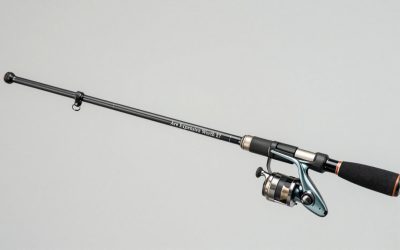
This guide focuses primarily on fly rods, since rod length and line weight matter most when choosing a creek-trout rod. If you fish conventional tackle, a 5½- to 6½-foot ultralight spinning rod with a 1/32- to 1/8-ounce lure rating is the comparable starting point.
Standard Sizes
| Rod Size | Length in Inches | Length in Centimeters | Best Creek Conditions | Typical Use |
|---|---|---|---|---|
| 6 ft 6 in, 2-weight | 78 in | 198 cm | Very tight, overgrown headwaters | Small dry flies, short casts, 6- to 12-inch trout |
| 7 ft, 3-weight | 84 in | 213 cm | Narrow brushy creeks | Dry-dropper rigs, small nymphs, casts under 40 feet |
| 7 ft 6 in, 3-weight | 90 in | 229 cm | Small creeks with occasional open runs | Technical dry-fly fishing and light nymphing |
| 8 ft, 4-weight | 96 in | 244 cm | Most small and medium creeks | Best all-around creek-trout size |
| 8 ft 6 in, 4-weight | 102 in | 259 cm | Open creeks and mixed pocket water | Improved mending, longer drifts, dry flies and nymphs |
| 9 ft, 5-weight | 108 in | 274 cm | Wide creeks, wind, deeper runs | Heavier nymph rigs, larger flies, larger trout |
Line weight is as important as rod length. A 2-weight casts delicate small flies but lacks the power to turn over bulky indicators or weighted rigs. A 3-weight is the classic small-creek choice. A 4-weight provides more versatility without feeling oversized, while a 5-weight is appropriate when the creek behaves more like a small river.
For packability, look for a four-piece rod. A 7-foot 6-inch four-piece rod usually breaks down into sections close to 23 inches long, while a 9-foot four-piece model has sections around 27 inches long. These fit more easily in a vehicle, backpack, or travel case than a two-piece rod. Moderate-action rods are forgiving for short casts and delicate presentations; faster actions can help when wind and heavier rigs are common.
How to Measure Your Space
“Space” for creek fishing means the practical casting area around the water, not the width of the stream alone. Measure or estimate the clear lane available behind, above, and beside you before selecting rod length.
- Estimate the creek width. Pace across an open section or use known landmarks. A creek under 12 feet wide usually favors a 6½- to 7½-foot rod. Water 15 to 25 feet wide is ideal for 7½- to 8½-foot rods. On creeks wider than 25 feet, a 9-foot rod becomes more practical.
- Check overhead clearance. Look for branches directly above the bank and water. If the usable vertical opening is under about 10 feet, a 6½- or 7-foot rod is much less frustrating than an 8½- or 9-foot model.
- Measure the open back-cast lane. Identify the distance from your casting position to brush, trees, rock walls, or steep banks behind you. Less than 6 feet of clear room calls for roll casts, bow-and-arrow casts, or a shorter rod. With 10 to 15 feet of open space, an 8-foot rod is comfortable for most anglers.
- Account for bank height. A bank 2 to 4 feet above the water increases the value of a longer rod because extra reach helps keep line off conflicting currents. On a low bank or while wading, a shorter rod is easier to manage.
- Match rod reach to drift length. If you routinely need to keep fly line off several current seams, choose 8 to 9 feet. If drifts are only 5 to 15 feet long before the fly reaches the next pool, a 6½- to 7½-foot rod is usually sufficient.
- Consider transport dimensions. Measure your pack, vehicle storage area, or airline-friendly tube length. Four-piece rods offer a good balance of compact storage and quick setup.
By Room or Use Case
Tight, Brushy Headwater Creeks
Choose a 6½- to 7-foot 2- or 3-weight. This size works where streams are 4 to 12 feet wide and alder, rhododendron, or low branches restrict a normal back cast. The shorter blank is easier to move through vegetation and less likely to catch overhead limbs. A 3-weight is generally more versatile than a 2-weight if you expect to use a small indicator, bead-head nymph, or occasional fish over 14 inches.
Typical Small Trout Creeks
An 8-foot 4-weight is the best fit for many anglers. It handles creeks roughly 10 to 25 feet wide, offers enough length for mending, and still works around moderate cover. Use it with a weight-forward 4-weight floating line and leaders from 7½ to 9 feet. A 7-foot 6-inch 3-weight is a more delicate alternative when dry flies are the main focus and fish are modest in size.
Open Meadow Creeks and Spring Creeks
Use an 8½-foot 4-weight or 9-foot 4-weight. Open banks create room for longer casts, and the added length helps with reach casts, drag-free drifts, and line control across complex currents. A 4-weight remains light enough for size 16 to 22 dry flies, but it can still deliver a small hopper-dropper rig. An 8-foot 1-inch 4-weight travel rod can also be a useful middle ground for anglers who want a compact rod with added reach.
Wide Creeks, Wind, and Bigger Fish
Choose a 9-foot 5-weight when the water is 25 to 40 feet wide, afternoon wind is regular, or trout commonly run 16 to 20 inches and beyond. The 5-weight is not too heavy for creek trout, but it is less delicate and can feel cumbersome in tight cover. It earns its place when you need to cast larger foam flies, weighted nymph rigs, or small streamers.
Backpacking and Travel
Prioritize a four- or five-piece 7½- to 8-foot 3- or 4-weight. A multi-piece rod is easier to protect in a pack and convenient for trips involving hiking, small cars, or air travel. Entry-level to midrange creek-trout rods commonly fall around $80 to $200. For example, a travel-oriented carbon rod may cost about $79.99, while a classic moderate-action four-piece trout rod may be around $199.99. Price alone does not determine the correct size; fit the rod to the water first.
Common Sizing Mistakes
- Buying a 9-foot rod for every creek. A 9-footer is versatile, but it can be awkward under low branches and on streams only 6 to 10 feet wide.
- Choosing too light a line weight. A 2-weight is fun with dry flies, yet a 4-weight is often easier to cast and more capable with wind, nymphs, and larger fish.
- Using rod length as a substitute for casting technique. A shorter rod helps in cover, but roll casts, sidearm casts, and bow-and-arrow casts are still essential on cramped water.
- Ignoring handle-to-tip clearance. Rod length is measured from the butt to the tip, but your actual operating space includes your arm reach and casting motion. A 9-foot rod can require far more than 9 feet of usable clearance.
- Overlooking transport length. A two-piece rod can be inconvenient to carry through brush or store in a small vehicle. Check the packed section length before buying.
- Matching the rod only to average fish size. Consider flies, wind, current, and casting distance as well as trout size. These factors often justify moving from a 3-weight to a 4-weight.
FAQ
Is a 7-foot rod too short for creek trout?
No. A 7-foot rod is excellent for narrow, tree-covered creeks and short-range fishing. Choose a 3-weight for the broadest usefulness. Its limitation is reduced reach for mending and keeping line off fast, conflicting currents.
What is the best all-around rod size for creek trout?
An 8-foot 4-weight fly rod is the best all-around choice for many creek anglers. It balances short-range maneuverability with enough reach for drift control, and it handles dry flies, nymphs, and small streamers.
Should I get a 3-weight or 4-weight for small streams?
Choose a 3-weight for delicate dry-fly fishing, very small trout, and tight cover. Choose a 4-weight if you want one rod for mixed techniques, occasional wind, bead-head nymphs, or trout approaching 16 inches or more. When uncertain, select the 4-weight.
Can I use a spinning rod for creek trout?
Yes. A 5½- to 6½-foot ultralight spinning rod is well suited to small creeks. Look for a rod rated for roughly 1/32- to 1/8-ounce lures and light line, commonly 2- to 6-pound test. Shorter models are easier to cast around trees, while 6½-foot models provide a little more reach in open water.

Write Your Review
No reviews yet. Be the first to share your experience!