
Key takeaways
- Medium-light: Best for 1/8- to 3/8-ounce finesse crankbaits, small flat-sided plugs, lightweight wakebaits, and small lipless crankbaits. Typical lengths are 6 feet 6 inches to 7 feet 2 inches. Use 6- to 10-pound line.
- Medium: The sweet spot for 1/4- to 5/8-ounce squarebills, medium divers, standard lipless baits, and many topwater plugs with trebles. A 7-foot to 7-foot 4-inch medium rod covers the widest range. It pairs well with 10- to 14-pound fluorocarbon or 10- to 15-pound monofilament.
- Medium-heavy: Useful for 1/2- to 1 1/2-ounce deep-diving crankbaits, heavy lipless baits ripped through grass, and oversized plugs. Look for a moderate action rather than a stiff fast action. Typical line ratings run from 12 to 20 pounds.
- Heavy: Usually too powerful for ordinary crankbaits. It makes sense only for very large, high-resistance baits, heavy vegetation, or specialty techniques. A 7-foot 10-inch heavy, extra-fast rod such as the KastKing Spartacus II Twin-Tip model is not a conventional crankbait choice; its fast tip and heavy power are better aligned with heavy single-hook presentations.
Choosing a crankbait rod is less about buying the “best” rod and more about matching its power, action, length, and material to the lures you actually throw. The most common mistake is using a general-purpose fast-action rod that feels great with jigs or worms but pulls treble hooks free on a moving fish. Another is assuming every crankbait needs the same rod. A shallow squarebill, a 1/2-ounce lipless bait, and a big deep-diving plug put very different loads on the blank.
For most anglers, medium power with a moderate or moderate-fast action is the starting point. But the correct choice changes with lure weight, diving depth, cover, line size, and whether you fish from a boat, kayak, or shore. In 2026, there are more technique-specific options than ever, but you do not need an expensive dedicated rod to make better crankbait choices. You do need a rod that loads smoothly, casts the bait efficiently, and keeps steady pressure on fish without tearing out small treble hooks.
Our top picks


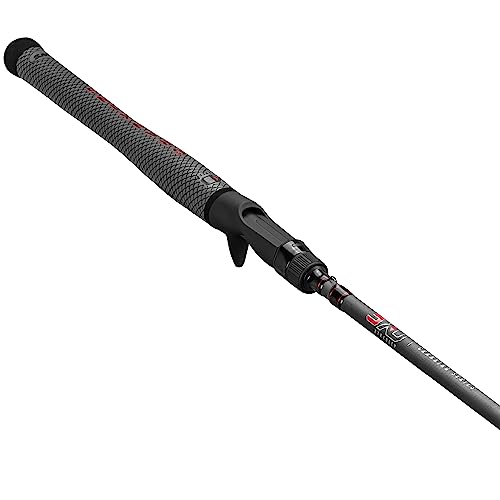
As an Amazon Associate we earn from qualifying purchases at no extra cost to you.
Decide These 3 Things First
- What crankbait weights will you throw most? For 1/4- to 1/2-ounce squarebills and standard shallow divers, medium power is usually right. For compact 1/8-ounce baits, use medium-light power. For 3/4- to 1 1/2-ounce deep divers, consider medium-heavy power.
- How deep and how hard will the bait pull? A deep diver can create far more drag than a similarly weighted shallow plug. Rod power needs to account for water resistance, not just the number printed on the lure package.
- Where are you fishing? Open-water cranking favors a softer, more forgiving moderate blank. Around wood, grass edges, docks, or current, you may need a little more power to control the fish once it is hooked.
Rod Power: Match the Blank to Lure Weight and Pull
Rod power describes how much force it takes to bend the blank. For crankbaits, medium power is the all-around choice because it handles the most common hard baits while still bending deeply enough to protect treble hooks.
- Medium-light: Best for 1/8- to 3/8-ounce finesse crankbaits, small flat-sided plugs, lightweight wakebaits, and small lipless crankbaits. Typical lengths are 6 feet 6 inches to 7 feet 2 inches. Use 6- to 10-pound line.
- Medium: The sweet spot for 1/4- to 5/8-ounce squarebills, medium divers, standard lipless baits, and many topwater plugs with trebles. A 7-foot to 7-foot 4-inch medium rod covers the widest range. It pairs well with 10- to 14-pound fluorocarbon or 10- to 15-pound monofilament.
- Medium-heavy: Useful for 1/2- to 1 1/2-ounce deep-diving crankbaits, heavy lipless baits ripped through grass, and oversized plugs. Look for a moderate action rather than a stiff fast action. Typical line ratings run from 12 to 20 pounds.
- Heavy: Usually too powerful for ordinary crankbaits. It makes sense only for very large, high-resistance baits, heavy vegetation, or specialty techniques. A 7-foot 10-inch heavy, extra-fast rod such as the KastKing Spartacus II Twin-Tip model is not a conventional crankbait choice; its fast tip and heavy power are better aligned with heavy single-hook presentations.
Do not choose power by lure weight alone. A 3/4-ounce deep diver can feel heavier on the retrieve than a 1-ounce lipless bait because its bill catches water. If your rod feels overloaded, the tip may stay bent throughout the retrieve, casting distance can suffer, and a fish has less cushion during the fight.
Action and Material: The Treble-Hook Connection
Action tells you where a rod bends. A moderate-action rod bends through the upper half or more of the blank. A fast-action rod bends mainly near the tip. With crankbaits, moderate action is valuable because it lets the fish take the bait before the hooks are driven home, then absorbs head shakes and surges.
Moderate action is the safest default for crankbaits with two or three treble hooks. It is especially useful with thin-wire hooks and when using low-stretch braided line. Moderate-fast action is a practical compromise for anglers who fish squarebills around cover and want a little more accuracy and control. Fast and extra-fast actions can work for lipless crankbaits, but they demand a softer line choice, careful drag adjustment, and less aggressive hooksets.
Material affects how the action feels:
- Fiberglass: Naturally slower, heavier, and forgiving. It is excellent for hard-pulling baits and steady retrieves. A glass rod may weigh 5 to 7 ounces in a 7-foot casting configuration, but its loading characteristics are ideal for many crankbait techniques.
- Graphite: Lighter and more sensitive, commonly around 3.5 to 5.5 ounces for comparable lengths. It excels for casting accuracy and feeling bottom contact with squarebills, but overly crisp graphite blanks can be unforgiving with trebles.
- Composite glass/graphite: Often the best one-rod compromise. Composite rods provide a softer bend than full graphite while reducing the weight and sluggish feel of full glass.
The Guide Gear Core Angler Glass Crankbait Casting Rod is an example of the traditional approach: a 7-foot 1-inch medium-power, moderate-action glass crankbait rod. That combination is well suited to everyday 1/4- to 1/2-ounce crankbaits and anglers who prioritize forgiveness over ultra-light weight.
Length and Construction: Casting Distance Versus Control
Rod length affects casting range, leverage, line pickup, and maneuverability. For one dedicated crankbait rod, choose 7 feet to 7 feet 4 inches. This range is long enough to launch most 3/8- to 5/8-ounce plugs, yet manageable around dock posts, trees, and boat decks.
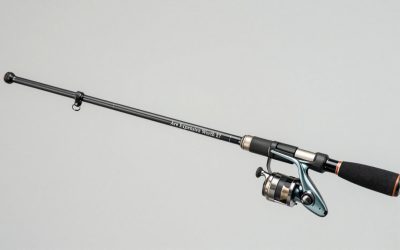
- 6 feet 6 inches to 6 feet 10 inches: Better for tight creek banks, small boats, kayaks, and pinpoint squarebill casts around cover. The 6-foot 10-inch KastKing Verus Technique Twin-Tip spinning rod illustrates the compact end of the range, though a finesse spinning setup is generally more appropriate for lighter crankbaits than for full-size divers.
- 7 feet to 7 feet 4 inches: Best general-purpose crankbait length. It balances castability, accuracy, and fish-fighting cushion.
- 7 feet 6 inches to 8 feet: Best for deep divers, long casts over offshore structure, and large open-water reservoirs. A longer rod helps keep more line out and can improve a diving plug’s working depth.
One-piece rods generally offer the most consistent bend and are preferred for dedicated crankbait setups. The tradeoff is transportation: a 7-foot 4-inch one-piece rod needs a vehicle interior or roof rack that can safely accommodate it. Two-piece rods are easier to carry and store, particularly for travel or apartment living. If choosing a two-piece model, make sure the ferrule seats fully and check it periodically; a loose connection can create noise, dead spots, and reduced casting performance.
For guide construction, look for corrosion-resistant frames and smooth inserts that will not nick fluorocarbon. You do not need exotic guide materials for crankbait fishing, but the guides should be aligned straight and securely wrapped. A rod with 9 to 11 guides plus a tip on a 7-foot casting rod typically distributes line well enough for standard crankbait use.
Comfort and On-Water Performance
Crankbait fishing often involves hundreds of casts and long, repetitive retrieves, so comfort matters more than it does for occasional casting. A balanced rod reduces wrist fatigue, especially with high-resistance deep divers.
Check the reel seat and handle length before buying. A rear grip around 9 to 11 inches works well for normal squarebill and medium-diver casting. For deep cranking, a 12- to 14-inch rear grip gives you more leverage for two-handed casts and helps tuck the rod under your forearm during the retrieve. Cork, EVA foam, and split-grip handles are all viable; the best choice is the one that remains comfortable after a full day.
Pair the rod with a reel that balances its length and weight. A 150-size baitcasting reel weighing roughly 6.5 to 7.5 ounces suits most medium-power crankbait rods. For deep-diving plugs, a 5.4:1 to 6.4:1 gear ratio reduces fatigue. Squarebills and lipless baits can be fished effectively on 6.4:1 to 7.1:1 reels, depending on retrieve speed and water temperature.
Price Tiers: Where Your Money Goes
Budget: $45 to $90. Expect fiberglass or basic composite blanks, standard guides, and fewer finish refinements. This tier is a smart entry point for a dedicated crankbait rod. The Guide Gear rod at about $69.99 fits here, as do many serviceable technique-specific rods. Check guide alignment, reel-seat security, and return policies closely.
Mid-range: $100 to $180. This is the value sweet spot for frequent anglers. You can expect lighter composite blanks, better guide components, more refined handles, and more consistent quality control. The Lew’s XD Crankbait Series, listed around $159.95 for a 7-foot 4-inch one-piece model, sits in this category and represents the kind of length commonly chosen for versatile crankbait work.
Premium: $200 to $400 or more. Premium rods typically reduce weight, improve balance, and offer more specialized tapers. The benefit is most noticeable for anglers who crank for several hours at a time or need distinct rods for shallow, medium, and deep presentations. Do not assume the highest price means the best choice: the action and lure rating still matter more than brand prestige.
Warranty, Delivery, and Assembly
A rod warranty is useful, but read what it actually covers. Many warranties protect against manufacturing defects, not car doors, stepped-on blanks, high-sticking, or accidental breakage. Budget rods may have limited warranties or require the buyer to pay return shipping. Mid-range and premium brands may offer one- to five-year coverage or paid replacement programs.
For shipping, one-piece rods are usually delivered in long tubes or reinforced cartons. Inspect the package immediately, especially the tip-top guide and the section just above the handle. Photograph any crushed tube, cracked blank, or bent guide before removing tags. Two-piece rods need no assembly beyond joining sections, but align the guides carefully and seat the ferrule firmly. Never force a stuck ferrule or twist the rod excessively to separate it.
Spec Checklist
| Spec | Budget | Mid | Premium |
|---|---|---|---|
| Typical price | $45-$90 | $100-$180 | $200-$400+ |
| Best all-purpose length | 7’0″-7’2″ | 7’0″-7’4″ | 7’0″-7’6″ by technique |
| Recommended power | Medium | Medium or medium-heavy | Technique-specific medium to medium-heavy |
| Preferred action | Moderate | Moderate or moderate-fast | Purpose-built moderate tapers |
| Common blank material | Fiberglass or basic composite | Composite or refined graphite | Lightweight composite or specialized graphite |
| Typical lure range | 1/4-5/8 oz. | 1/4-1 oz. | Matched to shallow, medium, or deep baits |
Red Flags
- A heavy-power, extra-fast rod marketed as an all-purpose crankbait rod without a moderate option.
- A lure rating that tops out at 1/2 ounce when you regularly throw 3/4- to 1-ounce deep divers.
- A rod tip that remains deeply loaded during a normal retrieve before a fish is even hooked.
- Loose guide inserts, visibly crooked guides, or a reel seat that shifts under hand pressure.
- Claims of being suitable for every technique from finesse baits to giant deep divers. Specialized ranges need specialized tools.
- A one-piece rod purchase without a realistic plan for transporting a 7- to 8-foot blank safely.
FAQ
What power rod is best for crankbaits?
Medium power is best for most crankbaits from 1/4 to 5/8 ounce. Move to medium-light for small finesse plugs and medium-heavy for large deep divers, heavy lipless baits, or strong current.
Is medium-heavy too heavy for crankbaits?
It can be too heavy for small squarebills and light plugs, particularly with a fast action. A medium-heavy rod works well for larger crankbaits when it has a moderate or moderate-fast bend and an appropriate lure rating.
Should I use a glass or graphite crankbait rod?
Choose glass for maximum forgiveness and a classic moderate bend. Choose graphite for lower weight and better casting precision. A composite rod is often the most versatile choice because it combines a forgiving load with less overall weight.
What is the best rod length for squarebill crankbaits?
A 6-foot 8-inch to 7-foot 2-inch rod is an excellent squarebill range. Use the shorter end for tight cover and close targets, or about 7 feet for a more versatile setup that also handles medium divers and lipless crankbaits.

Write Your Review
No reviews yet. Be the first to share your experience!