
Key takeaways
- No lure or line rating: A power label alone is not enough to judge finesse compatibility.
- Confusing spinning and casting models: Spinning rods have guides designed to sit beneath the blank; casting rods use a different guide arrangement.
- Exaggerated sensitivity claims: Marketing language is not a substitute for a stated blank material, action, and weight.
- Tip-heavy balance: A rod that constantly pulls your wrist downward will become tiring, regardless of its advertised weight.
- Loose reel seat or misaligned guides: These are quality-control concerns that should be addressed before fishing.
- Unclear warranty terms: If the seller cannot explain coverage, return shipping, or replacement procedures, factor that risk into the price.
- Buying too light for the cover: An ultralight may cast beautifully in open water but lack control around weeds, docks, or larger fish.
Finesse lures reward control rather than brute force. Small jigs, Ned rigs, lightweight tubes, drop shots, micro crankbaits, and compact inline spinners need a rod that loads easily, casts accurately, and protects light line when a fish surges. The wrong rod can make a capable lure feel lifeless—or turn a routine hookset into a breakoff.
The most common mistake is buying by lure rating alone. Two rods may both handle 1/16-ounce baits, yet one feels crisp and precise while the other feels soft, heavy, or difficult to balance. Shoppers also overvalue a long list of guides, confuse “fast” action with maximum stiffness, and choose an ultralight rod when they actually need the control of a light-power blank. Price matters, but a $60 rod with the right length and action can outperform a poorly matched $200 model.
Our top picks


As an Amazon Associate we earn from qualifying purchases at no extra cost to you.
This spinning rod buying guide for finesse lures focuses on the specifications that affect real fishing: casting range, lure control, hook-setting power, fatigue, and durability. The goal is not to find the most expensive rod. It is to match the rod to the lure weights, cover, fish size, and line you actually use.
Decide These 3 Things First
- Your usual lure weight: If most of your presentations weigh 1/32 to 1/16 ounce, start with an ultralight rod. For 1/16 to 1/4 ounce, a light-power rod is usually more versatile.
- Your fishing environment: Open water favors a longer, more forgiving rod. Docks, brush, and tight banks favor a shorter rod with quicker handling.
- Your line and target species: A 2- to 4-pound mono or fluorocarbon setup calls for a softer, protective tip. Braided line with a leader and larger bass, walleye, or trout may justify a light or even medium-light power.
Size: Length and Power Set the Basic Feel
Length changes casting distance, line control, and leverage. A 6-foot to 6-foot-6-inch rod is easy to maneuver around trees, boats, and docks. It also makes short, accurate casts simple. A 7-foot to 7-foot-6-inch rod generally casts farther and keeps more line off the water, which helps with a drop shot or a drifting small jig.
For general finesse use, a 6-foot-6-inch to 7-foot rod is the safest starting point. Go shorter when accuracy and compact handling matter most. Go longer when you fish from shore, need distance, or frequently work bottom-contact rigs.
Power is separate from length. Ultralight rods excel with tiny lures, light line, and smaller fish. A light-power rod is better for mixed finesse work and offers more authority around cover. Do not assume an ultralight is automatically more sensitive or more fun; if the blank collapses under a heavier lure, control suffers.
As examples, a 6-foot-2-inch ultralight KastKing Zephyr Finesse Spinning Rod suits compact presentations, while the 7-foot-2-inch light version provides more casting reach and a broader working range. Check the manufacturer’s lure rating rather than relying on the power label alone.
Material: Carbon Is Useful, but the Layup Matters More
Most finesse spinning rods use graphite or carbon-fiber composite blanks because these materials can be light and responsive. A higher-modulus graphite blank is often lighter and crisper, but it can also be less forgiving of high-sticking, impacts, and careless transport. Lower-modulus graphite or composite construction usually adds toughness and a softer feel at the cost of some weight.
Look for the blank material and, when provided, a clear indication of the construction rather than vague claims such as “professional grade.” Weight differences of 1 to 2 ounces are noticeable after a full day, but balance can matter more than total weight. A 3.5-ounce rod that balances near the reel seat may feel better than a 3-ounce rod that is tip-heavy.
For small treble-hook lures and light line, a moderate or moderate-fast flex can keep fish pinned. For a Ned rig, small Texas rig, or drop shot, fast action often improves bite detection and lure control. The best choice depends on the presentation, not just the material printed on the blank.
Construction: Inspect the Details That Take Abuse
A finesse rod should have a cleanly aligned guide train, secure inserts, a straight blank, and a reel seat that clamps firmly without excessive force. Six to nine guides are common on rods in the 6- to 7-foot range, depending on the design. More guides are not automatically better; spacing and alignment are what help distribute load and manage line.
Check the tip guide especially carefully. Its insert should be smooth, centered, and free of cracks. Run a small piece of cotton through the guide; snagging can indicate a damaged insert that will fray braid or weaken a leader. The remaining guides should sit in a consistent line from the reel seat to the tip.
A two-piece rod is convenient for storage and travel. The connection should seat fully and remain snug, with no visible gap that appears during normal assembly. One-piece rods can offer a continuous blank feel, but they are less convenient in a car or apartment. Never force a ferrule together or twist aggressively when separating it.
Comfort and Performance: Match Action to the Lure
Action describes where the rod bends, while power describes how much force it takes to bend. A fast-action rod bends mostly near the upper third and returns quickly. It is useful for feeling bottom, detecting subtle bites, and driving a single hook. A moderate-fast action bends farther down the blank and is more forgiving with light line and treble hooks.
Handle design affects fatigue and sensitivity. A cork or EVA handle between about 9 and 11 inches from butt to reel seat is common for finesse spinning rods. Shorter handles help with one-handed casts; longer handles provide a little more leverage and may be more comfortable for two-handed distance casting. There is no universal winner, but the grip should not force your wrist into an awkward angle.
Pair the rod with a reel that balances near the front of the reel seat. For many light and ultralight rods, a 1000- to 2500-size spinning reel is a practical range. Reel size varies by brand, so use balance and line capacity—not the number alone—as the final test.
Price Tiers: Spend on the Specification You Need
Budget finesse rods generally cost about $40 to $80. They can be excellent starter choices when the guides, reel seat, and action are sound. The 6-foot-2-inch ultralight KastKing Zephyr Finesse Spinning Rod is listed at $62.99, while the 6-foot-3-inch ultralight Zephyr casting model is listed at $67.49; the latter is not a substitute for a spinning rod, but it illustrates why shoppers must confirm the rod style before ordering.
Midrange rods, roughly $80 to $160, often offer better balance, cleaner finishing, lighter components, or a more refined action. They make sense for frequent anglers who want one dependable rod for several finesse techniques.
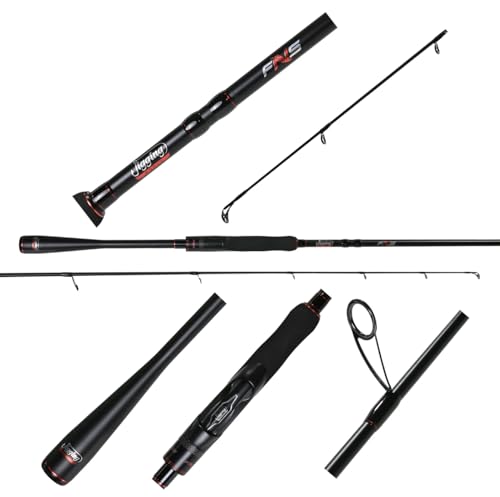
Premium models typically begin around $160 and can exceed $300. The FNS Spinning Rods by Jigging World are listed at $199.99. A higher price may buy lower weight, improved component quality, or a more specialized action, but it does not guarantee that the rod is right for your lure range. Compare the actual specifications before paying for branding.
Warranty, Delivery, and Assembly
Read the warranty before checkout. Confirm whether coverage lasts one, five, or more years; whether it covers manufacturing defects only; and whether you pay shipping, a service fee, or both. Many warranties exclude accidental damage, misuse, high-sticking, and normal wear. Save the receipt and photograph the rod if it arrives damaged.
Inspect the package immediately. A long rod should arrive in a rigid tube or reinforced box, with the tip protected from side impacts. Do not accept a visibly crushed package without documenting it. During assembly, align the guides, seat the sections completely, and test the reel seat with a reel attached before making a full-power cast.
Spec Checklist
| Spec | Budget | Mid | Premium |
|---|---|---|---|
| Typical price | $40–$80 | $80–$160 | $160–$350+ |
| Useful length | 6’0″–7’2″ | 6’3″–7’6″ | 6’6″–7’6″ |
| Power | UL or L | UL, L, or ML | Technique-specific UL, L, or ML |
| Common lure range | 1/32–1/4 oz | 1/32–3/8 oz | 1/64–3/8 oz, depending on model |
| Action | Fast or moderate-fast | Fast or moderate-fast | Fast, moderate-fast, or specialized taper |
| Line range | 2–8 lb | 2–10 lb | 2–12 lb |
| Sections | One or two | One or two | Usually one, with travel options available |
Red Flags
- No lure or line rating: A power label alone is not enough to judge finesse compatibility.
- Confusing spinning and casting models: Spinning rods have guides designed to sit beneath the blank; casting rods use a different guide arrangement.
- Exaggerated sensitivity claims: Marketing language is not a substitute for a stated blank material, action, and weight.
- Tip-heavy balance: A rod that constantly pulls your wrist downward will become tiring, regardless of its advertised weight.
- Loose reel seat or misaligned guides: These are quality-control concerns that should be addressed before fishing.
- Unclear warranty terms: If the seller cannot explain coverage, return shipping, or replacement procedures, factor that risk into the price.
- Buying too light for the cover: An ultralight may cast beautifully in open water but lack control around weeds, docks, or larger fish.
FAQ
What is the best rod length for finesse lures?
A 6-foot-6-inch to 7-foot spinning rod is the most versatile choice for many anglers. Choose 6 feet to 6 feet 6 inches for tight quarters and accurate short casts. Choose 7 feet or longer for shore fishing, longer casts, and better line control with bottom-contact rigs.
Should I choose ultralight or light power?
Choose ultralight for very small lures, 2- to 4-pound line, and smaller fish in open water. Choose light power when your lures approach 1/4 ounce, you use braided line, or fish may reach several pounds. Light power is usually the better all-around option.
Is fast action always best for finesse fishing?
No. Fast action is excellent for detecting bites and controlling single-hook rigs. Moderate-fast action can be better for tiny treble-hook lures because it keeps a steady bend and reduces pulled hooks. Match action to the lure and line, not to a general sensitivity claim.
How much should I spend on a finesse spinning rod?
About $60 to $100 is enough for a capable first rod if the length, lure rating, action, and balance fit your needs. Spending $150 to $250 can make sense for frequent anglers seeking lower weight or a specialized taper. Buy the correct specification before upgrading the price tier.



Write Your Review
No reviews yet. Be the first to share your experience!