
Our Top Picks
 Bait Plastics Premium Lure PlastisolSmall to Medium100 x 100 x 50 Centimeters10 poundsCheck on Amazon
Keep soft plastic lures in their original bags, inside a closed container that stays cool and out of the sun, and group them by material and color. Never let different brands or bait materials touch. Most storage disasters are chemistry, not neglect: heat softens baits, and the plasticizers in different compounds react with each other, so lures fuse into a lump, warp, or bleed color onto their neighbors. This guide covers sorting by material, rinsing and drying used baits, choosing a container, and keeping a tackle tray from ruining your favorites.
Quick Answer
- Three material families, three rules. Standard plastisol baits can share a bag only when the colors match; ElaZtech-type baits only with other ElaZtech in the same color; TPE-type baits individually.
- Original bag first. One pack, one bag. Group the sealed bags by lure type (for example craws, stick worms, swimbaits) in a latching bin about the size of a shoe box.
- Heat is the main enemy. No manufacturer publishes one safe temperature, so treat direct sun, a dashboard, and a closed truck bed as off limits.
- Two steps after saltwater or mud: rinse in fresh water, then dry completely before the bait goes back in a bag.
- Unhook everything. Hooks and jig heads rust and stain, and a wet bait holds that moisture against the metal.
What You Need
Match the gear to what you actually own rather than buying a big organizer first.

QualyQualy Soft Jerkbait Fishing Lures - Jerk Shad Minnow Drop Shot Lure for Bass Trout Pike Walleye Crappie - 2.95in, 6Pcs, Color 4
Chosen because it specifies 2.95in and 6Pcs.
View on Amazon- Original resealable bags: the bag a bait ships in is designed around its shape and its scent or oil. Keep it whenever you can.
- Latching bin, shoe-box size: deep enough to stand packs upright, with a lid that closes tightly. One bin per bait material family is a clean rule.
- Gallon zip bags: useful for holding several same-material packs together, or for double-bagging a pack that has a torn corner.
- Worm binder: a zippered binder with clear pockets saves space for a day on the water. Use one binder per material family.
- Dedicated tray (optional): a tackle tray that has never held any other soft plastic. Residue from earlier baits can transfer.
- Labels and a marker: write the material and the date you opened the pack.
- Paper towels and fresh water: for the rinse and dry steps.
Sort by Material Before Anything Else
Soft plastics are not one material. A bait that is perfectly safe next to its own kind can melt into a different compound within a few hot days. Check the pack for a material name (plastisol, ElaZtech, TPE, or a maker-specific blend) and store by that label. If the pack gives no material, treat the bait as its own family until you learn otherwise.
| Material family | Typical baits | Can share a container with | Key caution |
|---|---|---|---|
| Plastisol (PVC-based) | Classic worms, flukes, craws, tubes, creature baits | Other plastisol baits, ideally the same color | Different colors bleed into each other; heat makes them tacky |
| ElaZtech-type elastomer | Finesse worms, swim jigs trailers, tube-style finesse baits | Only ElaZtech baits, same color preferred | The maker advises against storing it with conventional plastics, even in separate compartments, and it can warp a box over time |
| TPE-type premium baits | Some premium swimbaits and shrimp-style baits | Nothing; store each bait separately | Reported to fuse even with other TPE baits when warm |
| Unknown or unmarked | Hand-poured, imported, or loose baits | Nothing until identified | Isolate in a single bag and label it |
When a stored batch turns into a “melted” mess, Z-Man’s customer service has said that nearly every case includes a shriveled conventional bait in the middle of the ElaZtech. The takeaway is simple: cross-contact between material families causes more damage than any other single storage mistake.
Step-by-Step: Putting Baits Away After a Trip
- Take baits off hooks and jig heads. Do this at the end of the trip, not at home. Porous baits stay wet a long time and push moisture against the metal.
- Sort by material and color. Split the used pile into material families before you do anything else. Color matters too, because dark dyes can stain lighter baits.
- Inspect each bait. Toss torn, chewed, or badly bent pieces. A bait that has kinked into a permanent curve rarely swims straight again.
- Rinse in fresh water. Use cool water, not hot, and a gentle swish. Salt, dirt, and sunscreen are what shorten a bait’s life in storage.
- Dry completely. Lay the baits on a clean towel in the shade and let them air-dry until no moisture is visible in the grooves and ribs. Trapped water causes cloudy spots and a musty smell.
- Return each bait to a compatible bag. Use its original bag or a new bag holding only the same material and color. Press out the extra air and seal it. If a bait is dry, a small amount of oil-based attractant such as menhaden oil is a common way to keep it from drying out and deforming.
- Label and bin. Put the sealed bags in a latching bin by lure type, label the bin with the material family, and store it somewhere cool, dark, and dry, such as a closet shelf or a shaded garage cabinet.
Choosing a Container
| Method | Best for | Watch out for |
|---|---|---|
| Original bags in a latching bin | Home storage and boat storage | Takes more room than loose baits, but it is the safest default |
| Worm binder | Bank, kayak, and wading trips | Keep one material family per binder; check pockets for residue before reuse |
| Tackle tray | Rigged baits for a single day | Baits bend and kink in cramped compartments, and tray plastic can react with some compounds; use a dedicated tray |
| Loose in one big bag | Bulk, inexpensive punch-style baits only | You lose track of inventory, and mixed colors bleed |
Heat, Sun, and Time
Heat and sunlight are the two reasons baits fuse. A vehicle in summer can easily heat a bin far beyond what a bait is designed to handle, and sunlight on a clear lid works the same way. Move storage out of the car after every trip and never leave a tray on a boat deck in direct sun. No maker publishes a shelf life for baits, so judge by feel: a bait that is still supple, smells normal, and swims straight is fine; one that is sticky, slimy, or cracked is done.
Gear That Helps
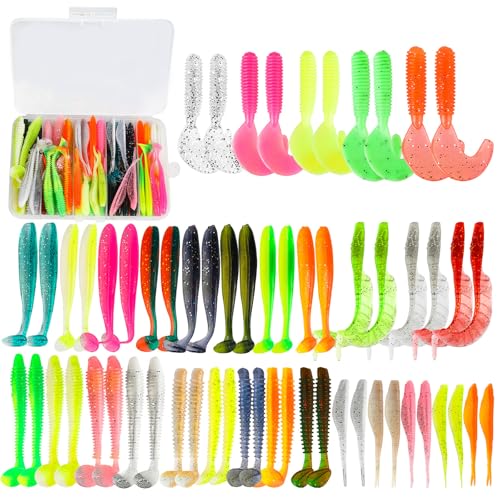
60-piece paddle tail swimbait set with tackle box – a ready-made starter case
As an Amazon Associate we earn from qualifying purchases at no extra cost to you.
This listing is a 60-piece set of 6.5 cm and 8 cm paddle tail swimbaits in assorted colors, sold with a tackle box. It helps if you want one small box that is already organized by bait. The caveat is the one covered above: keep that box for those baits only, and do not add a different brand or material to the same compartments. The listing describes the baits as silicone-like, flexible, and reusable, but the exact compound is not stated clearly, so confirm on the listing before you store them with anything else.
Premium lure plastisol (112 Super Soft Formula) – for remelting scraps or pouring your own
This is liquid plastisol for pouring baits, not a storage product, but it solves one storage problem: what to do with torn or fused baits. Clean plastisol scraps can be chopped and remelted, and most hand-pour work happens at roughly 320 to 350 degrees F, per lure-making guides. Heat only in a ventilated area, use dedicated equipment, and keep water away from hot plastic. The listing shows a large 10-pound container, which is more than most casual anglers need, and remelting guidance applies to plastisol baits only: do not mix brands or material types in the pot, because their melting points can differ.
Common Mistakes
- Mixing brands in one tray. Even separate compartments may not stop a reaction between material families.
- Leaving baits in a hot vehicle. One summer afternoon is enough to fuse a stack.
- Storing baits on hooks. Rust stains the plastic, and a wet bait keeps moisture against the metal.
- Bagging baits wet. Trapped water leaves cloudy patches and a musty smell.
- Dumping dark and light colors together. Dye migrates from dark baits to light baits.
- Reusing a tray that held other plastics. Residue can start a reaction with a new bait.
Questions
Can soft plastic lures stay in a tackle box?
Yes for a day of fishing, but not as long-term storage. Trays can bend baits and react with certain compounds, so move baits back to their bags at home.
Should soft plastics be stored flat or standing up?
Store them so they stay straight. A bait that is folded or squeezed into a compartment can hold that bend, so flat in the bag or standing in a bin both work as long as nothing crushes the tail.
Can I store different brands of soft plastics together?
Only if you know they are the same material family and the same color. When in doubt, bag each brand separately, and keep ElaZtech-type and TPE-type baits away from everything else.
How long do soft plastic lures last in storage?
No maker publishes a firm number. Cool, dark, dry storage in the original bag gives the longest life, and you should retire any bait that feels sticky, slimy, or brittle.
Is it okay to add attractant oil before storing?
Many anglers add a little oil-based attractant to keep baits from drying out. Use only a small amount, and check that it is safe for your bait material first.
Update History
- October 15, 2026 – Updated with specification checks and a revised product comparison.
- Check the product page for current specifications and availability before buying.
Sources
- SaltStrong – guide to storing soft plastics so they do not melt together
- MonsterBass – soft plastic storage articles
- Bass Resource forum threads on storing ElaZtech baits, including a reply attributed to Z-Man customer service
- Plastic Ranger and Battlbox lure-making guides for plastisol remelting and handling
- Retail product listings for the two products named above




Write Your Review
No reviews yet. Be the first to share your experience!