
Key takeaways
- Medium-light: 1/8- to 1/2-ounce lures, 6- to 12-pound line, open water, smaller lures
- Medium: 1/4- to 3/4-ounce lures, 10- to 20-pound line, the best all-around choice
- Medium-heavy: 3/8- to 1 1/2-ounce lures, 15- to 30-pound line, heavy current, structure, and larger plugs
The Short Answer
For most redfish lures, choose a medium-power spinning rod measuring 7 feet to 7 feet 6 inches long, with a fast or moderate-fast action. Pair it with 10- to 20-pound braided line and a 15- to 25-pound fluorocarbon leader. This combination handles common soft plastics, jig heads, spoons, topwater plugs, and inshore spinnerbaits without feeling unnecessarily heavy.
If you mainly fish small marsh creeks or cast lightweight lures, step down to a medium-light rod. A medium-heavy rod is better for oversized topwater plugs, strong current, heavy cover, or large redfish, but it can make light lures harder to cast and less lively in the water.
Our top picks
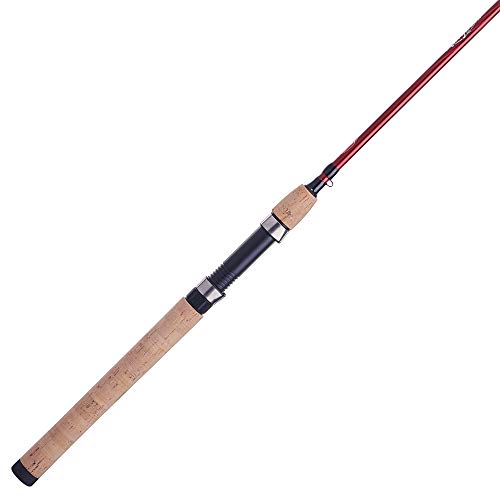 Berkley 6’6” Cherrywood HD Spinning Rod
- BERKLEY CHERRYWOOD HD 6’6” SPINNING ROD, FAST ACTION:…
- 4-12LB LINE RATING, MEDIUM LIGHT POWER: Lure rating…
- Provides unmatched sensitivity with the security of blank…
 Shimano GLF
- Hybrid EVA + Rubber Cork Grips
- Shimano Custom Reel Seat
- Specialized Actions for Gulf Coast Inshore Applications
| Product | Key specs | |
|---|---|---|
| Berkley 6’6” Cherrywood HD Spinning Rod | BERKLEY CHERRYWOOD HD 6’6” SPINNING ROD, FAST ACTION:… 4-12LB LINE RATING, MEDIUM LIGHT POWER: Lure rating… Provides unmatched sensitivity with the security of blank… | Check price |
| Shimano GLF | Hybrid EVA + Rubber Cork Grips Shimano Custom Reel Seat Specialized Actions for Gulf Coast Inshore Applications | Check price |
 Sougayilang Fishing Rods Sougayilang Fishing Rods | Check price | |
 Strike King Redfish Magic Saltwater Spinnerbait Strike King Redfish Magic Saltwater Spinnerbait | Check price |
As an Amazon Associate we earn from qualifying purchases at no extra cost to you.
The most useful way to answer “what rod power for redfish lures” is to match power to lure weight, line strength, cover, and fish size:
- Medium-light: 1/8- to 1/2-ounce lures, 6- to 12-pound line, open water, smaller lures
- Medium: 1/4- to 3/4-ounce lures, 10- to 20-pound line, the best all-around choice
- Medium-heavy: 3/8- to 1 1/2-ounce lures, 15- to 30-pound line, heavy current, structure, and larger plugs
For a general-purpose setup, a 7-foot medium spinning rod with a fast action is the safest starting point. In 2026, that specification remains broadly compatible with the most common inshore redfish tackle.
Standard Sizes
Rod length is separate from rod power. Length affects casting distance, line control, and maneuverability, while power describes how much force it takes to bend the blank. The lure rating printed on the rod is equally important: a medium rod rated for 1/8 to 5/8 ounce is not identical to another medium rod rated for 1/4 to 1 ounce.
| Rod type | Typical length | Length in cm | Typical lure range | Best use |
|---|---|---|---|---|
| Short medium-light | 6 ft 6 in | 198 cm | 1/8-1/2 oz | Small creeks, kayaks, light plastics |
| Standard medium | 7 ft 0 in | 213 cm | 1/4-3/4 oz | All-purpose redfish fishing |
| Long medium | 7 ft 6 in | 229 cm | 1/4-1 oz | Long casts, flats, shore fishing |
| Medium-heavy | 7 ft 0 in | 213 cm | 3/8-1 1/2 oz | Heavy current, cover, large lures |
| Two-piece travel rod | 6 ft 10 in | 208 cm | 1/4-3/4 oz | Storage, travel, general inshore use |
A 6-foot 6-inch medium-light rod, such as the Berkley Cherrywood HD example, is compact and rated for 1/8- to 5/8-ounce lures. Its 4- to 12-pound line rating makes it a reasonable light-tackle option for smaller redfish and open water. A 7-foot medium inshore rod, such as the Shimano GLF example, offers a stronger all-around platform for heavier jig heads, plugs, and longer casts.
Rod prices commonly range from about $30 to $45 for basic graphite or composite models, $60 to $140 for purpose-built inshore rods, and more than $150 for premium blanks and components. A $33.99 two-piece casting or spinning rod can be practical for occasional use, while a roughly $119.99 inshore rod may provide more specialized balance and saltwater-focused components. Prices vary by retailer and configuration.
How to Measure Your Space
“Space” matters because the best rod length depends on where you stand, how much room you have behind you, and how the rod will be stored. Use this quick measurement process before buying.
- Measure the storage location. Measure the longest uninterrupted distance in your rod locker, vehicle, closet, or garage. A one-piece 7-foot rod needs at least 84 inches of clear length, plus room for the handle and protective sleeve.
- Check the transport opening. Measure the vehicle hatch, kayak rod tube, or storage compartment. A two-piece 7-foot rod has a transport section roughly 42 inches long before allowing for the handle, guides, and case.
- Measure your casting area. Stand where you normally fish and check for branches, railings, awnings, and other obstructions. A 7-foot 6-inch rod can improve distance but needs more clearance than a 6-foot 6-inch model.
- Measure lure weight, not just lure length. Weigh a fully rigged lure if possible. Add the jig head, hook, plastic, split ring, and trailer. Keep the total inside the rod’s printed lure range.
- Measure the line and leader setup. Confirm that the rod’s line rating suits your braid and leader. A rod rated for 4- to 12-pound line is not the right match for regularly fishing 30-pound braid around oysters or pilings.
By Room or Use Case
Open flats and shoreline
Choose a 7-foot to 7-foot 6-inch medium spinning rod. The extra length helps launch 1/4- to 3/4-ounce spoons, soft-plastic jig heads, and topwater lures farther. It also keeps more line above the water when working a lure over shallow grass. A fast action gives you a crisp tip for casting and quick hook-setting.
Small creeks and tight banks
A 6-foot 6-inch to 7-foot medium-light rod is easier to maneuver around trees, docks, and narrow banks. Use it with 1/8- to 1/2-ounce lures and 10- to 15-pound braid. Medium-light power provides more bend with smaller redfish, but avoid pulling hard around barnacle-covered structure.
Kayak and small-boat fishing
For a seated angler, a 6-foot 6-inch to 7-foot rod is usually easier to control than a longer model. Medium power is the most flexible choice when space is limited. A fast action helps steer fish away from the kayak while keeping the setup responsive for soft plastics and spinnerbaits. Keep a second rod under 7 feet if the deck or cockpit is especially crowded.
Heavy current, docks, and cover
Use a 7-foot medium-heavy rod when redfish are near pilings, rocks, oyster beds, or thick vegetation. Select a lure rating that reaches at least 1 ounce if you regularly throw heavy jig heads or larger plugs. Pair it with 20- to 30-pound braid and a suitably strong leader. The extra power is useful for turning a fish quickly, but it is excessive for small 1/8-ounce lures.
Topwater and spinnerbaits
For standard topwater plugs and saltwater spinnerbaits, a medium rod with a moderate-fast action is forgiving and versatile. A spinnerbait such as the Strike King Redfish Magic example is inexpensive, commonly around $5 to $10, but its total rigged weight still needs to fit the rod rating. A slightly softer tip can keep treble-hooked fish pinned during the fight.
Common Sizing Mistakes
- Confusing power with action: Medium is power; fast is action. A medium-fast rod and a medium-moderate rod can feel very different.
- Ignoring the lure rating: Do not assume every medium rod safely handles the same lure weights. Check the printed range before buying.
- Choosing too much rod: Medium-heavy power can overpower small plastics, reduce casting distance, and make light bites less noticeable.
- Choosing by fish weight alone: A redfish’s size matters, but current, cover, leader strength, and lure weight often matter more.
- Buying a long rod without checking storage: A 7-foot 6-inch one-piece rod is difficult to transport if your vehicle or locker cannot accommodate 90 inches of length.
- Overlooking the reel seat and grip: A rod that feels tip-heavy becomes tiring during repeated casts. Balance the rod with the reel you plan to use.
FAQ
Is medium or medium-light better for redfish?
Medium is better for most anglers because it covers more lure weights and conditions. Choose medium-light for lightweight lures, smaller redfish, and open water where you do not need to force fish away from cover.
What rod length is best for redfish lures?
A 7-foot rod is the best general-purpose length. Choose 6 feet 6 inches to 7 feet for tight spaces and kayaks, or 7 feet 6 inches when maximum casting distance and line control are priorities.
What action should a redfish rod have?
Fast action is a strong choice for soft plastics, jig heads, and single-hook lures. Moderate-fast action is more forgiving for topwater plugs and spinnerbaits with treble hooks.
Can I use a bass rod for redfish?
Yes, if its lure and line ratings suit your setup and its components are appropriate for saltwater. Rinse the rod and reel with fresh water after every saltwater trip. For regular inshore use, a dedicated saltwater or inshore rod may offer better corrosion resistance.



Write Your Review
No reviews yet. Be the first to share your experience!