
Our Top Picks
 Ned-Rig-Kit-Finesse-Baits-Soft-Plastic-Worms-Fising-Lure for Bass Stick Swimbait Minnow Crawfish Lures3535-Piece Ned Rig KitJ HookCheck on Amazon
Pros & cons
- Buoyant soft plastics create a slow, enticing flutter fall
- Ned jig heads are tuned for finesse-style presentations
- 35-piece kit covers worms and jig heads together
- Technique requires light line and a specific jig head setup
- 25 stick worms share just one classic color assortment
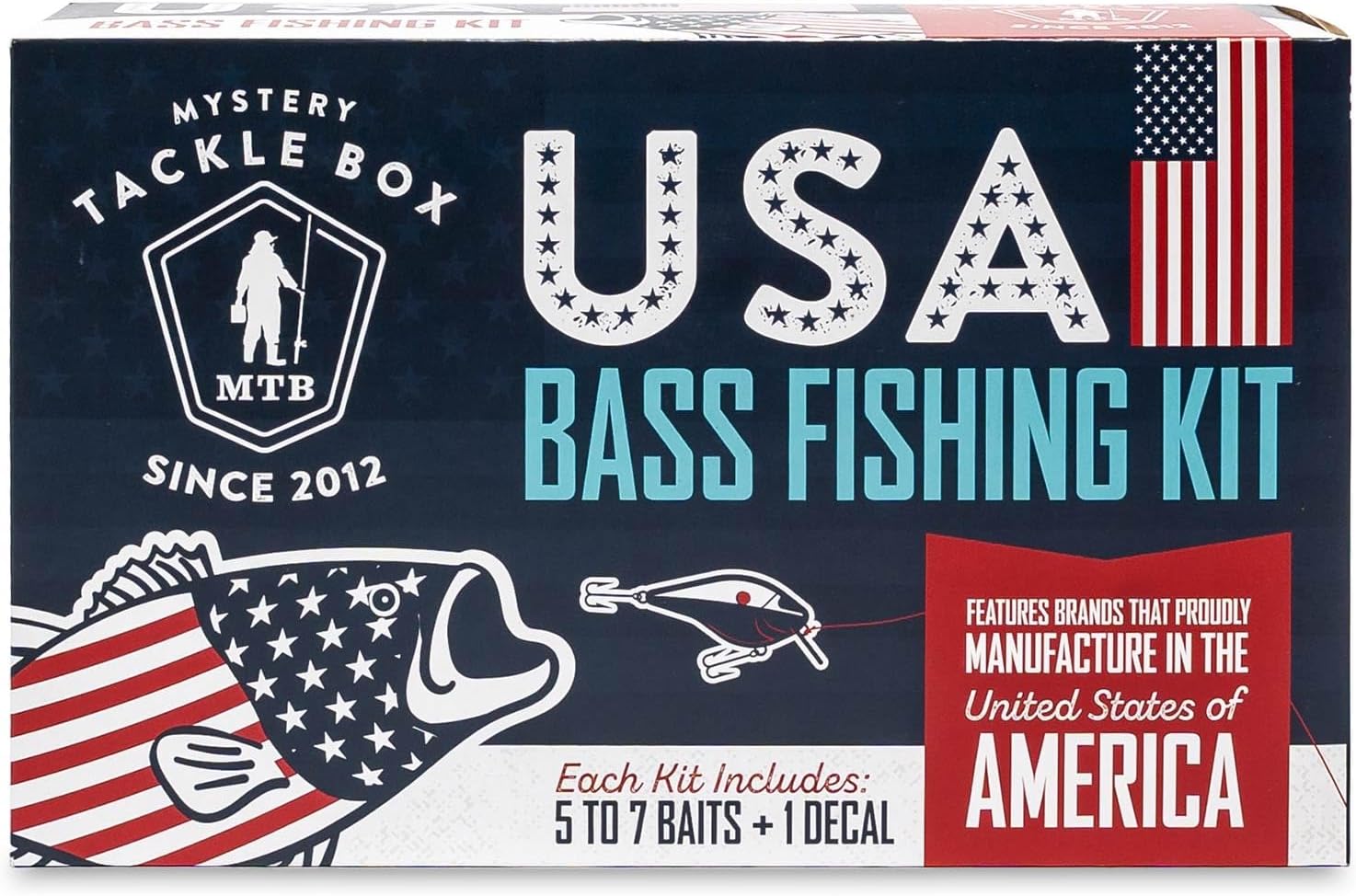 Catch Co Mystery Tackle Box Freshwater Largemouth andUSA Bass Fishing KitSpear PointBassCheck on Amazon
Pros & cons
- Mix of soft and hard baits covers varied bass techniques
- Baits are sourced from US-manufactured partner brands
- Bonus USA decal adds a fun extra to the kit
- Only seven items total leaves little room for backups
- Lure selection is pre-chosen, not customizable by the buyer
The best smallmouth bass lures for rivers are small, natural-looking baits you can drift through current seams: a Ned rig, a 3 to 4 inch tube on a 1/8 to 1/4 ounce head, an inline spinner, and a compact crankbait. If you want one starting point, choose the Ned rig kit, because a stubby soft plastic on a light mushroom head works from clear creeks to moderate rivers and rarely scares fish. Rivers differ from lakes because fish hold in soft water beside fast water, so the right lure is the one that stays in that pocket long enough to be seen. The eight listings below are mostly assortments, so this guide also explains sizes, weights, and when to use each lure type.
Quick List
- Ned rig kit (XFISHMAN) – best for finesse fishing in clear, moderate current
- VMSIXVM 165-piece tube and jig kit – best for tube jigs in seams and eddies
- 5 Pack Mini Hard Baits – best for creeks and small streams
- Rooster-tail style inline spinner set – best for riffles and runs
- FONMANG 6-piece spinnerbaits – best for stained or higher water
- UperUper lure kit – best for variety in a single box
- Lifelike multi-jointed swimbait 3-pack – best for deeper pools
- Catch Co Mystery Tackle Box – best for experimenting with new brands
Which One Is Right for You?
| If you… | Choose |
|---|---|
| Fish clear water and want a bait smallmouth rarely refuse | Ned rig kit (XFISHMAN) |
| Wade rocky runs and want to bounce a bait along the bottom | VMSIXVM tube and jig kit |
| Fish narrow creeks where big lures spook fish | 5 Pack Mini Hard Baits |
| Want to cover water quickly across riffles | Rooster-tail style inline spinners |
| Fish after rain when water is stained | FONMANG spinnerbaits |
| Want crankbaits, topwater, jigs, and soft plastics in one box | UperUper lure kit |
| Fish long, deep pools from a boat or bank | Lifelike multi-jointed swimbaits |
| Like trying new brands and surprise assortments | Catch Co Mystery Tackle Box |
Most river anglers end up with two or three of these. A finesse bait handles clear or cold water, a spinner or small crankbait handles fast water, and a tube bridges the two. Because many listings are assortments, check hook sizes, weights, and piece counts on the page before you order.
All 8 Picks in Detail
1. Ned Rig Kit (XFISHMAN) – Best for Finesse Fishing in Clear Water
As an Amazon Associate we earn from qualifying purchases at no extra cost to you.
The title describes a Ned rig kit with finesse soft plastics, including stick, swimbait, minnow, and crawfish shapes, plus mushroom-style Ned jig heads. The Ned rig is a simple, low-profile presentation: a 2.75 to 3 inch buoyant bait stands up off the bottom on a small head and quivers when you pause. Most guides use heads from 1/16 to 3/16 ounce, with lighter heads for calm shallow water and heavier ones to keep contact in current. It suits wading anglers and kayakers fishing clear, slow to moderate river water, especially when fish are cold or pressured. Confirm head weights and piece counts on the listing.
- Finesse soft plastics plus mushroom jig heads (listing title)
- Typical head weights 1/16 to 3/16 oz
- Pair with a 6’6″ to 7′ medium-light spinning rod
- Common line: 6 to 10 lb braid with a 4 to 5 foot fluorocarbon leader
- Confirm exact pack contents on the listing
Pros
- Low-profile bait works when fish ignore bigger lures
- Light heads slow the fall, which helps in clear water
Cons
- Light heads may not hold bottom in fast current
- Kit hooks and plastics can vary in quality, so check them before a trip
Compared with the tube kit, it works better in calm clear water, while tubes handle heavier current.
2. VMSIXVM 165-Piece Tube and Jig Kit – Best for Tubes in Seams and Eddies
The listing, titled as a crappie tube kit, packs 165 pieces of tube lures, jig heads, soft plastic baits, and worms with a storage box. Do not let the crappie label put you off. River guides regard tubes as a staple for smallmouth, and a 3 to 4 inch tube on a 1/8 to 1/4 ounce head is a standard river setup. Slide the head inside the body, cast upstream of a seam, and let the tube tumble along the bottom. It suits anglers who want a large volume of replaceable baits for rocky bottoms where losses are common. Check the tube lengths on the listing, since crappie tubes can be smaller than the 3 to 4 inch size smallmouth guides prefer.
- 165 pieces including tubes, jig heads, plastics, and worms
- Storage box included
- Best size for river smallmouth: 3 to 4 inch tubes
- Use 1/8 oz in clear low water and 1/4 oz in faster current
- Natural colors such as green pumpkin and smoke are common choices
Pros
- Big supply of baits for rocky, snaggy water
- Tubes drift naturally and imitate crawfish
Cons
- Crappie-sized tubes may be too small for adult smallmouth
- Mixed kit contents mean you may never use many of the pieces
Compared with the Ned kit, tubes sink faster and hold bottom better in current.
3. 5 Pack Mini Hard Baits – Best for Creeks and Small Streams
This pack holds five small hard baits with treble hooks, marketed for trout, crappie, panfish, perch, and small bass in creeks, ponds, and streams. A listing summary puts each lure at roughly 3.35 inches long, though you should confirm that on the page. River smallmouth guides favor small crankbaits and minnow baits of about 1 7/8 to 2 1/2 inches in creeks, so these run a little larger than that. They suit anglers who fish narrow, clear water where subtle, wobbling baits work better than large swimbaits. The assortment of shapes offers wobble, darting, and sinking actions.
- Five assorted small hard baits
- Treble hooks
- Intended for creeks, ponds, and streams
- About 3.35 inches per lure per listing summary
- Confirm weights and diving depth on the listing
- Pair with 6 to 8 lb line so the small lures swim freely
Pros
- Compact lures suit tight stream pockets
- Variety of actions in one small pack
Cons
- Diving depths and weights are not clearly listed
- Treble hooks are more likely to snag on rocky bottoms
Compared with the Rooster-tail style set, they offer a wobbling baitfish profile instead of flash, but their trebles hang up more.
4. Rooster-Tail Style Inline Spinner Set – Best for Riffles and Runs
This set is listed as inline spinner baits with metal bodies, treble hooks, and feather tails, marketed for trout, bass, salmon, and panfish. Piece counts differ across versions of the listing, so confirm the pack size you are buying. Inline spinners are an old river tactic: Kentucky’s fisheries agency suggests small inline spinners along gravel shoals and rocky banks with current. Weights around 1/8 to 1/4 ounce are common, and you should cast across or slightly upstream, then retrieve just fast enough to keep the blade turning. They suit anglers who want to cover water fast and find active fish. Confirm blade size and weight on the listing.
- Metal spinner bodies with feathered tails
- Treble hooks
- Common weights for rivers: 1/8 to 1/4 oz
- Cast across or slightly upstream
- Confirm piece count and size on the listing
- Vary retrieve speed until you find what fish want
Pros
- Easy to fish for beginners
- Fast way to cover long stretches of river
Cons
- Trebles snag in rocks and wood
- May be too small or too light for the biggest fish
Compared with spinnerbaits, they track straighter and work better in moderate current.
5. FONMANG 6-Piece Spinnerbaits – Best for Stained or Higher Water
The listing describes a six-piece set of spinnerbaits for freshwater and saltwater, with bass, trout, crappie, salmon, and walleye listed as targets. Spinnerbaits give off more flash and vibration than an inline spinner, which helps fish find the lure in stained water. Kentucky’s fisheries agency suggests 1/4 ounce spinnerbaits around gravel shoals and rocky banks with current. It suits anglers who fish after rain, in stained pools, or along wood and rock cover. Confirm the weights and blade types on the listing, since the title does not give them. Slow rolling a spinnerbait along rocky banks is a better fit for rivers than a fast, high-in-the-water retrieve.
- Six spinnerbaits per set
- Freshwater and saltwater marketing
- Suggested river weight: about 1/4 oz
- Retrieve slowly past rocky banks and gravel shoals
- Confirm size and hook details on the listing
Pros
- Flash and vibration help in stained water
- Wire arms help the lure deflect off cover
Cons
- Weights and sizes are not clearly listed
- Bulkier than finesse baits, so clear low water can make fish wary
Compared with inline spinners, it is a better fit for cover and stained water, while the inline style is the better choice in clear, low flows where less vibration is an advantage.
6. UperUper Lure Kit – Best for Variety in One Box
The listing describes a kit set with crankbaits, topwater, spinnerbaits, worms, jigs, hooks, and a tackle box for bass and trout. For rivers, the value lies in having several lure types to test across changing conditions, from topwater at dusk to jigs for deeper holes. The title does not give sizes or counts, so confirm those before you buy. Smallmouth guides prefer compact lures, so use the crankbaits and jigs that fall within roughly 2 to 3 inches and leave oversize pieces for other waters. It suits beginners who want to learn what works before buying individual premium lures.
- Crankbaits, topwater, spinnerbaits, worms, and jigs
- Hooks and a tackle box included
- Marketed for bass and trout
- Choose compact lures for creek and river work
- Confirm piece counts and sizes on the listing
- Start with the soft plastics and jigs, which are easiest to fish in current
Pros
- Variety lets you test several presentations
- Storage box keeps the kit portable
Cons
- Quality and sizing may vary across the assortment
- Many pieces may be too large for small streams
Compared with the Catch Co box, the contents are described up front instead of a surprise, which makes it easier to plan a day on the river.
7. Lifelike Multi-Jointed Swimbait 3-Pack – Best for Deeper Pools
The listing is a three-pack of multi-jointed swimbaits marketed for bass, trout, walleye, and other predators in fresh and salt water. Jointed swimbaits suit long, slow pools where smallmouth sit off the current and chase baitfish. The title does not list length or weight, so confirm those, because a large swimbait is a poor match for a narrow creek. Retrieve it slowly and steadily, and give pauses near boulders and ledges. It suits boat and bank anglers working big, deeper river sections, especially as water warms and fish become more aggressive.
- Three multi-jointed swimbaits per pack
- Hooks are treble style, so use pliers and keep them sharp
- Marketed for bass, trout, walleye, and predator fish
- Best in slow pools and deeper runs
- Retrieve slowly with pauses
- Confirm length and weight on the listing
Pros
- Realistic baitfish profile for aggressive fish
- Covers water efficiently in big pools
Cons
- Size may be too large for creeks
- Treble hooks snag easily in rocky rivers
Compared with the mini hard baits, it targets larger fish in deeper water and sacrifices stealth, so keep it for pools rather than skinny creek runs where a splash alerts every fish.
8. Catch Co Mystery Tackle Box – Best for Experimenting With New Brands
Catch Co’s box is a mystery sampler of bass lures. Contents are a surprise: the standard box contains at least five different baits, and higher tiers add more items. One listing names brands that have appeared in the boxes, including Z-Man, X-Pro, Bass Mafia, V&M, Lunkerhunt, and Optima. It suits anglers who enjoy discovering new lures, but not those who need a specific river setup. Because the content varies, treat it as a bonus rather than a core purchase, and confirm which tier the listing sells. If a box includes a lure that is clearly too big for your water, save it for a lake trip.
- Freshwater largemouth and smallmouth bass lure assortment
- Standard box includes at least five different items
- Higher tiers add more items and limited editions
- Contents vary from box to box
- Aimed at both largemouth and smallmouth anglers
- Confirm tier and contents on the listing
Pros
- Introduces brands and styles you might not buy
- Aimed at both largemouth and smallmouth
Cons
- You cannot plan a river-specific lineup
- Some items may be too large for creeks
Compared with the UperUper kit, it offers brand-name surprises but less predictability, so keep it as a sampler on top of a proven core selection.
Specs Compared
| Product | Type | Best river situation | Key detail |
|---|---|---|---|
| Ned rig kit (XFISHMAN) | Finesse soft plastics and heads | Clear, slow to moderate current | Confirm head weights |
| VMSIXVM tube and jig kit | Tubes, jig heads, worms | Seams, eddies, rocky bottoms | 165 pieces with box |
| 5 Pack Mini Hard Baits | Small hard baits | Creeks, small streams | About 3.35 in per lure per summary |
| Rooster-tail style spinners | Inline spinners | Riffles and runs | Confirm pack size |
| FONMANG spinnerbaits | Spinnerbaits | Stained or higher water | Six pieces |
| UperUper kit | Mixed lure kit | Variety testing | Crankbaits, topwater, jigs, worms |
| Lifelike swimbait 3-pack | Jointed swimbaits | Deeper pools | Three per pack |
| Catch Co Mystery Tackle Box | Surprise assortment | Experimenting | At least five items in standard box |
How We Chose These
This guide comes from research, not testing on a river. We began with the eight products on the list and checked each against its listing text, manufacturer or retailer descriptions, and published smallmouth guidance from fisheries agencies and fishing publications. We then weighed each lure type against what river smallmouth need: a natural profile, a weight that matches current, and a size that suits creeks and rivers. Where a listing did not give sizes or contents, we said “confirm on listing.” We also noted where a product is an assortment, because assortments can include pieces that are too large or too small for your water.
What to Look For
Read the River First
Smallmouth sit in soft water beside fast water. Look for current seams behind boulders, along bank edges, below gravel bars, and where channels meet. Pool heads and tails also hold fish. Cast upstream of the seam and bring the bait through it at about the speed of the current, because a lure moving much faster or slower than the water looks wrong. Boulders and bridge pilings block the flow and create pockets where fish wait for food to drift past, so make a few casts to every one you find.
Match Lure to Current and Depth
| Situation | Lure | Size or weight |
|---|---|---|
| Clear, low water | Ned rig or tube | Ned head 1/16 to 1/8 oz; tube 4 in on a light head |
| Faster or deeper current | Tube or Ned rig | Tube head 1/4 oz; Ned head 3/16 oz |
| Creeks and small streams | Compact crankbait or small inline spinner | Crankbait 1 7/8 to 2 1/2 in; spinner 1/8 oz or less |
| Gravel shoals and rocky banks | Inline spinner or spinnerbait | About 1/4 oz |
| Cool water near 55 degrees F | Suspending jerkbait | About 4 in |
A worked example: in 3 feet of moderate current, start with a 1/8 ounce tube head. If you cannot feel it touching bottom, go to 3/16 or 1/4 ounce. Use the lightest head that keeps contact.
Fishing Each Lure Type
Each river lure has a different job, so the way you work it matters as much as the lure itself.
- Tubes: use a 3 to 4 inch tube with a head inside the body, or rig it Texas-style with a pegged bullet weight in snaggy water. Green pumpkin, watermelon, and smoke are dependable natural colors.
- Ned rig: drag it along the bottom with the rod tip near the 2 o’clock position, pause, and reel up the slack. Most bites come on the initial fall or within 5 to 10 feet of working the bait on bottom.
- Spinners and spinnerbaits: cast across or slightly upstream and reel just fast enough to keep the blade turning.
- Crankbaits and jerkbaits: match the dive depth to the water depth, and pause so the lure suspends in the seam.
When a fish bites a Ned rig, do not swing hard. Reel while pulling back so the small hook seats, and keep the drag fairly loose.
Rod, Reel, and Line
A 7-foot medium-light spinning rod with 8 to 10 pound fluorocarbon handles most river smallmouth applications, and many anglers settle on 8 pound line. Ned rig anglers often use 6 to 10 pound braid with a 4 to 5 foot fluorocarbon leader of 6 to 12 pounds. A 2500 reel balances a medium-light rod well. Ultralight rods lack the backbone to pop a Ned rig off the bottom.
Water Temperature and Speed
At about 55 degrees, expect a slower, more deliberate bite. One Bassmaster stream guide starts with a twitched soft jerkbait at that temperature, while another guide says 60 to 65 degrees is when fish become most aggressive. Fish slowly: one guide suggests going as slow as you can until you snag on every cast, then speeding up by about 10 percent. In early spring, with water at 45 to 55 degrees, smallmouth move from deep wintering holes toward shallower flats and rocky banks, so lipless cranks and small jerkbaits along those banks become effective. As summer arrives, switch to surface baits and fish the slicks below riffles.
Questions
What is the best lure for river smallmouth?
A 3 to 4 inch tube on a 1/8 to 1/4 ounce head and a Ned rig are two of the most consistent choices. Add an inline spinner or a small crankbait for faster water.
What line should I use?
Eight pound fluorocarbon on a 7-foot medium-light spinning rod is a common river setup. Braid with a fluorocarbon leader adds sensitivity and casting distance.
Do I need heavy lures for current?
You need enough weight to touch bottom, but not much more. Start with 1/8 ounce and move to 1/4 ounce only when the current pushes the bait off the bottom.
Are mixed lure kits worth buying?
They are useful for learning what works, but sizes and quality vary. Sort out the pieces that fit your water and consider upgrading the ones that catch fish.
Where do smallmouth hold in a river?
They hold in soft water near fast water: seams, eddies, boulder pockets, and pool heads and tails. Work those spots before casting into open flat water.
Should I fish upstream or downstream?
Casting upstream and bringing the lure back with the current looks natural and keeps your presentation in front of fish that face the flow. Cast across and slightly upstream for spinners and cranks.
Update History
- October 15, 2026 – Updated with specification checks and a revised product comparison.
- Check the product page for current specifications and availability before buying.
Sources
- Kentucky Department of Fish and Wildlife stream fishing tips
- Bassmaster stream smallmouth articles
- Outdoor Life guide to river smallmouth
- Omnia Fishing tube and Ned rig guides
- Bass Resource Ned rig discussion
- Catch Co Mystery Tackle Box listing information
- Manufacturer and retailer listing text for each product




Write Your Review
No reviews yet. Be the first to share your experience!