
Key takeaways
- What size jig head for crappie? Use 1/16 oz as the all-around pick, with a depth, hook size, and weight chart for 1/32, 1/16, and 1/8 oz heads.
For most crappie fishing, start with a 1/16-ounce jig head on a #2 to #4 hook, dressed with a 1.5- to 2-inch soft plastic. Drop to 1/32 ounce when fish are shallow, pressured, or want a slow fall, and move up to 1/8 ounce for deeper brush, wind, or current. Jig head size is really three decisions at once: weight (how fast it falls), hook size (what the plastic needs), and head shape or color (how visible it is). Get the weight right first and the rest follows.
Quick Answer
- All-around size: 1/16 ounce, which fishes roughly 7 to 12 feet and casts well on light line.
- Shallow, clear, or finicky: 1/32 ounce, commonly used in about 2 to 7 feet of water.
- Deep, windy, or fast: 1/8 ounce, commonly used in about 12 to 20 feet.
- Hook sizes by weight: #4 to #8 for 1/32, #2 to #6 for 1/16, and #1 to #2 (up to 1/0) for 1/8.
- Pair with 4- to 6-pound line and a 1.5- to 2-inch plastic body.
What You Need
Think in classes rather than brands. You need a small range of jig head weights, a few plastic body styles, and light line.
- Jig heads: 1/32, 1/16, and 1/8 ounce cover most situations. A 1/24-ounce head sits between 1/32 and 1/16 and is popular for finesse and dock shooting because of softer entries and extra hang time. Heads down to 1/64 ounce exist for the most delicate presentations.
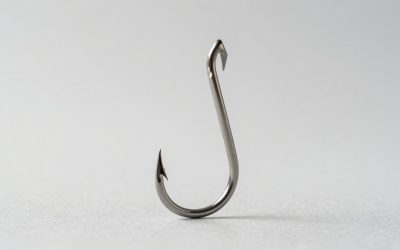
- Hooks: light-wire, with a sickle or Aberdeen style common on crappie heads.
- Plastic bodies: 1.5-inch tubes, 1.5- to 2-inch minnow or grub styles, and 2- to 2.5-inch minnow bodies for bigger fish.
- Line: 4- to 6-pound mono or fluorocarbon, or 6- to 10-pound braid with a short 4- to 6-pound fluorocarbon leader.
- Rod: a light or ultralight rod loads properly with 1/32- and 1/16-ounce heads.
Jig Head Size Chart by Depth and Situation
Anglers disagree at the edges, so treat these figures as starting points and adjust to how fish respond. The depth ranges are a widely repeated forum rule of thumb, not a law.
| Jig weight | Typical depth | Common hook size | Best situations |
|---|---|---|---|
| 1/64 oz | Very shallow | #8 | Extremely finicky fish, very light line |
| 1/32 oz | About 2 to 7 ft | #4 to #8 (#6 common) | Docks, shallow spawning banks, calm and clear water |
| 1/16 oz | About 7 to 12 ft | #2 to #6 (#2 to #4 common) | All-around casting, brush piles, float rigs |
| 1/8 oz | About 12 to 20 ft | #1 to #2, up to 1/0 | Wind, current, deep brush, faster searching |
Worked example: you are casting to a laydown in about 8 feet of water on a calm, clear day. The chart points to 1/16 ounce on a #4 hook with a 1.5-inch tube on 4-pound line. If the wind picks up and you lose contact with the jig, step to 1/8 ounce on a #2 hook rather than going to heavier line. If fish follow but do not bite, drop to 1/32 ounce on a #6 hook and slow the fall.
Head color is the last variable. In stained water, bright heads in chartreuse, orange, pink, or white are easier for fish to find; in clear water, natural or plain heads are usually the better choice.
How to Choose the Right Size, Step by Step
- Estimate the depth the fish are holding. If you do not know, start at 1/16 ounce, the easiest all-around size.
- Check the wind and current. If the jig will not hold its depth or you cannot feel it, go one step heavier.
- Check water clarity and fish mood. In clear, calm, or pressured water, go one step lighter for a slower fall.
- Match the hook to the body. The plastic should sit straight on the hook, the hook point should exit cleanly, and the tail should still move freely. An oversized hook crowds a small body.
- Thread the 1.5- to 2-inch body straight onto the hook shank. A crooked body spins on the fall and twists your line.
- Make a few casts and count the fall. If fish hit on the drop, keep that weight. If the jig lands faster than the fish react, go lighter.
Sizing by Water and Cover
- Shallow spawning banks and flats: 1/32 ounce with a #6 hook gives a natural, slow fall.
- Dock shooting: 1/32 or 1/24 ounce skips under docks with soft entries and longer hang time.
- Brush piles and laydowns: 1/16 ounce is the usual choice, stepping up to 1/8 ounce when the brush is deeper.
- Open-water schools and suspended fish: pick a weight that holds depth and stays visible on the line, but does not drop past the fish too fast. Heavier heads give better vertical control when fish are deeper.
- Trolling: one source gives a 1/16-ounce head trolling at about 4 to 6 feet at 0.7 miles per hour. Speed and line size change that, so use it as a rough anchor.
Gear That Helps
Strike King Mr. Crappie Jig Heads, 1/16 Ounce – Why It Helps
As an Amazon Associate we earn from qualifying purchases at no extra cost to you.
The listing title gives a white 1/16-ounce head in a 25-pack, built for crappie. That is the all-around weight from the chart, so one pack covers most spring and summer casting. Check the hook size on the listing before buying, because it determines which plastic bodies sit straight. Only one weight is included, so you will need another pack or an assortment for shallow or deep days.
Crappie Jigs 75-Pack Assortment – Why It Helps
This listing is a 75-piece set of jig heads in 1/32, 1/16, and 1/8 ounce, marketed for crappie, trout, and bass. Having all three weights in one bag means you can follow the chart and adjust within a day on the water. The trade-off is that the listing does not spell out the hook size for each weight, so confirm on the listing, and check whether the lighter hooks fit your plastics.
40-Pack Crappie Jig Heads, 5-Color Kit – Why It Helps
A 40-piece kit in 1/32, 1/16, and 1/8 ounce with five head colors, aimed at panfish, walleye, and bass. Color matters most in stained water, where bright heads such as chartreuse, orange, pink, and white help fish find the jig, while natural heads are better in clear water. It is a smaller count than the 75-pack, but the color mix is the selling point. Confirm hook sizes on the listing.
Dr.Fish 10-Pack Crappie Jigs, 1/32 Ounce – Why It Helps
A 10-pack of white 1/32-ounce heads with a sickle hook, listed for crappie and also usable on bass, trout, panfish, and bluegill. This is the specialist for shallow, clear, or pressured water, where the slow fall matters. Ten pieces is a small supply if you fish snaggy docks, and the listing gives only one weight, so it complements rather than replaces an assortment.
Common Mistakes
- Going too big. One guide calls an oversized head the most common mistake. A heavy head falls past fish and kills the delicate action.
- Heavy line. Heavier line reduces the jig’s action and means fewer bites. Stay near 4 to 6 pounds for most situations.
- Oversized hooks. A big hook crowds a small plastic and ruins its movement.
- Ignoring wind. A light head blows into a belly of line and you lose feel. Step up a size.
- Overfilling a fluorocarbon spool. It has more memory than mono, which can cause loops and tangles on a small reel.
- Crooked bodies. A poorly threaded plastic spins and twists your line.
Questions
What is the best jig head size for crappie?
A 1/16-ounce head is the best starting point for most anglers. Go to 1/32 for shallow or finicky fish and 1/8 for deep water or wind.
Should I use a 1/16- or 1/8-ounce jig head?
Use 1/16 ounce when you want a natural fall and good control on light line. Choose 1/8 ounce when fish are deeper than about 12 feet, the wind is pushing you, or you want to search faster.
What hook size should a crappie jig head have?
Common pairings are #4 to #8 for 1/32 ounce, #2 to #6 for 1/16 ounce, and #1 to #2 for 1/8 ounce. Match the hook to the plastic so the body sits straight.
Can I use a 1/32-ounce jig head under a bobber?
Yes. A 1/32-ounce head suits shallow, calm water where you want a slow fall, and the 1/16-ounce head is the usual step up when wind or chop makes the float hard to control.
What line works with these jig heads?
Four- to 6-pound mono or fluorocarbon is the usual range, and braid users add a short fluorocarbon leader.
Update History
- October 15, 2026 – Updated with specification checks and a revised product comparison.
- Check the product page for current specifications and availability before buying.
Sources
- Crappie.com forum threads on jig head and hook size
- Qwik Fishing crappie jig head guide
- Lurenet guide to choosing a crappie jig head
- Cast and Spear and Wired2Fish crappie line guides
- Glenmore Fishing crappie guide
- Manufacturer and retailer product listings for each pick



Write Your Review
No reviews yet. Be the first to share your experience!