
Key takeaways
- Using one length everywhere: A 24-inch leader is versatile, but clear open water and heavy cover call for different setups.
- Confusing diameter with strength: Pound-test ratings are not identical across every brand. Compare actual diameter when possible, particularly for finesse fishing.
- Making the leader too long for the rod: A leader several feet longer than the rod can cause the connection knot to strike the spool or guides.
- Ignoring abrasion: Fluorocarbon is resistant to abrasion, not immune to it. Rocks, mussels, wood, and dock edges can damage even heavy line.
- Leaving damaged line in service: Replace any section that feels rough, cloudy, kinked, or unusually thin.
- Using a weak connection knot: A suitable leader size cannot compensate for a poorly tied or poorly seated knot.
- Overmatching the leader: Very heavy fluorocarbon may reduce lure action, especially with small jerkbaits, finesse plastics, and light crankbaits.
The Short Answer
For most bass fishing, use 18 to 36 inches (46 to 91 cm) of fluorocarbon leader. A 24-inch leader is the best starting point for general-purpose fishing because it gives bass a nearly invisible presentation without adding excessive line to cast or manage.
Use a shorter leader of 12 to 18 inches (30 to 46 cm) around heavy cover, docks, grass, and other areas where you need direct contact with your lure. Choose 24 to 36 inches (61 to 91 cm) in clear water, on rocky bottoms, or when bass are wary. A leader of 48 to 72 inches (122 to 183 cm) can help in very clear, open water, especially with finesse techniques, but longer leaders are more difficult to cast and retie.
Our top picks



As an Amazon Associate we earn from qualifying purchases at no extra cost to you.
For line strength, 8- to 12-pound fluorocarbon covers many bass applications. Move to 15- to 20-pound line near wood, vegetation, and heavy structure. The correct amount depends on water clarity, cover, lure type, main line, and whether you are tying fluorocarbon to braided line or using it as your primary line.
Standard Sizes
| Fishing situation | Leader length | Leader length in cm | Typical strength | Useful with |
|---|---|---|---|---|
| Heavy cover and close casting | 12–18 in. | 30–46 cm | 12–20 lb | Jigs, Texas rigs, frogs, docks |
| General bass fishing | 18–24 in. | 46–61 cm | 8–15 lb | Spinnerbaits, crankbaits, soft plastics |
| Clear water | 24–36 in. | 61–91 cm | 6–12 lb | Finesse worms, swimbaits, shaky heads |
| Very clear, open water | 36–72 in. | 91–183 cm | 6–10 lb | Drop shots, ned rigs, light spinning tackle |
| Heavy vegetation or abrasive structure | 12–24 in. | 30–61 cm | 15–25 lb | Flipping, punching, heavy jigs |
Leader length and leader strength are separate decisions. A short, heavy leader may be more useful than a long, light leader around brush or rocks. In clear water, a longer 8-pound leader may produce more bites, but it provides less abrasion resistance and shock protection.
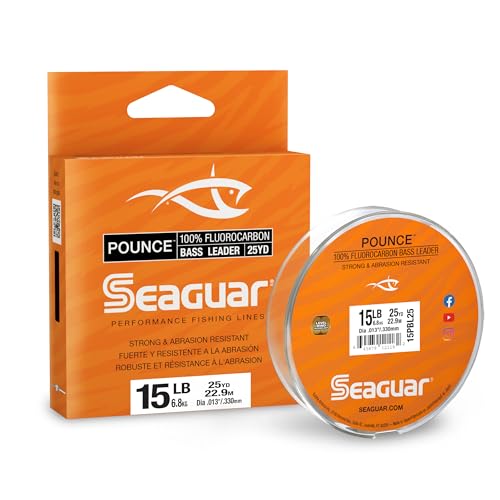
Common spool choices include 8-, 10-, 12-, and 15-pound fluorocarbon. A 25-yard spool contains 900 inches, or 2,286 cm, of material. At 24 inches per leader, that equals approximately 37 leaders before trimming and knot waste. At 36 inches per leader, it provides about 25 leaders. Example Seaguar Pounce Bass Fishing Leader spools in 8, 10, and 15 pounds are commonly listed near $8.20, while a 12-pound spool may be around $9.47. Prices can change by retailer and package size, so compare the price per yard rather than the package price alone.
How to Measure Your Space
- Start at the connection point. Measure from the braid-to-leader knot, swivel, or main-line connection to the lure or terminal tackle. Do not count line still wrapped around the spool.
- Choose a starting length. Begin with 24 inches (61 cm) for general use. Reduce it to 12–18 inches (30–46 cm) in heavy cover or increase it to 36 inches (91 cm) in clear water.
- Account for knots. Leave about 6 inches (15 cm) of extra material while tying an FG knot, Alberto knot, double uni knot, or other connection. Trim the tag ends after checking the knot.
- Check the rod guides. If your connection knot repeatedly catches in the guides during a cast, shorten the leader or use a slimmer knot. A leader does not need to extend far up the rod unless the fishing conditions call for it.
- Inspect the last few feet. Run your fingers over the section closest to the lure after catching a fish or contacting cover. Replace the leader when you feel nicks, rough spots, flattened line, or unexplained stretching.
- Measure from your hand or rod. A 12-inch ruler, tape measure, or marked rod handle improves consistency. If you do not have a ruler, the distance from your elbow to your fingertips is often close to 18 inches, but body measurements vary.
- Retie when the leader becomes too short. Repeated lure changes and damaged sections can reduce an original 24-inch leader to less than 12 inches. Instead of continually trimming it, cut it off and install a fresh section.
When using fluorocarbon as the main line on a baitcasting or spinning reel, you usually do not need a separate leader. Fill the reel with the appropriate line and tie the lure directly to it. A separate leader is most useful when braid supplies casting distance and sensitivity while fluorocarbon provides a less visible, abrasion-resistant connection near the lure.
By Room or Use Case
Clear Lakes and Open Water
Use 24 to 36 inches (61 to 91 cm) of 6- to 10-pound fluorocarbon for wary bass in clear water. A longer leader places the braid farther from the lure and gives finesse presentations a more natural appearance. For a drop-shot rig, 18 to 36 inches below the hook is a separate measurement from the leader above the hook; adjust both sections to the depth and cover.
Stained or Murky Water
In stained water, 18 to 24 inches (46 to 61 cm) is generally sufficient. Bass rely less on sight, so an extra-long leader offers limited benefit. Choose 10- to 15-pound line for general lures, increasing the strength when rocks, timber, or dock hardware are present.
Heavy Grass, Brush, and Wood
Use 12 to 24 inches (30 to 61 cm) of 15- to 20-pound fluorocarbon. The shorter length helps you control a hooked fish immediately and keeps the connection away from repeated contact with cover. For punching thick mats or fishing especially abrasive structure, many anglers use heavy fluorocarbon or braid directly rather than a light leader.
Finesse Spinning Tackle
Choose 24 to 48 inches (61 to 122 cm) of 6- to 10-pound fluorocarbon when pairing braided main line with a shaky head, ned rig, small swimbait, or drop shot. Keep the knot compact and inspect it frequently. A long leader can improve presentation, but it also adds more line that can wrap around the spool or guide during casting.
Moving Baits and Reaction Lures
For crankbaits, jerkbaits, spinnerbaits, and vibrating jigs, use 18 to 30 inches (46 to 76 cm). Select 10- to 15-pound fluorocarbon for most open-water applications. A shorter leader is easier to cast and reduces the chance that a knot interferes with the lure’s action.
Cold Water and Slow Presentations
When bass are moving slowly and inspecting a lure, use 24 to 36 inches (61 to 91 cm) of 8- to 12-pound fluorocarbon. The longer section gives a lightly weighted bait more separation from the braid and can help maintain a subtle presentation. Reduce the length if wind, current, or cover makes line control difficult.
Common Sizing Mistakes
- Using one length everywhere: A 24-inch leader is versatile, but clear open water and heavy cover call for different setups.
- Confusing diameter with strength: Pound-test ratings are not identical across every brand. Compare actual diameter when possible, particularly for finesse fishing.
- Making the leader too long for the rod: A leader several feet longer than the rod can cause the connection knot to strike the spool or guides.
- Ignoring abrasion: Fluorocarbon is resistant to abrasion, not immune to it. Rocks, mussels, wood, and dock edges can damage even heavy line.
- Leaving damaged line in service: Replace any section that feels rough, cloudy, kinked, or unusually thin.
- Using a weak connection knot: A suitable leader size cannot compensate for a poorly tied or poorly seated knot.
- Overmatching the leader: Very heavy fluorocarbon may reduce lure action, especially with small jerkbaits, finesse plastics, and light crankbaits.
FAQ
How much fluorocarbon leader should I use for bass?
Use 18 to 36 inches (46 to 91 cm) for most bass fishing. Start with 24 inches (61 cm), shorten it around heavy cover, and lengthen it in clear, open water.
Is 8-pound fluorocarbon strong enough for bass?
Yes, 8-pound fluorocarbon works for clear water, finesse baits, and open areas. It is less suitable for thick vegetation, sharp rocks, and submerged wood, where 12- to 20-pound line provides more protection.
Is a longer fluorocarbon leader better?
Not always. A longer leader can reduce the visibility of braided main line, but it adds knot-management problems and may be harder to cast. Use the shortest length that provides the presentation and abrasion resistance you need.
How often should I replace my bass leader?
Check it after every fish, snag, or contact with cover. Replace it when it feels rough or nicked, or when repeated lure changes reduce it below your preferred length. In clean open water, an undamaged leader can last longer, but inspection should remain routine.


Write Your Review
No reviews yet. Be the first to share your experience!