
Key takeaways
- Assuming every 3000 reel holds the same amount. Brand sizing varies. Compare the capacity chart, not the number on the reel alone.
- Using pound test as the only measurement. Diameter determines capacity. Always compare the line’s listed diameter when precision matters.
- Overfilling the spool. Line should sit just below the lip, not flush with or above it. Overfill is one of the most common causes of line loops.
- Underfilling with braid. A spool that is more than about 1/8 inch low can shorten casts and reduce line control.
- Skipping backing when needed. Filling a deep spool entirely with premium braid can waste 75 to 150 yards of usable line.
- Choosing a 3000 for fish that need a larger reel. Heavy surf fishing, large catfish, big pike, and powerful saltwater species often justify a 4000, 5000, or larger reel with more drag and capacity.
The Short Answer
A 3000-size spinning reel typically holds about 140 to 220 yards of 10-pound monofilament line, 120 to 180 yards of 12-pound fluorocarbon, or 150 to 220 yards of 20-pound braided line. The exact amount depends on the reel’s spool depth, the line’s actual diameter, and whether the manufacturer rates capacity in yards, meters, or millimeters.
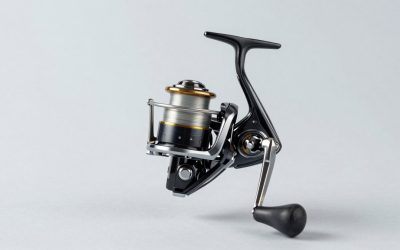
“3000” is a size category rather than one fixed physical measurement. A compact 3000 reel may be very close in body size to a 2500, with a slightly deeper spool. A larger 3000 may use a wider, deeper spool and hold substantially more line. Always use the line-capacity marking printed on the spool or shown in the manufacturer specifications as the final authority.
Our top picks


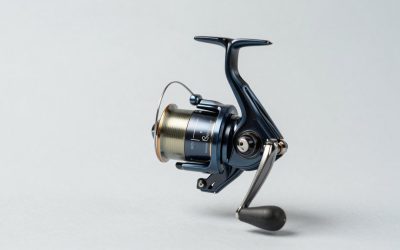
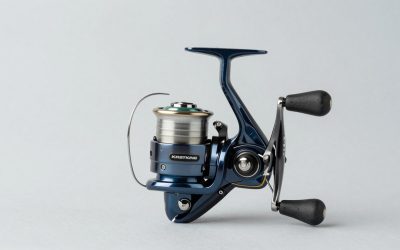
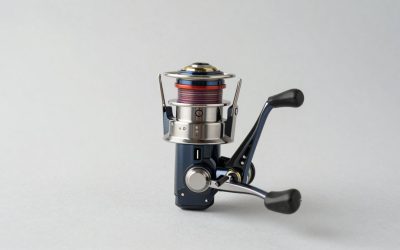
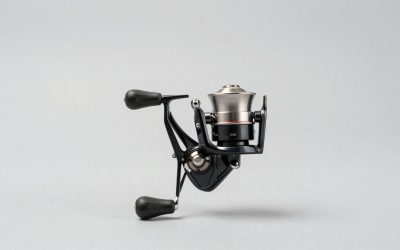
 KastKing Centron Spinning Fishing Reels
- Hand Orientation: Ambidextrous
- Fishing Technique: Spinning
- Fishing Reel Maximum Drag: 17.5 Pounds

As an Amazon Associate we earn from qualifying purchases at no extra cost to you.
For many freshwater anglers, a 3000 reel is a versatile middle size. It is usually large enough for bass, walleye, trout, inshore light tackle, and general-purpose fishing, yet light enough to pair comfortably with a 6-foot 6-inch to 7-foot medium or medium-light rod. In 2026, most 3000 spinning reels weigh roughly 7.5 to 10.5 ounces, although lightweight models can come in below that range.
Standard Sizes
Spinning-reel numbering is not perfectly standardized between brands, but the ranges below are useful for comparing common reel classes. Physical dimensions are approximate overall reel measurements, including the rotor and body, not just the spool. Capacity figures describe typical monofilament capacity; thinner braid will fit in greater lengths.
| Reel Size | Typical Overall Dimensions | Typical Weight | Typical Mono Capacity | Best General Use |
|---|---|---|---|---|
| 1000 | 4.3–4.9 in long × 3.1–3.6 in high 10.9–12.4 cm × 7.9–9.1 cm |
5.5–7.5 oz 156–213 g |
100–160 yd of 4–6 lb | Panfish, creek trout, ultralight rods |
| 2000 / 2500 | 4.7–5.4 in long × 3.4–4.0 in high 11.9–13.7 cm × 8.6–10.2 cm |
6.5–8.8 oz 184–249 g |
120–200 yd of 6–8 lb | Trout, bass, finesse fishing, light inshore |
| 3000 | 5.0–5.8 in long × 3.7–4.4 in high 12.7–14.7 cm × 9.4–11.2 cm |
7.5–10.5 oz 213–298 g |
140–220 yd of 8–10 lb | All-purpose freshwater and light saltwater |
| 4000 | 5.4–6.2 in long × 4.0–4.8 in high 13.7–15.7 cm × 10.2–12.2 cm |
9.0–12.5 oz 255–354 g |
180–260 yd of 10–12 lb | Inshore fishing, larger bass, catfish |
| 5000 | 5.9–6.8 in long × 4.4–5.2 in high 15.0–17.3 cm × 11.2–13.2 cm |
11–15 oz 312–425 g |
200–300 yd of 12–15 lb | Surf, salmon, heavy inshore applications |
A practical 3000-size capacity example is 200 yards of 10-pound monofilament or approximately 180 yards of 20-pound braid. Another model may list 165 yards of 10-pound mono because its spool is shallower. Neither is necessarily better; the right capacity depends on how much line your fishing style actually requires.
How to Measure Your Space
For a reel, “space” means usable spool capacity. Line diameter matters more than the pound-test label alone. One brand’s 10-pound line can be noticeably thicker or thinner than another brand’s 10-pound line.
- Read the spool label. Look for markings such as “8/200, 10/170, 12/140.” This normally means the reel holds 200 yards of 8-pound, 170 yards of 10-pound, or 140 yards of 12-pound monofilament.
- Check the line diameter. Monofilament and fluorocarbon packages list diameter in inches or millimeters. Braid is often listed in diameter too, but stated “mono equivalent” ratings are not always consistent across brands.
- Choose a realistic target length. For typical pond, lake, and river fishing, 100 to 150 yards of usable main line is generally sufficient. Long casts, fast-running fish, surf fishing, and trolling may call for more.
- Decide whether to use backing. If you are filling a deep 3000 spool with thin braid, add inexpensive monofilament backing first. This prevents wasting braid and helps keep the braid from slipping on the spool arbor.
- Fill to the correct level. Stop about 1/16 to 1/8 inch below the spool lip. Too little line reduces casting distance; too much line can create loops, wind knots, and loose coils.
- Keep packaging for reference. Note how much line came off the filler spool. If a 300-yard braid spool leaves about 110 yards, your reel took roughly 190 yards, assuming no significant waste.
By Room or Use Case
Everyday Freshwater Fishing
A 3000 reel is an excellent all-around choice for bass, walleye, larger trout, crappie around cover, and moderate-current river fishing. Load 150 to 200 yards of 10-pound braid with a 6- to 12-foot fluorocarbon leader, or use 150 to 180 yards of 8- to 10-pound monofilament. This setup gives ample casting distance without making the reel feel overly heavy on a 7-foot rod.
Finesse Bass and Light Tackle
For drop shots, shaky heads, small swimbaits, and light jigs, a 3000 spool often handles 10- to 15-pound braid better than a small 1000 reel because the larger spool reduces line coil. Plan on 150 to 200 yards of braid. A 2500 can be similarly effective, but the 3000 gives a little more capacity and typically a wider spool lip for smoother casting.
Inshore and Brackish Water
For schoolie striped bass, speckled trout, redfish, and flounder, use 150 to 200 yards of 15- to 20-pound braid on a sturdy 3000 reel. The capacity is enough for normal flats and bay fishing, but it is not intended for large offshore species or extended runs. Rinse the reel with a gentle fresh-water spray after salt exposure and dry it before storage.
Travel, Dock, and Bank Fishing
A 3000 reel works well when one outfit needs to cover several species. A versatile fill is 150 yards of 15-pound braid plus an 8- to 15-pound leader selected for the lure and fish. This leaves enough line for a long cast from a dock or bank while avoiding the bulk of a 4000-size reel.
Line Spooling at Home
For clean, even line installation, keep the filler spool under light tension and make sure line leaves the filler spool in the same direction it enters the reel. A line-spooling tool with an adjustable handle can make the job easier, especially with braid. These tools commonly cost about $20 to $35. A basic 3000 spinning reel such as an entry-level KastKing Centron is often priced around $25 to $35, while replacement titanium line rollers for common 1000 through 4000 reels may cost about $10 to $20.
Common Sizing Mistakes
- Assuming every 3000 reel holds the same amount. Brand sizing varies. Compare the capacity chart, not the number on the reel alone.
- Using pound test as the only measurement. Diameter determines capacity. Always compare the line’s listed diameter when precision matters.
- Overfilling the spool. Line should sit just below the lip, not flush with or above it. Overfill is one of the most common causes of line loops.
- Underfilling with braid. A spool that is more than about 1/8 inch low can shorten casts and reduce line control.
- Skipping backing when needed. Filling a deep spool entirely with premium braid can waste 75 to 150 yards of usable line.
- Choosing a 3000 for fish that need a larger reel. Heavy surf fishing, large catfish, big pike, and powerful saltwater species often justify a 4000, 5000, or larger reel with more drag and capacity.
FAQ
How much 20-pound braid fits on a 3000 reel?
Most 3000 spinning reels hold approximately 150 to 220 yards of 20-pound braid. A shallow-spool model may hold closer to 120 to 160 yards, while a deep-spool design can exceed 200 yards. Check the braid maker’s diameter and the reel’s mono capacity chart before buying line.
Is a 3000 reel too big for bass fishing?
No. A 3000 is a popular bass-fishing size, particularly for spinning techniques and medium-power rods. It balances well with many 6-foot 10-inch to 7-foot 3-inch rods and offers more line capacity than a 1000 or 2000. For very light finesse rods, a 2000 or 2500 may feel more balanced.
Can I put 300 yards of line on a 3000 reel?
You can if the line is thin enough, but it is not always useful. Many 3000 reels can accept 250 to 300 yards of very thin braid, such as 10-pound braid, especially with no backing. For most anglers, 150 to 200 yards of fresh usable line is more practical and economical.
How full should a 3000 reel spool be?
Fill the spool until the line sits about 1/16 to 1/8 inch below the spool lip. This small gap helps the line leave the spool smoothly while reducing the chance of tangles. After your first outing, inspect the fill level and remove a few yards if repeated loops develop.
Write Your Review
No reviews yet. Be the first to share your experience!