
Key takeaways
- Capacity: Compare ratings using the same line type and diameter. Leave room for a long run and avoid overfilling, which can cause line to spill or rub.
- Drag: Look for smooth startup and consistent adjustment. Set it before fishing, then verify under tension rather than relying only on the maximum-drag number.
- Gear ratio: A lower ratio generally trades retrieve speed for cranking leverage; a higher ratio retrieves line faster. Spool diameter also affects how much line is recovered per handle turn.
- Frame: Graphite keeps many trolling reels lighter and less expensive. Aluminum is often preferable when sustained heavy loads make frame flex a concern.
- Line counter: Treat it as a repeatability tool, not a precise depth gauge. Lure depth also depends on line diameter, lure, speed, and current.
Best trolling reels: quick picks by fishing situation
The best trolling reels depend on your target species and how much line you need: choose a levelwind line-counter reel for freshwater walleye and salmon trolling, a sturdier conventional reel for heavier saltwater runs, and a compact lever-drag reel when smooth, adjustable pressure matters more than easy line management.
For a practical shortlist, consider the Daiwa Sealine SG-3B Line Counter for freshwater trolling, the Okuma Cold Water Line Counter for a feature-rich line-counter option, and the Penn Squall II Level Wind for heavier-duty trolling. For offshore fish and long runs, a conventional reel such as the Shimano Talica is a better fit than a typical freshwater line-counter. Match the exact model size to your line, rod, and target species; specifications vary within each product family.

Shakespeare ATS Size 15 Conventional Trolling Fishing Reel, Right Handle Position
Included for 'Best Trolling Reels for Freshwater and Saltwater Fishing' because the listing specifies Right Handle Position, details this guide uses to compare options.
View on Amazon
Okuma Cold Water Linecounter Trolling Reel CW-453D
Included for 'Best Trolling Reels for Freshwater and Saltwater Fishing' as a relevant option in this category; details come from the product listing.
View on Amazon
Okuma Magda Pro Line Counter Levelwind Trolling Reel, Small, Black/Silver, MA-20DXT
Included for 'Best Trolling Reels for Freshwater and Saltwater Fishing' because the listing specifies Small and Black/Silver, details this guide uses to compare options.
View on Amazon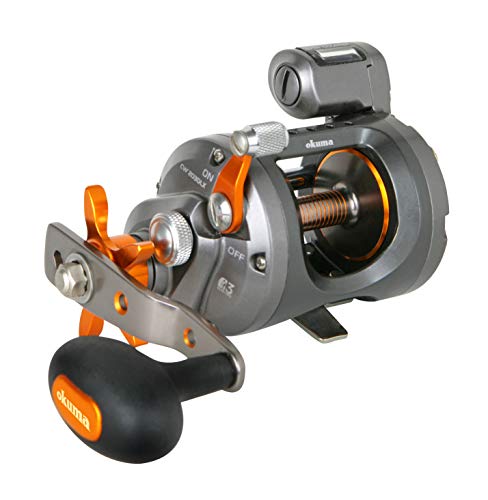
OKUMA FISHING TACKLE Cold Water Linecounter Trolling Reel CW-153DLX, Multicolor
Included for 'Best Trolling Reels for Freshwater and Saltwater Fishing' because the listing specifies Multicolor, details this guide uses to compare options.
View on AmazonCompare the reels by the features that matter
The figures below are representative published specifications for named models, not estimates of how much line any setup will hold in practice. Manufacturers may update specifications, and capacity changes with line diameter, material, and how tightly it is spooled. Check the current model listing before buying.
| Reel | Typical use | Gear ratio | Weight | Representative line capacity | Construction and drag notes |
|---|---|---|---|---|---|
| Daiwa Sealine SG-3B 27LC | Freshwater walleye and salmon trolling | 4.2:1 | About 17 oz | About 330 yd of 14 lb mono | Graphite frame; star drag; mechanical line counter |
| Okuma Cold Water CW-303D | Freshwater and lighter Great Lakes trolling | 5.1:1 | About 16 oz | About 420 yd of 20 lb mono | Corrosion-resistant coating and graphite body; multi-disc drag; line counter |
| Penn Squall II SQLII30LW | Heavier trolling and larger fish | 4.9:1 | About 22 oz | About 475 yd of 20 lb mono | Graphite frame and sideplates; star drag; levelwind |
| Shimano Talica 12II | Offshore trolling and long-running fish | 6.2:1 high / 3.8:1 low | About 23 oz | About 440 yd of 20 lb mono | Compact aluminum-bodied lever-drag conventional reel; two speeds |
Capacity figures are useful for comparing scale, but do not treat them as interchangeable: braid often fits in a smaller diameter than mono, while knots, backing, and actual line diameter affect the final amount. Line-counter readings can also vary with line type and spool fill, so calibrate against a measured length if precise lure depth or spread spacing matters.
Which reel fits your target and conditions?
Walleye, trout, and salmon on inland or Great Lakes water
A line counter is usually the most useful feature here. It helps repeat a productive setback and spread lures at different distances without estimating by rod length. The Daiwa Sealine SG-3B is a straightforward choice if you want a simple levelwind line-counter reel. The Okuma Cold Water adds a faster retrieve in the listed size and is a sensible alternative when its available model and capacity better match your line plan.
For modest fish and occasional trips, prioritize a smooth drag and a comfortable handle over maximum capacity. If you troll leadcore, wire, or heavy copper, check that the reel is specifically suitable for that line and load; a standard mono capacity table will not tell you whether the frame, levelwind, or line guide is appropriate.
Striped bass, larger salmon, and heavier nearshore trolling
Choose a larger conventional reel when you need more line reserve, a stronger drag range, or a more robust spool and frame. The Penn Squall II Level Wind offers levelwind convenience, but a levelwind adds a moving line-guide assembly that needs inspection and cleaning. For heavy drag pressure or demanding use, compare the reel’s frame rigidity and service parts as carefully as its advertised maximum drag.
Offshore trolling and fast, powerful runs
A two-speed lever-drag conventional reel such as the Shimano Talica 12II suits situations where you may need a fast retrieve to recover slack and a low gear to gain leverage under load. Lever drag makes it easier to return to a chosen setting, but that setting still needs to be matched to the rod, line, knots, and fish. It is not automatically safer to run the drag near its maximum.
Saltwater use makes materials and care especially important. An aluminum frame resists flex better under load than many graphite frames, while corrosion resistance depends on the reel’s components, seals, coatings, and maintenance—not just the frame material. Rinse gently with fresh water after use, dry before storage, and follow the manufacturer’s service instructions. Avoid forceful spray that can push salt and grit into the reel.
Choose capacity and drag with a simple setup check
Start with the longest plausible run, not the average fish. As a planning example, suppose a trolling setup needs 250 yards of working line and you want another 100 yards in reserve. That is 350 yards total before allowing for backing, knots, or line-counter calibration. A reel rated for 330 yards of the same line would be too tight for that plan; move up a size or revise the line choice only if the rod and fishing conditions support it.
- Capacity: Compare ratings using the same line type and diameter. Leave room for a long run and avoid overfilling, which can cause line to spill or rub.
- Drag: Look for smooth startup and consistent adjustment. Set it before fishing, then verify under tension rather than relying only on the maximum-drag number.
- Gear ratio: A lower ratio generally trades retrieve speed for cranking leverage; a higher ratio retrieves line faster. Spool diameter also affects how much line is recovered per handle turn.
- Frame: Graphite keeps many trolling reels lighter and less expensive. Aluminum is often preferable when sustained heavy loads make frame flex a concern.
- Line counter: Treat it as a repeatability tool, not a precise depth gauge. Lure depth also depends on line diameter, lure, speed, and current.
Ownership realities that affect the choice
On a levelwind reel, the line guide and worm gear are moving wear points; keep them clean and inspect for rough travel. On any reel, line and drag washers are consumables, and salt, sand, corrosion, or long-term storage with the drag tightened can shorten service life. Replace damaged line rather than assuming a reel’s drag can compensate for abrasion.
A reel that is too large can make a long day of trolling tiring, while an undersized reel may leave little reserve when a fish runs or heavier line is needed. Before buying, confirm the rod’s line rating, reel-seat fit, handle clearance, and whether you need a left- or right-hand retrieve. Then choose the smallest reel that comfortably holds your working line plus a realistic reserve.



Write Your Review
No reviews yet. Be the first to share your experience!