
Our Top Picks
Over-lubricate a baitcasting reel and you will kill casting distance, attract grit that grinds bearings to a halt, and leave a sticky residue that traps salt and moisture. Under-lubricate and you get whining spool bearings, heat buildup, corrosion pitting, and premature failure that often costs more to fix than the reel is worth. Using the wrong product is just as damaging: household oils like WD-40 strip existing lubricant and evaporate quickly, while thick greases designed for gears will choke high-speed spool bearings that need a light, low-viscosity oil to spin freely at high speed. Done correctly, lubrication takes less than 20 minutes and restores that quiet, effortless cast without risking damage to delicate shields, drag washers, or spool shafts.
In 2026, most modern baitcasters use stainless steel or ceramic hybrid bearings that are more corrosion resistant than older chrome steel versions, but they still need a thin film of proper reel oil to displace water and reduce metal-on-metal contact. This guide shows you exactly how to clean and oil them the right way.

ReelX Fishing Reel Lubricant, Extreme-Pressure Anti-Corrosion Oil for Bearings, Spinning, Baitcasting, Spincast, Fly, Trolling & Electric Reels, Smooth Casting Saltwater Freshwater Protection, 1 oz
One of the home product options compared in this guide.
View on Amazon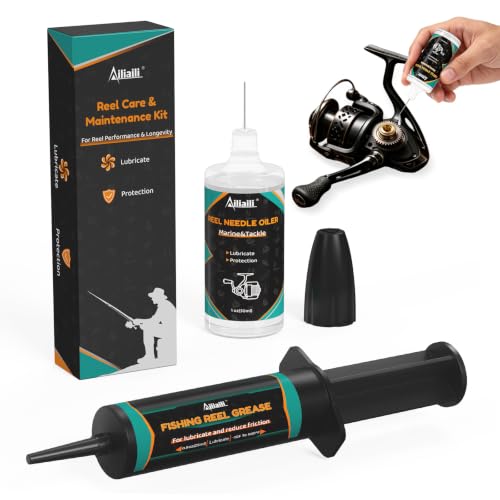
ailiaili Fishing Reel Care Kit with Needle Oil & Grease
One of the home product options compared in this guide.
View on AmazonUpdated October 2026 — To lubricate baitcasting reel bearings, remove the side plate and spool tension cap, wipe each spool bearing clean, then put one drop of light reel oil on the inner race and spin it. Use oil on bearings and grease only on gears. Reel makers agree on the core rule: a small drop per bearing, never grease in spool bearings.
- Time: about 15–20 minutes per reel
- Amount: 1 drop per spool bearing (2 at most for saltwater stainless bearings)
- Bearings to oil: 2 spool bearings, pinion bearing (if your reel has one), handle knob bearings, level wind worm
- Check your manual first: makers disagree on oiling the one-way clutch bearing
What You Need
| Item | Why | Optional? |
|---|---|---|
| Light baitcasting reel oil (e.g., ReelX Fishing Reel Lubricant, 1 oz bottle) | Extreme-pressure, anti-corrosion formula designed for spool and handle bearings; thin enough not to slow spool speed | No |
| Reel grease (e.g., included in ailiaili Fishing Reel Care Kit) | For gears and worm shafts only; keeps bearings from being packed with grease that restricts RPM | Yes, if servicing gears at same time |
| Precision needle oiler or syringe applicator (0.5mm – 1mm tip) | Delivers single drops (about 0.02 ml) exactly into the bearing race without flooding the reel | No – kit with needle oil is recommended |
| Small screwdriver set (Phillips #0, #1 and flat 2.0mm) | Removes side plates, spool tension caps, and bearing retainer clips on most low-profile baitcasters | No |
| Tweezers and bearing removal tool or small pick | Lifts shielded bearings from spool shaft and frame without bending retainers | No |
| Lint-free swabs, microfiber cloth, and isopropyl alcohol 90%+ | Cleans old oil, salt, and grit from bearing seats and spool shaft before re-oiling | No |
| Small glass dish and citrus-based degreaser or bearing cleaner | Soaks bearings to dissolve oxidized oil if they are gritty or noisy | Yes, only for deep cleans |
| Towel or reel mat and small parts tray | Prevents losing 3mm screws, E-clips, and 10x15x4mm spool bearings on a workbench | Yes |
Avoid 3-in-1 household oils, automotive greases, and cooking sprays; they are too heavy or too volatile for the tight 3mm to 5mm clearances inside spool bearings.
Step-by-Step
Step 1: Prepare Your Workspace and Reel – 2 minutes
Work on a clean, well-lit table. Lay down a white towel so small parts are visible. Loosen the drag star and back off the spool tension knob until the spool has slight side-to-side play. This unloads pressure on the bearings and makes removal easier. If your line is still on, place a piece of tape across the line on the spool to keep it from unwinding. Have your screwdrivers, swabs, and oil within reach before you open the reel.
Step 2: Access the Spool Bearings – 3 to 5 minutes
Most low-profile baitcasters have two primary spool bearings to service: one under the cast control cap on the handle side, and one under the side plate on the opposite side. Unscrew the spool tension cap by hand, usually 8 to 10 full turns counterclockwise. For the side plate, loosen the thumb screw or the three 4mm side plate screws depending on your model, then lift the plate straight off. Carefully pull the spool straight out, holding it by the shaft ends. The bearings will either stay on the spool shaft or remain seated in the frame and side plate. Note any thin brass shims or washers, they must go back in the same order.
Step 3: Remove Bearings Without Damaging Them – 2 minutes
Use tweezers to gently lift each bearing. Many bearings are held by a small wire retainer clip. Use a pick to lever the clip out, then tip the reel frame to let the bearing drop out. Standard baitcaster spool bearings are commonly size 3x10x4mm or 5x11x4mm and weigh about 1 to 2 grams each. Handle them by the outer race only. Do not pry against the rubber shield or metal shield. If a bearing feels stuck, do not force it with pliers; apply a single drop of oil around the outer race, wait 30 seconds, then wiggle it free.
Step 4: Inspect and Clean – 5 to 7 minutes
Wipe the spool shaft and bearing seats with a swab lightly dampened with isopropyl alcohol. Spin each bearing slowly between your fingers. If it feels smooth and quiet, a simple wipe and re-oil is enough. If it feels gritty, raspy, or makes a sandy sound, it needs a soak. Place the bearing in a small dish with a few milliliters of bearing cleaner or citrus degreaser, not gasoline, and avoid acetone on rubber-shielded bearings because it can damage the shields. Swirl for 60 seconds, then spin the bearing on a pencil or cotton swab to flush debris. Pat dry with a lint-free cloth and let it air dry for 2 to 3 minutes. Never use compressed air at high pressure, it can spin a dry bearing too fast and damage the cage. If you remove shields for cleaning, only do so if you are comfortable; most anglers can clean effectively without de-shielding.
Step 5: Apply the Correct Amount of Oil – 1 to 2 minutes
This is where most mistakes happen. Less is more. With the bearing on a swab or your fingertip, use the needle oiler to place 1 to 2 drops of light reel oil directly into the gap between the inner race and shield. That is roughly 0.02 to 0.04 ml per bearing. One drop is ideal for ceramic hybrids and high-speed spool bearings for maximum free spool; two drops is better for stainless steel bearings in saltwater use where corrosion protection matters more than absolute distance. Spin the bearing slowly for 5 seconds to work the oil through the balls and cage. You should see a faint wet sheen, not pooling or dripping. Wipe any excess from the outer race so it does not migrate to the brake system.
Step 6: Reassemble and Test – 3 minutes
Seat each bearing back into its original location, outer race first, with a light press from your thumb. Replace any retainer clip until it clicks. Reinsert the spool, aligning the pinion gear and spool pin carefully, it should drop in without force. Replace the side plate and spool tension cap. Tighten the tension cap until the spool has no side play, then back it off about 1/4 turn. Engage the reel handle and spin the spool. With proper oiling, a flicked spool in free spool should spin freely and quietly for several seconds, depending on spool weight and brake setting. If you hear squealing, you under-oiled. If spin time dropped dramatically compared to before cleaning, you over-oiled, remove one bearing and wick away excess with a dry swab.
Step 7: Final Wipe and Brake Check – 1 minute
Wipe fingerprints and oil smudges from the frame and side plate with a dry microfiber cloth. Reset your magnetic or centrifugal brakes to your preferred setting and test cast with a 3/8 to 1/2 oz practice plug in an open area. The cast should feel smooth, without an initial hesitation or a high-pitched whine at the end of the cast. Add a single drop of oil to each handle knob bearing and the level wind worm shaft if accessible, these turn at low RPM and benefit from a slightly heavier film than spool bearings.
Which Baitcasting Reel Bearings Get Oil, and Which Don’t
| Part | Where it is | Lubricant | Amount |
|---|---|---|---|
| Spool bearing, cast control side | Under the spool tension knob, behind the handle | Light reel oil | 1 drop |
| Spool bearing, side plate side | Inside the removable side plate | Light reel oil | 1 drop |
| Pinion bearing | Where the spool shaft enters the frame; visible with the spool out on most reels | Light reel oil | 1 drop |
| Handle knob bearings or bushings | Inside each handle knob | Reel oil | 1 drop each |
| Level wind worm gear | Grooved shaft under the line guide | Reel oil | 1–2 drops, then turn the handle |
| One-way (anti-reverse) clutch bearing | Under the handle and star drag | Follow your maker (see below) | Never grease |
| Main drive gear and pinion gear teeth | Inside the gear side of the frame | Reel grease | Thin coat |
Should You Oil the One-Way Clutch Bearing?
It depends on the brand, so read your reel’s manual before you touch it. Abu Garcia’s maintenance guide tells owners not to oil the one-way clutch. Lew’s lubrication instructions say to apply 3 drops of its reel oil between the clutch sleeve and the one-way bearing. Both agree on one point: grease does not belong in a one-way bearing, because thick lube can keep the rollers from locking and the handle may slip backward on a hookset.
Shielded vs. Sealed Bearings
Most baitcaster spool bearings are shielded, with a thin metal or rubber shield that leaves a small gap at the inner race. Oil applied to the edge of the inner race wicks past the shield, so you can oil them with the shields in place. Contact-sealed bearings, where the seal touches the inner race, block oil; to relube them you have to pop a seal out, or simply replace the bearing.
Ceramic Hybrid Bearings
Ceramic hybrid bearings use ceramic balls in steel races. The balls do not rust, but the races still can, so they still need a thin film of oil for corrosion protection. Use the lightest bearing oil you have and stick to 1 drop. Never put grease in a ceramic spool bearing unless the reel maker says so.
Cleaner Choices for Removed Bearings
For a bearing out of the reel, a quick-drying solvent leaves no residue; Tackle Tour’s bearing-care guide prefers acetone for removed metal-shielded bearings. Keep acetone away from plastic parts, painted side plates and rubber shields. For cleaning in the frame, a water-based degreaser like Simple Green works, but rinse and dry well before you oil. Avoid bleach-based cleaners on bearings and ammonia cleaners on brass or bronze parts.
Best Oil and Grease for Baitcasting Reel Bearings
Any purpose-made reel oil beats household oil. These three are widely recommended by reel-service guides and fill gaps the two products above do not cover.
Ardent Reel Butter Bearing Lube — Best for Spool Bearings

Ardent Reel Butter Bearing Lube- 1 oz
One of the home product options compared in this guide.
View on AmazonSpec line: 1 oz · 100% synthetic · ultra-low viscosity · no graphite · pin-point tip · made in USA
Ardent built this one specifically for ball bearings. It is thinner than general reel oil, so it is the best choice when free-spool distance matters most. Use it on the two spool bearings and the pinion bearing, not on gears.
Lucas Oil Fishing Reel Oil (10690) — Best All-Around Reel Oil
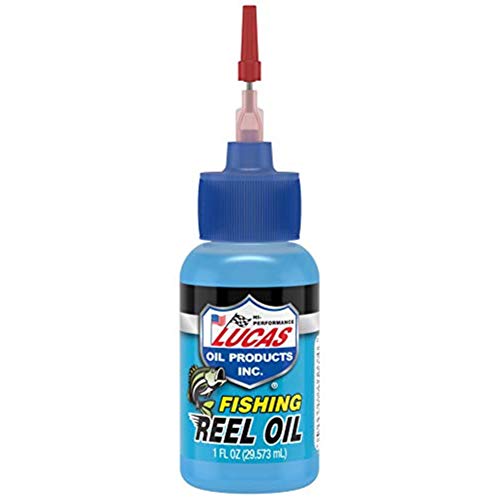
Spec line: 1 oz · oil-and-additive blend (petroleum based) · rust and corrosion protection · precision needle tip
Lucas makes a slightly heavier oil meant for every moving part in fresh and saltwater reels. It is a good single bottle for handle knobs, the level wind worm and saltwater spool bearings where a bit more film helps.
PENN Reel Grease, 2 oz — Best for the Gears You Don’t Oil

Spec line: 2 oz tube · reel grease for drive and pinion gears · fresh and saltwater use
When you open the reel to reach the bearings, a thin coat of PENN Reel Grease on the drive gear teeth keeps the retrieve smooth. Keep it out of spool bearings and the one-way clutch.
Mistakes to Avoid
Avoid these common errors that shorten bearing life or ruin performance:
- Packing bearings with grease: Grease is for drive gears, pinion gears, and worm gears. It creates drag that slows the spool. Bearings need oil, not grease.
- Using WD-40 or household penetrating oils: These are solvents, not lasting lubricants. They dissolve the correct oil and leave bearings dry within hours, inviting rust.
- Over-oiling: More than 2 drops per bearing attracts dust and thickens during cold weather. It also contaminates brake pads and causes inconsistent spool control.
- Spraying oil while bearings are still in the reel: Aerosols flood the spool, line, and drag stack. Always apply a controlled drop with a needle tip to the bearing itself.
- Forgetting to clean first: Adding fresh oil on top of salt crystals and old oxidized oil creates an abrasive paste. Even a quick wipe before oiling extends bearing life significantly.
- Oiling a damaged bearing: If a bearing is pitted, rusted solid, or has a cracked shield after cleaning, oiling will not save it. Replacement is cheaper than a seized spool mid-trip.
- Mixing incompatible products: Do not mix silicone-heavy oils with petroleum-based reel oils without fully cleaning first. They can separate and reduce corrosion protection.
How Often
Frequency depends on water type and use. For freshwater anglers fishing once or twice a week, a light oiling of both spool bearings every 4 to 6 weeks during the season is sufficient. Add a quick wipe and one drop after any trip where the reel was submerged or heavily splashed. For saltwater or brackish water use, oil spool bearings after every 2 to 3 trips, and always after exposure to spray or dunking, even if the reel is rated as saltwater resistant. Salt crystals form quickly as water evaporates and will pit races within days. If you store reels for more than 3 months, give each bearing 1 drop before storage and store the reel with the drag loosened and the reel cover on in a dry area at 50 to 75 degrees Fahrenheit. Heavy use, such as tournament fishing with hundreds of casts a day, calls for more frequent deep cleaning of the bearings.
What Reel Makers Recommend
| Source | Freshwater | Saltwater |
|---|---|---|
| Lew’s | Basic lube about every 3 months if used 1–2 times a week; monthly if used 4+ times a week; full service once a year | Full service every 6 months |
| Abu Garcia | Monthly | Daily when used in saltwater |
| Fischer Angling Pro (service guide) | After every 2–3 trips | After each trip |
The schedules differ because use differs. A simple rule that fits all three: oil the spool bearings when you first hear a faint whine or notice shorter free-spool time, and never let a saltwater reel go back in storage without a rinse and a drop of oil.
When to Call a Pro or Replace
You can handle routine oiling at home, but some situations need a professional service or new parts. Call a reel technician or replace the bearings if you notice persistent grinding after a full cleaner soak and re-oil, visible rust or pitting on the races or balls, a bent or cracked shield that rubs, excessive play where the bearing rattles on the shaft, or water intrusion into the frame that has reached the drive gears and drag stack. If the spool shaft itself is scored or the pinion gear is chewed, stop and have it inspected; running a damaged shaft will destroy new bearings in a few trips.
FAQ
Can I lubricate baitcasting reel bearings without removing them?
You can add a temporary drop with the spool still in, but it is not a proper service. Oil applied in place mixes with trapped grit and rarely reaches the ball cage evenly. For best results, pull the spool, remove the bearings, wipe the seats clean, then apply 1 to 2 drops directly to each bearing. The whole process adds only about 5 minutes and gives a more even, longer-lasting result than oiling in place.
How much oil do baitcasting reel bearings really need?
One to two drops per spool bearing is enough. One drop maximizes spool speed and distance for freshwater and tournament casting. Two drops provides a slightly thicker film for saltwater corrosion resistance with a small trade-off in free-spool speed. Reapply when you hear a faint high-pitched whine on casts.
Should I use oil or grease on my baitcaster bearings?
Use light reel oil for all spool bearings, handle knob bearings, and the line roller if accessible. Use grease only on the main drive gear, pinion gear teeth, and worm shaft. If you are using a kit like the ailiaili Fishing Reel Care Kit, use the needle oil bottle for bearings and the grease tube for gears. Never fill a spool bearing with grease; it will feel quiet at first but cast shorter and run hotter.
Why is my reel louder after oiling?
A slight increase in spool spin noise can be normal if you switched from heavy grease to light oil, because the spool is now spinning faster and freer. However, a gritty, crunchy, or squealing sound means dirt is still inside or the bearing is damaged. Remove the bearing, soak and clean it thoroughly, re-oil with 1 fresh drop, and retest. If noise remains after cleaning, replace the bearing. Bearings are consumable parts and wear out eventually, even with regular care.
Can I use WD-40 on baitcasting reel bearings?
No, do not use standard WD-40 as a bearing lubricant. It is a thin water-displacing solvent that thins out or washes away reel oil, then evaporates and leaves the bearing nearly dry. Use it only to free a stuck part, then clean and oil with reel oil.
Should I oil the one-way bearing on my baitcaster?
Only if your reel maker says to. Abu Garcia says not to oil the one-way clutch, while Lew’s calls for 3 drops of its reel oil. Never grease a one-way bearing; thick lube can make the anti-reverse slip.
Do ceramic bearings need oil?
Yes, ceramic hybrid bearings still need a light film of oil. The ceramic balls resist rust but the steel races do not. One drop of ultra-low viscosity bearing oil protects the races without slowing the spool.
How do I know my reel bearings need oil?
A faint high-pitched whine on the cast, a gritty feel when you spin the spool by hand, or noticeably shorter free-spool time are the usual signs. If cleaning and one drop of oil do not fix a gritty feel, replace the bearing.

Write Your Review
No reviews yet. Be the first to share your experience!