
Our Top Picks
 attwood 11776-5 Kayak Nylon Spray Skirt with Mesh40" L x 22" W12 x 6 x 3 inches0.75 poundsCheck on Amazon
Walk into any whitewater shop and the wall of boats can look like a rainbow of nearly identical plastic. It is not identical at all. Whitewater kayaks have split into clear families, each shaped around a different kind of river and a different style of paddling: high-volume creek boats built to resurface from steep drops, balanced river runners for all-purpose rapids, playful half-slice designs that turn the whole river into a feature, tiny playboats made for a single wave or hole, versatile crossover boats that mix rapids with flatwater miles, and inflatable kayaks that trade a hard shell for portability and forgiveness.
Choosing the right type matters more than choosing the right brand. The wrong family of boat makes easy rapids stressful and hard rapids dangerous, while the right family makes your home river feel designed for you. This guide explains each type, the hull features that define it, the water it suits, and how to match a type to your weight, skill level, and ambitions.
As an Amazon Associate we earn from qualifying purchases.
First, the Language of Whitewater Hulls
Every whitewater kayak description uses the same handful of terms, and understanding them makes the types below easy to compare.
Volume is how much water the boat displaces, usually described in gallons. More volume means more buoyancy: the boat floats higher, carries more weight, and pops back to the surface faster after a drop. Rocker is the upward curve of the bow and stern when you look at the boat from the side. Lots of rocker lets a boat climb over waves and holes and turn quickly; little rocker makes a boat faster and straighter in a line. Hull shape falls on a spectrum from rounded displacement hulls, which are forgiving and roll easily, to flat planing hulls with defined edges, which carve, surf, and feel precise but can catch an edge if you are sloppy. Length trades speed for agility: longer boats run fast and track, shorter boats spin and pivot. Keep those four ideas in mind and each type below becomes a simple recipe of volume, rocker, hull, and length.
Creek Boats: Maximum Volume for Steep Water
Creek boats are the safety-first specialists of the whitewater world, built for steep, low-volume creeks, waterfalls, and technical rapids where resurfacing quickly is everything. Their recipe is high volume distributed generously in both bow and stern, heavy rocker so the bow rises over holes and ledges instead of spearing into them, and a rounded or softly edged hull that slides off rocks and forgives mistakes. Most are medium length, long enough to carry speed out of a drop but short enough to turn inside a cramped boulder garden.
On the water, a creek boat feels like a cork with a seat: it bobs over features, punches through small holes on buoyancy alone, and gives a paddler time to think. The trade-offs are weight, a softer and less carvy feel on ordinary rapids, and a sense of overkill on mellow rivers, where all that volume can feel vague and slow to respond. If your ambitions include steep creeks, bigger drops, or expedition-style runs where a swim would be serious, this is your type. If your river is mostly friendly wave trains, a creek boat will keep you safe but may bore you.
River Runners: The All-Purpose Middle Ground
River runners are the balanced generalists and the most sensible first whitewater kayak for most people. Their recipe is moderate volume, moderate rocker, and a planing or semi-planing hull with usable edges. They are typically a little longer and sleeker than creek boats, which gives them real speed for catching eddies, ferrying across current, and attaining back upstream, while still carrying enough bow volume to run respectable drops.
A good river runner does everything competently: it surfs small waves, carves into eddies with satisfying precision, runs the occasional steep section with care, and cruises the flat pools between rapids without exhausting you. It will not resurface from a big waterfall as calmly as a creek boat, and it will not perform aerial playboat tricks, but for the vast majority of river miles in the world, from beginner-friendly Class II up through solid intermediate rapids, this is the type that fits. When in doubt, buy the river runner; it is the type most paddlers keep in the fleet forever, even after adding specialists.
Half-Slice Kayaks: Play Built Into the Run
Half-slice kayaks are the modern fun machines. The recipe takes a river runner’s high-volume, high-rocker bow and pairs it with a dramatically low-volume, slicey stern. The bow keeps you safe and dry running rapids, while the thin tail can be deliberately sunk: skilled paddlers load the stern to squirt, splat rocks, and get vertical on eddy lines, turning an ordinary run into a playground. Most half-slices have planing hulls and firm edges, so they also surf and carve beautifully.
This is the type for intermediate and advanced paddlers who have solid boat control and want more play from the rivers they already run. The same low-volume stern that makes a half-slice playful will punish sloppy technique, because a current seam can grab that tail and flip an inattentive paddler. Beginners can grow into one on easy water, but a forgiving river runner is a kinder teacher. For downriver freestyle, river surfing, and making moderate rapids feel new again, nothing beats a half-slice.
Playboats and Full-Slice Kayaks: Built for One Feature
Playboats are the shortest, lowest-volume whitewater kayaks made, designed not to travel down a river but to perform on a single wave or hole: spinning, cartwheeling, looping, and other freestyle moves. Their recipe is extreme in every direction: very short length, minimal volume in the ends, a flat planing hull, and aggressive edges. Full-slice kayaks are their close cousins, slightly longer and slicey at both ends, favoring old-school moves such as cartwheels and squirts on eddy lines rather than the big aerial tricks of a modern playboat.
Both types are specialists with real costs. They are slow, they are unforgiving in continuous rapids, and paddling one downriver is a workout reserved for experts amusing themselves on easy water. But at a good play feature, nothing else comes close, and freestyle is a discipline of its own with its own competitions. Buy a playboat because you have a wave or hole you love, not as your only boat for river trips.
Crossover Kayaks: Rapids Plus Real Distance
Crossover kayaks answer a different question: what if the trip mixes whitewater with miles of flat or slow water, and you want one boat that camps? Their recipe is a longer hull, usually with a retractable skeg that drops down for tracking on flat sections and lifts for rapids, moderate whitewater volume and rocker, and a storage hatch for overnight gear. Many use larger cockpits and more comfortable seating borrowed from recreational kayaks.
A crossover runs moderate rapids honestly, then cruises a reservoir or a slow river reach without the constant correction strokes a short whitewater boat demands. It is the right type for multi-day self-supported trips on mixed rivers, for paddlers whose local water alternates rapids and pools, and for anyone who wants a single boat for both a whitewater park and a lake weekend. It will not match a creek boat on steep water or a playboat on a wave, and that is an acceptable price for its range.
Inflatable Whitewater Kayaks: Forgiving and Packable
Inflatable kayaks, often called duckies, replace the hard shell with air chambers, and modern whitewater models are far more capable than their pool-toy reputation. Their recipe is very high buoyancy, a wide and stable platform, and construction tough enough to bounce off rocks that would dent or crack plastic. Better models add thigh straps and foot braces so the paddler can edge and brace rather than merely sit and paddle.
Inflatables shine for beginners, because stability builds confidence and the boat forgives collisions; for travelers, because the whole kayak rolls into a bag that fits in a car trunk or a closet; and for raft-supported trips, where guests can paddle their own craft through moderate rapids. The limits are wind, which pushes a light inflatable around, softer edging and carving than a hardshell, and the need to manage pumps, valves, and occasional repairs. Packrafts deserve a mention in the same breath: ultralight inflatables designed to be carried on foot or by bike to remote water, trading some whitewater precision for unmatched portability.
At a Glance: Matching Type to River and Paddler
- Creek boat: steep creeks, waterfalls, technical and high-consequence rapids; paddlers prioritizing safety and resurfacing.
- River runner: general rapids from beginner water to solid intermediate runs; the best default first boat.
- Half-slice: playful river running, surfing, and downriver freestyle; intermediates and experts with solid edge control.
- Playboat or full-slice: park-and-play waves and holes, freestyle training and competition; feature-focused specialists.
- Crossover: mixed rapids and flatwater, camping trips, one-boat households; versatility over peak performance.
- Inflatable: beginners, travelers, small storage spaces, and guided group trips; stability and packability first.
Notice that skill and river difficulty interact. Rapids are graded on the Class I to Class VI scale, and a boat type that is perfect on Class II can be wrong on Class IV even in expert hands. Match the type to the hardest water you honestly paddle, not the hardest water you hope to paddle someday.
Sizing and Fit: The Other Half of Choosing
Type is only half the decision. Every whitewater kayak comes in sizes, and the right size is the one where your weight sits near the middle of the manufacturer’s suggested paddler range. Too light for a boat and it floats high, feels corky, and refuses to engage its edges; too heavy and it sits low, punches through waves instead of riding over them, and resurfaces slowly. Fit inside the cockpit matters just as much: your hips, thighs, and feet should contact the outfitting snugly enough that the boat moves when your body moves, without numb legs after twenty minutes. A boat that fits well disappears under you; a boat that fits badly argues with you all day. If you are between sizes and paddle steeper water, the larger size usually serves you better; for play, the smaller size is often the livelier choice.
Safety Gear Every Type Shares
The type of kayak changes, but the safety kit does not. A whitewater-specific helmet, a properly fitted life jacket designed for river use, a spray skirt matched to your cockpit on hardshell boats, appropriate thermal layers for cold water, and sturdy closed footwear are the baseline for every type in this guide. Groups add throw bags and the training to use them, and every paddler, whatever the boat, needs a roll or a reliable self-rescue plan appropriate to the difficulty of the run. The most capable kayak type in the world is still the wrong choice on a river beyond your group’s rescue skills.
Safety Gear for Whitewater Kayaking
Moving water raises the stakes, so a helmet, a rescue-rated vest and a throw rope are standard before the first rapid.
Tontron Adult Whitewater Kayaking Helmet
A water sports helmet with drain holes and adjustable fit, a common entry-level choice for paddlers.

Tontron Adult Whitewater Kayaking Canoeing Watersports Helmet (Matte Deep Black, Large)
One of the home product options compared in this guide.
View on AmazonNRS Havoc Livery Helmet
A durable helmet used by rental and guiding operations, designed for repeated wet use.

Astral YTV 2.0 Life Jacket
A lightweight Coast Guard approved vest with a comfortable fit for long days on a river.

Astral YTV 2.0 Life Jacket - Adult Life Vest - Fire Orange - Medium/Large | Lightweight USCG Type V PFD for SUP, Touring, Sailing, & Whitewater
One of the home product options compared in this guide.
View on AmazonNRS 70′ Compact Rescue Throw Bag
A compact floating rescue line that lets a paddler pull a swimmer to shore from a safe position.
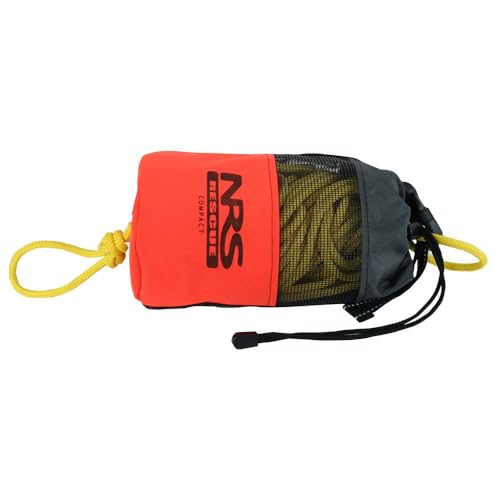
NRS 70' (21.3m) Compact Rescue Throw Bag, Orange
One of the home product options compared in this guide.
View on Amazonattwood Nylon Kayak Spray Skirt
A nylon spray skirt that helps keep water out of a sit-inside cockpit in rough conditions.
attwood 11776-5 Kayak Nylon Spray Skirt with Mesh Storage Bag, Black
One of the home product options compared in this guide.
View on AmazonFrequently Asked Questions
What is the best type of whitewater kayak for a beginner? A river runner, sized so your weight falls mid-range. It is forgiving enough to learn in, capable enough to keep for years, and versatile enough for almost any river a beginner should be on. A stable inflatable is an equally good starting point if storage or transport rules out a hardshell.
Can one kayak do everything? One kayak can do most things. A river runner or crossover covers the widest range honestly. Creeking at the steep end and freestyle at the playful end are the two extremes that genuinely demand their specialist types.
Are longer whitewater kayaks faster? Generally yes: length adds hull speed and tracking, which is why crossover and old-school downriver designs run long, while playboats sacrifice nearly all speed for rotation and play.
Do I need a creek boat for big waterfalls? For steep, technical water and drops of any consequence, a high-volume creek boat is the appropriate and safer tool. Paddlers do run hard water in half-slices and river runners, but they accept slower resurfacing and less margin in exchange for playfulness.
Hardshell or inflatable for a first boat? Choose a hardshell if you have storage and transport solved and want precise boat control as you progress. Choose an inflatable if you need packability, maximum stability, or a boat that shrugs off beginner mistakes against rocks.
Conclusion
The types of whitewater kayaks are really answers to different questions. Creek boats answer “keep me safe on the steep stuff,” river runners answer “do a bit of everything well,” half-slices answer “make my home river fun again,” playboats answer “let me master this one wave,” crossovers answer “take me camping down a mixed river,” and inflatables answer “get me on the water with the least fuss.” Decide which question your paddling is actually asking, size the boat to your weight, fit it carefully, and the rainbow wall of plastic turns into a short, clear shortlist.
More from Amazon
Programs that pair well with the guide above. Offers and eligibility are set by Amazon and may change.
Free shipping on eligible items, Prime Video and more. Eligible new members can start with a free trial.
Start a Prime free trialA Prime membership for ages 18-24 with a trial period. Eligibility is set by Amazon.
See Prime for Young AdultsAudiobooks and podcasts to listen to on the go. Eligible new members can start with a free trial.
Try Audible freeAd-free music streaming. Eligible new subscribers can start with a free trial.
Try Music Unlimited freeAs an Amazon Associate we earn from qualifying purchases.




Write Your Review
No reviews yet. Be the first to share your experience!