
Our Top Picks
 StoreYourBoard Kayak Storage Rack Wall Mount2 Levels - Outdoor & Indoor26.5 x 4 x 30 inchesCheck on Amazon
 StoreYourBoard Kayak and Canoe Ceiling Hoist8 ft - 10 ft Ceiling8.75 x 6 x 4 inches3.6 poundsCheck on Amazon
As an Amazon Associate we earn from qualifying purchases.
Most kayak damage does not happen on the water. It happens slowly in a garage, on a fence, or under a tarp, where a hull sits on a hard edge for months, bakes in sun through a window, or stays damp inside until mould and smells take hold. Proper storage is therefore less about finding a spare corner and more about three things: how the boat’s weight is supported, what the environment does to it, and whether it goes away clean and dry.
This guide is for owners storing a plastic, composite, or inflatable kayak at home, in a garage, shed, basement, or garden, for anything from a few weeks between trips to a full off-season. It covers preparation, support positions, indoor and outdoor arrangements, and the checks that keep a stored boat ready to use rather than quietly deteriorating until spring.
Prepare the Kayak Before It Goes Away
Wash it, inside and out
Rinse the hull, deck, hatches, and cockpit with fresh water, especially after salt water, which leaves deposits that attack metal fittings and keep surfaces damp. Use a mild soap on grime, fish residue, and sunscreen, and pay attention to the areas you normally ignore: around hatch rims, under bungees, inside the hull through the hatch openings, and in the scupper holes of a sit-on-top. Remove sand and grit from footbrace tracks and seat mechanisms, because grit stored in a mechanism works on it every time the boat is moved.
Rinsing also serves an environmental purpose. Moving between different waters can carry invasive species and plant fragments, so clean and drain the kayak before storing it, and dispose of weeds and debris away from drains and waterways. A boat that is washed at the end of a trip is also easier to inspect: cracks, worn keel areas, loose fittings, and damaged hatch covers are far easier to spot on a clean hull than under a layer of lake mud.
Dry it completely, including the inside
Water left inside a hull or a closed hatch compartment is the main cause of musty smells, mould, and corrosion on fittings during storage. Drain the hull through its drain plug if it has one, sponge out what remains, and leave hatches open with the boat positioned so air can circulate through the compartments. Dry the seat, padding, and any foam or fabric parts separately, since those hold moisture long after the plastic feels dry. Do not close the boat up for the season until the inside smells neutral and feels dry to the hand.
If you store the kayak with its hatches open for ventilation, keep out dust and nesting insects or animals with a breathable cover over the cockpit and hatch openings rather than sealing them shut. In a garage where rodents are a known problem, check stored boats periodically, because seats, foam, and stored soft items inside a hull can attract nesting. Never store food, bait, or scented items inside the kayak.
Do the small repairs and checks now
Storage is the right moment to note and fix the jobs that will otherwise greet you on the first trip of the season. Tighten loose deck fittings, replace perished bungee cord, check hatch cover seals for cracking, and look at the hull for deep gouges, cracks around fittings, and wear at the stern keel from dragging. Photograph or note anything you intend to repair so the job is not forgotten. Remove batteries from electronics, and take out the seat, drive unit, and accessories where they are designed to be removed, storing them dry and out of direct sun.
Loosen or remove anything that presses on the hull in one spot for months. A strap left cranked tight from the last car trip can leave a dent that becomes permanent in warm conditions. If the kayak will hang or sit on supports, position it once, correctly, and then leave it alone rather than repeatedly dragging it across a hard floor, which adds keel wear every time.
Support the Hull Correctly
Spread the load along the boat
A kayak hull is strong in the water, where pressure is distributed, and vulnerable in storage, where its whole weight can rest on two narrow points for months. Support it on wide, padded surfaces that spread the load, and place supports under stronger areas of the hull rather than at the soft middle of the bottom. Purpose-made cradles, wide straps, foam blocks, and padded rack arms all work when they present a broad contact area. Narrow bars, saw horses with hard edges, and the top of a fence do not, unless padded and positioned with care.
Time and heat make support mistakes worse. A plastic hull that looks fine after a weekend on a poor support can take a set after a summer in a hot garage, leaving a flat spot or a warped bottom that affects how the boat paddles. If you find a shallow dent from earlier storage, warmth and correct support often let it relax back, but prevention is far more reliable than hoping a deformation recovers.
Choose a position the boat can keep for months
Storing a kayak on its side, resting on an edge where the hull and deck meet, is a widely used option because that seam area is comparatively strong and the boat takes up little floor space against a wall. Storing it deck down on padded supports also spreads load across the deck and gunwale area and keeps the cockpit opening protected. Storing it flat on its hull bottom is acceptable on a soft, even surface or on properly placed wide supports, but it is the position most likely to flatten the bottom if the supports are narrow or badly placed.
Hanging a kayak from wide straps under the hull can work well and frees floor space, provided the straps are broad, padded, and positioned toward the stronger sections rather than the middle, and the lifting system and wall or ceiling fixings are rated for the weight. Never hang a kayak by its carry handles, which are not designed for months of suspended load, and avoid hanging in a space that becomes very hot, such as directly under a sun-heated roof, where plastic softens and deformation under its own weight becomes more likely.
Keep it off the ground
A kayak stored directly on concrete, soil, or gravel picks up moisture, abrasion, and in winter the risk of water freezing around and inside it. Raise it on supports, a rack, or a platform so air can move underneath and ground water cannot pool against the hull. Outdoors, a raised position also keeps the boat clear of puddles, leaf litter, and the damp layer at ground level that encourages mould. Indoors, getting the boat off the floor protects it from knocks, flooding from a leaking appliance, and being used as a shelf for paint tins and tools.
Indoor and Outdoor Storage
Indoor storage: control heat, sun, and stacking
A garage, basement, or shed is usually the best home for a kayak, provided it is out of direct sunlight and away from heat sources such as boilers, heaters, and sun-facing windows that can create a hot spot on one part of the hull. Ultraviolet light degrades plastic and fades and weakens fittings over time, and it reaches stored boats more often through a garage window than owners expect. Position the boat away from the window or cover it, and keep chemicals, fuels, and solvents stored separately rather than inside or against the kayak.
Do not stack heavy items on top of a stored kayak, and avoid leaning heavy objects against a hull resting on its side. If several kayaks share one space, give each its own support rather than stacking boats directly hull to hull for a season, which concentrates weight on the lower boat. Leave enough access that you can inspect the boats without dragging them, and keep the area around them clear enough that a ladder or bicycle cannot fall onto a deck.
Outdoor storage: shade, cover, and drainage
If outdoors is the only option, choose the shadiest, most sheltered spot available, ideally under a roof overhang or a purpose cover that sheds rain while allowing air to circulate. A cover should protect from sun and falling debris without sealing the boat in its own moisture: a tight, non-breathable wrap over a damp kayak creates exactly the mould conditions you are trying to avoid. Raise the boat off the ground, angle it slightly so rain cannot pool in the cockpit or on the deck, and cover the cockpit opening to keep out leaves, insects, and animals.
Security matters outdoors too. A stored kayak is visible and portable, so store it out of plain sight where possible and lock it to a fixed object with a cable through a solid fitting. Check an outdoor-stored boat more often than an indoor one: after storms, during long wet spells, and in freezing weather, when water trapped in fittings, scupper holes, or the hull can expand as it freezes. Empty any collected water promptly rather than leaving it to sit for weeks.
Inflatable and folding kayaks follow the maker’s instructions
Inflatable kayaks should be cleaned, dried thoroughly, and stored loosely rolled or folded as their maker directs, out of sun and away from sharp objects and rodents, without heavy items pressing a crease into the same fold all season. Avoid storing an inflatable fully pressurised, and avoid a very cold or very hot space if the maker warns against it. Folding and modular kayaks should be stored in the configuration and case the maker specifies, with skins and frames clean and dry before the case is closed, since trapping damp inside a closed case defeats the purpose of the design.
Long-Term and Off-Season Care
Inspect the boat during storage, not only at the ends
A stored kayak benefits from a brief check every month or two. Look for new dents where supports press, signs of rodents or insects, water that has found its way in, covers that have slipped and exposed the hull to sun, and straps or supports that have shifted. In a hot climate or a sun-exposed building, check more often, because heat-related deformation develops gradually and is easiest to correct by repositioning the boat early. Rotate or adjust supports if one spot is clearly carrying too much of the load.
Before the first trip after long storage, work through the boat as if it were new to you: hull and deck inspection, hatch seals, bungees and deck lines, seat and footbrace adjustment, drain plug in place, and all fittings firm. Take a short, close-to-shore first outing rather than heading straight for a long crossing, so any stiffness, slow leak, or forgotten repair reveals itself where it is merely inconvenient.
Store the accessories with the same care
Paddles, seats, personal flotation devices, pumps, and electronics each deteriorate in their own way when stored damp, compressed, or in sun. Dry buoyancy aids fully and store them uncompressed and out of sunlight, rinse and dry paddles and store them where blades cannot be chipped or stepped on, and keep batteries and electronics indoors in normal room conditions. Storing accessories separately from the hull also means the kayak itself is not carrying extra weight in storage and that nothing inside it can trap moisture against the hull for months.
Common Mistakes
- Storing the kayak damp with hatches closed, so the inside develops mould and corrosion over the season.
- Resting the hull on two narrow, hard supports for months until the bottom flattens or dents permanently.
- Leaving the boat where sun through a window or a hot roof space heats one area of plastic all summer.
- Hanging a kayak by its carry handles or leaving tight transport straps cranked on during storage.
- Sealing a wet boat inside a non-breathable cover outdoors, or storing it directly on soil or concrete.
Storage Gear That Protects a Kayak at Home
Getting the hull off the ground and out of the weather prevents warping and sun damage. These options cover garage walls, ceilings and outdoor storage.
StoreYourBoard Kayak Storage Rack, Wall Mount
A padded wall rack that holds two kayaks on their sides, keeping the weight off the hull and the floor clear.
StoreYourBoard Kayak Storage Rack Wall Mount, Holds 2 Kayaks, Padded Arms | Kayak Wall Rack, Outdoor Kayak Storage, Wall Mount Rack, Stainless Hardware, Adjustable Levels
One of the home product options compared in this guide.
View on AmazonStoreYourBoard Kayak and Canoe Ceiling Hoist
A pulley hoist that lifts a kayak to the ceiling, useful when wall space is limited in a garage.
StoreYourBoard Kayak and Canoe Ceiling Hoist, Pulley Lift System | Kayak Ceiling Hoist, Kayak Pulley System, Canoe Hoist, Auto Locking Brake, Fits All Garage Heights
One of the home product options compared in this guide.
View on AmazonFrelaxy 420D Heavy Duty Kayak Cover
A waterproof, UV-resistant cover for boats stored outdoors or under a carport.
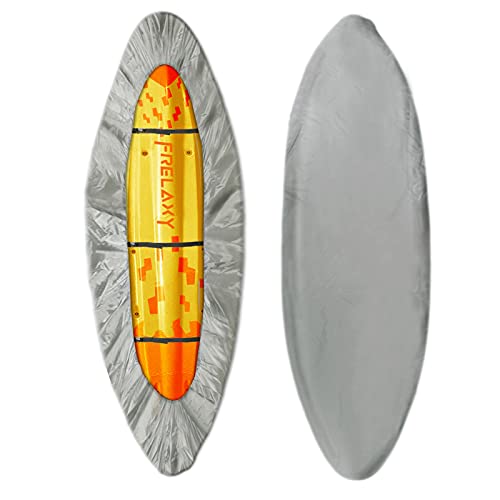
Frelaxy 420D Kayak Cover, Heavy Duty Waterproof UV Resistant Kayak Covers for Outdoor Storage, Ultra Strong Canoe Storage Dust Cover, Great for Indoor & Outdoor 9.8-13.5ft
Chosen because it is waterproof.
View on Amazonniffgaff Heavy Duty Garage Storage Hooks
Simple wall hooks that hold a kayak or other long gear off the ground at a modest cost.

niffgaff Heavy Duty Garage Storage Hooks - 120 LB Capacity Wall Mounted Rack for Kayaks, Ladders, and Bikes
One of the home product options compared in this guide.
View on AmazonFrequently Asked Questions
Is it better to store a kayak on its side or upside down?
Both can work well when the boat is properly supported. On its side, the kayak rests on the stronger seam between hull and deck and takes up little space against a wall. Upside down on wide, padded supports, the load spreads across the deck and edges and the cockpit stays protected. What matters more than the choice between them is avoiding narrow pressure points, keeping the boat off the ground, and protecting it from heat and sunlight.
Can I leave my kayak outside all winter?
You can, with preparation, but indoors is kinder. Outdoors, raise the kayak off the ground, place it in the most sheltered and shaded spot available, angle it so water cannot pool, cover the cockpit, and use a cover that sheds rain while letting air move. Empty collected water, check the boat after storms and during freezes, and secure it against theft. Water left inside fittings or the hull can freeze and expand, so dryness before a cold spell matters.
How do I stop a stored kayak getting dented?
Spread its weight. Use wide, padded supports placed under stronger parts of the hull, keep the boat out of high heat, and do not leave transport straps tightened during storage. A hull resting on a narrow bar in a hot garage is the classic recipe for a flat spot. If a shallow dent appears, moving the boat onto correct supports in a warm environment often lets the plastic relax, but badly deformed hulls may not fully recover.
Should hatches be open or closed in storage?
Leave them open or ajar while the boat dries and for ventilation during storage, provided you keep out dust, insects, and rodents with a breathable cover over the openings. Sealing a boat with moisture still inside is the mistake to avoid, since closed, damp compartments are where mould and odours develop. Once the boat is fully dry in a clean, dry indoor space, the priority is simply keeping it dry and undisturbed.
FAQ
Is it better to store a kayak on its side or upside down?
Can I leave my kayak outside all winter?
How do I stop a stored kayak getting dented?
Should hatches be open or closed in storage?
More from Amazon
Programs that pair well with the guide above. Offers and eligibility are set by Amazon and may change.
Free shipping on eligible items, Prime Video and more. Eligible new members can start with a free trial.
Start a Prime free trialA Prime membership for ages 18-24 with a trial period. Eligibility is set by Amazon.
See Prime for Young AdultsAudiobooks and podcasts to listen to on the go. Eligible new members can start with a free trial.
Try Audible freeAd-free music streaming. Eligible new subscribers can start with a free trial.
Try Music Unlimited freeAs an Amazon Associate we earn from qualifying purchases.



Write Your Review
No reviews yet. Be the first to share your experience!