
Key takeaways
- Provides running room: A fish that takes all 90 feet of your fly line can continue into the backing instead of breaking off at the end of the line.
- Improves reel capacity: Backing helps fill the spool behind the fly line, which generally supports more efficient line pickup and a more useful spool diameter.
- Offers strong connections: Properly tied backing-to-fly-line connections are dependable and can withstand far more pressure than the fly line’s thin coating alone.
- Costs relatively little: Basic backing commonly costs about $8 to $20 for a usable spool, while longer or specialized versions may cost $20 to $40 or more.
- Is lightweight and compact: Even 100 yards of thin backing can fit on many fly reels without making the setup unwieldy.
- Comes in visible colors: Orange, white, and other high-visibility colors make it easier to see how much backing is outside the reel during a long run.
- Works across several fly lines: You can often leave backing on a reel while changing fly lines, provided the new line and backing remain within the reel’s capacity.
The Short Answer
Yes, you need braided line backing if your fly line is attached to a reel and you may hook a fish capable of taking more line than the fly line itself provides. The one condition is simple: the backing must fit your reel and match the expected size and power of your target fish.
For most freshwater fly anglers, braided backing is inexpensive insurance. It fills empty space on the spool, provides a reserve when a fish runs, and gives you something stronger to hold than the fly line’s thin coating. A small-trout angler fishing a short, light rod may rarely use it, but the cost and effort of adding it are usually modest.
Our top picks


As an Amazon Associate we earn from qualifying purchases at no extra cost to you.
What You Actually Get
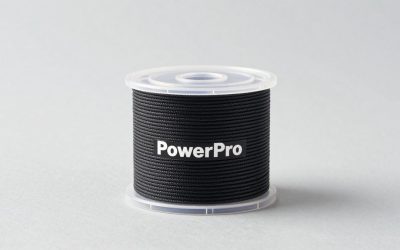
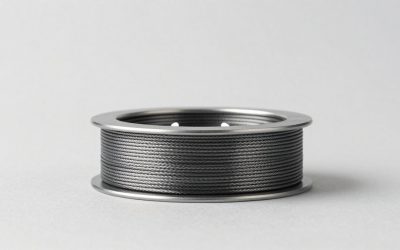
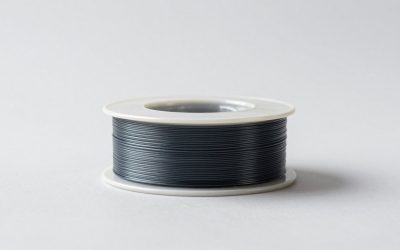
Braided line backing is a thin, woven line secured to the reel before the fly line is attached. It is commonly made from Dacron or a similar synthetic fiber. The braid creates a strong, flexible line with relatively low stretch compared with many traditional monofilament options.
Backing serves three practical purposes. First, it increases the reel’s line capacity. Fly lines are often only 80 to 100 feet long, while a strong fish can travel considerably farther. Second, it helps the reel spool carry the correct amount of line. A fly reel filled too sparsely has a smaller effective diameter, which can make retrieval slower and alter how the reel’s drag behaves. Third, backing gives you a durable connection point between the reel and the fly line.
Common backing strengths range from about 20 pounds for light freshwater use to 30 pounds or more for larger trout, salmon, bass, saltwater species, and other powerful fish. A 20-pound product may be appropriate for a 3- to 5-weight setup when the fish are modest. A 30-pound product offers more margin, though its diameter and capacity should still suit the reel.
Length matters too. A small stream reel may need only 50 to 100 yards, while a salmon, steelhead, bonefish, or tarpon setup may call for 200 to 300 yards or more. The reel manufacturer’s stated backing capacity is the best starting point because two lines with the same breaking strength can have different diameters.
Two readily available examples illustrate the range. The SF Braided Fly Fishing Trout Line Backing is a 20-pound, 100-meter product—about 108 yards—and is listed at $7.99. The RIO Products Dacron Fly Line Backing is a 30-pound, 300-yard option listed at $17.49. The first is sized and priced for basic freshwater use; the second provides more length and strength for larger or faster fish.
Pros
- Provides running room: A fish that takes all 90 feet of your fly line can continue into the backing instead of breaking off at the end of the line.
- Improves reel capacity: Backing helps fill the spool behind the fly line, which generally supports more efficient line pickup and a more useful spool diameter.
- Offers strong connections: Properly tied backing-to-fly-line connections are dependable and can withstand far more pressure than the fly line’s thin coating alone.
- Costs relatively little: Basic backing commonly costs about $8 to $20 for a usable spool, while longer or specialized versions may cost $20 to $40 or more.
- Is lightweight and compact: Even 100 yards of thin backing can fit on many fly reels without making the setup unwieldy.
- Comes in visible colors: Orange, white, and other high-visibility colors make it easier to see how much backing is outside the reel during a long run.
- Works across several fly lines: You can often leave backing on a reel while changing fly lines, provided the new line and backing remain within the reel’s capacity.
Cons
- It takes up spool space: Too much backing, or backing that is too thick, can prevent the fly line from fitting properly. Too little can leave the reel underfilled.
- It does not make a weak setup stronger: A 30-pound backing line cannot protect a 4-weight leader or tippet from breaking. The entire system is limited by its weakest component.
- It can cut or chafe skin: Braided backing is smoother than some alternatives, but a fast-running line can still burn fingers. Never try to stop a fish by grabbing moving backing.
- It requires correct knots: Poorly tied arbor, backing, or backing-to-fly-line knots can fail even when the line itself has a high rating.
- It may develop memory or loosen on the spool: Backing that is wound unevenly can dig into lower layers or create bumps that interfere with smooth retrieval.
- It is unnecessary in some fishing situations: If fish never run beyond the fly line and you are using a small reel on a short, sheltered stream, backing may never be used.
Who Should Buy It
Buy braided backing if you fish open water, target trout larger than the average stream fish, or pursue species known for long runs. It is especially useful for anglers targeting salmon, steelhead, pike, carp, bass, bonefish, redfish, and other fish that can put substantial pressure on a fly reel.
You should also add backing when setting up a new reel, even if you expect to fish small water most of the time. A modest amount—roughly 50 to 100 yards on a light freshwater reel—provides inexpensive protection for an unexpected larger fish. Choose 20-pound backing for many light trout applications, and consider 30-pound backing when fish are larger, the water is open, or the reel has enough capacity for it.
Choose length based on both the species and the reel. For ordinary trout, 75 to 150 yards is often a practical range. For fish that can maintain a long run, 200 to 300 yards may be more appropriate. Confirm the manufacturer’s capacity before buying rather than assuming every 30-pound line takes up the same space.
Who Should Skip It
You can reasonably skip backing if you are fishing a very small, controlled stream for small trout, panfish, or other fish that are unlikely to take more than the fly line’s length. Some ultralight setups use the reel primarily as a line holder, and the fish are played by hand or from a fixed position.
Skipping it can also make sense if your reel has extremely limited capacity and you cannot fit an appropriate amount without crowding the spool. In that case, check whether the reel is suitable for the fly line and fish you intend to target. Do not force a fly line onto an overfilled spool; tangles and drag problems can result.
Cheaper Alternatives
| Option | Cost | Trade-off |
|---|---|---|
| Basic 20-pound braided backing | About $8–$12 | Affordable and adequate for many trout setups, but typically offers less strength and length than premium or big-game options. |
| 30-pound Dacron backing | About $15–$25 | More strength and often more length, but it can use more spool capacity and costs more than light backing. |
| Used backing from an existing reel | $0 if already owned | Only suitable if its condition, remaining length, knots, and breaking strength are known. Replace frayed or sun-damaged line. |
| Monofilament backing | About $5–$15 | Can be inexpensive and compact, but it has different stretch, handling, and knot characteristics and is less convenient for general fly-reel use. |
| No backing | $0 | Acceptable only for limited short-range fishing where a fish is unlikely to take the full fly line. |
For most buyers, basic braided backing is the better value than trying to improvise. The $7.99 SF option supplies 100 meters at 20 pounds, which is a practical amount for many trout reels. The $17.49 RIO option supplies 300 yards at 30 pounds, making it a more suitable choice when capacity and extra strength matter. Neither is automatically better; the correct choice depends on the reel’s capacity and the fish you pursue.
FAQ
Can I use fishing line instead of braided fly-line backing?
You can, but it is not always the best substitute. Monofilament may have more stretch, coil more noticeably, and behave differently under pressure. It also requires careful attention to diameter and knots. Purpose-made backing is designed for reel storage, line connections, and repeated handling, so it is usually the simpler and more predictable option.
How much backing do I need for trout?
For small and average trout, 50 to 100 yards is often enough, while 100 to 150 yards provides additional insurance on open rivers and larger water. Use the reel’s capacity chart as the final authority. A 20-pound backing line is commonly adequate for light trout fishing, but the leader, tippet, rod, and drag should all be considered together.
Does backing affect casting?
Indirectly, yes. Backing should remain underneath the fly line and should not normally leave the reel during a cast. If the spool is badly underfilled, line retrieval and the reel’s effective diameter can suffer. If it is overfilled, the fly line may rub against the frame or fall off in loops. Wind the backing evenly and leave a small margin below the spool rim.
What is the best knot for attaching backing?
An arbor knot is commonly used to attach backing to the reel, while an Albright-style connection, nail knot, or loop-to-loop connection may be used to attach backing to the fly line, depending on the line system. Follow the fly-line manufacturer’s instructions, moisten knots before tightening, and test every connection with firm hand pressure before fishing.


Write Your Review
No reviews yet. Be the first to share your experience!