
Key takeaways
- How to spool a spinning reel with braided line: mono backing, knots, tension, fill level and twist checks to stop wind knots before they start.
To spool a spinning reel with braided line without wind knots, first tie 20 to 30 yards of monofilament backing to the arbor, join the braid to it with a double uni or Albright knot, and then wind the braid on under steady pressure from a damp cloth or your fingers. Stop about 1/8 inch below the lip of the spool. Backing stops the slick braid from spinning on the arbor, and tension packs the line tightly so loose loops cannot jump off during a cast. This method suits any angler moving from monofilament to braid, and it matters most on small and mid-size spinning reels.
Quick Answer
- Tie monofilament backing to the arbor with an arbor knot: roughly 20 to 30 yards on a 2500-size reel, scaled up or down for the spool.
- Join backing to braid with a double uni (5 turns on the mono, 10 turns on the braid) or an Albright knot.
- Reel under tension: pinch the line in a damp cloth or between your fingers about a foot from the reel, firm enough to feel drag.
- Check for twist: line should leave the filler spool label side up and counterclockwise; if loops form, flip the spool.
- Fill to about 1/8 inch from the spool lip, never closer than 1/16 inch.
What You Need
- Braided line: 10 to 20 pound test for general freshwater spinning, 6 to 10 pound for finesse, and 20 to 30 pound for heavy cover or inshore saltwater. Braid is thinner than monofilament of the same strength, roughly the diameter of 6 to 10 pound mono for a 20 pound braid, though this varies by maker.
- Monofilament backing: 8 to 12 pound test, in a quantity that fills the spool about halfway to two-thirds on a mid-size reel.
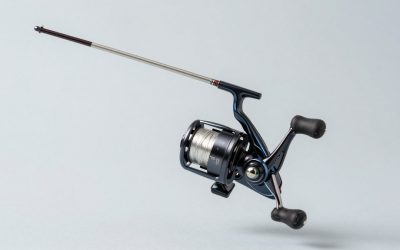
- Reel: a spinning reel in size 1000 to 5000, with a clean, smooth line roller and a bail that closes crisply. A worn roller can nick braid.
- Rod: thread the line through each guide before you start so the braid lays straight when you reel.
- Cloth or tension tool: a damp cotton rag, a spool of line held by a helper, or a pair of fingers. Use gloves if the braid cuts into your skin.
- Knots: an arbor knot, a double uni knot or Albright knot, and a pair of sharp scissors or braid cutters. Standard scissors do not cut braid cleanly.
- Tape or rubber band: some anglers use a strip of electrical tape on the arbor instead of mono backing; backing is more reliable if you plan to change braid later.
Cut braid with scissors made for it and keep the blades away from your fingers. Braid can slice skin when it is pulled tight, so wear thin gloves if you are winding under heavy tension.
Why Backing and Tension Matter
Braid is slick and has no stretch. If it is tied straight to the bare arbor, a hard hookset can spin the whole spool of line around the arbor and leave you with nothing on the reel. Monofilament grips the arbor much better, so a base layer of mono acts as a non-slip foundation. Backing also saves braid, because you only need enough on top to fill the spool.
Tension is the second half of the job. Braid wound on loosely sits in soft layers. When you cast, a loop from a lower layer can slip under the top wraps and come off in a tangle called a wind knot, or a “bird’s nest.” Packing the line firmly stops this.
Step-by-Step: Spooling Braid Over Mono Backing
- Open the bail and thread the mono. Run the end of the backing through the first guide on your rod, then around the arbor of the reel.
- Tie the arbor knot. Tie an arbor knot around the arbor, tighten it and trim the tag end to about 1/4 inch. Close the bail. The knot only needs to grip the arbor; the wraps do the rest.
- Wind on the backing. Reel with light, steady tension. If you are using a 2500-size reel, aim for about 20 to 30 yards. For a quick reference, see the table below. The backing should be level, not humped on one side.
- Tie the braid to the backing. Use a double uni knot with 5 turns of mono and 10 turns of braid, or an Albright knot for a slimmer join. Moisten the knot, pull each side snug, then pull both standing lines together until the knots meet. Trim both tails close.
- Set up the filler spool. Place the braid spool on the floor or on a pencil held by a helper, with the label up. The line should leave the spool counterclockwise.
- Apply tension. Pinch the braid between your fingers or lightly through a damp rag, about 1 foot above the reel. You should feel noticeable drag when you turn the handle.
- Wind slowly. Reel at a steady speed of about one turn per second, keeping tension constant. Stop every few minutes to look for twist.
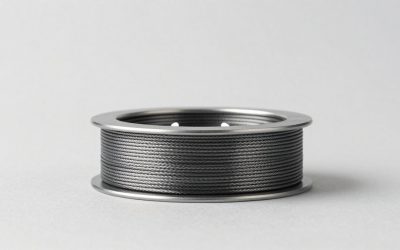
- Stop at the right level. The braid should end about 1/8 inch below the lip of the spool. Overfilled spools shed coils in every cast.
- Cut and clip. Trim the line from the filler spool, secure it in the line clip, and tie on a swivel or attach a leader.
Backing Estimates by Reel Size
These figures are starting points; actual amounts depend on the reel, line diameter and how much braid you want. A simple method is to wind on all the braid, note how much space is left, and then rewind with the right backing.
| Reel size | Backing (8 to 12 lb mono) | Typical braid fill |
|---|---|---|
| 1000 to 2000 | 10 to 20 yards | 100 to 150 yards of 6 to 10 lb braid |
| 2500 to 3000 | 20 to 30 yards | 150 to 250 yards of 10 to 20 lb braid |
| 4000 to 5000 | 30 to 50 yards | 200 to 300 yards of 15 to 30 lb braid |
Choosing a Knot to Join Backing and Braid
| Knot | Best for | Notes |
|---|---|---|
| Double uni | Beginners, quick joins | 5 turns mono, 10 turns braid; slightly bulkier but easy to tie on the water. |
| Albright | Smooth, slim join | Passes through guides easily; needs practice to keep the wraps tight. |
| Blood knot | Similar line diameters | Less reliable when braid and mono differ greatly in diameter. |
| Arbor knot | Mono to reel | Not for braid directly; braid slips on the arbor. |
How to Prevent Line Twist
Line twist comes from how line leaves the filler spool. Pulling line off the end of a spool that is lying flat adds one twist per loop, and a spinning reel adds more if the direction is wrong.
- Set the filler spool on the floor or on a pencil with the label facing up, so the line leaves it counterclockwise toward the reel.
- Every minute or so, stop winding and let a few feet of slack hang between the filler spool and the reel. If the slack coils or loops, twist is building.
- If you see twist, pull off several feet of line, flip the filler spool over so the label faces down, and begin again. Flipping reverses the direction in which the line leaves the spool.
- Keep the line from the filler spool to the first rod guide short, about 1 foot, so it is easy to watch.
Monofilament has memory and shows twist faster than braid. Braid hides twist at first, so check the backing as well.
After Spooling: Finishing Touches
- Add a leader. Braid is highly visible and abrasive, so most anglers tie a 2 to 4 foot fluorocarbon or monofilament leader using a double uni or FG knot. Choose a leader test similar to or slightly lighter than the braid.
- Set the line on the spool. Make a few casts with a light lure and reel in under tension to settle the first wraps.
- Close the bail by hand. Turning the handle to close the bail can leave slack on the spool. Flip the bail with your fingers after each cast.
- Keep your drag light at first. Braid has no stretch, so set the drag at about one-quarter of the line’s breaking strength.
Common Mistakes
- Tying braid directly to the arbor. It slips. Use mono backing or a base of tape.
- Winding without tension. This is the main cause of wind knots. Pinch the line firmly the whole time.
- Overfilling the spool. Stop at 1/8 inch below the lip, not at the edge.
- Using bulky joins. Large knots catch in the guides. Trim tags close, and use an Albright if guide snags keep happening.
- Skipping the twist check. Look at the slack line every few minutes and flip the filler spool if it coils.
- Using household scissors. Braid frays instead of cutting. Use scissors or cutters made for braid.
Questions
Do I really need backing for braid on a spinning reel?
Backing is strongly recommended. Braid can slip on a smooth arbor, and backing means you use less braid to fill the spool. If you want to skip it, a layer of tape on the arbor is the usual alternative.
How full should I fill a spinning reel with braid?
Fill to about 1/8 inch below the edge of the spool lip. A fill of 1/16 inch is the limit. Overfilling releases coils during casting and leads to wind knots.
Which way should the line come off the filler spool?
Set the filler spool with the label facing up so the line comes off counterclockwise. If you see coils forming, flip the spool over and start again.
How do I stop wind knots on braid?
Spool under firm tension, stop at the right fill level, close the bail by hand, and avoid casting with slack line. Using a lighter braid diameter with a light lure also helps.
How often should I replace braided line?
Replace it when it looks frayed, fuzzy or faded, or when it picks up nicks near the end. Many anglers cut off the first few feet regularly and re-tie the leader instead of replacing the whole spool.
Update History
- October 15, 2026 – Initial publication; details checked against current manufacturer guidance and angling references.
- Conditions, regulations and tackle specifications vary by water and region; check local rules before you fish.
Sources
- Take Me Fishing, how to spool a spinning reel with braided line
- Dick’s Sporting Goods Pro Tips, how to spool your spinning reel
- Salt Strong, spooling braided line without twists
- Tackle Theory, spooling a spinning reel without line twist
- knots.fish, how to spool a spinning reel


Write Your Review
No reviews yet. Be the first to share your experience!