
Finding the best color fishing line is a critical decision that can make or break your day on the water, which is why our team at fishnholeoutdoors.com has analyzed the latest industry data to help you choose. Whether you need stealth or high visibility, the right shade depends entirely on your target species and environment.
🛒 Best Price Today on Amazon
Prime members get fast, free shipping on everything above, plus member-only deals. New members get a 30-day free trial — cancel anytime.
Understanding Fishing Line Visibility and Light Penetration
To select the perfect setup, you must first understand how light behaves once it penetrates the water’s surface. Different wavelengths of light disappear at varying depths, which directly impacts how fish perceive your presentation. I always tell anglers that what looks bright red or neon green on your reel can look completely different just ten feet below the surface.
Our top picks


As an Amazon Associate we earn from qualifying purchases at no extra cost to you.
How Water Clarity Affects Color Perception
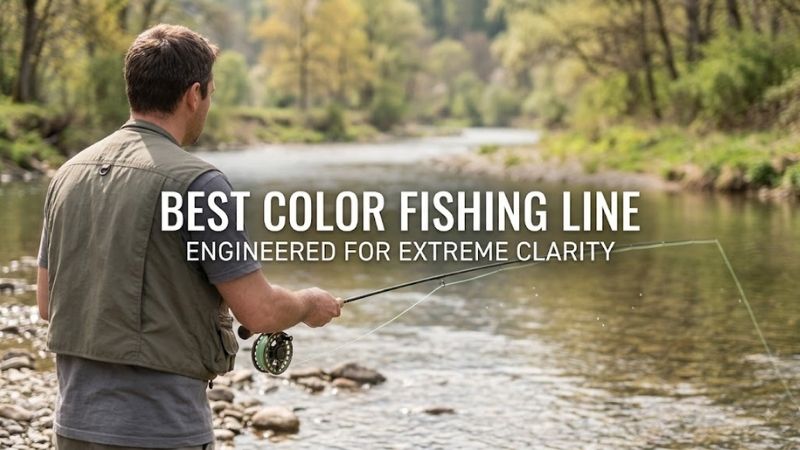
Water acts as a natural filter, absorbing light wavelengths starting with red, which disappears in as little as 15 feet of water. Orange and yellow follow quickly, while greens and blues penetrate the deepest. In stained or muddy water, suspended organic particles scatter light, making bright colors fade even faster and turning clear lines into highly visible reflective strands.
The Role of Refractive Index in Line Selection
The refractive index determines how much a material bends light compared to water, which has a refractive index of 1.33. The closer a line’s index is to 1.33, the more invisible it becomes underwater. Fluorocarbon sits at roughly 1.42, making it nearly invisible, while nylon monofilament ranges from 1.52 to 1.62, causing it to catch and reflect light more easily.
| Line Type / Color | Refractive Index | Underwater Visibility | Primary Recommended Use |
|---|---|---|---|
| Clear Fluorocarbon | 1.42 | Extremely Low | Finesse fishing in crystal-clear water |
| Clear Monofilament | 1.52 – 1.62 | Low to Moderate | Topwater baits and general-purpose fishing |
| Moss Green Braid | Opaque (N/A) | Low in vegetation | Heavy cover, flipping, and pitching |
| Hi-Vis Yellow Braid | Opaque (N/A) | High (to angler and fish) | Line watching, drift fishing, and bobber fishing |
The Best Color Fishing Line for Different Water Conditions
When I help anglers rig their reels, I always ask about their local waterways because water clarity dictates your color strategy. Here is how I break down the choices for the best color fishing line based on where you plan to cast.
Clear Waters: Why Transparency Wins
In ultra-clear lakes, spring-fed streams, or calm coastal flats, fish have plenty of time to inspect your lure. Any unnatural line color can easily spook wary game fish, especially in heavily pressured waters. For these environments, a completely transparent clear line is the gold standard because it does not create a distracting silhouette.
Stained or Murky Water: Utilizing High-Visibility Options
In dark, muddy, or tannin-stained waters, visibility drops to just a few inches, making line detection by fish less of a concern. Here, I recommend high-visibility options like neon yellow, bright orange, or gold. These colors allow you to watch your line for subtle, twitching bites that you might never feel through the rod blank.
The Utility of Green and Earth-Tone Lines
For most freshwater environments, moss green and dark green are incredibly effective choices. Because many lakes and rivers have a natural green tint from algae and organic runoff, green lines blend seamlessly into the background. Many anglers find that a dark green braided line is the most forgiving option for general-purpose casting around weeds and timber.
Analyzing Popular Line Materials and Their Color Profiles
Each line material holds dye and interacts with light differently, meaning your material choice directly impacts your color strategy. Let’s look at how the three main line types handle coloration and visibility.
Fluorocarbon: The Gold Standard for Low Visibility
Fluorocarbon is naturally clear and does not absorb water, meaning it maintains its low-visibility properties throughout a long day of fishing. Because it is denser than water, it sinks quickly, making it excellent for bottom-contact baits. I recommend using it as a main line or as a stealthy leader attached to a more visible main line.
Monofilament: The Versatile All-Rounder
Monofilament is highly receptive to dyes, allowing manufacturers to produce it in a massive variety of colors, including clear, blue, red, and high-vis green. While it is highly versatile, nylon monofilament absorbs water over time, which can slightly alter its clarity and cause it to look more opaque after hours of use.
Braided Line: Dealing with Pigmentation Challenges
Braided line is made of woven synthetic fibers, which are naturally opaque and cannot be made transparent. Because the color is applied as a coating rather than infused into the material, braided lines will fade over time with sun and water exposure. To get the best of both worlds, many anglers spool up with a dark green or high-vis braid and tie on a clear fluorocarbon leader.
Species-Specific Color Considerations
Different fish species hunt using different senses, meaning the best color fishing line for one species might spook another. I recommend tailoring your color selection to the specific visual habits of your target catch.
Bass and Walleye: Targeting Predatory Fish
Largemouth and smallmouth bass are highly visual predators that often inspect slow-moving baits. While a dark green line is ideal for bass in heavy vegetation, walleyes often feed in low-light conditions where a high-vis line helps you detect light bites. If you are targeting walleye with jigs, a high-vis yellow main line paired with a clear leader is an incredibly effective combination.
Crappie and Trout: Why Finesse Matters
Trout have exceptional vision and typically feed in crystal-clear streams, making a clear, low-diameter fluorocarbon absolutely essential. Crappie anglers, on the other hand, frequently rely on “line watching” to detect the delicate vertical bites of schooling fish. For crappie, a high-vis gold or yellow monofilament is highly popular because it allows you to see the slightest line twitch.
Surf Fishing and Catfishing: When Color Is Secondary
In heavy surf or muddy river bottoms where catfish roam, stealth is rarely the priority. Surf anglers often choose bright blue or high-vis orange lines to track their baits in crashing waves and prevent tangles with other fishers. For catfishing in murky waters, a heavy high-vis monofilament helps you monitor your line’s angle in strong river currents.
How to Choose the Right Fishing Line Color for Your Needs
To find your ideal setup, always start by analyzing your typical fishing scenario. If you mostly fish clear, pressured lakes for bass or trout, prioritize a clear fluorocarbon or a clear monofilament to maximize your bite rate. If you find yourself fishing thick lily pads or heavy timber, a moss green braided line will offer the perfect blend of camouflage and raw pulling power.
If you prefer to watch your line for visual bite detection but still want to avoid spooking fish, I highly recommend using a hybrid system. Spool your reel with a high-visibility yellow or orange braided line so you can easily track your casts. Then, use an FG knot or a double-uni knot to attach a six-to-ten-foot leader of clear fluorocarbon, giving you the perfect balance of visibility and stealth.
Check the latest price on Amazon:
- Best Color For Braided Fishing Line: Ultimate Top Choices
- What Is The Best Braided Fishing Line For Ultimate Power
- Best Color Braid Fishing Line: Proven Choices for Success
- How to Choose the Right Bass Fishing Rod for Your Technique
- Top 7 Best Fishing Coolers for Keeping Your Catch Fresh
Conclusion
Ultimately, there is no single best color fishing line for every scenario, as the ideal choice depends on water clarity, target species, and your personal fishing style. By matching your line color to the underwater environment and utilizing clear leaders when necessary, you can fish with absolute confidence. For more expert gear guides and rigging tips, be sure to visit us at fishnholeoutdoors.com before your next trip to the water.


Write Your Review
No reviews yet. Be the first to share your experience!