
Key takeaways
- Power: This refers to the rod’s strength or backbone – how much force it takes to bend the rod. Power ratings typically range from Ultra-Light to Extra-Heavy. For bass fishing, Medium, Medium-Heavy, and Heavy are the most common.
- Medium Power: Ideal for lighter lures and finesse techniques, offering more flexibility for delicate presentations.
- Medium-Heavy Power: A versatile choice, suitable for a wide range of lures from jigs to spinnerbaits. It provides a good balance of casting distance and hook-setting power. The Pflueger 7′ President XT Casting Rod is a good example of a medium-power rod suited for various species.
- Heavy Power: Designed for heavier lures, thick cover, and big bass, offering maximum leverage for pulling fish out of tough situations. The KastKing Spartacus II Twin-Tip Casting Rods, 6’8″, MH Power, Fast is a solid choice in this range.
Selecting the correct bass fishing rod can feel like navigating a labyrinth of power ratings, actions, and lengths. The truth is, your rod is an extension of your arm, directly influencing your casting accuracy, lure presentation, and your ability to set the hook and land that trophy bass. Thankfully, with a little knowledge, you can demystify the process and find the perfect tool for your preferred techniques. This guide will break down the key considerations to help you choose the right bass fishing rod.
We’ll explore how different rod characteristics are optimized for various fishing styles, ensuring you have the confidence to make an informed decision. Whether you’re a seasoned angler or just starting out, understanding these nuances will elevate your bass fishing game.
Our top picks


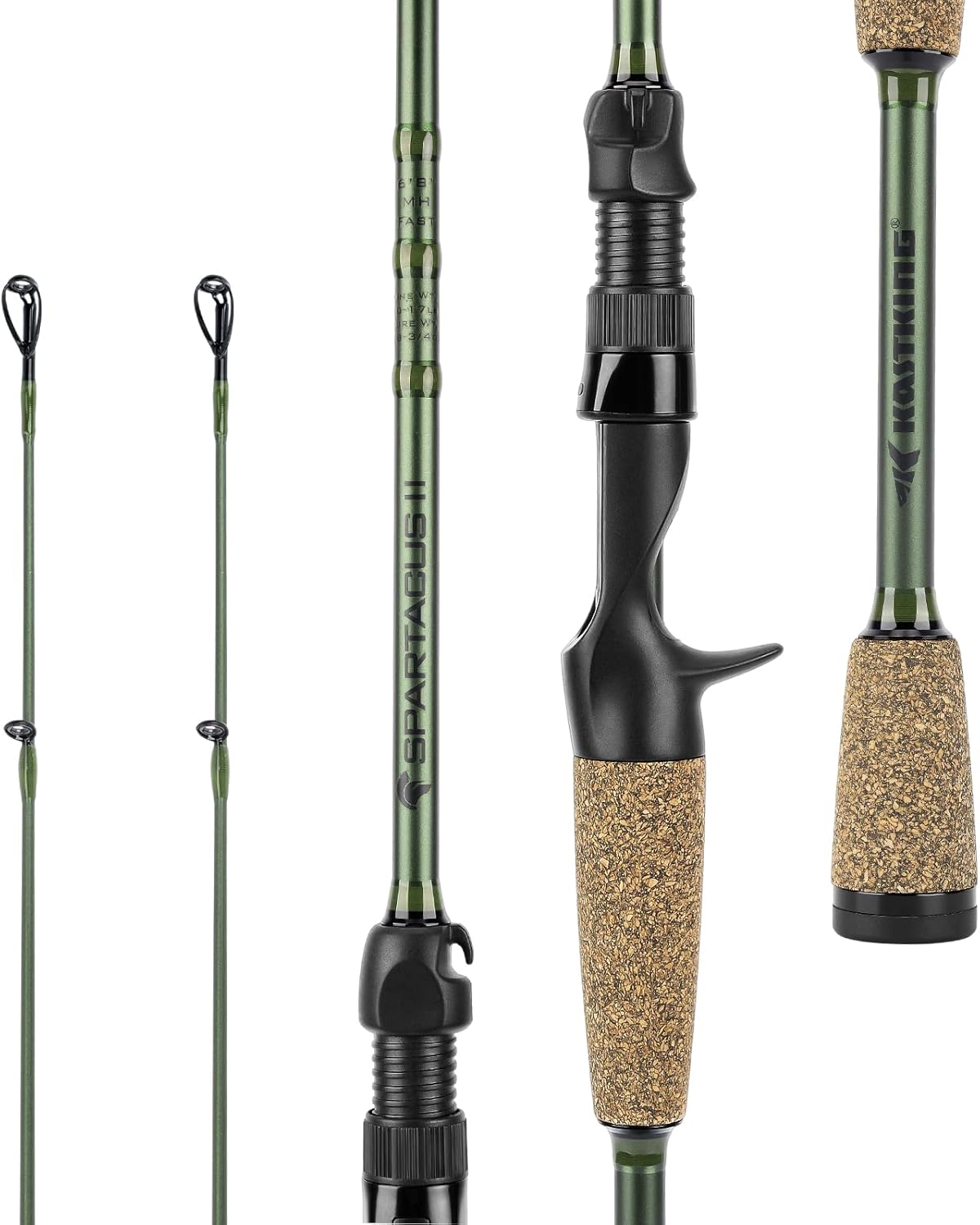 KastKing Spartacus II Twin-Tip Casting Rods
- Fishing Technique: Casting
- Action: Fast
- Line Weight: 17 pounds
Zirconium oxide guide rings cut friction and reduce tangles
Extra tip section included as a backup if one breaks
Integrated hook keeper makes bait storage convenient
Fast action may feel less forgiving for beginners
17 pound line weight limits use with heavier line
 Berkley 7’ Cherrywood HD Spinning Rod
- Number of Pieces: 2
- Fishing Technique: Spinning
- Action: Fast

As an Amazon Associate we earn from qualifying purchases at no extra cost to you.
⚡ Save on Your Next PC — Amazon Prime
Prime members get fast free shipping on the systems above, plus early access to Prime Day & Black Friday PC deals. New members get a 30-day free trial.
Watch: How to Choose the Right Bass Fishing Rod for Your Technique — Video Review
Understanding Rod Power and Action
Two of the most critical specifications for any fishing rod are its power and action. Understanding these will form the foundation of your choice.
- Power: This refers to the rod’s strength or backbone – how much force it takes to bend the rod. Power ratings typically range from Ultra-Light to Extra-Heavy. For bass fishing, Medium, Medium-Heavy, and Heavy are the most common.
- Medium Power: Ideal for lighter lures and finesse techniques, offering more flexibility for delicate presentations.
- Medium-Heavy Power: A versatile choice, suitable for a wide range of lures from jigs to spinnerbaits. It provides a good balance of casting distance and hook-setting power. The Pflueger 7′ President XT Casting Rod is a good example of a medium-power rod suited for various species.
- Heavy Power: Designed for heavier lures, thick cover, and big bass, offering maximum leverage for pulling fish out of tough situations. The KastKing Spartacus II Twin-Tip Casting Rods, 6’8″, MH Power, Fast is a solid choice in this range.
- Action: This describes where the rod bends when pressure is applied. It’s often categorized as Slow, Moderate, Fast, or Extra-Fast.
- Fast Action: The rod bends primarily in the upper quarter of the blank. This offers sensitivity for detecting subtle bites and quick hook sets, making it excellent for techniques like Texas rigs and jigs.
- Moderate Action: The rod bends in the upper half of the blank. This provides a more forgiving bend, which can be beneficial for treble-hooked baits like crankbaits, reducing the chance of pulling hooks.
- Extra-Fast Action: Similar to fast action but even more concentrated in the tip, offering extreme sensitivity and immediate response.
Matching Rods to Common Bass Fishing Techniques
Different bass fishing techniques demand specific rod characteristics to maximize their effectiveness. Here’s a breakdown of how to match your rod to your preferred method.
- Finesse Techniques (Drop Shot, Ned Rig, Shaky Head): These techniques rely on subtle lure movements and detecting light bites. You’ll want a rod with good sensitivity and a lighter power rating. A Fast or Extra-Fast action is crucial for detecting these subtle takes. The KastKing Verus Technique Twin-Tip Bass Spinning Rod, 6’10”, Finesse Spin is designed with these requirements in mind. Look for lengths between 6’8″ and 7’2″ for good casting and control.
- Jigs and Texas Rigs: These are staple bass baits that often encounter cover. You need a rod with enough backbone to pull fish out of weeds and brush. Medium-Heavy to Heavy power is recommended, paired with a Fast or Extra-Fast action for solid hook sets. Rod lengths of 7’0″ to 7’6″ provide excellent casting distance and leverage. The KastKing Verus Technique Twin-Tip Bass Fishing Rod – IM7 Graphite Blanks with Nano Resin, Extra Tip, PTS, Titanium Guide Frames, Technique-Specific Casting & Spinning Rod is a versatile option here.
- Spinnerbaits and Buzzbaits: For these reaction baits, you want a rod that allows for a smooth retrieve and absorbs shock during a strike. A Moderate or Moderate-Fast action is ideal, preventing you from ripping the bait away from a striking fish. Medium-Heavy power is generally sufficient. A rod in the 7’0″ to 7’4″ range is a good starting point. The KastKing Verus Technique Twin-Tip Bass Casting Rod, 7’0″, Spinner Bait exemplifies this.
- Swimbaits: These larger lures often require more power and a rod that can handle the weight and pull of the bait. Heavy power is often necessary, paired with a Moderate-Fast action to allow the fish to commit to the bait and ensure a solid hookset. Longer rods, from 7’4″ to 8’0″, are common for maximizing casting distance and controlling these big baits. The KastKing Verus Technique Twin-Tip Bass Casting Rod, 7’6″, Swimbait is a prime example.
Casting vs. Spinning Rods
The choice between a casting and spinning rod often comes down to personal preference and the specific technique, though there are general guidelines.
- Spinning Rods: Generally easier to cast for beginners and excel at lighter lures and finesse techniques. They are less prone to line tangles and offer a smoother retrieve for very light baits.
- Casting Rods: Offer more direct control over the line and are favored for heavier lures, techniques requiring power, and precision casting. They typically have a trigger grip for better handling. Many anglers find casting rods more comfortable for all-day use when employing heavier techniques.
Rod Length Considerations
Rod length plays a significant role in casting distance, accuracy, and leverage.
- Shorter Rods (Under 7’0″): Offer more accuracy for precise casts in tight spots, such as around docks or under overhanging trees. They are also easier to handle in a kayak or small boat.
- Medium Length Rods (7’0″ to 7’6″): Provide a good balance of casting distance and accuracy, making them versatile for a wide range of techniques.
- Longer Rods (Over 7’6″): Excel at long-distance casting, particularly for techniques like swimbait fishing or when covering large expanses of open water. They also offer greater leverage for controlling large fish.
Tips for Choosing Your Rod
- Consider your primary fishing techniques.
- Don’t be afraid to feel the rod in your hand before purchasing.
- Invest in quality components like guides and reel seats for durability and sensitivity.
- When in doubt, a versatile Medium-Heavy power, Fast action rod in the 7’0″ to 7’4″ range is a solid starting point.
Frequently Asked Questions
What is the best all-around bass fishing rod?
For a versatile approach, a 7’0″ to 7’4″ Medium-Heavy power, Fast action casting rod is often considered the best all-around choice. It can handle a wide variety of lures and techniques, from jigs and Texas rigs to spinnerbaits.
How important is rod material?
Rod material significantly impacts sensitivity, weight, and durability. Graphite rods are popular for their sensitivity and light weight, while composite rods offer a blend of strength and flexibility. Higher modulus graphite generally means greater sensitivity.
Should I get a one-piece or two-piece rod?
One-piece rods are generally more sensitive and stronger due to the continuous blank. However, two-piece rods offer greater portability and are easier to transport. For serious anglers, a one-piece rod is often preferred, but two-piece rods have improved significantly and are an excellent option for convenience.
How do I maintain my bass fishing rod?
Rinse your rod with fresh water after each use, especially if fishing in saltwater. Inspect guides for damage and clean them regularly. Store your rod in a protective sleeve or rod rack to prevent scratches and breakage.
Conclusion
Choosing the right bass fishing rod is a crucial step towards success on the water. By understanding rod power, action, length, and matching these characteristics to your preferred fishing techniques, you can significantly enhance your casting, lure presentation, and hook-setting ability. Don’t hesitate to experiment, feel the rods, and invest in quality gear that will serve you well season after season.


Write Your Review
No reviews yet. Be the first to share your experience!