
Key takeaways
- 6’6″ to 6’10”: Easier to maneuver around docks, trees, and narrow banks. Good for beginners and kayak anglers, although it gives up some casting distance.
- 7′ to 7’3″: The most versatile range for bass. It improves casting distance and line control without becoming unwieldy.
- 7’3″ to 7’6″: Better for flipping, pitching, frog fishing, and long casts. The extra length helps move line and fish, but can be awkward in confined spaces.
- Medium power: Suits smaller crankbaits, jerkbaits, lighter Texas rigs, and open-water fish.
- Medium-heavy power: The safest general-purpose choice for bass, covering jigs, spinnerbaits, worms, and many topwater lures.
- Heavy power: Designed for thick vegetation, frogs, large swimbaits, and heavy hooks. It is excessive for small treble-hook lures.
Best Baitcasting Combos for Every Budget and Fishing Style
The best baitcasting combos match rod power and length to your lure and target species, then add a reel gear ratio and braking system you can control without making the setup unnecessarily heavy.
Quick Picks by Situation
| Angler or situation | Best starting specification | Why it fits | Typical market range |
|---|---|---|---|
| First baitcaster, limited budget | 6’10″–7′ medium-heavy, 6.4:1–7.1:1, magnetic brakes | Forgiving length and enough power for common bass lures | $90–$150 |
| Bank fishing and all-purpose bass | 7’–7’3″ medium-heavy, 7.1:1, magnetic or dual brakes | Balances casting distance, hook-setting power, and portability | $120–$220 |
| Heavy cover and flipping | 7’3″–7’6″ heavy, 7.1:1–8.1:1, strong multi-setting brakes | Moves fish quickly and retrieves slack line fast | $150–$300 |
| Crankbaits and moving lures | 7’–7’6″ medium or medium-heavy, moderate action, 5.6:1–6.8:1 | Slower retrieve and a more forgiving rod reduce pulled hooks | $120–$250 |
| Frequent tournament or guide use | 7’–7’3″ medium-heavy, 7.1:1, corrosion-resistant bearings and frame | Better serviceability and durability justify the higher cost | $250–$450 |
Best Budget Baitcasting Combos
Abu Garcia Max STX Combo: affordable all-purpose option
An Abu Garcia Max STX baitcasting combo is a sensible entry point when the priority is learning baitcaster control without committing to premium pricing. Common configurations pair a 6’6″ or 7′ medium-heavy rod with a low-profile reel, magnetic braking, and a gear ratio near 7.1:1.

Abu Garcia Max SX Baitcast Low Profile Reel and Fishing Rod Combo
Included for 'Best Baitcasting Combos for Every Budget and Fishing Style' as a relevant option in this category; details come from the product listing.
View on Amazon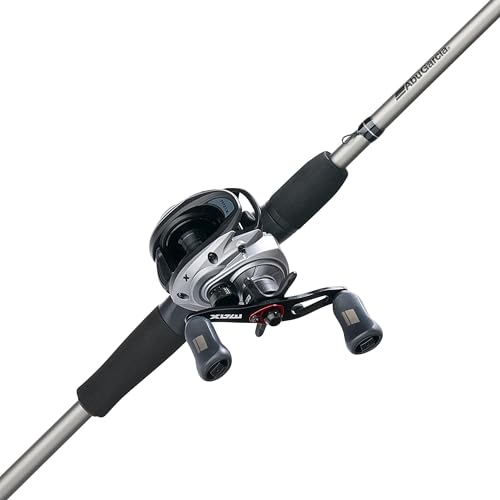
Abu Garcia Max X Baitcast Reel and 7' 2-Piece Fishing Rod Combo, Graphite Composite Rod Blank Construction, Split EVA Handles
Included for 'Best Baitcasting Combos for Every Budget and Fishing Style' because the listing specifies Graphite Composite Rod Blank Construction and Split EVA Handles, details this guide uses to compare options.
View on Amazon
KastKing Royale Legend II Twin-Tip Casting Combo, Right-Hand, 6'6" M
Included for 'Best Baitcasting Combos for Every Budget and Fishing Style' because the listing specifies Right-Hand and 6'6" M, details this guide uses to compare options.
View on Amazon
KastKing Spartacus II Baitcaster Fishing Combo,6'8" MH,Right Handed
Included for 'Best Baitcasting Combos for Every Budget and Fishing Style' because the listing specifies 6'8" MH and Right Handed, details this guide uses to compare options.
View on AmazonThe medium-heavy power handles typical bass jigs, Texas rigs, spinnerbaits, and frogs more confidently than a light rod. The trade-off is weight and refinement: an entry-level combo may feel less balanced, and the spool may require more thumb control when casting light lures. It is best for anglers using roughly 3/8- to 3/4-ounce lures rather than finesse presentations.
Lew’s American Hero or Mach Smash Combo: value with a bass-focused feel
Lew’s offers several bass-oriented combo lines, including American Hero and Mach Smash configurations. Depending on the package, expect a 6’10″–7′ medium-heavy rod and a reel in the neighborhood of a 7.5:1 retrieve ratio. These combos favor quick lure control and fast slack-line pickup.
Choose one if you fish soft plastics, jigs, and topwater lures more often than deep-diving crankbaits. Before buying, check whether the specific package uses a one-piece or two-piece rod, the included line, and the exact braking adjustment. Combo specifications can change between seasonal packages.
Best Mid-Range Choice: Shimano SLX DC Combo
The Shimano SLX DC combo stands out for anglers who want an easier transition into baitcasting. Its defining feature is the reel’s digital control braking system, which electronically adjusts spool braking during the cast. It does not eliminate the need to set spool tension or use your thumb, but it can make variable lure weights and changing wind less intimidating.
A commonly sold configuration uses a 7’2″ medium-heavy rod and a reel around 7.6 ounces, with gear ratios commonly in the 6.3:1 or 7.2:1 range depending on the version. A 7.2:1 model is the more versatile choice for bass because it retrieves slack quickly while remaining suitable for many moving baits.
The SLX DC is not automatically the best choice for very light lures. Digital braking improves control, but the rod’s medium-heavy power and spool design still favor conventional bass weights. It is also a poor reason to ignore proper casting technique: an overfilled spool or a lure below the rod’s rating can still produce a backlash.
Best for Lightweight All-Day Use: Daiwa Tatula Combo Options
Daiwa Tatula combo packages are worth considering when balance, casting comfort, and repeated use matter more than the lowest price. Tatula baitcasting reels commonly use an adjustable magnetic braking system, and many weigh approximately 7 ounces, depending on the model and spool configuration.
The advantage of a magnetic system is quick external adjustment. Add braking for a headwind or a beginner learning thumb control; reduce it gradually as the cast becomes smoother. A Tatula setup paired with a 7′ medium-heavy rod works well for bass, walleye-sized presentations, and general freshwater casting.
Check the rod’s lure rating carefully. A lightweight reel does not make a heavy-power rod suitable for 1/8-ounce lures. For lighter applications, select a medium rod with a lower lure rating rather than assuming a more expensive reel will solve the mismatch.
Rod Length and Power: The Fit Matters More Than the Brand
- 6’6″ to 6’10”: Easier to maneuver around docks, trees, and narrow banks. Good for beginners and kayak anglers, although it gives up some casting distance.
- 7′ to 7’3″: The most versatile range for bass. It improves casting distance and line control without becoming unwieldy.
- 7’3″ to 7’6″: Better for flipping, pitching, frog fishing, and long casts. The extra length helps move line and fish, but can be awkward in confined spaces.
- Medium power: Suits smaller crankbaits, jerkbaits, lighter Texas rigs, and open-water fish.
- Medium-heavy power: The safest general-purpose choice for bass, covering jigs, spinnerbaits, worms, and many topwater lures.
- Heavy power: Designed for thick vegetation, frogs, large swimbaits, and heavy hooks. It is excessive for small treble-hook lures.
Action also matters. Fast action concentrates flex near the tip and helps with single-hook lures. Moderate action flexes farther down the blank, keeping a fish pinned on crankbaits and other treble-hook baits.
Gear Ratio and Braking Systems Compared
| Gear ratio | Approximate use | Advantages | Limitations |
|---|---|---|---|
| 5.6:1–6.4:1 | Crankbaits and resistance-heavy lures | More torque and slower presentation | Slow slack-line pickup |
| 6.8:1–7.3:1 | All-purpose bass fishing | Good compromise for most techniques | Not ideal at either extreme |
| 7.4:1–8.3:1 | Frogs, flipping, and fast presentations | Rapid line recovery after a strike | Less torque and easier to retrieve too quickly |
Magnetic brakes are simple to adjust from the outside and are friendly for changing wind conditions. Centrifugal brakes often provide strong control during the early, fastest part of a cast and can feel smooth once dialed in. Digital braking adds automatic control across changing spool speeds, usually at a higher price and with greater electronic complexity.
For a first combo, an externally adjustable magnetic system is usually adequate. Spend more on digital braking when you frequently change lure weights, fish in wind, or want additional casting consistency rather than expecting it to replace technique.
Combo Weight and Real-World Comfort
A complete baitcasting setup commonly weighs about 10.5 to 14 ounces, depending on rod materials, guides, reel size, and handle hardware. The number alone is less important than balance. A slightly heavier combo that balances near the reel seat may feel better than a lighter rod that becomes tip-heavy.
Here is a practical estimate: if you cast 400 times during a six-hour trip, an extra 1 ounce is carried through roughly 25 pounds more repeated casting load than a lighter setup. This is not a precise measure of fatigue, but it explains why balance becomes noticeable during frequent use. For all-day fishing, prioritize a comfortable grip, a reel that sits low in the palm, and a rod that does not pull downward at the tip.
Setup and Maintenance That Prevents Most Problems
- Fill the spool correctly. Leave approximately 1/8 inch between the line and spool rim. Overfilling increases overruns; underfilling reduces casting distance.
- Match lure weight to the rod. Begin near the middle of the printed lure range, not at its extreme lower limit.
- Set spool tension. Tighten it until side-to-side spool movement disappears, then use the brake dial for cast control.
- Start with more braking. Reduce one setting at a time only after the cast is controlled. Use your thumb to stop the spool just before the lure lands.
- Rinse carefully after use. For freshwater, wipe the combo with a damp cloth and dry it. After brackish or saltwater exposure, use a light freshwater rinse without forcing water into the reel, then dry it thoroughly.
- Inspect the line and guides. Replace line damaged by rocks or cover, and check that guide inserts are not cracked. A damaged insert can abrade line quickly.
The parts most likely to wear first are line, level-wind components, spool bearings, handle knobs, and drag washers. Avoid spraying heavy oil or general-purpose lubricant into the reel. Use manufacturer-recommended reel oil and grease, and have complex internal service performed by a qualified reel technician if you are not comfortable disassembling the frame.
Final Buying Advice
For most anglers, a 7′ to 7’3″ medium-heavy rod, a 6.8:1 to 7.3:1 reel, and adjustable magnetic or centrifugal brakes form the best baitcasting combo starting point. Choose a budget combo when you fish occasionally and use standard bass lures. Move to a Shimano SLX DC, Daiwa Tatula, or comparable mid-range setup when you cast frequently and value smoother control, lighter weight, or easier adjustment.
Do not choose by gear ratio or reel brand alone. First identify your lure weights, cover, casting space, and expected hours on the water. The right combination of rod power, length, braking, and balance will make a modestly priced combo more useful than an expensive setup chosen for the wrong fishing style.



Write Your Review
No reviews yet. Be the first to share your experience!