
Key takeaways
- Why you need it: Seamlessly joins two lines of different diameters, crucial for transitioning from your fly line to your leader.
- How to tie (simplified): Lay the end of your fly line and leader side-by-side. Wrap the leader around the fly line 5-7 times, then pass the leader through the loop you created. Now, wrap the fly line around both the leader and itself 3-4 times. Pass the fly line through the loop near the leader end. Moisten, then pull both ends and tag ends simultaneously to cinch down the knot. Trim tag ends closely.
- Practice Tip: Use contrasting colored lines to visualize the wraps.
Welcome to the world of fly fishing! As a beginner, the sheer volume of information can be overwhelming, and nowhere is this more true than when it comes to knots. While the internet is flooded with hundreds of fishing knots, the reality is you only need a handful to get out on the water and start catching fish. This guide will cut through the noise and introduce you to the essential knots that will serve you reliably on nearly any fly fishing adventure.
Mastering a few key knots will not only boost your confidence but also ensure the integrity of your line, leader, and tippet, preventing costly break-offs and lost fish. We’ll focus on knots that are strong, relatively easy to learn, and versatile enough for most freshwater applications. Think of these as your foundational skills; once you’ve got these down, you can explore more specialized knots if the need arises. Let’s get tying!
Our top picks
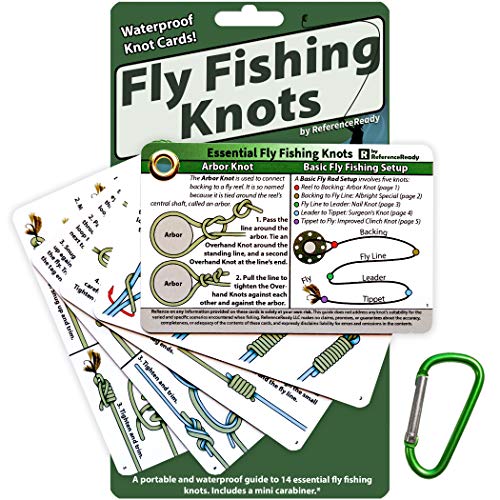
 ReferenceReady Easiest Fishing Knots Pocket Guide for
- Sport Type: Fishing
- Material Type: plastic
- Fishing Technique: Rod and Reel
Waterproof plastic card survives wet fishing conditions
Mini carabiner lets you clip it to a vest or pack
Color-coded diagrams make knots easy to follow step by step
Covers only 12 basic knots, not advanced techniques
Pocket-sized card limits how much detail each knot gets


As an Amazon Associate we earn from qualifying purchases at no extra cost to you.
⚡ Save on Your Next PC — Amazon Prime
Prime members get fast free shipping on the systems above, plus early access to Prime Day & Black Friday PC deals. New members get a 30-day free trial.
Watch: Beginner’s Guide to Fly Fishing Knots You Actually Need — Video Review
The Essential Leader-to-Line Knot: The Albright Special
This knot is your go-to for connecting your fly line to your leader. It’s strong, streamlined, and passes through rod guides with minimal friction. While it might look a bit intimidating at first, it’s surprisingly manageable with a little practice.
- Why you need it: Seamlessly joins two lines of different diameters, crucial for transitioning from your fly line to your leader.
- How to tie (simplified): Lay the end of your fly line and leader side-by-side. Wrap the leader around the fly line 5-7 times, then pass the leader through the loop you created. Now, wrap the fly line around both the leader and itself 3-4 times. Pass the fly line through the loop near the leader end. Moisten, then pull both ends and tag ends simultaneously to cinch down the knot. Trim tag ends closely.
- Practice Tip: Use contrasting colored lines to visualize the wraps.
The Leader-to-Tippet Knot: The Blood Knot
The Blood Knot is a classic for a reason. It’s incredibly strong and creates a smooth, low-profile connection between two sections of monofilament or fluorocarbon, typically your leader and tippet. This is the knot you’ll use most frequently on the water.
- Why you need it: Efficiently joins two segments of tippet or leader of similar diameter.
- How to tie (simplified): Overlap the ends of the two lines you want to join by about 6 inches. Wrap one end around the other line 5-7 times, working towards the overlap. Then, pass that same end back through the loop created by the first wrap, coming out between the two lines. Repeat the process with the other line, wrapping it around the first line 5-7 times and passing it back through its own loop. Moisten, then grasp each line individually and pull firmly to seat the knot. Trim tag ends.
- Practice Tip: Aim for 6-8 wraps on each side for maximum strength.
The Tippet-to-Fly Knot: The Improved Clinch Knot
This is arguably the most important knot for a beginner. It’s simple, secure, and works with almost any fly. It’s also incredibly forgiving, making it easy to learn and reliable to tie quickly on the riverbank.
- Why you need it: The standard for attaching your fly to your tippet.
- How to tie (simplified): Pass the tippet through the eye of the hook. Double the tippet back along its length and wrap it around the standing line 5-7 times. Pass the tag end back through the loop closest to the hook eye. Then, pass the tag end back through the larger loop you just created. Moisten the knot with saliva or water and pull the tag end and standing line simultaneously to tighten. Trim the tag end.
- Practice Tip: If you only learn one knot, make it this one. It’s foolproof and strong.
The Loop Knot for More Action: The Rapala Knot (or Non-Slip Mono Knot)
While the Improved Clinch Knot is excellent, sometimes you want your fly to have a bit more freedom of movement, especially with lures or streamers. A loop knot allows the fly to swing and dart more naturally. The Rapala Knot is a popular and effective choice for this.
- Why you need it: Creates a loop that allows your fly to move more freely in the water.
- How to tie (simplified): Tie an Improved Clinch Knot, but on the final step, pass the tag end through the eye of the hook and create a loop. Instead of pulling the tag end tight against the hook, pull the standing line to create a small, fixed loop. The fly will sit within this loop.
- Practice Tip: Ensure the loop is large enough for your fly’s dressing to move without restriction.
Tips for Knot Tying Success
- Practice Outside: While indoors is great for learning, practice tying your knots in conditions similar to fishing – wind, cold fingers, and limited light. This builds real-world confidence.
- Use a Tool: The pullther fishing 4PCS Fishing Knot Tying Tool can be a lifesaver for those with larger fingers or when dealing with fine tippet. It helps create neat, tight knots.
- Moisten Your Knots: Always moisten your knots with saliva or water before tightening. This reduces friction, preventing heat buildup that can weaken your line.
- Inspect and Trim: Before casting, always inspect your knot for any slippage or damage. Trim tag ends as closely as possible without cutting into the standing line.
Frequently Asked Questions
How many knots do I really need to know?
For 90% of fly fishing situations, mastering the Improved Clinch Knot, Blood Knot, and Albright Special will suffice. Adding a loop knot like the Rapala Knot will cover almost everything else.
What’s the best way to practice tying knots?
Start with a thicker diameter line (like old fly line or thicker monofilament) to get the feel for the wraps. Use contrasting colors if possible. ReferenceReady Knot Cards and guides are excellent visual aids for repetition.
Are there specific knots for different types of fishing?
Yes, but as a beginner, the core knots cover most freshwater scenarios. Saltwater, heavy-duty bass fishing, or specialized fly fishing might require different knots, but these basics are universally applicable.
How do I know if my knot is strong enough?
A well-tied knot, using the correct type for the material and application, should test at 80-90% of the breaking strength of your line or tippet. If you’re breaking knots, it’s usually due to poor tying, dry tightening, or incorrect knot selection.
Conclusion
Don’t let the fear of knots hold you back from enjoying fly fishing. By focusing on these essential, reliable knots, you’ll equip yourself with the skills needed to confidently connect your gear and present your flies effectively. Practice them until they become second nature, and you’ll be well on your way to a rewarding fly fishing journey. Remember, the best knot is the one you can tie correctly when it counts!



Write Your Review
No reviews yet. Be the first to share your experience!