
Key takeaways
- Basic spinning setup: $45–$90 initially, including a $20–$40 reel, a $20–$45 rod, and approximately $5–$10 for line and terminal accessories.
- Basic baitcasting setup: $75–$140 initially, including a $40–$85 reel, a $30–$50 rod, and approximately $5–$10 for line and accessories.
- Five-year consumables: Add roughly $25–$75 for replacement monofilament or braided line, depending on how often you fish.
- Storage and upkeep: Budget $10–$35 for a rod sleeve, reel cover, small tackle container, and occasional lubricant.
Choosing between a baitcasting reel and a spinning reel is less about finding the “best” fishing reel and more about choosing the setup you will actually enjoy using, storing, and maintaining at home. A baitcaster can offer excellent control, fast retrieves, and a compact, purposeful look. A spinning reel is usually easier to learn, more forgiving with light lures, and simpler to share with family members.
That distinction matters if your fishing gear lives in a small apartment, a busy garage, or a hall closet rather than a dedicated tackle room. The right choice should fit your experience level, the species you target, the amount of storage you have, and your five-year budget. This guide compares baitcasting reel vs spinning reel for beginners with those everyday considerations in mind.
Our top picks
 KastKing Spartacus II Baitcasting Reels
- Hand Orientation: Ambidextrous, Right Hand
- Fishing Technique: Baitcasting
- Gearbox Ratio: 7.2
 KastKing Royale Legend Pro Baitcasting Fish Reels
- Hand Orientation: Right Hand
- Material: Carbon Fiber
- Fishing Technique: Baitcasting
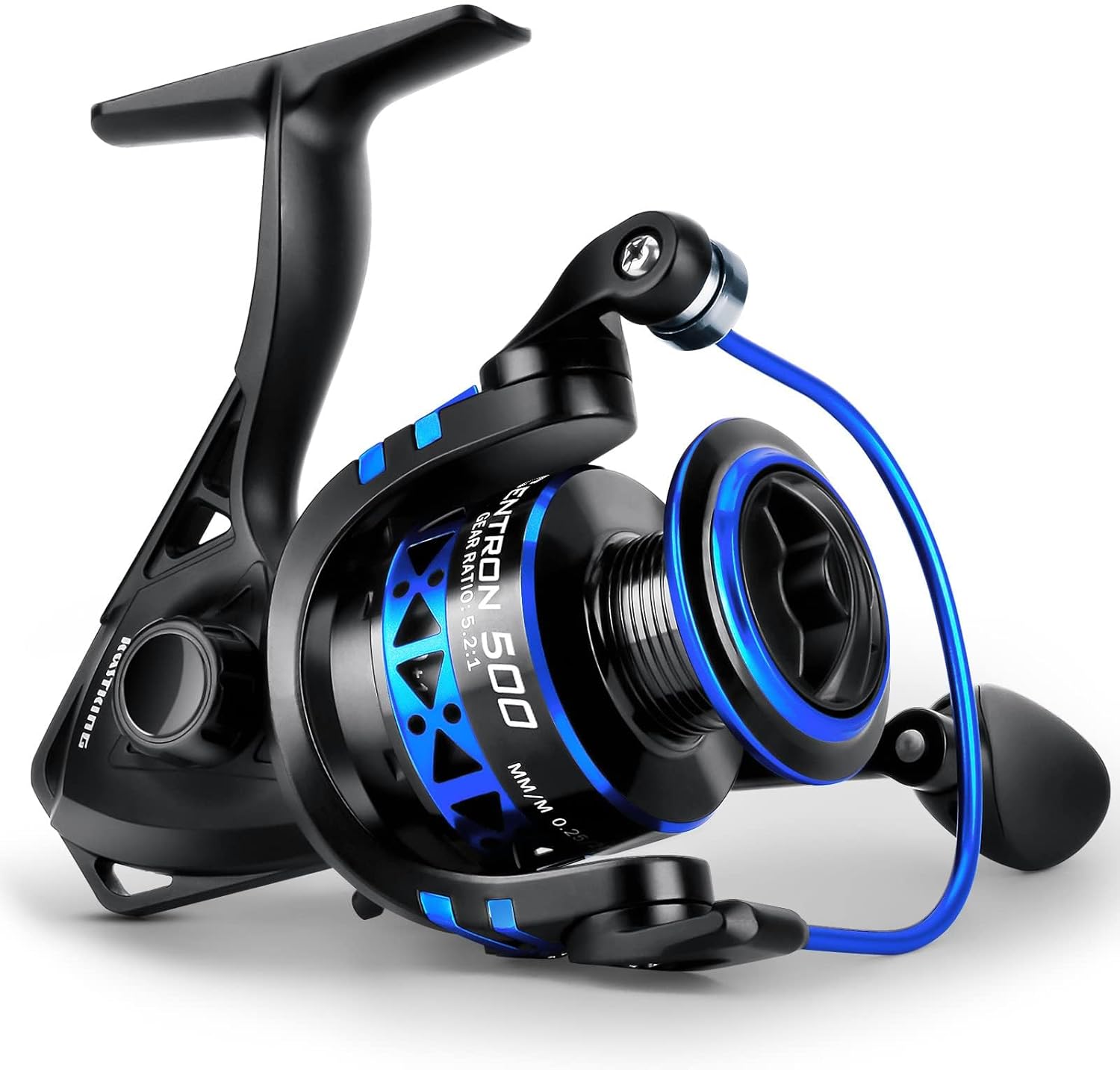 KastKing Centron Spinning Fishing Reels
- Hand Orientation: Ambidextrous
- Fishing Technique: Spinning
- Fishing Reel Maximum Drag: 17.6 pounds
| Product | Key specs | Amazon rating | |
|---|---|---|---|
| KastKing Spartacus II Baitcasting Reels | Hand Orientation: Ambidextrous, Right Hand Fishing Technique: Baitcasting Gearbox Ratio: 7.2 | 4.5★ | Check price |
| KastKing Royale Legend Pro Baitcasting Fish Reels | Hand Orientation: Right Hand Material: Carbon Fiber Fishing Technique: Baitcasting | 4.6★ | Check price |
| KastKing Centron Spinning Fishing Reels | Hand Orientation: Ambidextrous Fishing Technique: Spinning Fishing Reel Maximum Drag: 17.6 pounds | 4.5★ | Check price |
 PLUSINNO Fishing Rod and Reel Combos -24 PLUSINNO Fishing Rod and Reel Combos -24 | Fishing Technique: Casting Target Species: Bass Line Weight: 10 pounds | 4.4★ | Check price |
As an Amazon Associate we earn from qualifying purchases at no extra cost to you. Ratings are shown as listed on Amazon.
Quick Verdict
For most first-time buyers, a spinning reel is the safer choice. It handles light lures well, casts with a straightforward motion, and is less likely to develop the frustrating “bird’s nest” tangles associated with an improperly adjusted baitcaster. Spinning reels also tend to be less expensive, making it easier to build a complete rod-and-reel setup without overspending.
Choose a baitcasting reel if you expect to use heavier lures, fish around cover such as docks and vegetation, or want more direct control over the cast and retrieve. It takes practice, but many anglers eventually prefer its balance and accuracy. A model such as the right-handed KastKing Spartacus II, listed at $40.79, represents the lower-cost end of baitcasting equipment, while the KastKing Royale Legend Pro at $84.98 sits in a more feature-focused price range.
In short: beginners who value simplicity should start with spinning equipment. Beginners who specifically want casting precision and are willing to practice can start with a baitcaster.
Side by Side
| Factor | Baitcasting Reel | Spinning Reel |
|---|---|---|
| Comfort | Compact and balanced above the rod; thumb control takes practice. | Easy hand position and generally comfortable for long casual sessions. |
| Durability | Protected spool and sturdy frame can suit heavier use; gears need proper care. | Durable for general freshwater use, though the exposed spool needs protection. |
| Price range | About $40–$150 for many beginner and midrange options. | About $20–$100 for many beginner and midrange options. |
| Maintenance | Requires spool-tension and brake adjustments plus occasional gear lubrication. | Usually needs line care, rinsing, and occasional lubrication. |
| Space needed | Roughly 7–10 inches when mounted on a typical rod; store dry and covered. | Roughly 7–10 inches when mounted; the hanging spool may need extra protection. |
| Look | Technical, compact, and streamlined. | Familiar, open-spool appearance with a more traditional profile. |
| Resale | Can hold value well when clean and paired with a popular gear ratio. | Broad beginner demand makes clean, functional models easy to pass along. |
| Best for | Heavier lures, accurate casts, bass fishing, and experienced technique. | New anglers, light lures, changing conditions, and shared family use. |
Where Baitcasting Reel Wins
A baitcasting reel places the spool in line with the rod, creating a direct path for the fishing line. That layout can feel more controlled when pitching or flipping a lure toward a specific target. With practice, you can use your thumb to slow the spool at the end of a cast and land a lure close to a dock post, fallen tree, or weed edge.
Baitcasters are also a strong match for heavier line and lures. If you commonly throw large crankbaits, spinnerbaits, frogs, or weighted soft plastics, the reel’s compact frame and direct gearing can feel powerful and stable. A fast gear ratio, such as 7.2:1 or 8.0:1, retrieves more line with each handle turn, which can help when quickly taking up slack. The KastKing Spartacus II is listed with a 7.2:1 ratio, while the KastKing Royale Legend Pro is listed at 8.0:1; both illustrate the fast-retrieve category.
The baitcaster’s shape can also be easier to store neatly. It does not have a large, projecting bail arm, and the reel sits close to the rod. For a wall rack, tall cabinet, or narrow gear bin, that compact profile can make organization simpler. Use a rod sleeve or soft case, however, because loose hooks and other tackle can damage the line or scratch the reel.
The trade-off is a steeper learning curve. If the spool spins faster than the lure is pulling line, excess line gathers into a tangle. Beginners can reduce that risk by setting the spool tension correctly, using the magnetic or centrifugal brake, and practicing with a heavier plug in an open area. Expect several short practice sessions rather than instant accuracy.
Where Spinning Reel for Beginners Wins
A spinning reel is generally easier to cast because the spool does not rotate during the cast. Open the bail, hold the line against your finger, and release it as the rod moves forward. That simple sequence works well for many beginners and reduces setup time when several people are fishing together.
Spinning equipment is especially useful with light lures and small baits. A 1/16- to 1/4-ounce lure may be easier to launch on a light or medium-light spinning rod than on a baitcaster. The design also handles many line types and conditions with relatively little adjustment. If your fishing includes panfish, trout, bass, casual pond fishing, or travel, a spinning reel is often the most adaptable starting point.
Entry prices are appealing. The KastKing Centron 500-size spinning reel is listed at $22.94, giving a beginner a low-cost way to try the hobby. A complete option such as the PLUSINNO telescopic spinning rod and reel combo is listed at $44.95 and includes a travel-oriented rod, reel, and carrying case. A combo can be practical when closet space is limited because the components are designed to be stored and transported together.
Spinning reels are not maintenance-free. Rinse saltwater equipment with fresh water, wipe the reel dry, and avoid spraying high-pressure water into the housing. Check the line for rough sections and replace it when it becomes visibly worn or develops repeated tangles. Store the reel away from direct heat, damp floors, and pets that may chew fishing line.
Cost Over 5 Years
A realistic five-year budget includes more than the reel. For a beginner setup, plan on the reel, a compatible rod, fishing line, replacement line, and basic storage. Prices vary, but the following ranges are useful for comparison:
- Basic spinning setup: $45–$90 initially, including a $20–$40 reel, a $20–$45 rod, and approximately $5–$10 for line and terminal accessories.
- Basic baitcasting setup: $75–$140 initially, including a $40–$85 reel, a $30–$50 rod, and approximately $5–$10 for line and accessories.
- Five-year consumables: Add roughly $25–$75 for replacement monofilament or braided line, depending on how often you fish.
- Storage and upkeep: Budget $10–$35 for a rod sleeve, reel cover, small tackle container, and occasional lubricant.
That places a practical five-year total at approximately $80–$200 for a basic spinning setup and $110–$250 for a basic baitcasting setup. These estimates assume one rod and reel, occasional freshwater use, and no major damage. Frequent saltwater trips, premium rods, specialized lures, or professional servicing can raise the total substantially.
The cheapest purchase is not always the cheapest ownership choice. A spinning reel may save money if it prevents an early upgrade caused by frustration. A baitcaster may provide better long-term value if you are committed to heavier fishing and will use its extra control.
Which One for Your Home
Small Apartment
Choose a spinning reel or a compact baitcaster based on your fishing plans, but prioritize a complete storage solution. A seven- to ten-inch reel mounted on a rod can fit in a narrow closet, while a telescopic spinning combo can reduce the stored length when space is tight. Keep the rod horizontal or vertical in a sleeve, and store hooks in a closed box rather than loose in a drawer.
Family With Kids or Pets
A spinning reel is usually the better shared option because new users can learn the basic cast quickly. Select a reel with a comfortable handle and a rod length that is manageable for the smallest regular user. Store every setup with hooks covered and line secured. A baitcaster is appropriate when one experienced adult will handle the equipment and teach others gradually.
Rental
For a rental home, choose gear that is easy to transport and unlikely to require wall-mounted storage. A spinning combo with a case can stay in a closet, under a bed, or in a vehicle trunk. Avoid leaving wet equipment on hardwood, carpet, or a balcony; use a plastic tray or towel while the reel dries. This reduces the risk of water marks and salt residue.
Long-Term Home
If you have a garage, mudroom, or dedicated gear cabinet, either style can work. A baitcaster makes sense for a committed angler who wants multiple setups for different lures. A spinning reel remains the more versatile choice for guests, light tackle, and changing fishing trips. Label separate bins for rods, reels, line, and hooks so maintenance does not become a seasonal chore.
FAQ
Is a baitcasting reel harder for beginners?
Usually, yes. The main challenge is controlling the spool during a cast. Begin with a heavier practice lure, lower the brake setting gradually, and use short casts until your thumb control improves. A spinning reel offers a gentler learning curve.
Can beginners use a baitcaster for light lures?
They can, but the reel and rod must be designed for lighter weights. Many standard baitcasting setups work more comfortably with medium-weight lures. For very light lures, a light spinning setup is generally simpler and more reliable.
Which reel is better for saltwater?
Neither style is automatically saltwater-proof. Look for corrosion-resistant materials, rinse the reel with fresh water after use, dry it thoroughly, and follow the manufacturer’s care instructions. Saltwater exposure can shorten the life of any reel.
Should I buy a reel or a combo first?
A combo is convenient when you want a matched rod and reel at a predictable price, especially for travel or limited storage. Buy separately when you want a specific rod action, line capacity, or reel style. For most first-time buyers in 2026, a reasonably priced spinning combo is the simplest starting point.



Write Your Review
No reviews yet. Be the first to share your experience!