
Key takeaways
- The listing says “fluorocarbon coated” but never says “100% fluorocarbon.”
- The product gives pound test but no diameter, length, or intended use.
- The price is unusually low for a short leader spool but shipping costs are hidden until checkout.
- The line arrives with flattened sections, cloudy discoloration, or severe memory.
- The package promises extreme strength without explaining knot, abrasion, or storage limitations.
- You are choosing 30-pound leader for a tiny lure solely because a larger number seems safer.
Choosing leader strength is less about buying the thickest fluorocarbon you can find and more about matching the line to the fish, cover, lure, and water conditions. A leader that is too light can break at the knot or against rocks. One that is too heavy may reduce lure action, look unnatural, or make casting awkward.
The most common mistake is treating the pound-test number as a guaranteed breaking point. A label such as 10 lb describes the manufacturer’s rated strength, but knots, abrasion, nicks, heat, and sudden shock can reduce real-world performance. Anglers also confuse main-line strength with leader strength, choose leader diameter without considering visibility, or buy a 25-yard leader spool when they actually need a 200-yard filler spool.
Our top picks


As an Amazon Associate we earn from qualifying purchases at no extra cost to you. Ratings are shown as listed on Amazon.
This guide explains how to choose fluorocarbon leader strength using practical numbers rather than marketing language. The right choice in 2026 depends on several connected specifications, not just the largest number printed on the package.
Decide These 3 Things First
- Target species and expected fish size: A 4- to 8-pound leader may suit trout, panfish, and small bass in open water. A 10- to 15-pound leader is a more flexible range for bass, walleye, inshore species, and light cover. Fish with sharp teeth, rough mouths, or powerful runs may require 20 to 40 pounds or more.
- Cover and abrasion: Open sand and clean rock are less demanding than docks, wood, shell beds, vegetation, and barnacle-covered structure. Add strength when a fish can wrap the leader around cover or rub it against a hard surface.
- Presentation and casting: Lighter fluorocarbon is usually less visible and more flexible, while heavier leader is easier to handle and more resistant to abrasion. Decide whether your priority is stealth, lure action, casting distance, or insurance against cover before comparing brands.
Size: Match Pound Test to Fish and Cover
Leader size is normally expressed in pounds, but diameter is equally important. Two products with the same rated strength can have different diameters, stiffness, and knot performance. Check the package for diameter in inches or millimeters when available.
| Typical leader strength | Best use | Important limitation |
|---|---|---|
| 4–6 lb | Trout, panfish, finesse presentations, clear open water | Vulnerable to sharp cover and large fish |
| 8–12 lb | General bass, walleye, light inshore fishing | May be inadequate around wood, rocks, or heavy weeds |
| 15–20 lb | Heavy bass cover, larger walleye, moderate inshore structure | Can reduce lure action on small baits |
| 25–40 lb | Snook, pike, nearshore saltwater, sharp or abrasive structure | Stiffer, more visible, and harder to knot cleanly |
A useful starting point is to choose leader strength roughly equal to your main line for open-water fishing. In heavy cover, the leader may be one or two ratings stronger than the main line. Do not assume a stronger leader makes the entire setup stronger: the weakest knot, swivel, hook, or main-line section still determines the system’s practical limit.
Material: Confirm It Is 100% Fluorocarbon
Look for wording such as “100% fluorocarbon” or “fluorocarbon leader.” Some products marketed as fluorocarbon are actually coated monofilament. Coated lines can be useful and inexpensive, but they do not provide the same underwater density, stiffness, or abrasion behavior as a true fluorocarbon product.
Fluorocarbon sinks faster than nylon monofilament and is generally less visible underwater. Those traits can help with suspending or bottom-oriented presentations, but they do not make the line invisible in every condition. Clear water, direct sunlight, line diameter, and movement all affect visibility.
For example, Berkley Vanish Clear is sold in an 8-pound, 250-yard spool for about $9.87. Seaguar Red Label is a 10-pound, 200-yard 100% fluorocarbon line priced around $15.48. These are filler-spool formats that make sense when you need to replace a longer section or use fluorocarbon as a main line. A short leader spool is more convenient when you only need terminal connections.
Construction: Choose Leader Material or Main-Line Format
Not every fluorocarbon spool is built for the same job. Main-line fluorocarbon is designed to be managed on a reel over a longer length. Leader material is often sold in 20- to 50-yard spools and may prioritize diameter consistency, stiffness, and abrasion resistance.
A short leader spool is convenient for making leaders from 18 inches to 6 feet. Longer leaders can be useful in clear water or around fish that circle the boat, but excessive length creates casting and knot-management problems. For many spinning setups, 2 to 4 feet is a practical starting length. Around heavy cover, 12 to 24 inches may be easier to control.
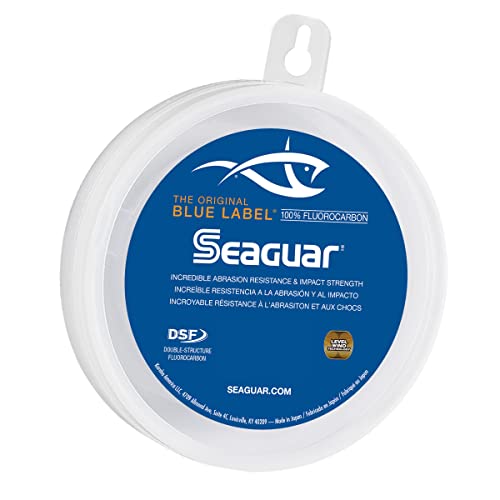
Seaguar Gold Label, for example, is a 20-pound, 25-yard leader product priced around $16.79. Seaguar Blue Label is available as a 25-pound, 50-yard leader spool at approximately $12.99. Compare price per yard, but also consider whether a leader-specific construction saves time and reduces waste.
Comfort and Performance: Evaluate Flexibility, Memory, and Knots
Heavier fluorocarbon is typically stiffer than lighter line. Stiffness can improve abrasion resistance and make a short leader easy to inspect, but it may create coils, reduce lure freedom, and cause wind knots on spinning gear. A 30- to 40-pound leader can also be difficult to thread through small hook eyes.
Before fishing, stretch and inspect a short section. Replace it if you see white stress marks, flat spots, roughness, or a sharp bend that will not straighten. Tie the recommended knot carefully and moisten the line before tightening. Common leader connections include an improved Albright, Alberto, FG, or double uni knot; the best choice depends on your line diameters and tying skill.
For a small lure weighing 1/16 to 1/4 ounce, a 4- to 10-pound leader generally preserves better action than 20-pound material. For a 1/2- to 1-ounce lure around wood or rock, 12- to 20-pound leader can offer a more reasonable balance. These are starting ranges, not guarantees.
Price Tiers: Compare Cost per Yard and Cost per Trip
Budget fluorocarbon commonly costs about $8 to $12 for 200 to 250 yards. It is a practical choice for frequent reties, practice knots, and situations where the leader is replaced often. Berkley Vanish at about $9.87 fits this category.
Midrange products generally cost $12 to $20 for 150 to 250 yards, or about $12 to $18 for a 25- to 50-yard leader spool. Seaguar Red Label at approximately $15.48 is an example of a midrange filler spool, while Blue Label at about $12.99 offers a leader-specific format.
Premium leader material often costs $16 to $30 for 20 to 50 yards. The higher price may be worthwhile when you need a specific diameter, consistent knot performance, or heavy abrasion resistance. Seaguar Gold Label at roughly $16.79 is priced in this short-spool segment.
Do not compare a 25-yard leader spool directly with a 250-yard line spool without calculating cost per yard. Also account for waste: if you retie after every fish or snag, a lower-cost product may deliver better value even if it is not the most refined option.
Warranty and Quality Control: Read the Actual Policy
Fishing-line warranties vary, and many are limited to manufacturing defects rather than breakage caused by knots, abrasion, aging, or incorrect storage. Before paying extra for a premium spool, check the package or manufacturer’s current warranty terms. Do not assume that a higher price means a lifetime replacement policy.
Inspect a new spool for consistent diameter, clean winding, and a smooth surface. A practical quality check is to pull several feet from different parts of the spool and look for flat spots, discoloration, or rough sections. Keep the receipt and package if the line appears defective. Replace fluorocarbon that has been exposed to prolonged heat, direct sunlight, chemicals, or repeated crushing in a tackle box.
Delivery and Setup: Buy the Format You Can Use
Online listings can make a leader spool look larger than it is. Confirm both length and strength before ordering. A 25-yard spool is enough for dozens of 2-foot leaders, while a 200-yard spool is better for anglers who use fluorocarbon as main line or fish frequently.
Allow at least 6 to 12 inches of extra material for tying and trimming each connection. Store the spool in a cool, dry tackle box, and avoid leaving it on a hot dashboard. When setting up, cut a leader length that keeps the connection outside the rod tip during normal casting unless your knot and rod guides are specifically suited to repeated passage.
Spec Checklist
| Spec | Budget | Mid | Premium |
|---|---|---|---|
| Typical strength | 4–12 lb | 8–20 lb | 15–40+ lb |
| Typical spool length | 200–250 yd | 150–250 yd or 25–50 yd | 20–50 yd |
| Typical price | $8–$12 | $12–$20 | $16–$30 |
| Best use | Frequent reties and general fishing | All-around use and mixed conditions | Specific diameters and demanding cover |
| Priority | Low replacement cost | Balance of handling and durability | Specialized leader performance |
Red Flags
- The listing says “fluorocarbon coated” but never says “100% fluorocarbon.”
- The product gives pound test but no diameter, length, or intended use.
- The price is unusually low for a short leader spool but shipping costs are hidden until checkout.
- The line arrives with flattened sections, cloudy discoloration, or severe memory.
- The package promises extreme strength without explaining knot, abrasion, or storage limitations.
- You are choosing 30-pound leader for a tiny lure solely because a larger number seems safer.
FAQ
Is stronger fluorocarbon always better?
No. Stronger line is usually thicker and stiffer, which can reduce lure action and increase visibility. Choose the lightest strength that safely handles the fish and cover you expect.
Should leader strength match main-line strength?
It can, especially in open water. Around rocks, docks, wood, or vegetation, a leader one or two ratings stronger than the main line may provide useful abrasion resistance. The complete setup is limited by its weakest component.
How long should a fluorocarbon leader be?
Start with 2 to 4 feet for general spinning or casting applications. Use 12 to 24 inches around heavy cover for easier control, or extend toward 6 feet when clear water and cautious fish make stealth more important.
How often should fluorocarbon leader be replaced?
Replace it whenever it feels rough, shows nicks, develops flat spots, or has been stressed by a large fish or snag. Even an apparently clean leader should be checked after each fish in abrasive cover and retied when the knot or final few inches look compromised.




Write Your Review
No reviews yet. Be the first to share your experience!