
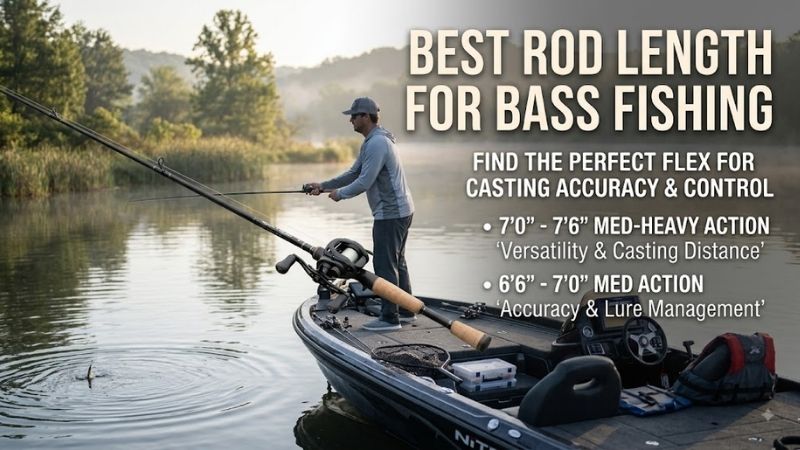
Finding the best rod length for bass fishing is the quickest way to improve your casting accuracy and hookset leverage on the water. Here at fishnholeoutdoors.com, I have analyzed the latest 2026 industry standards and community feedback to help you choose the perfect rod size for your specific style of bass fishing.
🛒 Best Price Today on Amazon
Prime members get fast, free shipping on everything above, plus member-only deals. New members get a 30-day free trial — cancel anytime.
The All-Rounder: Why 7-Foot to 7’4″ Rods Dominate
If you want a single setup that can handle almost any bass scenario, focusing on the middle of the length spectrum is your best move. Based on current manufacturer standards and community consensus, this medium range offers the ultimate balance for multi-species bass angling.
| Rod Length Range | Primary Setup Type | Best Applications / Techniques | Primary Benefit |
|---|---|---|---|
| 6’6″ to 6’10” | Baitcasting / Spinning | Topwater, jerkbaits, target casting in tight cover | Maximum accuracy and ease of downward twitching |
| 7’0″ to 7’4″ | Baitcasting / Spinning | All-around, jigs, Texas rigs, spinnerbaits | Optimal balance of distance, control, and hookset power |
| 7’6″ to 8’0″ | Baitcasting | Flipping, pitching, deep-diving crankbaits | Maximum leverage, line pickup, and casting distance |
| 7’6″ to 8’8″ | Spinning / Fly-style | Finesse drift, specialized fly-style bass fishing | Extreme casting distance with ultra-light lines |
Balancing Casting Distance and Control
A rod in the 7′ to 7’4″ range acts as the perfect lever for the everyday angler. Longer rods swing in a wider arc, which accelerates the tip faster to launch your lures over massive distances. However, if a rod is too long, you lose the ability to make precise, close-quarters casts around structure.
Our top picks


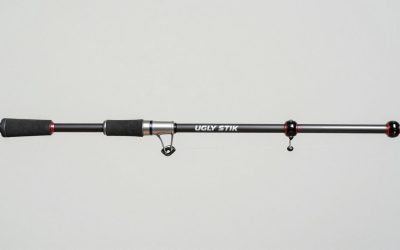
 Ugly Stik GX2 Spinning Reel and Fishing
- Fishing Technique: Spinning
- Target Species: Bass
- Line Weight: 12 lb
Sized and styled specifically for young anglers
PVD-coated guides resist corrosion and reduce line fray
Backed by a ten year warranty
6 to 12 pound line weight limits it to smaller fish
Compact 5.5 foot length limits casting distance versus longer rods
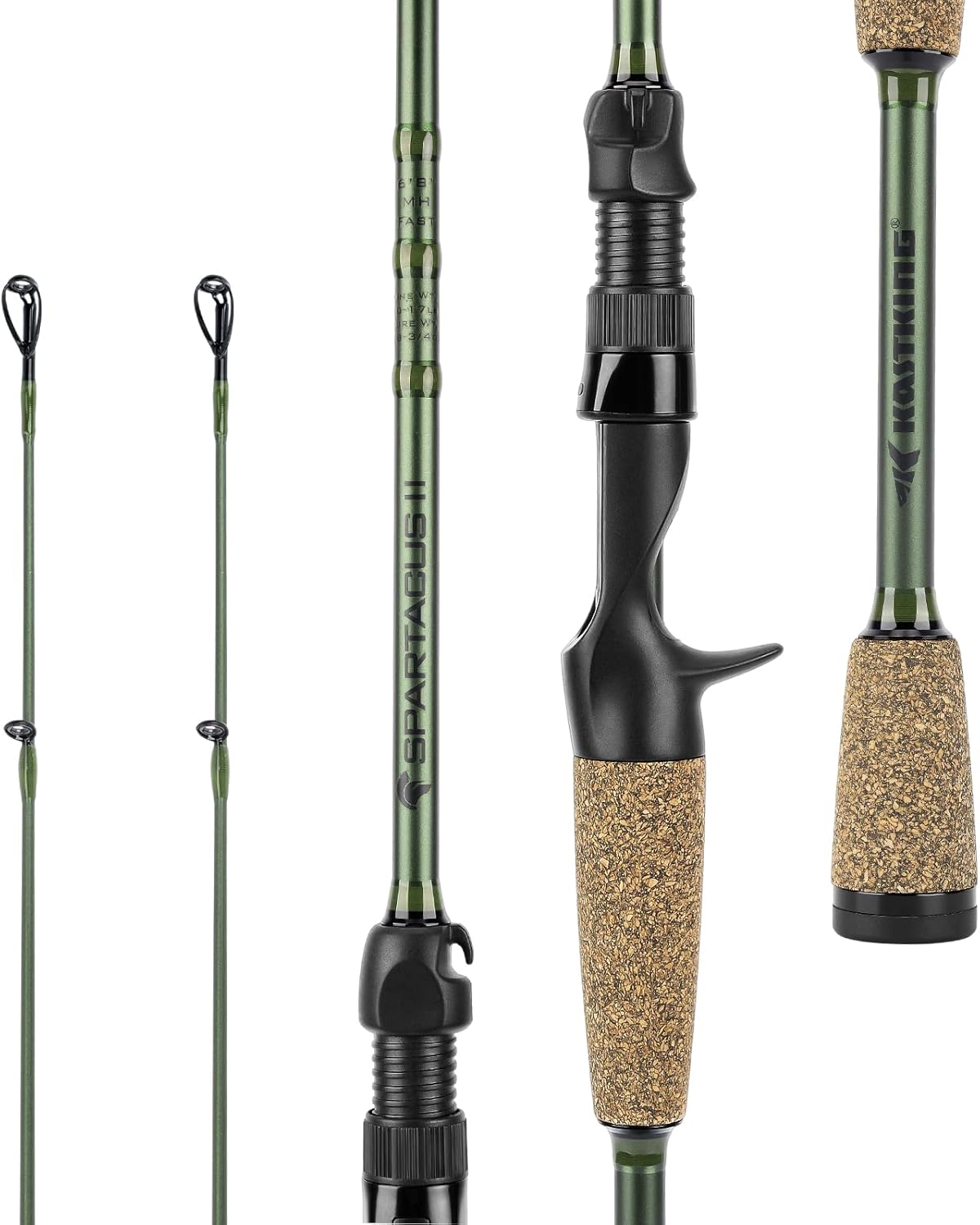 KastKing Spartacus II Twin-Tip Spinning & Casting
- Fishing Technique: Casting
- Action: Fast
- Line Weight: 17 pounds
Zirconium oxide guide rings cut friction and reduce tangles
Extra tip section included as a backup if one breaks
Integrated hook keeper makes bait storage convenient
Fast action may feel less forgiving for beginners
17 pound line weight limits use with heavier line
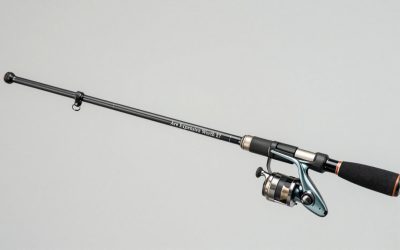
 Sougayilang Fishing Rod Reel Combo with Telescopic
- Fishing Technique: Spinning
- Target Species: Bass, Trout
- Line Weight: 10 pounds
As an Amazon Associate we earn from qualifying purchases at no extra cost to you.
I recommend this length range because it gives you enough tip speed to clear the bank while retaining the control needed to target specific weed lines. According to verified buyer reviews, rods in this category keep you from feeling fatigued after a full day of casting, making them highly manageable for beginners and seasoned pros alike.
Versatility Across Bass Techniques
For anglers who want to carry just one rod on their boat or kayak, a 7’0″ medium-heavy fast action rod remains the gold standard. It is long enough to pick up slack line quickly on a deep Texas rig hookset, yet short enough that you won’t constantly hit the water’s surface when working a walking topwater lure.
Based on the specs of top-selling rods, this length range accommodates a wide variety of lure weights, typically from 1/4 ounce up to 3/4 ounce. If you are building your first serious bass setup, starting within this sweet spot ensures you will not be limited when switching from soft plastics to moving baits.
Baitcasting Rod Lengths: Precision and Power
Selecting the right baitcasting rod requires a close look at how you present your lures and the type of cover you fish. Because baitcasting gear is designed for heavier lines and high-leverage situations, your rod length directly impacts your physical leverage over a fighting fish.
The Sweet Spot for Baitcasting (6’6″ to 7’2″)
For general baitcasting duties, the sweet spot lies between 6’6″ and 7’2″. This range allows you to handle heavier lures like swimbaits, spinnerbaits, and heavy jigs without feeling off-balance. I suggest looking at a 7’0″ model as your baseline, as it provides the ideal leverage for driving single-hook jigs into a bass’s jaw.
Angler discussions from early 2026 highlight that this range offers the physical stiffness needed to pull bass out of light cover while still loading up properly during a cast. It is a highly forgiving length that helps minimize backlashes for those who are still mastering baitcasting reels.
When to Go Shorter for Accuracy
Shorter baitcasting rods, specifically those around 6’6″ to 6’8″, excel when you are fishing in tight quarters. If you find yourself casting under overhanging tree limbs or target-casting around dock pilings, a shorter rod gives you a tighter casting arc. This makes roll casts and sidearm casts much more controllable, preventing costly hang-ups in the brush.
The trade-off with a shorter rod is a slight loss in casting distance and line pickup speed. However, if your local lake is choked with standing timber where pinpoint accuracy is the difference between a strike and a snag, stepping down in length is a very smart compromise.
Spinning Rod Lengths: Finesse and Distance
Spinning tackle is the go-to choice for light lines and finesse presentations that require maximum sensitivity. Because spinning reels naturally release line with minimal friction, the rod’s length plays a massive role in how far you can launch lightweight lures.
Why Longer Rods (7′ to 8′) Improve Spinning Performance
In the spinning world, longer rods between 7′ and 8′ are highly favored by modern anglers. The extra length allows the rod to load up deeply even when throwing lightweight lures like Ned rigs, drop shots, or hair jigs. This extra whip translates to incredible casting distance, letting you keep your boat far away from easily spooked bass in clear water.
Additionally, a longer rod helps you pick up slack line rapidly when a bass bites at the end of a long cast. If you are fishing deep flats, a 7’6″ spinning rod gives you the sweeping hookset power needed to drive the hook home through dozens of yards of water.
Managing Finesse Tactics
When managing finesse tactics, a longer spinning rod also helps you control your line drift and keep more of your line off the water’s surface. This is crucial for detecting subtle, pressure-based bites in windy conditions. While an 8′ rod might feel cumbersome in a small kayak, a 7’2″ to 7’4″ spinning rod offers a fantastic middle ground for handling light fluorocarbon lines.
Keep in mind that very long spinning rods can sometimes feel tip-heavy if paired with an ultra-light reel. I recommend balancing any spinning rod over 7’2″ with a properly sized 2500 or 3000-size reel to ensure the outfit balances comfortably in your hand.
Technique-Specific Length Considerations
While general-purpose rods are great, specialized bass fishing techniques demand specific rod lengths to perform correctly. Matching your rod length to your specific presentation will dramatically increase your hookup ratio and overall efficiency on the water.
Topwater and Jerkbait Requirements
When fishing topwater walking baits or jerkbaits, you constantly work the rod tip with a downward snapping motion. If your rod is too long, you will repeatedly slap the water or the side of your boat. For this reason, I highly recommend choosing a shorter rod between 6’6″ and 6’10” to keep your movements clean and precise.
These shorter rods also feature shorter rear grips, which prevents the rod butt from catching on your clothing or forearm as you work the lure. The result is a much more natural presentation that keeps your jerkbait darting erratically.
Flipping and Pitching for Heavy Cover
Conversely, flipping and pitching into dense grass, reeds, or standing timber requires serious length and power. A rod measuring 7’4″ to 8’0″ is essential here. The added length allows you to gently drop your lure into tiny pockets of cover from a distance without spooking the fish.
Once a bass strikes, the massive leverage of a 7’6″ or longer rod allows you to hoist the fish out of thick vegetation before it can wrap your line around a branch. For this style of fishing, do not hesitate to go as long as your boat deck allows.
How to Choose the Right Rod Length for Your Needs
To find the best rod length for bass fishing in your specific situation, you need to evaluate your typical fishing environment. If you primarily fish from the bank of a heavily wooded pond, a 7’4″ rod will likely constantly catch on branches behind you. In this specific real-world scenario, I’d suggest stepping down to a 6’8″ or 6’10” rod, which gives you the maneuverability to cast around tight brush without sacrificing too much casting distance.
On the other hand, if you are fishing from a bass boat on expansive lakes where casting distance and deep-water hooksets are your primary concerns, a longer rod is always your friend. I recommend opting for a 7’2″ to 7’6″ rod to maximize your coverage area and ensure you can pick up slack line quickly when a bass strikes at the end of a long cast.
Finally, consider your height and physical comfort. A shorter angler might find an 8-foot rod exhausting to manage over an eight-hour day, whereas a taller angler can handle a longer blank with ease. Always balance the technical requirements of your favorite lures with what feels balanced and comfortable in your hands.
Check the latest price on Amazon:
- Best Fishing Rod And Reel For Catfish: Ultimate Proven Gear
- Best Fly Fishing Rod For Trout: Proven Excellent Choices
- Best All Around Fishing Rod Choices For Ultimate Reliable Gear
- Best Rod And Reel For Salmon Fishing: Ultimate Great Gear
- Best Starter Fly Fishing Rod Selection for Ultimate Success
Conclusion: Making Your Final Selection
Selecting the perfect rod length is all about finding the right compromise between casting distance, accuracy, and lure control. While specialized techniques like flipping or fishing jerkbaits benefit from extreme lengths, most anglers will find their sweet spot in the 7’0″ to 7’4″ range. This versatile middle ground ensures you can throw everything from Texas rigs to spinnerbaits with confidence.
By assessing your fishing style, your boat setup, and the cover you target, you can easily narrow down the options. I recommend starting with a versatile 7-foot medium-heavy rod if you want a do-it-all setup, and then expanding your arsenal with specialized lengths as your techniques diversify.
For more gear breakdowns and expert angling advice, keep exploring our resources here at fishnholeoutdoors.com. Equip yourself with the right tools, head out to your local waters, and enjoy the confidence that comes with having the perfect rod in hand.
Write Your Review
No reviews yet. Be the first to share your experience!