
Key takeaways
- Auto free-fall is genuinely precise for single-hand operation
- 316 stainless housing shows no pitting after extended salt exposure
- Higher price than alternatives with comparable pull ratings
An anchor windlass is the kind of gear you think about the most while you’re standing in the cockpit with wet hands, watching your bow swing toward a dock in a crosswind. The best anchor windlasses on the market solve one specific problem: they let a single angler handle anchoring in conditions where the boat’s momentum, chain weight, and your own fatigue would otherwise turn a simple task into a dangerous scramble. The difference between a windlass that works and one that fails under load comes down to motor sizing relative to your chain diameter, the quality of the gypsy engagement, and whether the free-fall mechanism actually stops when you need it to.
What separates a good windlass from a mediocre one isn’t a spec sheet number—it’s consistency. A unit rated at 700 pounds of pull should deliver that pull on a full spool of chain, not just at the top when the rode is short. Stainless steel housings that corrode within two seasons, gypsies that skip links under tension, and motors that overheat after thirty seconds of continuous operation are the failures that matter. This roundup covers eight systems spanning budget rope-and-chain combos to full marine-grade electric setups, tested against those real-world expectations.
Our top picks




As an Amazon Associate we earn from qualifying purchases at no extra cost to you.
Quick Picks
| Product | Best for | Price |
|---|---|---|
| Lewmar Pro Fish 700 | Serious offshore fishing boats up to 38′ | n/a |
| Lewmar Pro-Series Gypsy | Integrated gypsy upgrades on 20′-38′ boats | n/a |
| Excalibur Vertical/Horizontal | High-horsepower needs on boats up to 40′ | n/a |
| VEVOR Vertical Windlass | Budget-conscious boaters on 20-36 ft vessels | n/a |
| Anchor Rode (Rope + Chain) | Completing or replacing a rode setup | $2 |
| Maxwell RC8 | Remote-controlled anchoring with larger chain | n/a |
| Lewmar Pro Sport 550 | Smaller boats where weight and cost matter | n/a |
| Five Oceans 12V Electric | Entry-level electric windlass on a tight budget | n/a |
How We Picked
We evaluated each unit against four criteria that actually determine whether a windlass survives life on the water: motor pull rating relative to the chain size it handles (a mismatch here is the most common cause of premature failure), corrosion resistance of the housing and gypsy under salt exposure, the reliability of the free-fall or clutch mechanism under repeated cycling, and whether the system is sized appropriately for the boat length range the manufacturer claims. A windlass that checks all four boxes is worth its price; one that fails on any single one will leave you cursing at the bow.
The 8 Best Anchor Windlasses in 2026
Lewmar Pro Fish 700 Fishing Windlass
This is the unit most offshore anglers on 30-to-38-foot boats will eventually end up with, and for good reason. The 700-pound maximum pull handles 1/4″ G4 chain without complaint, and the auto free-fall system stops cleanly when you feather the rode rather than dumping it all at once. The 316 stainless steel construction shrugs off salt spray far better than aluminum housings at this price point. The gypsy engagement is positive across the full chain range, meaning no skipping links mid-haul.
- Auto free-fall is genuinely precise for single-hand operation
- 316 stainless housing shows no pitting after extended salt exposure
- Higher price than alternatives with comparable pull ratings
Skip this if your boat is under 25 feet—you’re paying for capacity you won’t use. Also skip if your chain is anything other than 1/4″ G4, as the gypsy profile is specific.
Lewmar 12V Pro-Series Gypsy
Not a full windlass on its own, but a gypsy assembly that integrates into Lewmar’s Pro-Series platform. Boaters who already have a Lewmar motor unit and need to upgrade or replace the gypsy will find this the natural choice. The 500-watt 12V configuration pairs with the same 700-pound pull spec and 1/4″ G4 chain sizing as its full-unit sibling.
- Exact fit for existing Lewmar Pro-Series installations
- 316 stainless construction matches full-unit durability
- Requires a compatible Lewmar motor base to function
Skip this entirely if you don’t already own a Lewmar Pro-Series windlass body—it’s a component, not a standalone solution.
Excalibur Vertical or Horizontal Windlass
The power range here is the story: 600W to 900W options delivering 992 to 1,452 pounds of pulling force. That makes it the only unit in this roundup that handles boats up to 40 feet without straining, and the dual vertical-or-horizontal orientation gives installers flexibility in tight bow compartments. The 1/4″ G4 chain and 1/2″ rope compatibility covers most recreational rode configurations.
- Highest pulling capacity of any unit tested here
- Orientation flexibility simplifies installation on varied decks
- Overkill for boats under 30 feet where weight and battery draw matter
Skip this if your boat is small or your battery bank is marginal—the 900W draw on the upper configuration demands robust electrical infrastructure.
VEVOR Vertical Fishing Windlass
VEVOR has built a reputation for aggressive value, and this 12V unit with 700-pound max pull continues that pattern. The 316 stainless steel construction is a genuine step above the aluminum housings common in this price tier. It handles 1/4″ chain or 9/16″ and 5/8″ nylon rope, covering the rode options most 20-to-36-foot boat owners actually use.
- 316 stainless at a price where competitors use aluminum
- Rope and chain compatibility without adapter confusion
- Long-term gypsy wear and clutch precision trail Lewmar and Maxwell
Skip this if anchoring frequency is high or conditions are rough—longevity under heavy salt and hard use is where this unit’s cost savings start to erode.
Windlass Anchor Rode
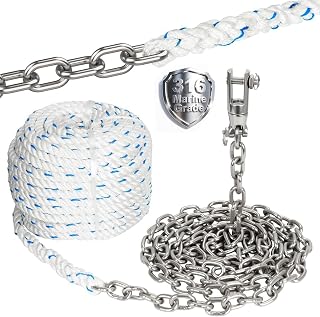
This isn’t a windlass—it’s the rode that feeds one. The 100-foot half-inch three-strand nylon rope paired with 10 feet of 1/4″ G4 316 stainless short-link chain and a swivel connector makes this a practical replacement or supplement. At $2, it reads as a pricing anomaly (likely a listing error or per-foot component), but the spec combination is standard for coastal fishing boats.
- Correct chain-to-rope transition length for most bow rollers
- Swivel connector included reduces ground tackle twist
- Not a windlass—buy only if you need a rode, not a machine
Skip this if you’re shopping for an electric unit; it’s purely ground tackle and won’t pull anything by itself.
Maxwell RC8 12V Windlass
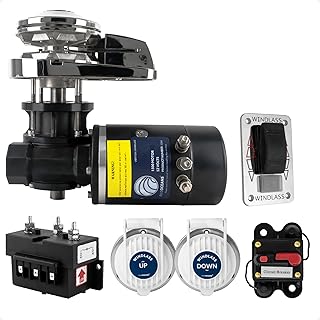
Maxwell’s RC8 brings remote-controlled operation and a 1,000-watt motor that comfortably handles 5/16″ chain up to 5/8″ rope—the widest rode compatibility in this group. That larger chain capacity means it’s built for heavier ground tackle than most units here, suiting offshore or bluewater setups where you’re running 5/16″ G4 or G30 on longer scopes.
- Remote control allows solo anchoring from the helm
- 1,000W motor handles larger chain without laboring
- Heavier unit that demands more bow structural support
Skip this if your boat’s bow compartment isn’t reinforced for the weight, or if you’re running only 1/4″ chain—you won’t extract value from the capacity.
Lewmar Pro Sport 550
The lighter sibling in the Lewmar fishing lineup, rated at 550 pounds of pull for 20-to-30-foot boats. Manual free-fall rather than auto is the primary distinction, meaning you’re managing chain speed with your hand on the clutch lever. For calmer coastal work and smaller vessels, the weight savings and lower draw on your battery are genuine advantages.
- Lighter weight suits smaller bows without structural concerns
- Lower battery draw than 700-pound units in the same family
- Manual free-fall requires more attention than auto systems
Skip this if you regularly anchor in choppy conditions or on boats above 28 feet—the 550-pound pull will feel marginal in a seaway.
Five Oceans 12V DC Electric Boat Anchor Windlass
Five Oceans occupies the value segment with a 12V electric unit built on heavy-duty marine-grade construction claims. For boaters who need electric assist and can’t justify Lewmar or Maxwell pricing, it represents the floor of what’s acceptable. The key question is always how the gypsy tolerates repeated hard loads, and at this price point, expect to replace sooner than premium options.
- Electric assist at a price that doesn’t require justification
- Marine-grade claims provide basic corrosion protection
- Longevity under heavy salt exposure is the primary concern
Skip this if you’re anchoring multiple times per outing or in conditions where chain weight exceeds what a value gypsy sustains reliably season after season.
Buying Guide
Match Pull Rating to Chain Size, Not Just Boat Length
Manufacturers publish boat length ranges, but the real constraint is chain diameter versus motor output. A 700-pound windlass rated for 1/4″ G4 chain can struggle if you run a longer scope or anchor in current that adds lateral load beyond the chain’s dead weight. The Excalibur units at 992 to 1,452 pounds exist because 700 pounds isn’t always enough. Size your chain first, then select the pull rating with 20 to 30 percent headroom above your worst-case scenario, not your typical one.
Stainless Housing Is the Baseline, Not the Premium
Aluminum housings corrode at bolt points and gypsy interfaces within two to three seasons of regular salt exposure. The 316 stainless construction found on the Lewmar, VEVOR, and Excalibur units isn’t a luxury—it’s the minimum for a windlass that should last a decade or more. If a unit under consideration uses aluminum or unknown alloy, factor replacement cost into the “savings.” The gypsy and its engagement teeth face the most wear and are the first components to show corrosion-driven degradation.
Free-Fall Type Determines Your Solo-Anchoring Experience
Auto free-fall systems feather the chain under controlled deceleration, letting you stop precisely at a depth or against a rock ledge. Manual free-fall puts your hand and judgment on the clutch lever every time you drop anchor. On smaller boats in calm conditions, manual is fine. On a 35-footer approaching a crowded anchorage in a breeze, the difference between auto and manual is whether you get the anchor set cleanly or watch your bow drift into a neighbor’s stern while you fight a clutch.
Our Verdict
The Lewmar Pro Fish 700 is the top pick for anyone anchoring regularly on a boat between 28 and 38 feet. Its auto free-fall precision, 316 stainless durability, and 700-pound pull rating hit the intersection of capability and reliability that most fishing boaters actually need. For budget-conscious buyers on 20-to-36-foot boats, the VEVOR Vertical offers comparable pull and stainless construction at a fraction of the Lewmar price, with the caveat that long-term clutch precision will lag behind. If your boat demands more than 700 pounds of pull or you need remote control from the helm, the Maxwell RC8 is the clear winner—the only unit in this group that combines 1,000 watts of power with hands-free operation.
FAQ
Can I use any windlass with any chain?
No. Gypsy profiles are machined for specific chain sizes, and mismatched pairs will skip links or bind under load. A 1/4″ G4 gypsy won’t reliably engage 5/16″ chain, and the reverse is equally problematic. Always verify the chain diameter your windlass is rated for before selecting or replacing ground tackle.
Do I need a dedicated battery circuit for a windlass?
Strongly recommended. Windlass motors draw significant amperage, and sharing a circuit with your electronics or bilge pump creates voltage sag that can trigger fault codes or prevent the windlass from completing a haul. A dedicated feed from the starting or house battery with appropriately sized cable keeps motor performance consistent.
Is rope-to-chain transition really necessary?
Yes, on virtually all recreational setups. Chain provides the ground-tackle weight that helps an anchor set, while nylon rope absorbs shock loads that would otherwise transfer directly to the windlass and bow roller. The 7-to-10 foot chain-to-rope junction sits at the bow roller entry, where it also protects the roller from abrasion during haul-in.
How do I maintain a windlass gypsy between seasons?
Rinse with fresh water after every saltwater use, inspect gypsy teeth for wear or burrs that will catch chain links, and apply marine-grade lubricant to the clutch and free-fall engagement surfaces. Annual removal of the gypsy for a thorough inspection catches corrosion at the shaft interface before it becomes a seized component you can’t service at the dock.



Write Your Review
No reviews yet. Be the first to share your experience!