
Key takeaways
- The lure rating does not include the jig weights you actually use.
- The rod is labeled for walleye but has a slow action designed primarily for trolling.
- Guide inserts are chipped, uneven, or loose.
- The reel seat does not clamp firmly or leaves sharp threads against your hand.
- A two-piece ferrule stops well short of its intended connection point.
- The blank has a flat spot, visible crack, deep scratch, or unexplained bulge.
- The warranty is vague about accidental breakage, replacement fees, or section coverage.
- The rod feels strongly tip-heavy with the reel you plan to use.
Choosing a walleye jigging rod is less about finding the most expensive blank and more about matching the rod to your jig weight, boat position, and fishing style. A common mistake is buying by length alone. Another is choosing a rod that feels powerful in the store but is too stiff for light jigs, too heavy for all-day use, or poorly suited to a spinning reel.
Anglers also overlook handle length, line rating, ferrule quality on two-piece rods, and whether a “walleye” rod is actually designed for vertical jigging rather than trolling. The right setup should detect subtle bites, control a jig near bottom, and still have enough backbone to steer a fish away from cover. Here is how to choose a walleye jigging rod in 2026 without paying for features you will not use.
Our top picks

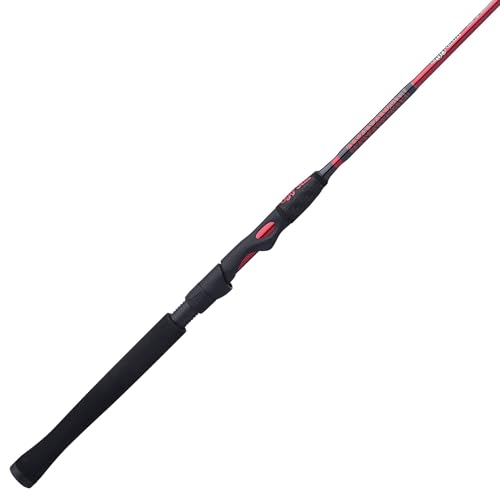

As an Amazon Associate we earn from qualifying purchases at no extra cost to you. Ratings are shown as listed on Amazon.
Decide These 3 Things First
- Where will you fish? A short rod is easier to manage when jigging vertically from a crowded boat. A longer rod helps cast jigs, mend line, and control fish around the bow or shoreline.
- What jigs and line will you use? Light 1/16- to 1/4-ounce jigs call for a sensitive medium-light rod. Heavier 3/8- to 3/4-ounce jigs, current, deep water, or heavier line may justify medium power.
- Do you need spinning or casting equipment? Most walleye jigging anglers choose spinning rods because they handle light lures and thin line easily. Casting rods are useful for heavier presentations, vertical control, or anglers who already prefer baitcasting reels.
Size: Choose Length and Power Together
For vertical jigging from a boat, a 5-foot-6-inch to 6-foot-6-inch rod is generally the easiest to handle. A 6-foot rod keeps the jig close to the boat and lets you make short, controlled lifts. It is also less likely to catch on a windshield, rod holder, or another angler’s line.
A 6-foot-6-inch to 7-foot rod is more versatile. It gives you additional casting distance and improves line control when wind or current pushes the boat away from the jig. The trade-off is a slightly larger swing radius and more effort when repeatedly lifting a lure.
Choose medium-light power for most walleye jigging with 1/16- to 3/8-ounce jigs and 4- to 10-pound line. Choose medium power when using 1/4- to 3/4-ounce jigs, fishing deep water, or dealing with strong current and larger bycatch. Power describes lifting strength; action describes how quickly the blank bends.
A fast action, which bends mostly in the top 20% to 30% of the rod, helps transmit bottom contact and light taps. A moderate-fast action bends farther down the blank and can be more forgiving when a walleye makes a sudden run. For a general-purpose choice, look for a 6-foot-6-inch to 7-foot medium-light, fast-action spinning rod.
Material: Graphite Usually Wins for Jigging
Graphite is the preferred material when bite detection matters. It is relatively light and transmits vibration efficiently, helping you distinguish a rock, weed, soft bottom, or walleye from one another. Higher-modulus graphite can reduce weight and increase sensitivity, but it may be less tolerant of impacts and high-sticking.
Fiberglass is tougher and often more forgiving, but it is typically heavier and less crisp in hand. A composite blank combines graphite and fiberglass, offering a middle ground for anglers who want durability without giving up all-day sensitivity.
Do not assume the word “carbon” guarantees a premium rod. Carbon is a form of graphite, but manufacturers can use different layups, resin systems, and blank tapers. Pay attention to the rod’s stated power, action, lure range, and warranty rather than relying on material language alone.
For most jigging trips, an actual rod weight below about 5 ounces is comfortable. Around 5 to 6 ounces remains manageable, but balance matters as much as the number. A tip-heavy 4.5-ounce rod can feel more tiring than a well-balanced 5-ounce model.
Construction: One Piece or Two?
A one-piece rod generally offers the cleanest continuous feel from handle to tip. It eliminates a ferrule that can loosen, collect grit, or slightly interrupt the blank’s response. If your rod lives in a boat locker or truck and storage is not a concern, one piece is a strong choice.
A two-piece rod is easier to transport and store. Most modern two-piece rods perform well when the sections are properly seated. Before fishing, align the guides, push the sections together firmly without twisting, and check the connection after the first few minutes on the water.
Inspect the guide train closely. A 6- to 7-foot spinning rod commonly uses about 7 to 9 guides, including the tip, though the exact count varies. Guides should be straight, securely wrapped, and free from sharp edges that can damage 4- to 10-pound monofilament or braided line. A chipped insert is reason to return the rod.
Also examine the blank around the ferrule, guide wraps, and tip. Fine scratches, flattened sections, loose inserts, or uneven finish can become failure points. Never lift a heavy fish by the rod tip; high-sticking puts extreme stress on the upper section.
Comfort and Performance: Sensitivity Is Only Half the Job
A good jigging rod should feel balanced with your reel attached. Mount the reel, hold the outfit with one hand near the reel seat, and check whether the tip immediately pulls your wrist downward. A small amount of forward balance is normal, but excessive tip weight becomes tiring after several hundred jig lifts.
Look for a handle that fits your technique. A 9- to 11-inch handle from the butt to the end of the grip works well for vertical jigging and short casts. A longer 11- to 13-inch handle can provide leverage for casting and fighting fish, but may get in the way when working a jig directly below the boat.
Cork is light and warm in cold weather, while EVA foam is durable and easy to clean. Split grips reduce weight, but a full-length grip can be more comfortable for anglers who brace the rod against a forearm. The reel seat should hold the reel tightly without exposed threads or uncomfortable edges.
Match the lure rating to your real-world presentation. A rod rated for 1/8 to 5/8 ounce has useful range for light and moderate jigging. Do not regularly exceed the upper rating, particularly when snapping a jig free from weeds. Similarly, a rod rated for 1/8 to 3/4 ounce is better suited to heavier jigs and current than a light finesse model.
Price Tiers: What Your Money Buys
Budget: $50-$90. Expect basic graphite or composite construction, a two-piece design, conventional cork or EVA, and a practical warranty. These rods can be excellent starter choices, especially when their lure and line ratings match your setup. Inspect the guides and reel seat before use.
Midrange: $90-$160. This is the sweet spot for many walleye anglers. You can typically find lighter graphite blanks, more refined actions, improved guide components, and better balance. The Dead Eye Classic Technique Specific rod listed at $91.99 and the Ugly Stik Carbon walleye models listed at $99.95 fall near the lower end of this tier. Their stated options include medium-light and medium power, with lure ratings from 1/8-5/8 ounce to 1/8-3/4 ounce.
Premium: $160-$300 or more. Premium rods may offer lighter high-modulus blanks, specialized tapers, upgraded guides, superior handle materials, or more precise quality control. They are worthwhile for frequent anglers who can feel the difference and protect their equipment. They are not automatically more durable; extra stiffness can make them less tolerant of abuse.
The Dead Eye Classic model listed at $85.48 is also worth considering for anglers who prefer its specific length, power, or casting configuration. Compare the actual lure range and reel type, not just the product family name. A lower-priced rod that matches your technique is better than a premium rod with the wrong action.
Warranty: Read the Fine Print
A rod warranty may cover manufacturing defects but exclude accidental breakage, misuse, normal wear, and damage from transportation. Check whether coverage lasts one year, five years, or the lifetime of the original owner. Some warranties require registration within 30 days, while others require proof of purchase and a service fee.
Also check the replacement process. A $20 handling fee may be reasonable on a $250 rod but significant on a $70 purchase. Determine whether the manufacturer replaces only the broken section or the entire rod. Keep the receipt, model number, and original packaging until you have used the rod several times.
Delivery and Assembly: Inspect Before the First Trip
Fishing rods are vulnerable to shipping damage, especially around the tip and ferrule. When a rod arrives, inspect it before removing tags. Sight down the blank for obvious bends, check every guide insert with a cotton swab, and confirm that the sections join fully and align correctly.
Do not assemble a two-piece rod on a hard surface where the tip can strike a wall or ceiling. Insert the sections with a straight push and a slight quarter-turn, then align the guides. Avoid forcing a connection that stops early. If the rod arrives cracked, bent, or with a loose guide, photograph the packaging and contact the seller before fishing it.
Spec Checklist
| Spec | Budget | Mid | Premium |
|---|---|---|---|
| Length | 5’6"-7′ | 6’3"-7′ | 6’3"-7’2" |
| Power | Medium-light or medium | Medium-light for finesse; medium for current | Technique-specific medium-light or medium |
| Action | Fast or moderate-fast | Fast | Fast, refined taper |
| Lure rating | 1/8-5/8 oz | 1/16-3/8 oz or 1/8-3/4 oz | Match your primary jig range closely |
| Line rating | 4-12 lb | 4-10 lb or 6-12 lb | 4-10 lb for finesse; 6-12 lb for heavier work |
| Construction | Two-piece graphite or composite | Graphite, one- or two-piece | Light high-modulus graphite, usually one piece |
| Target price | $50-$90 | $90-$160 | $160-$300+ |
Red Flags
- The lure rating does not include the jig weights you actually use.
- The rod is labeled for walleye but has a slow action designed primarily for trolling.
- Guide inserts are chipped, uneven, or loose.
- The reel seat does not clamp firmly or leaves sharp threads against your hand.
- A two-piece ferrule stops well short of its intended connection point.
- The blank has a flat spot, visible crack, deep scratch, or unexplained bulge.
- The warranty is vague about accidental breakage, replacement fees, or section coverage.
- The rod feels strongly tip-heavy with the reel you plan to use.
FAQ
What is the best length for a walleye jigging rod?
A 6-foot to 6-foot-6-inch rod is easiest for vertical jigging from a boat. Choose 6-foot-6-inches to 7 feet if you also want longer casts and better line control in wind or current.
Is medium-light or medium power better?
Medium-light is the better default for light jigs, 4- to 10-pound line, and open-water walleye. Choose medium for heavier jigs, deep water, strong current, or situations where you need extra control over larger fish and cover.
Should a walleye jigging rod be fast action?
Usually, yes. Fast action improves sensitivity and makes it easier to lift a jig precisely. Moderate-fast action is a good alternative if you want a softer tip and more forgiveness when fish surge near the boat.
Can I use a trolling rod for jigging?
You can, but it may not be ideal. Trolling rods are often longer, heavier, and designed to load gradually under sustained pressure. For dedicated jigging, choose a shorter spinning or casting rod with a fast or moderate-fast action and a lure rating that matches your jigs.




Write Your Review
No reviews yet. Be the first to share your experience!