
Key takeaways
- A product lists “anti-backlash” without naming the brake type or explaining how it is adjusted.
- The manufacturer gives a maximum drag number but omits reel weight, spool dimensions, or line capacity.
- A high ball-bearing count is emphasized while bearing seals, replacement parts, and warranty terms are absent.
- The brake dial has no numbered positions, clicks, or useful adjustment range.
- The reel is advertised for heavy saltwater use without corrosion-resistant materials or a rinsing and maintenance procedure.
- The listing shows different gear ratios, handle orientations, or specifications in different sections.
- Shipping and return terms are unclear, especially for electronic braking systems with batteries.
Choosing the right baitcaster brake is less about finding the highest number on a product page and more about matching the braking system to your casting style, lure weight, and experience. Many buyers focus on ball bearings, gear ratio, or maximum drag while overlooking the feature that controls spool acceleration and prevents a backlash: the brakes.
That mistake can make an otherwise capable reel difficult to cast. A system set too lightly may create a bird’s nest before the lure reaches the water. A system set too heavily can reduce distance and make a reel feel sluggish. The key question is not simply what to look for in baitcaster brakes, but how much adjustability, consistency, and user control you actually need.
Our top picks


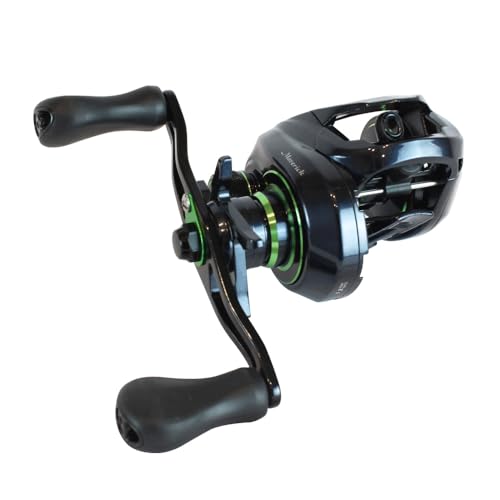
As an Amazon Associate we earn from qualifying purchases at no extra cost to you. Ratings are shown as listed on Amazon.
This guide explains the practical differences among magnetic, centrifugal, and electronic systems, along with the other reel specifications that determine whether those brakes will perform well. Prices and specifications change, so use the ranges below as buying benchmarks rather than guarantees.
Decide These 3 Things First
- Your typical lure weight: Reels used with 1/4- to 3/4-ounce lures need a different setup from reels throwing 1/2- to 2-ounce swimbaits. Very light lures place greater demands on spool startup and fine brake adjustment.
- Your casting environment: Open water rewards maximum distance, while docks, brush, and shoreline cover call for predictable low-speed control. Wind also increases the need for braking.
- Your tolerance for adjustment: Beginners often benefit from a wider safety margin and simple external controls. Experienced anglers may prefer a freer spool with separate internal and external adjustments.
Once those decisions are clear, compare the following factors in order of importance.
Brake Type and Adjustment Range
Magnetic brakes use magnets positioned near the spool. They are usually adjusted with an external dial, often numbered from 0 to 10. Magnetic systems provide strong control as the spool accelerates and are convenient when wind or lure weight changes frequently. They are a sensible choice for beginners and for anglers who want to make changes without removing the side plate.
Centrifugal brakes use brake blocks that move outward as spool speed rises. They tend to provide pronounced control during the first part of a cast, when backlash risk is highest. This can produce a natural-feeling cast, although changing the internal blocks may require opening the reel. A system with four or six brake shoes offers useful tuning flexibility.
Dual systems combine magnetic and centrifugal control. They can be especially useful for anglers who switch between finesse baits and heavier presentations, but extra adjustability is not automatically better. Poorly coordinated settings can make setup confusing.
Electronic or digital systems use a battery-powered control module to vary braking through the cast. They can be convenient for new casters, but check the battery type, replacement cost, water-resistance claims, and whether the system still works normally if the battery is depleted. A reel advertised with “computer braking” should identify its adjustment method rather than relying on marketing language alone.
Spool Size and Line Capacity
Spool dimensions affect both casting behavior and how much line the reel carries. A compact size 70 or 100 reel generally suits bass, walleye, and other medium-duty applications. A 150- or 200-size reel offers more capacity for heavy line, long casts, and larger lures, but it may weigh more and feel bulkier.
For general bass fishing, look for capacity around 100 to 150 yards of 10- to 14-pound monofilament or an equivalent braided-line rating. A spool that is too deep for your normal line can add unnecessary weight and reduce startup speed. If you commonly use 1/4-ounce lures, a shallow or compact spool may be more responsive than a large heavy spool.
Pay attention to spool material as well. Aluminum spools are common because they balance strength and weight. A spool weighing roughly 12 to 18 grams is often easier to start than a substantially heavier design, though the final weight depends on diameter, bearings, shaft, and line. Do not compare spool weights unless the manufacturers measure them the same way.
Frame Material and Construction
A rigid frame helps keep the spool, bearings, and brake components aligned. Graphite or composite frames can keep an inexpensive reel light, often in the 6.5- to 8-ounce range. They are reasonable for occasional use, but flex may become noticeable under heavy loads or when the reel is repeatedly exposed to impact.
Aluminum frames generally provide better rigidity and long-term dimensional stability. They may push reel weight closer to 7.5 to 9 ounces, but that extra weight can be worthwhile for heavy cover, frequent use, or large fish. Look for an aluminum side plate or frame when the reel will be paired with 30- to 50-pound braid or used for heavy lures.
Construction also includes the tolerances of the side plate, spool shaft, levelwind, and handle. A brake dial should turn with distinct clicks rather than wobbling between settings. The side plate should close securely, and the spool should not rattle noticeably from side to side after the tension knob is adjusted.
Comfort, Retrieve, and Performance
Brake performance is easier to control when the reel is comfortable. For most bass applications, a low-profile reel with a palm-side width of approximately 2.5 to 3 inches is easier to hold for long sessions than a tall round reel. A handle around 85 to 95 millimeters provides a useful balance of cranking power and speed.
Gear ratio affects lure presentation, not brake quality. A 6.3:1 to 6.8:1 ratio is versatile for spinnerbaits, jigs, and many moving baits. A 7.0:1 to 7.5:1 reel retrieves slack quickly for worms, topwater lures, and pitching. Ratios above 8:1 are fast but can feel less powerful under load.
Ball-bearing counts should be treated cautiously. Four or five quality bearings can feel smoother than a reel listing 10 or more poorly sealed bearings. Look for a supported spool bearing system, a smooth anti-reverse bearing, and a handle that does not have excessive play. A maximum drag rating of 15 to 20 pounds is sufficient for many freshwater applications; actual usable drag depends on washers, line, and maintenance.
Price Tiers and What You Get
Budget: $20 to $45. Reels in this range commonly offer magnetic braking, basic aluminum spools, 6.3:1 to 7.2:1 gear ratios, and weights around 7 to 9 ounces. They can work well for learning, backup tackle, and occasional bass fishing. Expect more variation in factory lubrication, dial consistency, and long-term smoothness. Examples in this category include low-cost models advertised with magnetic or digital anti-backlash systems priced around $21 to $31.
Midrange: $50 to $120. This tier typically brings better frame rigidity, smoother spool bearings, more precise brake adjustment, and improved quality control. A reel around $99, such as a size 100 model with an approximately 6.5:1 ratio, may be a practical all-purpose upgrade if its brake dial and spool tension are well matched to your lures.
Premium: $130 to $300 or more. Premium reels often reduce weight, improve sealing, and offer more consistent tolerances rather than simply adding more brake settings. They are worthwhile for frequent anglers who cast for hours each week or need dependable performance with light lures. They are not necessary if you fish only a few times per season.
Warranty and Replacement Support
A clear warranty matters because brake problems may not appear during a brief first outing. Look for coverage of at least one year, a stated process for replacement parts, and a seller that identifies where service is handled. Confirm whether the warranty covers the braking module, side plate, spool, and bearings.
Also check whether replacement brake shoes, magnets, tension caps, and side-plate screws are available. A reel with a two-year warranty but no accessible parts may be less useful than a simpler reel supported by a domestic distributor. Keep the receipt and record the model number before fishing in salt water, since corrosion damage is often excluded.
Delivery, Setup, and Assembly
Reels arrive ready to mount, but they still require setup. Before the first cast, inspect the handle, star drag, tension knob, and side plate. The spool should spin freely when the tension knob is loosened, without obvious grinding or lateral movement.
Spool the reel to within approximately 1/8 inch of the rim. Too much line increases the chance of overrun; too little reduces casting distance. Start with the brake dial around 70 to 80 percent of its maximum setting, tighten the spool tension until side-to-side play just disappears, and make short casts before reducing braking.
For a new caster, a 3/8- to 1/2-ounce practice plug is easier to control than a very light lure. Adjust only one control at a time. If the backlash occurs immediately at the start of the cast, increase centrifugal or magnetic braking. If the spool overruns near the end, use your thumb, increase braking slightly, or reduce the spool tension in small increments.
Spec Checklist
| Spec | Budget | Mid | Premium |
|---|---|---|---|
| Typical price | $20–$45 | $50–$120 | $130–$300+ |
| Brake system | Magnetic or basic centrifugal | Refined magnetic, centrifugal, or dual | Highly adjustable magnetic, centrifugal, dual, or electronic |
| Reel size | 100–150 | 70–150 | 70–200, application dependent |
| Typical weight | 7–9 oz | 6.5–8.5 oz | 5.5–8 oz |
| Gear ratio | 6.3:1–7.2:1 | 6.3:1–8.0:1 | 6.0:1–8.5:1 |
| Useful line range | 10–14 lb mono or equivalent braid | 8–20 lb mono or braid | Application-specific, including light braid and heavy line |
| Warranty target | At least 90 days | At least 1 year | 1–3 years or more |
Red Flags
- A product lists “anti-backlash” without naming the brake type or explaining how it is adjusted.
- The manufacturer gives a maximum drag number but omits reel weight, spool dimensions, or line capacity.
- A high ball-bearing count is emphasized while bearing seals, replacement parts, and warranty terms are absent.
- The brake dial has no numbered positions, clicks, or useful adjustment range.
- The reel is advertised for heavy saltwater use without corrosion-resistant materials or a rinsing and maintenance procedure.
- The listing shows different gear ratios, handle orientations, or specifications in different sections.
- Shipping and return terms are unclear, especially for electronic braking systems with batteries.
FAQ
Are magnetic or centrifugal brakes better for beginners?
Magnetic brakes are usually easier for beginners because the main adjustment is external and clearly marked. Centrifugal brakes can also be excellent, particularly for controlling the initial burst of spool speed, but internal adjustments take more time. Either type can work well when paired with correct spool tension and thumb control.
How many brake settings should a baitcaster have?
There is no magic number. A dial with 8 to 10 meaningful positions is generally enough for changing lure weight and wind conditions. A centrifugal system with four or six brake blocks can provide plenty of range. Precise, repeatable settings matter more than a large number printed on the dial.
Can better brakes eliminate backlash?
No. Brakes reduce spool overrun, but they cannot compensate for an overloaded spool, incorrect tension, a damaged bearing, or a sudden wind gust. Thumb pressure remains part of baitcaster technique. Begin with stronger braking, then reduce it gradually as your timing improves.
What is the best brake setup for bass fishing?
For general bass fishing, start with a size 70 to 150 low-profile reel, a 6.3:1 to 7.5:1 ratio, and magnetic or dual brakes. Use a 3/8- to 3/4-ounce lure, fill the spool to about 1/8 inch below the rim, and set braking high enough for controlled practice casts. Fine-tune from there based on wind, lure shape, and casting distance.




Write Your Review
No reviews yet. Be the first to share your experience!