
Key takeaways
- Longer casts: Thin braid leaves the spool with less friction. This is especially useful with small jigs, lightweight soft plastics, and topwater lures.
- Improved sensitivity: Low stretch helps you detect subtle bites and maintain contact with bottom-hopping lures.
- More line capacity: You can fit substantially more braid than monofilament of the same rated strength. That matters when fishing deep water or when a strong fish makes a long run.
- Better life under normal use: Braid does not develop the same coil memory as monofilament and generally does not need to be replaced as frequently if it is kept away from severe abrasion.
- Strong hooksets: The low-stretch connection helps drive hooks home at long range or through modest vegetation.
- Useful in vegetation: Heavier braid can cut through some aquatic weeds better than thin monofilament, although it should not be treated as invulnerable to stems, wood, or rock.
- Easy visual tracking: Bright yellow, green, or orange braid lets you watch line movement, which can reveal light bites before they reach your hands.
The Short Answer
Yes—braided line is worth it for spinning reels if you pair it with a leader and spool it correctly. Braid gives you greater casting distance, better sensitivity, and more usable strength than comparable monofilament, but it costs more and can create wind knots if the reel is overfilled or the line is managed poorly.
For most freshwater spinning setups, a 10- to 15-pound braided main line with a 6- to 12-pound fluorocarbon or monofilament leader is the most versatile combination. If you mainly fish clear water with inexpensive lures, monofilament may still be the better value.
Our top picks
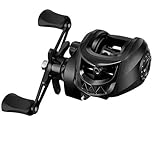
 Daiwa Crossfire LT Spinning Reel
- Hand Orientation: Ambidextrous
- Material: Metal
- Fishing Technique: Spinning
 KastKing Megatron Spinning Fishing Reels with 5.2:1
- Hand Orientation: Ambidextrous
- Material: Metal
- Fishing Technique: Spinning
As an Amazon Associate we earn from qualifying purchases at no extra cost to you. Ratings are shown as listed on Amazon.
What You Actually Get
Braided fishing line is made from tightly woven synthetic fibers rather than a single extruded strand. Its most important advantage is diameter. A typical 10-pound braid may measure roughly 0.006 to 0.008 inches, while 10-pound monofilament is often closer to 0.012 to 0.014 inches. The exact diameter varies by brand and construction, but the practical result is the same: braid takes up less space on the spool and creates less resistance during a cast.
On a spinning reel, that thinner profile can add noticeable distance, particularly with light lures. It also transmits vibration efficiently. You are more likely to feel a soft pickup, a lure ticking bottom, or a fish brushing cover because braid has very little stretch—often around 1% to 3%, compared with approximately 15% to 30% for common monofilament.
The trade-off is that braid is not automatically abrasion-proof. Its fibers can be damaged by rocks, dock edges, sharp vegetation, and fish teeth. That is why many anglers connect 2 to 4 feet of fluorocarbon or monofilament leader using a reliable knot such as an FG, Alberto, or double uni. The leader also makes the terminal end less visible in clear water and provides a little shock absorption.
A standard spinning reel can use braid, including affordable models such as the $31.53 Daiwa Crossfire LT. The reel’s lightweight design and line-friendly spool are suitable for general fishing, but braid still needs careful installation. Apply a small amount of monofilament backing first, or use enough braid to prevent the line from slipping around the bare spool. Fill the spool to about 1/16 inch below the rim—not flush with the lip.
A larger reel such as the 60-size, 5.2:1 KastKing Megatron, listed at $56.09, can carry more line for heavier applications. However, a larger spool does not eliminate braid’s drawbacks. Correct tension, a properly set drag, and occasional inspection remain essential.
Pros
- Longer casts: Thin braid leaves the spool with less friction. This is especially useful with small jigs, lightweight soft plastics, and topwater lures.
- Improved sensitivity: Low stretch helps you detect subtle bites and maintain contact with bottom-hopping lures.
- More line capacity: You can fit substantially more braid than monofilament of the same rated strength. That matters when fishing deep water or when a strong fish makes a long run.
- Better life under normal use: Braid does not develop the same coil memory as monofilament and generally does not need to be replaced as frequently if it is kept away from severe abrasion.
- Strong hooksets: The low-stretch connection helps drive hooks home at long range or through modest vegetation.
- Useful in vegetation: Heavier braid can cut through some aquatic weeds better than thin monofilament, although it should not be treated as invulnerable to stems, wood, or rock.
- Easy visual tracking: Bright yellow, green, or orange braid lets you watch line movement, which can reveal light bites before they reach your hands.
Cons
- Higher initial cost: A quality 150-yard spool of braid commonly costs about $10 to $25, compared with roughly $4 to $10 for a similar length of monofilament.
- Wind knots: Loose loops, an overfilled spool, a sticky bail roller, or closing the bail by turning the handle can cause tangles. Braid exposes poor line management more quickly than mono.
- Visible main line: In clear water, fish may notice brightly colored or dark braid. A leader solves much of this problem but adds another knot that can fail if tied poorly.
- Lower abrasion tolerance than expected: Its strength-to-diameter ratio is excellent, but a thin braid strand can be cut or frayed by rough cover.
- Less shock absorption: With almost no stretch, braid can pull hooks free when a fish surges close to the boat or bank. A softer rod, a properly adjusted drag, and a leader help compensate.
- Can dig into itself: If a fish pulls hard against a loose or poorly packed spool, braid may bury into lower wraps. The next cast can then stop abruptly.
- More complicated setup: You may need backing, a leader, a specialized knot, and more frequent checks for fraying.
Who Should Buy It
Braid is a strong choice if you fish often, cast lightweight lures, target bass or panfish around weeds, or regularly need maximum distance. It is also worthwhile for anglers who struggle to feel bites with stretchy monofilament. A 10- to 15-pound braid on a 1000- to 2500-size spinning reel covers many freshwater situations. For heavier bass cover, inshore fishing, or larger lures, 20- to 30-pound braid on a larger reel may be more appropriate.
Choose a leader based on conditions. Try 6- to 8-pound fluorocarbon for clear water and finesse presentations, 10- to 15-pound fluorocarbon around moderate cover, or monofilament when you want more stretch and buoyancy. Keep the leader long enough to reach the lure but short enough that the knot does not repeatedly slam into the spool during casting.
Braid also makes sense for anglers willing to learn basic maintenance. After every outing, run the final few feet between your fingers and cut back any rough section. Keep the drag smooth, and do not pull a snag by wrapping braid around your hand; use a dowel or line wrap instead.
Who Should Skip It
Skip braid if you fish only occasionally, use simple bait rigs, or want the lowest-cost setup with the fewest knots. Monofilament is forgiving, inexpensive, easy to tie, and naturally provides stretch. It is often a better starting line for children and beginners who are still learning to close the bail manually and control loose loops.
Braid may also be a poor fit for extremely clear water when you do not want to use a leader, or for fishing directly around sharp rocks, mussel beds, and abrasive dock hardware. In those situations, heavier fluorocarbon or abrasion-resistant monofilament can provide more confidence. Anglers who use very stiff rods and powerful hooksets should also consider mono or a longer leader to reduce pulled hooks.
Cheaper Alternatives
| Option | Cost | Trade-off |
|---|---|---|
| Monofilament main line, 150 yards | $4–$10 | Cheapest and easiest option, but more stretch, memory, and line diameter. |
| Fluorocarbon main line, 100 yards | $10–$20 | Low visibility and abrasion resistance, but stiffer, less manageable, and usually shorter-casting on a spinning reel. |
| Budget 4-strand braid, 150 yards | $8–$15 | Provides braid’s low stretch at a lower price, but is often noisier and rougher through the guides than smoother 8-strand braid. |
| Braid with recycled backing and a short leader | $12–$25 total | Reduces wasted braid and improves spool fill, but requires an extra knot and careful installation. |
If you are outfitting an inexpensive reel, remember that the line does not need to cost more than the reel. A Daiwa Crossfire LT at $31.53 can fish effectively with either budget braid or $5 monofilament. A $56.09 KastKing Megatron may justify a larger-capacity braid setup, but the reel itself will not make a poor knot or damaged line reliable.
FAQ
Does braid cause more wind knots on spinning reels?
It can, especially when the spool is overfilled, the line goes on loosely, or the bail is closed by turning the handle. Close the bail by hand, keep steady tension while spooling, and remove loose loops before they become knots. A properly filled spool and a smooth line roller make a major difference.
What braid strength should I use on a spinning reel?
Use 6- to 10-pound braid for panfish and finesse fishing, 10- to 15-pound braid for general freshwater use, and 20- to 30-pound braid for heavier bass cover or many inshore applications. Match the leader, rod, drag, and lure to the target rather than choosing braid strength by itself.
Do I need a leader with braided line?
No, but most anglers benefit from one. A 2- to 4-foot leader reduces visibility and adds abrasion resistance and shock absorption. You can tie braid directly when fishing stained water, heavy vegetation, or certain topwater presentations where visibility is less important.
How often should braided line be replaced?
Replace it when the working section is visibly frayed, faded from damage, or repeatedly causing problems. Healthy braid can last several seasons, but inspect it before every trip. You can also reverse the line on the spool when the first section becomes worn, provided the unused portion remains in good condition.



Write Your Review
No reviews yet. Be the first to share your experience!