
Key takeaways
- Choosing the longest rod available: More length can increase casting distance, but it also makes the rod harder to turn, store, and land fish with from a seated position.
- Ignoring collapsed length: A 7-foot telescoping rod may be convenient when extended but unusable if the collapsed sections do not fit your hatch.
- Measuring only the kayak’s total length: The important measurements are cockpit width, hatch opening, rod-holder placement, and casting clearance.
- Using a heavy rod for every species: Extra power can reduce sensitivity and make light lures difficult to cast. Match power to the fish, line, lure, and cover.
- Forgetting the reel and handle: The complete setup is longer and bulkier than the blank alone. Check the reel seat, handle, and butt dimensions before ordering.
- Assuming a travel rod is automatically kayak-ready: A compact rod still needs a secure holder and a comfortable casting action. Inspect the section connections regularly for looseness.
The Short Answer
For most kayak fishing, the best all-around rod size is 6 feet 6 inches to 7 feet (198 to 213 cm). This length gives you enough casting distance and lure control without making the rod awkward in a compact cockpit.
Choose a 6-foot to 6-foot 6-inch rod (183 to 198 cm) when you fish narrow creeks, sit inside a small kayak, or need to work lures close to the boat. Choose a 7-foot to 7-foot 6-inch rod (213 to 229 cm) for longer casts, surf launches, open lakes, and fighting fish around the bow or stern.
Our top picks
 Fishing Pole Combo
- Fishing Technique: Spinning
- Target Species: Bass
- Line Weight: 0.28
 PLUSINNO Fishing Rod and Reel Combos -24
- Fishing Technique: Casting
- Target Species: Bass
- Line Weight: 10 pounds
| Product | Key specs | Amazon rating | |
|---|---|---|---|
| Fishing Pole Combo | Fishing Technique: Spinning Target Species: Bass Line Weight: 0.28 | 4.3★ | Check price |
| PLUSINNO Fishing Rod and Reel Combos -24 | Fishing Technique: Casting Target Species: Bass Line Weight: 10 pounds | 4.4★ | Check price |
 EOW XPEDITE PRO Telescopic Fishing Rods EOW XPEDITE PRO Telescopic Fishing Rods | – | Check price | |
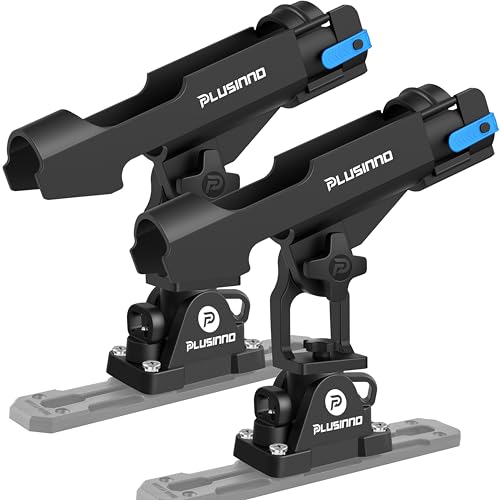 PLUSINNO 2 in 1 Kayak Fishing Rod PLUSINNO 2 in 1 Kayak Fishing Rod | – | Check price |
As an Amazon Associate we earn from qualifying purchases at no extra cost to you. Ratings are shown as listed on Amazon.
Length is only part of the answer. A kayak rod should also have a comfortable handle, suitable power, and a line rating that matches your target fish. For general freshwater use, a medium-light or medium spinning rod is the most versatile choice. A two-piece or telescoping design is convenient for transport, but check the collapsed length before buying: a long collapsed rod may still be difficult to store inside a kayak.
Standard Sizes
The table below compares common rod lengths and explains where each size works best. Measurements are listed in both inches and centimeters.
| Rod length | Centimeters | Best use | Kayak fit |
|---|---|---|---|
| 5 ft 6 in | 66 in / 168 cm | Small streams, short casts, tight cover | Excellent in compact sit-inside kayaks |
| 6 ft | 72 in / 183 cm | Creeks, docks, close-range lure work | Very easy to maneuver |
| 6 ft 6 in | 78 in / 198 cm | All-around freshwater fishing | Best balance for many paddlers |
| 7 ft | 84 in / 213 cm | Longer casts, bass, walleye, inshore fishing | Good in most sit-on-top kayaks |
| 7 ft 6 in | 90 in / 229 cm | Surf, open water, distance casting | Needs a clear deck and rod holder |
| 8 ft | 96 in / 244 cm | Specialty casting and larger water | Awkward for many compact kayaks |
For most buyers, a 6-foot 6-inch to 7-foot medium spinning rod is the safest starting point. A rod in this range generally handles common soft plastics, small crankbaits, jigs, and live-bait rigs while remaining manageable when seated.
A rod’s power describes its lifting strength. Ultra-light and light rods are sensitive but can be underpowered around vegetation or larger fish. Medium-light rods work well for panfish, trout, and smaller bass. Medium rods are more versatile for bass, catfish, walleye, and general inshore fishing. Medium-heavy rods are better for heavy lures, thick cover, and stronger saltwater species, but they can feel tiring in a small kayak.
Rod action matters too. Fast action bends mostly near the tip, which helps with responsive hooksets and soft-plastic fishing. Moderate action bends farther down the blank and can be useful with treble-hook lures. For a general-purpose kayak setup, medium power with fast or moderate-fast action is a practical combination.
How to Measure Your Space
- Measure the cockpit opening. Record the usable length from the front rim to the rear rim and the width at your seated position. A rod should not constantly strike the opposite side of the cockpit during a cast.
- Measure the storage tube or hatch. If you plan to store the rod inside the kayak, measure the narrowest opening, not the largest interior area. Compare this number with the rod’s collapsed or two-piece length.
- Check the front and rear clearance. Sit in the kayak with your paddle and estimate how far the rod can extend behind you without hitting a seat, crate, rudder control, or fishing crate.
- Measure the rod-holder opening. A holder should accept the rod butt and reel seat without forcing the guides or reel into an unstable position. Also check whether the holder is deep enough to keep the rod secure.
- Test your casting arc. With an unloaded rod, practice an overhead and side cast while seated. A rod that feels comfortable standing on shore may be too long when your elbows are confined by the kayak.
- Account for the handle. Handle length affects control more than overall rod length suggests. A long fighting butt can catch on your seat or life jacket, while an extremely short handle may be uncomfortable for two-handed casting.
Telescoping rods can solve transportation problems. For example, a 6.9-foot rod measures about 82.8 inches (210.3 cm) when extended, but its collapsed length depends on the number of sections and the manufacturer’s design. Always verify that specification rather than assuming every telescoping rod fits inside a hatch.
By Room or Use Case
Compact Sit-Inside Kayak
Use a 5-foot 6-inch to 6-foot 6-inch rod (168 to 198 cm). The shorter length reduces collisions with the cockpit rim and makes it easier to land a fish beside your knees. A 6-foot light or medium-light spinning rod is a good choice for creeks and small lakes. Avoid an oversized butt section if the cockpit is narrow.
Sit-On-Top Recreational Kayak
A 6-foot 6-inch to 7-foot rod (198 to 213 cm) usually fits best. The open deck gives you more room to cast and move the rod around the bow. A 7-foot medium spinning rod is especially useful when you need to cast beyond shallow water or steer a hooked fish around the hull.
Bass and Freshwater Fishing
Choose a 6-foot 6-inch to 7-foot medium rod for an adaptable setup. For finesse presentations, step down to medium-light. For frogs, heavier jigs, or thick vegetation, consider a 7-foot medium-heavy rod, provided your kayak has enough deck clearance. A two-piece rod is convenient for vehicles and storage; a telescoping model is even more compact but may have a different feel at the joints.
Saltwater and Inshore Fishing
A 7-foot to 7-foot 6-inch medium or medium-heavy rod (213 to 229 cm) helps with longer casts and line control around the bow. Select corrosion-resistant guides and rinse the rod and reel with fresh water after use. If you launch through surf, a shorter 6-foot 6-inch rod may be easier to manage during the launch and landing.
Travel and Small Storage Compartments
Look for a telescoping rod or a two-piece rod with a collapsed length under 36 inches (91 cm) if your kayak has a small hatch. Basic rod-and-reel combos commonly cost about $25 to $50, while a separate rod holder often costs about $20 to $35. Example combo configurations include 6.9-foot telescoping sets priced around $34 and 24-ton carbon-fiber telescoping combos around $45. These prices can change, so compare the listed extended length, collapsed length, reel size, and included case rather than choosing by price alone.
Rod-Holder Storage
A holder is useful for trolling, bait fishing, or keeping a second rod ready. A 2-in-1 kayak rod holder may cost about $25 to $35. Position it where the rod does not interfere with paddling or a paddle leash. The holder should keep the reel above splash level and allow you to remove the rod with one hand.
Common Sizing Mistakes
- Choosing the longest rod available: More length can increase casting distance, but it also makes the rod harder to turn, store, and land fish with from a seated position.
- Ignoring collapsed length: A 7-foot telescoping rod may be convenient when extended but unusable if the collapsed sections do not fit your hatch.
- Measuring only the kayak’s total length: The important measurements are cockpit width, hatch opening, rod-holder placement, and casting clearance.
- Using a heavy rod for every species: Extra power can reduce sensitivity and make light lures difficult to cast. Match power to the fish, line, lure, and cover.
- Forgetting the reel and handle: The complete setup is longer and bulkier than the blank alone. Check the reel seat, handle, and butt dimensions before ordering.
- Assuming a travel rod is automatically kayak-ready: A compact rod still needs a secure holder and a comfortable casting action. Inspect the section connections regularly for looseness.
FAQ
Is a 7-foot rod too long for kayak fishing?
No. A 7-foot rod is one of the most useful all-around lengths for a sit-on-top kayak. It may feel cumbersome in a narrow sit-inside cockpit, but it provides helpful casting distance and line control in open water.
What rod length is best for kayak bass fishing?
Start with a 6-foot 6-inch to 7-foot medium spinning or casting rod. Use medium-light for finesse lures and medium-heavy for thick cover, heavy jigs, or frog fishing.
Are telescoping rods good for kayak fishing?
They can be. Telescoping rods are convenient when hatch space and vehicle storage are limited. Look for secure section connections, a comfortable handle, and a collapsed length that fits your kayak. A two-piece rod may provide a more consistent fishing feel, but it requires more storage length.
Should I use a spinning or casting rod?
A spinning rod is usually the easiest choice for beginners and for light lures. It also handles many general freshwater and inshore techniques. Casting rods offer excellent control with heavier lures, but they require more practice and a compatible casting reel. For one versatile kayak setup in 2026, a 6-foot 6-inch or 7-foot medium spinning rod is the most practical choice.




Write Your Review
No reviews yet. Be the first to share your experience!