
Key takeaways
- Choosing by lure length only: A long, light soft plastic may be easier to cast than a short, dense glide bait. Always weigh the complete rig.
- Assuming a larger reel casts farther: Spool design, brake adjustment, rod action, line diameter, and casting technique matter just as much as reel size.
- Ignoring line diameter: Thick fluorocarbon occupies more spool space than thin braid. Check capacity using the exact line type you plan to fish.
- Overvaluing maximum drag: A high drag number is useful, but smooth startup, gear strength, and frame rigidity are equally important.
- Using an unnecessarily fast gear ratio: Fast ratios are convenient, but slower ratios often feel better with high-resistance swimbaits.
- Buying by price alone: Current baitcaster pricing commonly ranges from about $80 to $120 for budget 200- or 300-size reels and $180 to $250 or more for established premium models. Pay for the capacity and construction you need.
The Short Answer
For most swimbaits, choose a 200-size baitcaster. It offers the best balance of spool capacity, casting control, retrieve power, and manageable weight for swimbaits weighing roughly 1 to 3 ounces (28 to 85 grams).
Move up to a 300-size reel for large soft swimbaits, glide baits, musky lures, and repeated casts with baits above 3 ounces. A 150-size reel works for smaller paddle-tail swimbaits and compact hard baits, but it may feel underpowered when the lure, line, or target fish gets larger.
Our top picks

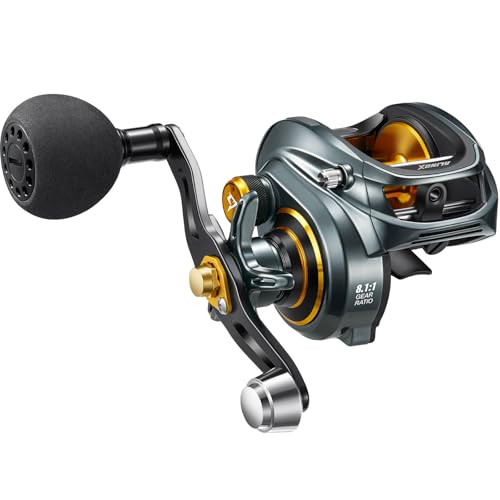
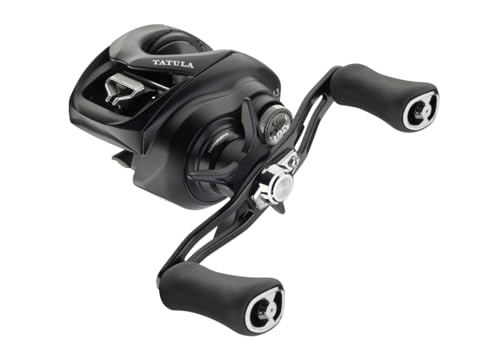

As an Amazon Associate we earn from qualifying purchases at no extra cost to you. Ratings are shown as listed on Amazon.
The number printed on a reel is not a universal measurement. A 200-size reel from one brand may hold more line or weigh less than a 200-size reel from another. Use size as a starting point, then check the reel’s line capacity, drag rating, frame size, and recommended lure range.
Standard Sizes
The table below shows practical size categories for baitcasters used with swimbaits. Dimensions are representative exterior measurements for low-profile reels, not universal standards. Handle length, star drag, and line guide position can change the final measurement by a small amount.
| Baitcaster size | Typical exterior dimensions | Typical weight | Best swimbait range | Common line capacity |
|---|---|---|---|---|
| 70–100 | 4.5–5.3 x 3.0–3.8 x 1.6–1.9 in (11.4–13.5 x 7.6–9.7 x 4.1–4.8 cm) |
5.5–7.5 oz (156–213 g) |
1/4–1 oz (7–28 g) |
100–150 yd of 10–12 lb mono |
| 150 | 5.0–5.6 x 3.1–4.0 x 1.7–2.0 in (12.7–14.2 x 7.9–10.2 x 4.3–5.1 cm) |
6.5–8.5 oz (184–241 g) |
3/8–1.5 oz (11–43 g) |
120–180 yd of 12–15 lb mono |
| 200 | 5.2–5.9 x 3.3–4.2 x 1.8–2.1 in (13.2–15.0 x 8.4–10.7 x 4.6–5.3 cm) |
7.5–10 oz (213–284 g) |
1–3 oz (28–85 g) |
120–180 yd of 15–20 lb mono |
| 300–400 | 5.7–6.5 x 3.6–4.6 x 2.0–2.4 in (14.5–16.5 x 9.1–11.7 x 5.1–6.1 cm) |
9.5–14 oz (269–397 g) |
2.5–8+ oz (71–227+ g) |
120–200 yd of 20–30 lb mono |
For a general-purpose swimbait setup, look for a 200-size reel with at least 20 pounds of maximum drag, a deep spool, and room for approximately 120 yards of 20-pound braid or 15 to 20-pound fluorocarbon. A 300-size reel, such as a Piscifun Alinox 300, is more appropriate when you need extra capacity and a stronger frame for large presentations. Its listed 33-pound maximum drag is more than enough for many freshwater applications, although maximum drag alone does not determine casting performance.
Gear ratio also affects the choice. A 6.3:1 to 7.1:1 ratio is a useful all-around range. A 6.6:1 reel gives controlled retrieve speed for swimming soft plastics and slow-rolling larger baits. An 8.1:1 reel picks up line quickly after a long cast or when a fish runs toward the boat, but it can require more effort when turning a large, high-resistance lure. The Piscifun Alinox 300 is offered in both styles, making the retrieve-speed choice more important than the name alone.
How to Measure Your Space
- Weigh the complete lure. Include the hook, jig head, screw-lock, weight, and trailer. A soft bait labeled 2 ounces can weigh considerably more after hardware is added.
- Measure the lure’s longest dimension. Measure from the front of the weight or line tie to the end of the tail. A 6- to 8-inch swimbait generally suits a 150- or 200-size reel; a 9- to 12-inch bait often warrants a 300-size reel.
- Check the rod’s lure rating. The rod should be rated for the complete lure weight. Do not pair a 4-ounce bait with a rod rated only to 1 ounce, even if the reel is large enough.
- Measure the reel seat area. Measure the rod’s reel-seat length and compare it with the reel foot. Most low-profile reels fit standard casting seats, but oversized 300-size reels can feel bulky on short, light handles.
- Estimate line requirements. For clear water, 15- to 25-pound fluorocarbon may be useful. For heavy cover, 40- to 65-pound braid is common. Choose a spool that holds the desired line with a small margin; a nearly empty spool reduces casting efficiency.
- Check hand clearance. With the reel mounted, leave enough space for your knuckles to clear the handle and star drag. A reel that is technically compatible can still be uncomfortable during hundreds of casts.
By Room or Use Case
Small swimbaits and finesse presentations
Choose a 70-, 100-, or compact 150-size baitcaster for 1/4- to 1-ounce swimbaits. These reels are lighter and easier to palm, which helps when casting all day. Pair one with a medium or medium-heavy rod rated for the lure. Braided line in the 10- to 20-pound range gives a small reel useful capacity without overfilling the spool.
Everyday bass swimbaits
A 200-size reel is the safest recommendation for most bass anglers. It handles 3/4- to 3-ounce soft swimbaits, underspins, weedless rigs, and many hard glide baits without being excessively heavy. Use 15- to 20-pound fluorocarbon for open water or 30- to 50-pound braid around grass and wood. A 7-foot-3-inch to 7-foot-6-inch medium-heavy or heavy rod is a practical pairing.
Large glide baits and trophy bass
For baits from about 3 to 6 ounces, select a 300-size reel. The larger frame and spool reduce strain, provide better line capacity, and make it easier to maintain pressure on a heavy fish. Choose a 6.3:1 or similar ratio when the lure creates substantial resistance. A strong heavy-action rod and 20- to 25-pound line are usually more important than choosing an extremely fast reel.
Musky and oversized swimbaits
Use a 300- or 400-size baitcaster for 6- to 10-ounce lures, thick-bodied soft plastics, and long days of musky fishing. These reels should have a rigid frame, oversized handle, durable gears, and a spool that holds at least 150 yards of appropriately heavy line. A large reel may weigh 10 to 14 ounces, so balance it with a rod designed for the lure rather than a lightweight bass rod.
Freshwater and saltwater use
For occasional inshore saltwater fishing, choose a reel with corrosion-resistant bearings, sealed components, and a frame intended for salt exposure. Rinse it with fresh water after every trip and follow the manufacturer’s maintenance instructions. A spinning reel, such as the TRUSCEND model in the example list, is not a baitcaster and does not replace a 200- or 300-size casting reel when you need thumb-controlled spool braking.
Common Sizing Mistakes
- Choosing by lure length only: A long, light soft plastic may be easier to cast than a short, dense glide bait. Always weigh the complete rig.
- Assuming a larger reel casts farther: Spool design, brake adjustment, rod action, line diameter, and casting technique matter just as much as reel size.
- Ignoring line diameter: Thick fluorocarbon occupies more spool space than thin braid. Check capacity using the exact line type you plan to fish.
- Overvaluing maximum drag: A high drag number is useful, but smooth startup, gear strength, and frame rigidity are equally important.
- Using an unnecessarily fast gear ratio: Fast ratios are convenient, but slower ratios often feel better with high-resistance swimbaits.
- Buying by price alone: Current baitcaster pricing commonly ranges from about $80 to $120 for budget 200- or 300-size reels and $180 to $250 or more for established premium models. Pay for the capacity and construction you need.
FAQ
Is a 200-size baitcaster big enough for swimbaits?
Yes. A 200-size reel is large enough for most bass swimbaits from 1 to 3 ounces. Choose a 300-size model when the lure exceeds 3 ounces regularly or when you need heavy line and extra capacity.
What size baitcaster is best for a 6-inch swimbait?
A 150- or 200-size reel is usually appropriate. The correct choice depends on the rigged weight. A light 6-inch paddle tail may work on a 150, while a weighted or hard-bodied 6-inch bait is better matched with a 200.
What gear ratio should I use for swimbaits?
Use approximately 6.3:1 to 7.1:1 for general swimbait fishing. Select a slower ratio for bulky, high-resistance lures and a faster ratio, such as 8:1, when rapid line pickup is more important.
Can I use a 300-size baitcaster for small swimbaits?
You can, but it may be unnecessarily heavy and less comfortable. A 300-size reel makes sense when you also fish large baits, heavy line, or powerful rods. For small swimbaits under 1 ounce, a 100- or 150-size reel is usually easier to palm and cast.




Write Your Review
No reviews yet. Be the first to share your experience!