
Key takeaways
- A listing gives color names but no lure dimensions, delivered weight, or quantity.
- A multi-pack claims “vibrant colors” but shows only one angle or does not identify each shade.
- The product mixes fishing terms, such as chatterbait and buzzbait, without explaining the actual blade, hook, or skirt design.
- DIY colorant has no usage directions, storage guidance, or material compatibility information.
- Hooks, split rings, or skirt ties are not shown clearly in product photographs.
- The seller promises universal success in muddy or clear water. Conditions vary too much for any color to work everywhere.
- The package price seems low because it excludes shipping, molds, hooks, or other required assembly supplies.
Choosing lure color for water clarity sounds simple: use bright colors in dirty water and natural colors in clear water. That rule is useful, but it is not enough. Anglers often make three costly mistakes: they choose color before considering light, buy a large assortment with overlapping shades, or assume the brightest lure will always be easiest for bass to find. Water depth, sky conditions, lure action, forage, and contrast can matter just as much as the base color.
This guide explains how to choose lure color for water clarity while also evaluating the practical details that determine whether a lure earns a place in your tackle box. The goal is not to buy every color available. It is to build a compact selection that remains visible without looking unnatural. Prices and product availability can change, so use the ranges below as buying benchmarks for 2026.
Our top picks


As an Amazon Associate we earn from qualifying purchases at no extra cost to you. Ratings are shown as listed on Amazon.
Decide These 3 Things First
1. Measure visibility conditions. Separate water clarity from light level. Clear water on a bright day calls for subtle, translucent colors, while clear water under cloud cover may allow a stronger silhouette. In stained or muddy water, contrast and vibration become more important than perfect realism.
2. Identify the dominant forage. Match the general appearance of local baitfish, crawfish, or panfish when fish are feeding selectively. You do not need an exact replica. A green pumpkin, brown, white, or silver lure often covers more situations than highly specialized patterns.
3. Decide how the lure will be presented. A slow-moving soft plastic needs a visible profile and natural color. A vibrating chatterbait or buzzbait can use a bolder color because movement and sound attract attention. Color cannot rescue a lure that is the wrong size, depth, or action.
Size: Match the Lure to Visibility and Forage
Lure size changes how color is perceived. A 2-inch soft plastic may disappear in stained water even if it is chartreuse, while a 5-inch black worm can create a clear silhouette. For general bass fishing, a useful starting range is 3 to 5 inches for soft plastics and 3/8 to 1/2 ounce for moving lures.
Use smaller profiles, around 2 to 3 inches, when water is clear, fish are pressured, or baitfish are small. In water with less than 2 feet of visibility, consider a 4- to 6-inch profile or a lure weighing 1/2 to 3/4 ounce if the cover and rod can handle it. Bigger does not automatically mean better; it simply produces a larger visual and vibration signature.
Color should support size. A small lure may benefit from a high-contrast shade such as black, white, or chartreuse. A large lure can often use a more subdued pattern because its outline is already easy to detect.
Material: Choose Transparency, Flake, and Scent Carefully
Soft-plastic material has a major effect on color. Transparent or lightly salted plastics allow light to pass through and are usually effective in clear water. Opaque plastics create a stronger silhouette for stained water. Laminated two-tone bodies can provide both a natural top color and a contrasting belly.
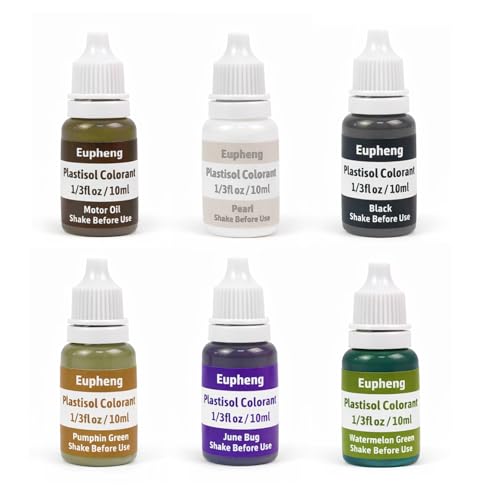
For a basic custom-color setup, plastisol colorant is typically sold in small bottles or multi-color sets. A six-color set priced around $10 to $20 can be enough for experimenting, but check the bottle size and recommended dosage before buying. Colorant intended for plastisol should not automatically be used in finished soft plastics, paint, or hard baits.
Glitter also changes visibility. Fine silver or gold flake can imitate flash in clear water, while larger or denser flake creates a more aggressive signal. Start with approximately 1/16 to 1/8 teaspoon of glitter per 4 ounces of soft-plastic material and adjust gradually. Too much flake can make a lure look unnatural and can weaken the smooth appearance of a hand-poured bait.
Construction: Examine Hooks, Skirts, and Color Placement
Construction matters because color is only useful if the lure stays intact and tracks correctly. On a soft plastic, inspect the tail connection, body thickness, and hook slot. A narrow tail may produce more action but can tear sooner. A thicker body often holds a hook better, particularly around vegetation and wood.
For skirted moving lures, look for evenly distributed strands and a secure tie or collar. A 3/8- to 1/2-ounce chatterbait or buzzbait is a practical all-purpose size. White and chartreuse are common choices for brighter or dirtier water; green pumpkin, brown, and black can be useful when you want a less intense profile.
Color placement can be more valuable than adding another completely different shade. A dark back with a light belly creates an easy-to-track baitfish profile. A black body with a blue or purple accent produces a strong outline in low visibility. Before buying a 24-piece assortment, check whether it contains six genuinely different colors or several minor variations of the same pattern.
Comfort and Performance: Match Color to Action
“Comfort” for fishing gear means practical handling: a lure should cast properly, run at the intended depth, and work with your retrieve. A compact 1/4-ounce lure is easier to cast on lighter tackle, while a 2/3-ounce bait requires a rod and line combination designed for that weight. Do not select a color without confirming that the lure suits your equipment.
Use natural, low-contrast colors with slow actions. Green pumpkin, watermelon, brown, and translucent shad patterns are strong starting points in clear water with visibility of 6 feet or more. In water with roughly 2 to 4 feet of visibility, add colors with contrast, such as white, black-and-blue, or a green pumpkin body with a dark flake.
When visibility drops below about 2 feet, prioritize silhouette, vibration, and flash. Black, black-and-blue, chartreuse, white, and combinations with reflective blades can remain detectable. In very muddy water, a noisy spinnerbait or chatterbait may outperform a subtle worm regardless of color.
Price Tiers: Build a Useful Color System
Budget, approximately $8 to $15: Look for a small six-color soft-plastic colorant set, a basic pack of soft baits, or one dependable moving lure. A product such as a six-color DIY plastisol set priced near $9.99 can be a low-cost way to test color mixing. At this level, inspect bottle volume, color labels, and whether instructions are included.
Midrange, approximately $15 to $30: Expect larger assortments, better color separation, more consistent hooks, or multiple lure styles. A six-color colorant kit priced around $19.99 may offer more product per bottle, but compare the total volume rather than assuming the higher price means a stronger pigment. A 24-piece soft-lure assortment around $24.99 is useful only if its sizes and colors cover different conditions.
Premium, approximately $30 to $60: You are generally paying for refined construction, specialized patterns, durable hardware, or a curated selection rather than color alone. Premium pricing is worthwhile when you fish frequently, need corrosion-resistant components, or want a lure tuned for a particular technique. It is rarely necessary to spend more simply to obtain another shade of green pumpkin.
Warranty and Return Policies
Most inexpensive lures and colorants have limited warranty coverage, so examine the return policy before ordering. For a finished lure, look for a clearly stated return window of at least 30 days and a policy covering damaged or incorrect items. For DIY colorant, confirm whether opened bottles can be returned; many cannot because of contamination or handling concerns.
Warranty language should also distinguish manufacturing defects from normal wear. A torn soft plastic after several fish is normal wear, while a missing hook, cracked body, or loose blade may justify a replacement. Keep packaging and take photographs immediately if the product arrives damaged.
Delivery and Assembly
Ready-to-fish lures should arrive assembled, with hooks, skirts, blades, and split rings attached. Check the listing for delivered weight, especially when a product name says “2/3 oz.” A four-piece set of chatterbaits or buzzbaits priced around $12.99 may be attractive, but confirm whether the stated weight applies to each lure or the entire package.
DIY kits require more preparation. You may need a heat-safe container, gloves, ventilation, molds, hooks, and a way to measure colorant accurately. Allow at least 30 minutes for a small test batch, plus cooling time, and test one lure before making a large pour. Never assume that a color shown on a product page will look identical after it is mixed into clear, salted, or scented plastic.
Spec Checklist
| Spec | Budget | Mid | Premium |
|---|---|---|---|
| Typical price | $8–$15 | $15–$30 | $30–$60 |
| Soft-plastic size | 2–4 inches | 3–5 inches | 4–7 inches or specialty profiles |
| Moving-lure weight | 1/4–3/8 oz | 3/8–1/2 oz | 1/2–3/4 oz |
| Useful color coverage | 3–6 basic shades | 6–12 distinct patterns | Specialized forage and water-condition patterns |
| Best visibility range | Clear to moderately stained | Clear, stained, and low-light conditions | Technique-specific conditions |
| Return-policy target | At least 14 days | At least 30 days | 30 days or longer |
Red Flags
- A listing gives color names but no lure dimensions, delivered weight, or quantity.
- A multi-pack claims “vibrant colors” but shows only one angle or does not identify each shade.
- The product mixes fishing terms, such as chatterbait and buzzbait, without explaining the actual blade, hook, or skirt design.
- DIY colorant has no usage directions, storage guidance, or material compatibility information.
- Hooks, split rings, or skirt ties are not shown clearly in product photographs.
- The seller promises universal success in muddy or clear water. Conditions vary too much for any color to work everywhere.
- The package price seems low because it excludes shipping, molds, hooks, or other required assembly supplies.
FAQ
What is the best lure color for clear water?
Start with natural, translucent shades such as green pumpkin, watermelon, brown, silver, or shad patterns. In clear water with bright sun, reduce contrast and use smaller amounts of glitter. If the sky is overcast or the lure is deep, add moderate contrast rather than immediately switching to neon.
What color lure works best in muddy water?
Black, black-and-blue, white, and chartreuse are practical starting points because they create a visible silhouette or strong contrast. Pair color with vibration, flash, or a larger profile. A quiet natural bait may be difficult for fish to locate when visibility is under 2 feet.
How many lure colors do I really need?
Six well-chosen options can cover most situations: natural green pumpkin, watermelon or translucent baitfish, white, black, black-and-blue, and chartreuse. Add brown or crawfish orange if local forage supports it. Buy additional colors only after you know which water conditions and techniques you fish most often.
Are DIY lure colorants worth buying?
They can be worthwhile for anglers who already have molds and soft-plastic supplies and want to adjust shades economically. A $10 to $20 colorant set is a reasonable entry point, but it is not a complete lure-making kit. If you fish occasionally, ready-made lures may cost less after accounting for molds, heating equipment, hooks, and safety supplies.




Write Your Review
No reviews yet. Be the first to share your experience!