
Key takeaways
- Fast action with no explanation: A true fast-action rod may be too abrupt for treble-hooked crankbaits.
- Vague ratings: Avoid listings that omit lure weight, line weight, power, or action.
- Overlapping claims: A rod rated for both tiny baits and 1-ounce divers may be a compromise rather than a specialist.
- Unusual discounts: A very low price can indicate discontinued inventory, missing warranty coverage, or cosmetic defects.
- Loose components: Rattling reel seats, uneven guide wraps, and chipped inserts are reasons to request an exchange.
- Unclear shipping: Confirm whether the rod ships in a protective tube and whether oversized delivery fees apply.
Choosing a crankbait rod is less about finding the longest, lightest, or most expensive model and more about matching the rod’s action to the way a crankbait loads under pressure. Many anglers make the same mistakes: they buy a fast-action rod designed for plastics, choose power based only on lure size, or assume “glass” automatically means better treble-hook performance. Others overlook casting comfort, travel length, and whether the rod can handle the line and lure range they actually use.
The right crankbait rod should load progressively during the cast, keep a fish pinned when it surges near the boat, and still provide enough power to steer a lure around cover. That balance changes with lure size, line type, water clarity, cover, and retrieve speed. The following guide explains how to choose crankbait rod action in 2026 without getting distracted by marketing language or isolated specifications.
Our top picks

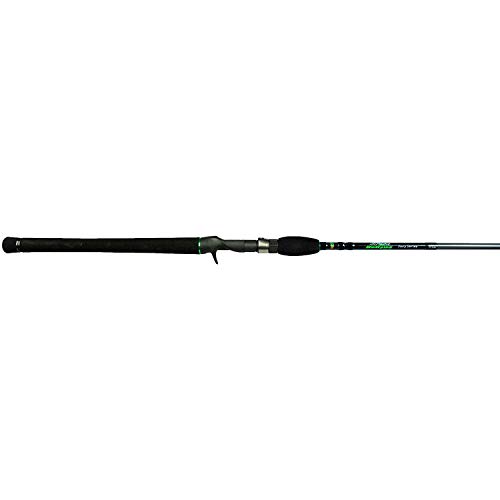


As an Amazon Associate we earn from qualifying purchases at no extra cost to you. Ratings are shown as listed on Amazon.
Decide These 3 Things First
1. What crankbaits will you throw most? A rod for small squarebills and shallow-running baits does not need the same power as one for deep divers weighing 3/4 ounce or more. Write down your typical lure range before comparing models.
2. Which line will you use? Monofilament and fluorocarbon provide some stretch, while braid has very little. A moderate or moderate-fast rod is especially helpful with braid because it adds forgiveness during the hookset and fight.
3. Where will you fish? Open water favors a softer, more forgiving rod. Grass, wood, docks, and rock require additional power and sometimes a slightly faster recovery so you can pull a fish away from cover. These three decisions narrow the field more effectively than choosing by brand alone.
Size: Match Length and Power to the Lure
For most bass crankbait fishing, a rod between 7 feet and 7 feet 6 inches is the most versatile range. A longer rod increases casting distance and helps keep more line below the surface, which is useful with deep-diving crankbaits. A shorter rod, around 6 feet 6 inches to 7 feet, improves accuracy when casting beside docks, laydowns, and overhanging limbs.
Medium power is a practical choice for small and medium crankbaits weighing approximately 1/4 to 5/8 ounce. Medium-heavy power is better for larger-bodied or deep-diving baits in the 1/2- to 1-ounce range, particularly when the lure creates substantial resistance.
Look for a line rating that overlaps your preferred setup. A useful general range is 8- to 14-pound line for medium-power rods and 10- to 17-pound line for many medium-heavy models. Do not treat these ratings as rigid limits; they indicate the load the rod is designed to manage comfortably.
Material: Glass, Graphite, or a Composite
Fiberglass, often called glass, bends deeply and progressively. That delay helps a fish fully take a crankbait before the angler applies pressure, reducing the chance of ripping out treble hooks. Glass rods are also effective when fishing with low-stretch braid or when a lure must remain in the strike zone.
Graphite is lighter and typically more sensitive. It recovers faster, making it easier to feel a crankbait deflect off rock, wood, or the bottom. A graphite crankbait rod can be a smart choice for anglers who fish around cover or want one rod to handle additional techniques.
Composite rods combine glass and graphite. They aim to provide a moderate bend with less weight and a quicker response than traditional glass. The trade-off is that materials and construction vary widely, so the action printed on the blank matters more than the word “composite” by itself.
As a starting point, choose glass for maximum forgiveness, graphite for a lighter and more responsive feel, and composite for a compromise between the two.
Construction: Understand Moderate Versus Moderate-Fast
Action describes where the rod bends, not how much force it can handle. A moderate rod bends farther down the blank, often into the middle section. A moderate-fast rod bends closer to the upper third while still loading more gradually than a typical fast-action rod.
Moderate action is usually the safest choice for treble-hooked crankbaits. It loads smoothly during the cast and maintains pressure as a fish shakes its head. Moderate-fast action adds control and can improve hook penetration when fishing around vegetation, but it demands a little more discipline. Avoid violently setting the hook with either style; reel down and sweep firmly instead.
Guides should be aligned and securely wrapped, with no sharp edges that can damage monofilament or fluorocarbon. A one-piece rod generally provides the most consistent bend. A two-piece rod is easier to transport and can perform well, but inspect the ferrule regularly and keep it fully seated.
Comfort and Performance: Balance Matters More Than Ounces
A rod that weighs a few ounces less is not automatically more comfortable. Balance is determined by the relationship between the blank, reel, handle, and your grip. A 7-foot 3-inch rod may cast farther, but it can feel tiring if the tip is heavy during an all-day retrieve.
Handle length also affects performance. A rear grip of roughly 10 to 11 inches from the reel seat to the butt is common for casting crankbaits. Longer handles support two-handed casting and help launch larger lures. Shorter handles improve close-quarters accuracy.
Cork and EVA foam are both reasonable choices. Cork often feels firm and transmits vibration well; EVA is typically easier to clean and can be more comfortable in wet conditions. Check the reel seat for a secure fit and make sure your reel does not wobble when the locking hood is tightened.
Before buying, compare the rod’s lure range with your actual baits. For example, the Lew’s KVD Elite listed at 7 feet 10 inches, medium power, and moderate action is aimed at long casts and a forgiving bend. A 7-foot medium-heavy moderate-fast model such as the Dobyns Fury FR 705CB is more appropriate when extra lure control and pulling power matter.
Price Tiers: What You Get for Your Money
Budget, about $60 to $100: These rods can be excellent starter choices and are often built with durable glass or straightforward composite blanks. Expect more weight, less refined guides, and fewer finish details. The Guide Gear Core Angler 7-foot 1-inch medium/moderate model, listed at $69.99, illustrates the basic format: useful length, medium power, and a forgiving action.
Midrange, about $110 to $160: This is the value sweet spot for many anglers. You can find better-balanced blanks, more consistent components, and specialized crankbait actions. The $129.95 Lew’s KVD Elite and $139.99 Dobyns Fury FR 705CB fall in this range, though their lengths and power ratings target different applications.
Premium, about $170 to $230 or more: Premium rods generally focus on reduced weight, improved balance, refined guides, and more specialized blank tapers. The Dobyns Kaden 7-foot 3-inch medium moderate-fast model, priced at $199.99, offers an 8- to 14-pound line rating and a 1/4- to 3/4-ounce lure rating. Pay for premium construction only when you will notice the difference during long sessions.
Warranty: Check Coverage Before the First Cast
Warranty terms can vary by series, retailer, and type of damage. Confirm whether coverage applies to manufacturing defects only or includes accidental breakage. Some programs require registration, proof of purchase, or a service fee. Keep the receipt and product packaging until you have inspected the rod.
Pay attention to exclusions involving high-sticking, transport damage, modified handles, and guides. A warranty is not a substitute for a rod tube. If the policy requires sending the rod to a service center, check the shipping cost and expected process before purchase.
Delivery and Assembly: Inspect It Immediately
For a one-piece rod, measure your vehicle and storage space before ordering. A rod around 7 feet 3 inches to 7 feet 10 inches may require a roof rack, truck bed, or diagonal placement inside a large SUV. Two-piece rods are easier to ship and store, but confirm the assembled length and ferrule design.
When the rod arrives, inspect the blank under bright light. Look for cracks, flattened sections, loose wraps, chipped inserts, or a reel seat that does not tighten evenly. Flex the rod gently by hand rather than forcing it to a sharp angle. If anything appears damaged, photograph it before using the rod and contact the seller promptly.
Spec Checklist
| Spec | Budget | Mid | Premium |
|---|---|---|---|
| Typical price | $60-$100 | $110-$160 | $170-$230+ |
| Length | 6’10"-7’2" | 7’0"-7’6" | 7’2"-7’10" |
| Power | Medium | Medium or medium-heavy | Medium to medium-heavy |
| Action | Moderate | Moderate or moderate-fast | Moderate or tuned moderate-fast |
| Lure range | 1/4-5/8 oz | 1/4-3/4 oz | 3/8-1 oz |
| Line range | 8-14 lb | 8-17 lb | 10-20 lb |
| Best material | Glass or composite | Composite or graphite | Refined composite or graphite |
Red Flags
- Fast action with no explanation: A true fast-action rod may be too abrupt for treble-hooked crankbaits.
- Vague ratings: Avoid listings that omit lure weight, line weight, power, or action.
- Overlapping claims: A rod rated for both tiny baits and 1-ounce divers may be a compromise rather than a specialist.
- Unusual discounts: A very low price can indicate discontinued inventory, missing warranty coverage, or cosmetic defects.
- Loose components: Rattling reel seats, uneven guide wraps, and chipped inserts are reasons to request an exchange.
- Unclear shipping: Confirm whether the rod ships in a protective tube and whether oversized delivery fees apply.
FAQ
Is moderate action best for crankbaits?
For most anglers, yes. Moderate action keeps the rod loaded longer and helps prevent treble hooks from pulling free. Moderate-fast action is useful when fishing heavier lures or cover, but it requires a smoother hookset.
What power should a crankbait rod be?
Medium power handles many 1/4- to 5/8-ounce crankbaits. Choose medium-heavy when your lures commonly weigh 1/2 to 1 ounce, create strong resistance, or must be pulled away from grass and wood.
Is glass better than graphite?
Neither is universally better. Glass is slower, softer, and forgiving. Graphite is lighter and more responsive. A composite rod can provide a middle ground, especially for anglers who want treble-hook protection without a heavy blank.
Can one rod handle every crankbait?
One versatile rod can cover a broad range, but not every situation. A 7-foot to 7-foot 6-inch medium rod with moderate or moderate-fast action is a strong general-purpose choice. Add a longer medium-heavy rod for deep divers and heavy cover when your fishing demands it.




Write Your Review
No reviews yet. Be the first to share your experience!