
Key takeaways
- Low upfront cost: At roughly $10 to $25, a kit can cost less than shipping a low- to mid-priced rod to a repair shop.
- Useful for common failures: Tip damage, loose guides, missing wraps, and small cosmetic repairs are the problems these kits handle best.
- Convenient to keep in tackle storage: A compact kit can be useful when a tip breaks on a trip or a guide becomes loose between fishing days.
- Can extend a rod’s life: A careful repair may keep an inexpensive or sentimental rod in service for another season or longer.
- Beginner-friendly for tip repairs: Replacing a damaged tip usually requires fewer tools and less precision than rebuilding a guide.
- Helpful for multiple rods: If you own several rods, the thread, adhesive, and small replacement parts may be used more than once.
The Short Answer
Usually, no—you do not need a rod repair kit unless you have a minor, repairable problem and want to fix it at home. A kit makes sense only when the blank is not badly cracked and the damaged section can be reinforced without changing the rod’s safety or action.
For a loose guide, missing tip, cracked handle component, or small split near the end of a fishing rod, a basic kit can be a convenient and inexpensive solution. For a rod that is snapped through the blank, crushed, badly splintered, or still under warranty, replacement or professional repair is generally the better choice.
Our top picks


As an Amazon Associate we earn from qualifying purchases at no extra cost to you. Ratings are shown as listed on Amazon.
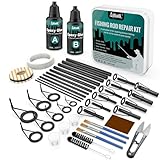
Most all-purpose fishing rod repair kits cost about $10 to $25. Two common budget options are the ailiaili Fishing Rod Repair Kit—listed at $13.99—and a Fishing Rod Repair Kit Complete with Stronger Stainless Steel Sleeves, also listed at $13.99. The price is low, but the kit cannot make every break safe or restore a rod to its original performance.
What You Actually Get
A rod repair kit is usually a collection of small supplies for quick fishing-rod maintenance. The exact contents vary, so check the package before buying. A typical kit may include replacement rod tips, guide rings or line guides, thread, adhesive, wrapping tools, and one or more reinforcement sleeves.
Some kits are marketed as “3-in-1” sets because they combine tip repair, guide repair, and blank reinforcement. A replacement tip is a small tubular fitting that slips over the cut end of a broken upper section. It is normally secured with hot-melt glue or rod adhesive. This is one of the easiest repairs and often the best use of a budget kit.
Guide repair is more involved. The guide must be aligned with the other guides, wrapped tightly with thread, and sealed with finish or epoxy. If the guide frame is bent but the blank is sound, replacement may be worthwhile. If the ceramic insert is cracked, replace the guide rather than continuing to fish with it; a rough insert can damage fishing line.
Reinforcement sleeves are intended for certain breaks where one section can fit inside or over another. They are not universal. A sleeve must match the rod’s diameter and leave enough room for the blank to flex. A rigid sleeve that is too short, too heavy, or poorly fitted can create a stress point that causes another failure.
Adhesives also differ. Hot-melt glue is convenient for tip replacement because it allows a tip to be repositioned or removed with controlled heat. Two-part epoxy is stronger for many structural and guide-related jobs, but it requires mixing and curing time. Do not use an open flame to heat a rod tip or adhesive; excessive heat can damage the blank, finish, or nearby guide.
Pros
- Low upfront cost: At roughly $10 to $25, a kit can cost less than shipping a low- to mid-priced rod to a repair shop.
- Useful for common failures: Tip damage, loose guides, missing wraps, and small cosmetic repairs are the problems these kits handle best.
- Convenient to keep in tackle storage: A compact kit can be useful when a tip breaks on a trip or a guide becomes loose between fishing days.
- Can extend a rod’s life: A careful repair may keep an inexpensive or sentimental rod in service for another season or longer.
- Beginner-friendly for tip repairs: Replacing a damaged tip usually requires fewer tools and less precision than rebuilding a guide.
- Helpful for multiple rods: If you own several rods, the thread, adhesive, and small replacement parts may be used more than once.
Cons
- It cannot fix every break: A full break through the blank, crushed graphite, or a long crack is often unsafe to reinforce with a small sleeve.
- Repair can change the rod: Added epoxy, thread, or metal may increase weight and reduce flexibility, especially near the tip.
- Fit is critical: A sleeve or replacement tip that does not match the rod’s outside diameter can wobble, split, or create a concentrated stress point.
- Alignment takes patience: A guide that sits even slightly out of line can affect casting, line flow, and overall rod performance.
- Adhesive is not instant: Many epoxies need several hours to set and up to 24 hours to fully cure. Fishing too soon can undo the repair.
- Contents may be limited: A low-cost kit may include only a few tip sizes or sleeves, so it may not fit your particular rod.
- Warranty concerns: An at-home repair can make a manufacturer warranty claim more difficult or void coverage, depending on the brand.
Who Should Buy It
A repair kit is a sensible purchase if you fish regularly, own several rods, or want an emergency solution in your tackle bag. It is especially useful for an angler who is comfortable with small hand tools and can measure a damaged section before applying anything.
Buy one if your likely repair is a broken tip, a loose guide, or a minor finish problem. A tip repair can often be completed with a replacement tip, adhesive, a razor or line cutter, and a few minutes of careful work. For guide repairs, look for a kit with appropriately sized guides, strong thread, and a finish designed for fishing rods rather than general household glue.
It can also be worthwhile for older rods that have little resale value but are comfortable to use. Spending $13.99 on a basic kit may be reasonable when replacing the entire rod would cost $40 to $100. Before buying, measure the rod tip and inspect the blank under bright light. If fibers are lifting, the section is flattened, or a crack extends more than a short distance, do not assume a kit will make it safe.
Who Should Skip It
Skip a general repair kit if the rod is expensive, new, or still covered by a written warranty. Contact the manufacturer first and document the damage with photographs. A warranty replacement may be cheaper and more reliable than an improvised repair.
You should also skip it when the blank has a deep longitudinal crack, multiple breaks, a sharp crease, or visible graphite splinters. Do not fish a rod that has been crushed near the handle or reel seat. Those areas carry substantial load, and a sleeve may hide damage without restoring the rod’s original strength.
Beginners who do not want to measure, align, wrap, or wait for adhesive to cure may be happier buying a replacement rod. A basic freshwater rod often costs about $25 to $80, and a replacement can provide more predictable performance than a poorly aligned repair.
Cheaper Alternatives
| Option | Cost | Trade-off |
|---|---|---|
| Hot-melt glue and a replacement tip | $4–$10 | Best for a clean tip break; does not address guide damage or a cracked blank. |
| Single replacement guide and rod thread | $5–$15 | Less waste than a complete kit, but you must match the guide size and supply suitable finish. |
| Household two-part epoxy | $6–$12 | Can work for some nonstructural repairs, but may be too brittle, heavy, or difficult to remove. |
| Professional guide or tip repair | $15–$50 per repair | More precise and cleaner; labor can exceed the value of an inexpensive rod. |
| Replacement rod | $25–$100+ | Fastest and most predictable option, but you lose the original rod and may spend more upfront. |
The least expensive option is not always the best value. If the rod cost $30 and the repair shop charges $35, replacement is easy to justify. If the rod is a favorite model, has sentimental value, or costs several hundred dollars, professional repair may be worthwhile even when the price is higher.
FAQ
Can a rod repair kit fix a snapped fishing rod?
Sometimes, but only when the break is short, clean, and located where a properly sized sleeve can reinforce it without preventing normal flex. A complete snap, crushed section, or long crack is not a good candidate for a basic kit. When in doubt, retire the rod from heavy use rather than testing a questionable repair on a large fish.
Is repairing a rod cheaper than buying a new one?
For a tip or guide, usually yes. A $10-to-$25 kit can repair several minor problems, while a professional repair may cost $15 to $50 per area. For major blank damage, repair costs can approach or exceed the price of a new $25-to-$80 rod.
How do I choose the right repair kit?
Match the kit to the problem first. For a broken tip, check the diameter and length of the remaining tip section. For a guide, compare the guide’s inside diameter, frame style, and foot size. For a sleeve, measure the damaged blank and confirm that the sleeve is intended for a similar rod section. A kit with more pieces is not automatically better if none fit.
Should I keep a rod repair kit in my tackle bag?
Yes, if you fish away from home or own multiple rods. Choose a compact kit, but also carry line cutters, a small ruler, adhesive appropriate to the repair, and a way to protect the parts from moisture. In 2026, inexpensive kits remain useful as emergency supplies, but they are not a substitute for inspecting the rod before every trip.




Write Your Review
No reviews yet. Be the first to share your experience!