
Key takeaways
- Choosing between fluorocarbon and copolymer line for crankbaits is less about finding a universally “best” line and more about matching the line to the way you fish. A bank angler working rocky cover needs different performance from someone casting shallow…
Choosing between fluorocarbon and copolymer line for crankbaits is less about finding a universally “best” line and more about matching the line to the way you fish. A bank angler working rocky cover needs different performance from someone casting shallow squarebills around grass. Water clarity, lure depth, rod action, casting distance, bait size, and how often you replace line all matter.
The practical decision is this: fluorocarbon gives you a denser, abrasion-resistant line with limited stretch and a lower underwater profile, while copolymer offers easier handling, longer casting comfort, and a generally lower cost. Neither choice makes a crankbait ineffective. The right line simply makes your specific setup easier to control and more forgiving when a fish strikes beside the boat.
Our top picks


As an Amazon Associate we earn from qualifying purchases at no extra cost to you. Ratings are shown as listed on Amazon.
Quick Verdict
Choose fluorocarbon when you fish clear water, need a crankbait to reach its intended depth, or regularly contact rocks, wood, docks, and other abrasive cover. Its low visibility and sinking behavior can help a diving crankbait track naturally, while its relatively low stretch improves feel and hook control at moderate distances.
Choose copolymer when you want simpler casting, better knot forgiveness, and a more economical line for treble-hooked baits. Its controlled stretch cushions sudden surges, which can help keep fish pinned during a boat-side run. It is especially practical for shallow crankbaits, stained water, and anglers who change line frequently.
For many anglers, the best compromise is fluorocarbon on a deep-diving or contact-heavy setup and copolymer on a shallow or squarebill setup. Line diameter still matters: a 10-pound line is typically more manageable than 20-pound line, but the exact strength-to-diameter ratio varies by brand.
Side by Side
| Factor | Fluorocarbon | Copolymer |
|---|---|---|
| Comfort | Stiffer; can feel wiry on smaller reels | Softer and generally easier to cast |
| Durability | Strong abrasion resistance; inspect after cover contact | Good everyday durability; usually less resistant to severe abrasion |
| Price range | About $10–$30 for common 200–300-yard spools; premium options cost more | About $8–$20 for common 250–300-yard spools |
| Maintenance | Needs careful spool management and frequent checks for nicks | Low maintenance; memory and damage are easier to manage |
| Space needed | A 250-yard spool is compact; extra leader spools add storage | Usually stored as one economical bulk spool |
| Look | Clear and relatively difficult to see underwater | Clear or lightly tinted; generally more visible than fluorocarbon |
| Resale | Unused, sealed spools hold value reasonably well | Unused, sealed spools are easy to resell but command less |
| Best for | Clear water, deep divers, rock, wood, and long-range contact | Shallow crankbaits, stained water, frequent casting, and budget setups |
Where Fluorocarbon Wins
Fluorocarbon is the stronger choice when underwater visibility and contact with cover are major concerns. It refracts light more like water than conventional nylon-based line, so it is less conspicuous in clear conditions. That does not make it invisible, and lure color, hardware, water movement, and fishing pressure still affect how noticeable a presentation is. However, low visibility is a useful advantage when bass have plenty of time to inspect a crankbait.
Its density is also valuable for diving baits. Fluorocarbon sinks, so it does not lift a crankbait as readily as a floating or more buoyant line. The difference is most useful with medium- and deep-diving models, where line choice can influence how quickly the bait reaches its working zone. A 10- to 12-pound line is a common starting point for many crankbait applications, while heavier 15- to 20-pound fluorocarbon can make sense around thick cover or when targeting larger fish.
Fluorocarbon also transmits vibration and lure contact clearly. You may feel a crankbait deflect from a rock, stop in vegetation, or foul with debris sooner than you would with a stretchier line. That information helps you pause, rip the bait free, or change the retrieve before the lure becomes permanently stuck.
For reference, a small spool such as the Seaguar Fluorocarbon Leader 20lb Test 25 Meter Coil costs $13.99 and is suited to short leader sections rather than filling a standard casting reel. A full-spool option such as Berkley Vanish Clear 8-pound, 250-yard line is listed at $9.87, making fluorocarbon accessible for lighter crankbait work. K9 Original Fluoro is another example of a lower-memory fluorocarbon blend; its listed price is $16.49, with available spool lengths ranging from 300 to 550 yards.
The tradeoff is handling. Fluorocarbon is denser and stiffer than copolymer, which can create more spool memory, loops, and backlashes—particularly on small baitcasters, cold days, or reels with overfilled spools. Knots also deserve attention. Use a knot suited to fluorocarbon, moisten it before tightening, and pull it down gradually rather than snapping it tight.
Where Copolymer Line for Crankbaits Wins
Copolymer line is often the more comfortable option for anglers who cast all day. It is generally softer and more flexible than fluorocarbon, so it comes off a baitcaster or spinning reel with less resistance. That can improve distance with small squarebills, lipless crankbaits, and shallow-running plugs weighing roughly 3/8 to 1/2 ounce.
Its moderate stretch is another advantage. Treble hooks are small and can tear free when a fish surges close to the boat. Copolymer gives the system a little more cushion, especially when paired with a fast-action rod or a reel with a tightly set drag. The same stretch can reduce sensitivity, but that is not always a disadvantage when fishing moving baits. A crankbait should often be retrieved steadily rather than fished with constant bottom-contact adjustments.
Copolymer is also forgiving at the knot and less demanding about spool management. It still needs inspection after contact with rocks or wood, but minor roughness is often easier to detect and trim away. Anglers who change line several times per season may appreciate its lower replacement cost.
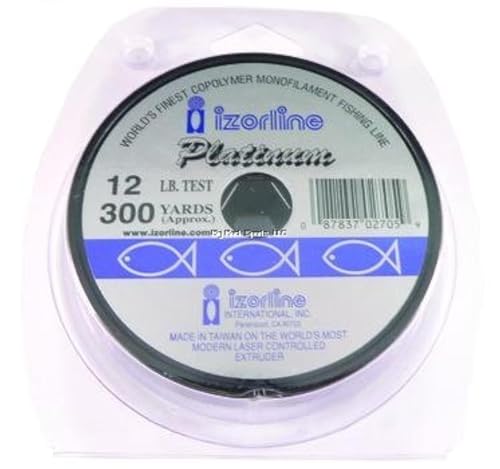
Izorline Platinum Co-Polymer Mono, listed as 12-pound/300-yard clear line for $14.64, illustrates the type of economical bulk spool that works well for general crankbait duty. Copolymer is particularly sensible in stained water, where a small visibility advantage may not justify the extra stiffness and cost of fluorocarbon.
Cost Over 5 Years
The five-year cost depends more on how much line you replace than on the price of one spool. Assume one baitcaster holds about 100 to 150 yards of line, and you maintain two crankbait reels. A 250- to 300-yard spool can usually refill both reels once, although backing can reduce the amount of main line required.
For a budget copolymer plan, assume a $15 spool replaced twice per year across two reels. The approximate five-year cost is $150: $15 multiplied by two annual replacement cycles and five years. If you replace line only once per year, the total is about $75.
For fluorocarbon, assume a $17 spool replaced twice per year across the same two reels. The five-year estimate is about $170, or $85 if you replace it once annually. Premium fluorocarbon at $25 to $30 per spool could bring the five-year total to $250 to $300 under the same replacement schedule.
These estimates do not include leader-only use. If you use a 20- to 30-inch fluorocarbon leader connected to copolymer main line, one small coil can last many trips. That approach reduces cost while adding some abrasion resistance and a less visible terminal section, though the connection knot becomes another component to inspect.
Which One for Your Home
Small apartment
Choose copolymer if storage and simplicity matter. One 300-yard spool can service multiple reels, and its softer handling is convenient when you have limited space for line maintenance. Store the spool in a cool, dark drawer rather than near a sunny window or heater. If you fish clear water, keep one compact fluorocarbon leader coil instead of several full spools.
Family with kids or pets
Copolymer is easier to manage during frequent rig changes and is less likely to spring dramatically from a small spool. Keep either line in a sealed container, and immediately discard loose cutoffs; both materials can create a hazard if left on floors, patios, or around curious pets. For heavier cover, add a fluorocarbon leader rather than storing multiple specialized setups.
Rental
Prioritize low replacement cost and easy organization. Copolymer is usually the practical default for a small collection of crankbait rods. A 12-pound spool around $15 gives you a straightforward backup without a large investment. Choose fluorocarbon only for the specific rod used around abrasive cover or in notably clear water.
Long-term home
A mixed system offers the best value. Keep 10- to 12-pound copolymer on a shallow-crankbait rod and 10- to 15-pound fluorocarbon on a medium- or deep-diving setup. Add 15- to 20-pound fluorocarbon for heavy cover if your rod, reel, and target species support it. Label spools with line size and purchase date so older line does not quietly remain in service for years.
FAQ
Is fluorocarbon better for crankbaits?
Not automatically. Fluorocarbon is better for clear water, deep-diving crankbaits, and abrasive cover. Copolymer can be better for shallow baits, stained water, long casting sessions, and anglers who want more forgiveness around treble hooks.
What pound test should I use?
Start with 10- to 12-pound line for general crankbait fishing. Move to 8-pound for smaller baits and open water, or 15- to 20-pound for heavy cover and larger lures. Check the lure maker’s recommended line range and match the line diameter to the depth you want the bait to reach.
Can I use copolymer as a leader?
Yes, but it usually provides less abrasion resistance and lower underwater camouflage than fluorocarbon. Copolymer works well when visibility is not a major concern and you want a flexible, inexpensive leader. Tie and test the connection before fishing around hard cover.
How often should I replace crankbait line?
Inspect the final several feet after every outing, especially after rocks, docks, or wood. Replace the damaged section immediately. For regularly used reels, replacing the working line once or twice per season is a reasonable starting point; heavy use, heat, sunlight, and frequent backlashes may require a sooner change.






Write Your Review
No reviews yet. Be the first to share your experience!