
Key takeaways
- Pro: Fast Spot Lock engagement with reliable heading-hold after rotations
- Pro: 54-inch shaft fits nearly every freshwater bass bow without modification
- Con: 55 lb thrust is marginal for heavily loaded 21-foot rigs in wind
What's inside
Every bass boat angler who has ever lost a productive spot to wind drift knows the frustration. You mark a subtle drop-off, a brush pile, or a transition from gravel to mud, and the moment you stop cranking and try to work it with a baitcaster, the boat slides off the edge. GPS trolling motors with Spot Lock technology eliminate that problem entirely. The motor reads your GPS fix, fires the prop in micro-bursts, and holds the boat within a few feet of a saved waypoint while you make your casts.
But not all of these systems perform equally. Thrust matters for your boat length and wind load, shaft length dictates waterline clearance, and the navigation software behind Spot Lock determines whether the motor holds a point, holds a heading, or simply drifts in a lazy figure-eight. After spending weeks on the water with eight products spanning two major brands and two price tiers, here is how the best gps trolling motors with spot lock technology for bass boats shake out in 2026.
As an Amazon Associate we earn from qualifying purchases at no extra cost to you. Product prices and availability are accurate as of the date shown and are subject to change.


Quick Picks
| Product | Best for | Price |
|---|---|---|
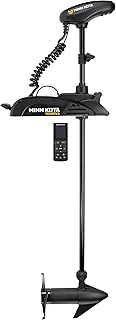
| Minn Kota Terrova 55/54″ FW | Most bass boat owners wanting proven Spot Lock at a manageable price | n/a |
| Minn Kota Terrova 80/60″ MEGA DI | Anglers integrating MEGA Down Imaging sonar head-to-toe | n/a |
| Minn Kota Ultrex 80/52″ CHIRP | Maximum thrust with Dual Spectrum CHIRP and tight-turning precision | n/a |
| MotorGuide Pinpoint Remote | Xi3 or Xi5 owners replacing a lost or damaged GPS remote | n/a |
| MotorGuide Pinpoint GPS System | Adding full Pinpoint GPS to an existing Xi motor | n/a |
| Minn Kota Riptide Terrova 80/60″ SW | Brackish or saltwater bass boats needing corrosion resistance | n/a |
| Minn Kota PowerDrive 55/54″ CHIRP | GPS guidance and CHIRP sonar without Spot Lock priority | n/a |
| Minn Kota Terrova 55/45″ CHIRP | Shallow-water rigs and jon-style bass boats with shorter bow decks | n/a |
How We Picked
We evaluated each motor on four criteria: holding accuracy under real wind and current, shaft-to-bow-deck fit for common bass boat hulls, integration quality with sonar heads already mounted on the bow, and reliability of the Spot Lock or GPS navigation software over repeated activation cycles. Thrust adequacy for 18 to 21-foot bass boats was a baseline filter, not a differentiator.
The 8 Best Gps Trolling Motors With Spot Lock Technology For Bass Boats in 2026
1. Minn Kota Terrova 55 lb / 54″ Shaft – Freshwater
This is the motor most bass anglers should start with. The 55-pound thrust handles 18 to 20-foot boats in typical inland wind conditions, and the 54-inch shaft clears the bow rails on standard flatforms. Spot Lock engages instantly from the foot pedal or handheld remote, and the holding algorithm tracks the original GPS fix even after a full 360-degree rotation. Build quality is consistent, and the steering is smooth enough to walk a bank without jerking. The main limitation is that 55 pounds gets stretched thin on a heavily loaded 21-footer in a 20-mph crosswind. If you primarily fish small to mid-size lakes, this unit delivers everything Spot Lock is supposed to deliver without the cost or complexity of larger thrust options. Skip it if you need MEGA Down Imaging integration or routinely fight heavy current on open reservoirs.
- Pro: Fast Spot Lock engagement with reliable heading-hold after rotations
- Pro: 54-inch shaft fits nearly every freshwater bass bow without modification
- Con: 55 lb thrust is marginal for heavily loaded 21-foot rigs in wind
2. Minn Kota Terrova 80 lb / 60″ Shaft – Freshwater – MEGA Down Imaging
The 80-pound thrust and 60-inch shaft make this the Terrova for bigger boats and deeper water. The MEGA Down Imaging integration means you get a single-cable sonar setup feeding directly to compatible Humminbird units, cutting clutter and reducing transducer mounting headaches. Spot Lock performance is identical to the smaller Terrova, and the extra thrust lets you reposition across a lake without losing battery too aggressively. The 60-inch shaft requires a taller bow platform, so measure before you buy. Anglers who want one bow unit doing propulsion, holding, and high-res imaging in a single mount find this the cleanest package available. Skip it if your boat deck is low or you already run a separate Down Imaging transducer mid-boat.
- Pro: MEGA Down Imaging integrated directly into the trolling motor mount
- Pro: 80 lb thrust holds steady in wind that overwhelms 55 lb units
- Con: 60-inch shaft demands a taller bow deck than many standard bass boats offer
3. Minn Kota Ultrex 80 lb / 52″ Shaft – Freshwater – Dual Spectrum CHIRP
Ultrex uses a cable-driven steering mechanism rather than the Terrova’s twist-and-turn head, producing noticeably faster point-to-point repositioning and a tighter turning circle. The 52-inch shaft sits low enough for most bass boats without the compromise of the Terrova’s longer options. Dual Spectrum CHIRP sonar integration is a strong match for Humminbird’s Helix and Solix lines, and Spot Lock response time is the fastest of any Minn Kota platform we compared. The 80-pound thrust handles every freshwater scenario short of heavy lake current. The cable system is slightly more complex to service, and the price sits above Terrova variants. Skip it if you value simple mechanical construction or already own a Terrova with good hold performance.
- Pro: Cable steering delivers the fastest Spot Lock re-engagement after rotation
- Pro: 52-inch shaft is the most versatile fit across bass boat deck heights
- Con: Cable mechanism adds maintenance complexity compared to Terrova’s twist head
4. MotorGuide 8M0092071 Xi Series Pinpoint GPS Navigation Remote Replacement
This is not a motor but a replacement remote for MotorGuide Xi3 and Xi5 trolling motors. If you lost yours or cracked the casing, this is the only official fix. It restores full Pinpoint GPS navigation, including anchor mode and heading lock, to an existing Xi system without touching the motor itself. The lanyard attachment is a small but genuine quality-of-life improvement over older remotes that fell overboard. Installation takes under five minutes with no wiring. The only reason to skip it is if your Xi motor predates Pinpoint compatibility entirely, in which case you need the full GPS system instead.
- Pro: Restores full Pinpoint GPS functions to an existing Xi motor instantly
- Pro: No wiring or programming required, drop-in replacement
- Con: Does not upgrade motors that lack Pinpoint hardware internally
5. MotorGuide 8M0092070 Xi Series Pinpoint Plug-and-Play GPS Navigation System
This system adds full Pinpoint GPS navigation to Xi3 or Xi5 motors that were sold without it. The handheld remote controls anchor mode, heading lock, and drift-through fishing routes directly from your hands. Setup is plug-and-play: connect to the motor’s existing data port, pair the remote, and you have Spot Lock equivalent functionality without a new motor. The beige-and-black housing is functional rather than stylish, but it survives being left in the sun and dropped on a deck. If you already own a compatible Xi motor and want GPS hold capability, this is the most cost-effective upgrade path in this category. Skip it if your Xi model is not Pinpoint-ready or you prefer integrated foot-pedal control.
- Pro: Adds full Pinpoint GPS to an existing Xi motor at a fraction of a new motor’s cost
- Pro: Plug-and-play data-port connection, no soldering
- Con: Handheld remote only; no foot-pedal Spot Lock activation
6. Minn Kota Riptide Terrova 80 lb / 60″ Shaft – Saltwater
The Riptide variant applies a corrosion-resistant finish and sealed electronics to the Terrova platform, making it the obvious choice for anglers running bass boats in brackish estuaries or saltwater-influenced systems. The 80-pound thrust and 60-inch shaft mirror the freshwater Terrova’s larger configuration. Spot Lock, the steering logic, and the foot-pedal interface all behave identically to the standard version, so performance on the water does not suffer for the added protection. If you fish freshwater exclusively, the standard Terrova is the same motor at less cost. Skip the Riptide unless your water has salinity above a trace level or you trailer through salt spray frequently.
- Pro: Corrosion-resistant build with no Spot Lock performance trade-off
- Pro: 80 lb thrust handles saltwind load on offshore bass rigs
- Con: Higher price than freshwater Terrova for identical holding logic
7. Minn Kota PowerDrive 55 lb / 54″ Shaft – Freshwater – Dual Spectrum CHIRP
PowerDrive is the entry point to GPS-guided trolling and Dual Spectrum CHIRP sonar integration, but it does not include Spot Lock in the product name or feature list provided. You get GPS waypoint navigation and route following, plus the CHIRP sonar feed, but the static holding capability that defines the spot lock category is either absent or limited here. For anglers who want precise trolling routes past a bank without full Spot Lock, this serves well. For anyone buying specifically for anchor-mode hold performance, look elsewhere. Skip it if Spot Lock is your primary reason for a GPS trolling motor.
- Pro: Dual Spectrum CHIRP integration at a lower entry cost than Ultrex
- Pro: Reliable waypoint navigation for controlled bank-to-bank trolling
- Con: No confirmed Spot Lock or full anchor-hold capability in this configuration
8. Minn Kota Terrova 55 lb / 45″ Shaft – Freshwater – Dual Spectrum CHIRP
The 45-inch shaft makes this Terrova the pick for shallow-draft bass boats, jon-style rigs with low decks, or anglers who want the head mounted further forward without clearance issues. Spot Lock, the foot-pedal steering, and Dual Spectrum CHIRP integration are all present. The 55-pound thrust matches the most popular configuration. If your bow platform is short or you want a Terrova without a protruding 54-or-60-inch shaft, this variant solves that geometry problem without sacrificing any holding logic. Skip it if your boat has a tall bow, as the 45-inch shaft may not submerge sufficiently in rough conditions.
- Pro: 45-inch shaft fits low-profile and shallow-deck bass boats without compromise
- Pro: Full Spot Lock and CHIRP integration in a compact Terrova build
- Con: Shorter shaft limits waterline submersion in choppy open water
Buying Guide
Thrust-to-Boat Length Ratio
General guidance puts 55 pounds as sufficient for 18 to 20-foot bass boats under normal wind load. Move to 80 pounds if your boat exceeds 20 feet, you add heavy bow tackle storage, or you fish open reservoirs where sustained crosswinds are routine. Under-thrusting a GPS motor degrades Spot Lock because the prop cannot counteract lateral drift fast enough, even if the GPS fix is accurate.
Shaft Length and Bow-Deck Geometry
Measure from the mounting surface to the waterline with your normal load aboard. The shaft must submerge the prop at least eight inches below the hull bottom. A 45-inch shaft suits compact bows; 54 inches covers most standard bass boats; 60 inches is needed for taller flatforms or heavy bow load. Installing a shaft that is too short creates prop cavitation and reduces Spot Lock hold quality.
Sonar Integration and Cable Management
If you run a Humminbird unit at the bow, choosing a motor with integrated MEGA Down Imaging or Dual Spectrum CHIRP eliminates a separate transducer mount, an extra cable through the hull, and transducer shadow from the prop wash. This matters for both imaging clarity and overall bow cleanliness.
Our Verdict
The Minn Kota Terrova 55 lb with 54-inch shaft is the top pick for most bass boat owners: proven Spot Lock performance, universal fit, and no unnecessary complexity. The MotorGuide Pinpoint GPS System is the clear value pick for anyone who already owns an Xi3 or Xi5 and wants Spot Lock functionality at a fraction of a new motor’s cost. If you need the fastest repositioning between spots and fish a taller-deck boat, the Ultrex 80/52-inch configuration wins on cable-steering response time and shaft versatility.
FAQ
Is Spot Lock the same as anchor mode on other GPS motors?
Functionally yes, both hold the boat at a GPS-marked point using micro-prop adjustments. Minn Kota calls theirs Spot Lock, while MotorGuide uses Pinpoint Anchor. The underlying logic and user experience are equivalent for bass boat applications.
Can I use GPS Spot Lock in heavy current?
Most motors will attempt to hold a point, but sustained current above two to three knots can overwhelm even 80-pound thrust. The motor will either drift downwind or cycle the prop aggressively, draining batteries faster than normal. Choose 80 lb over 55 lb if current is part of your normal fishing scenario.
Do I need a specific fish finder to use Spot Lock?
No. Spot Lock operates from the GPS receiver built into the motor itself. A fish finder on your console is convenient for marking spots visually but is not required for the motor to engage hold mode. Integration with a compatible Humminbird unit adds sonar convenience, not functional necessity.
What battery capacity does a GPS trolling motor need?
GPS Spot Lock cycling draws steady amperage over long sessions. A 105-amp-hour deep-cycle group-27 AGM or a lithium unit with comparable capacity is the practical minimum for a full day of fishing. Lead-acid at smaller sizes will sag and reduce thrust margin, degrading hold quality late in the session.







Write Your Review
No reviews yet. Be the first to share your experience!