
Key takeaways
- A size number is shown without line capacity or reel weight.
- The listing gives a maximum drag figure but no information about drag smoothness, adjustment, or material.
- Very high bearing counts are emphasized while bail, gear, and sealing details are missing.
- The reel is marketed for saltwater but has no stated corrosion protection or maintenance guidance.
- There is excessive handle wobble, rotor play, bail looseness, or grinding straight out of the box.
- The reel does not balance with the rod or leaves the spool visibly overfilled after normal spooling.
- Warranty terms, return instructions, or the actual seller are unclear.
Choosing a spinning reel size is less about buying the biggest reel you can afford and more about matching the reel to your rod, line, lure, and target fish. A reel that is too small may lack line capacity and drag power; one that is too large can make a balanced rod feel tip-heavy and tiring.
Common mistakes include treating “3000” or “4000” as universal measurements, ignoring the rod’s recommended line range, and choosing by bearing count alone. Numbering also varies by brand: one manufacturer’s 3000-size reel may be close to another’s 2500 or 3500. Use the size number as a starting point, then verify line capacity, weight, drag, and handle dimensions.
Our top picks
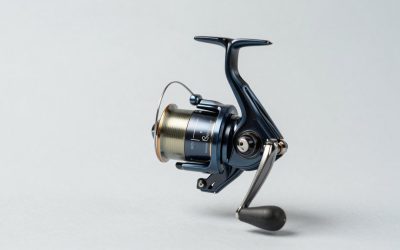
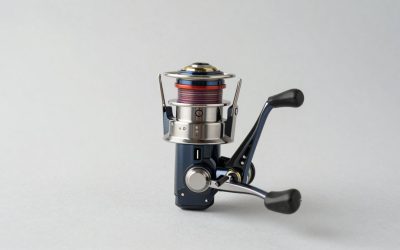
 Daiwa Crossfire LT Spinning Reel
- Hand Orientation: Ambidextrous
- Material: Metal
- Fishing Technique: Spinning
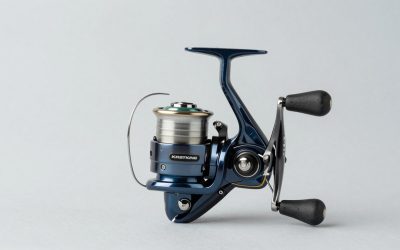
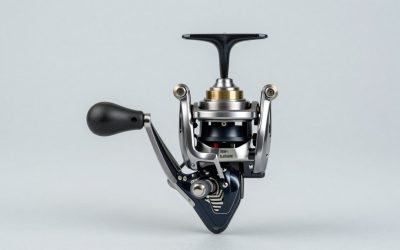
 KastKing Megatron Spinning Fishing Reels with 5.2:1
Aluminum skeletal frame adds strength without excess weight
Carbon drag system handles over 30 pounds of pressure
Seven plus one stainless bearings support smooth retrieves
Ambidextrous handle setup may feel less dedicated than handed reels
Zinc alloy main gear is less premium than full metal alloys
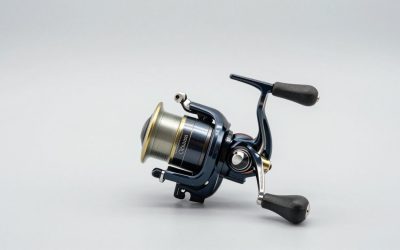
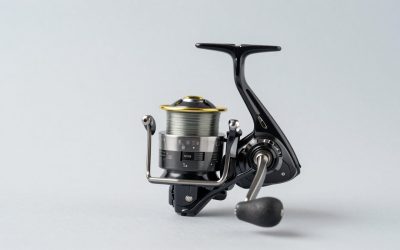
 Summer and Centron Spinning Reels
- Hand Orientation: Ambidextrous
- Fishing Technique: Spinning
- Gearbox Ratio: 5.1
Twelve plus one bearings give a notably smooth retrieve
Foldable handle swaps between left and right for easy storage
Light 7.8 ounce body makes for easier casting all day
Sizing runs small, so check measurements before ordering
13 pound maximum drag limits use with larger fish
| Product | Key specs | |
|---|---|---|
| Daiwa Crossfire LT Spinning Reel | Hand Orientation: Ambidextrous Material: Metal Fishing Technique: Spinning | Check price |
| KastKing Megatron Spinning Fishing Reels with 5.2:1 | Check price | |
| Summer and Centron Spinning Reels | Hand Orientation: Ambidextrous Fishing Technique: Spinning Gearbox Ratio: 5.1 | Check price |
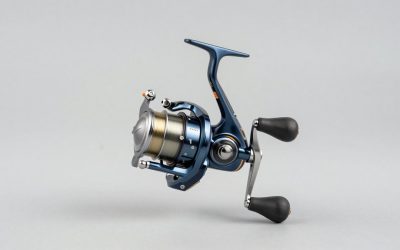
 KastKing Spartacus II Plus Spinning Fish Reels KastKing Spartacus II Plus Spinning Fish Reels | Hand Orientation: Ambidextrous Fishing Technique: Spinning Material Type: Graphite | Check price |
As an Amazon Associate we earn from qualifying purchases at no extra cost to you.
This guide explains how to choose spinning reel size for freshwater, inshore, and light saltwater fishing. The goal is a balanced setup that casts comfortably, holds enough line, and provides appropriate drag without paying for features you will not use.
Decide These 3 Things First
- Target species and cover: Panfish and trout need much less line and drag than bass, catfish, pike, or inshore saltwater species.
- Rod and line: Check the rod’s length, power, action, and recommended line weight before selecting a reel. A 6-foot ultralight rod should not be paired with a heavy 5000-size reel.
- Fishing environment: Freshwater use is less demanding than surf, piers, or saltwater flats. Saltwater requires better sealing, corrosion-resistant materials, and more frequent rinsing.
Size: Match the Reel to Line, Rod, and Fish
For most freshwater anglers, a 1000- to 2500-size reel is appropriate for ultralight and light fishing. These reels commonly suit 4- to 8-pound monofilament or roughly 6- to 15-pound braided line, depending on diameter. They are useful for trout, crappie, bluegill, small bass, and finesse presentations.
A 2500- to 3000-size reel is the most versatile choice for many anglers. It typically pairs well with a 6-foot-6-inch to 7-foot rod rated for about 6- to 12-pound line. Choose this range for bass, walleye, stocked trout, light pike, and general-purpose freshwater fishing. A reel such as the KastKing Spartacus II Plus in a listed 3000 size fits this middle category.
Move to a 4000- or 5000-size reel when you need more line, stronger drag, or heavier lures. These sizes can work with 10- to 20-pound monofilament or approximately 20- to 40-pound braid. They are common for larger bass, salmon, catfish, pike, pier fishing, and light inshore use. A 6000-size reel is better reserved for larger saltwater fish, surf casting, or situations requiring substantial line capacity.
Do not select by spool size alone. Confirm that the reel can hold at least 100 to 150 yards of your chosen line. For surf or saltwater fishing, 200 yards or more may be sensible. The reel should also balance the rod near the point where you hold it. If the tip drops sharply when you let go, the reel is probably too light or the outfit is poorly balanced.
Material: Aluminum, Graphite, and Composite Choices
Graphite and composite bodies keep costs and weight down. They are suitable for casual freshwater fishing and can make a small reel comfortable during long casting sessions. A budget reel in the $15 to $35 range may use a composite body, rotor, or spool. That is not automatically a problem, but rough handling and high drag pressure can expose flex more quickly.
Aluminum bodies and side plates generally provide a more rigid platform for the gears. This matters when fighting strong fish or retrieving resistance-heavy lures. Aluminum reels often weigh more than graphite models, so compare total reel weight rather than assuming the heaviest construction is best. For all-day finesse fishing, a difference of 2 to 3 ounces can be noticeable.
Spool material also matters. Aluminum spools are common on midrange and premium reels and usually offer a precise, durable lip for casting. A graphite spool can be perfectly adequate for light freshwater use. In either case, look for a smooth, nick-free line edge; even a small burr can damage line.
Construction: Focus on the Parts That Affect Reliability
Gear material, body rigidity, bail construction, and sealing are more useful indicators than a large bearing number. A reel advertised with 10 or 12 bearings is not necessarily smoother or longer-lasting than a well-built reel with 4 or 5 bearings. Bearing quality, placement, alignment, and maintenance matter more.
Look for a bail that snaps open and closed decisively without excessive side play. A thick, securely attached bail wire is preferable for frequent use. The line roller should turn freely and should not wobble. The anti-reverse system should engage immediately when you turn the handle backward; noticeable backplay can make light-line hooksets frustrating.
For saltwater, prioritize a sealed or water-resistant body and drag. The KastKing Spartacus II Plus, for example, is listed with IPX5 waterproof protection. Such a rating can be useful, but it does not make a reel maintenance-free. Rinse saltwater gear with fresh water, dry it fully, and follow the manufacturer’s lubrication instructions.
Comfort and Performance: Weight, Drag, and Retrieve
Reel weight should complement the rod. A practical target for a 2500- or 3000-size freshwater setup is roughly 7 to 10 ounces. Ultralight combinations may be closer to 6 to 8 ounces, while 4000- to 5000-size reels often fall around 9 to 13 ounces. Exact weights vary by model, so use these as comparison ranges rather than requirements.
Drag capacity should exceed your normal fishing needs without becoming a reason to buy an oversized reel. For panfish and trout, 6 to 10 pounds of maximum drag is usually sufficient. Bass and general freshwater fishing commonly call for about 10 to 15 pounds. Larger inshore or heavy-cover applications may justify 15 to 25 pounds. More important than the headline maximum is smooth adjustment at low settings.
Gear ratio affects how quickly line is retrieved. A ratio around 5.0:1 to 5.3:1 is a versatile middle ground. Ratios near 6.0:1 are helpful when quickly picking up slack or working faster presentations. Slower ratios can offer more cranking power for deep or high-resistance lures. Also check retrieve rate: a larger spool can collect more line per handle turn even when gear ratios are similar.
A comfortable handle knob and a solid attachment are valuable for repeated casting. The Summer and Centron reels advertise a 12+1 bearing count, but a buyer should still inspect the handle, bail, drag adjustment, and line roller rather than relying on that number alone.
Price Tiers: Spend Where Your Fishing Demands It
Budget spinning reels generally cost about $15 to $40. They can be good choices for occasional freshwater use, children’s outfits, backup equipment, or species that do not make long, powerful runs. The Summer and Centron example is listed at $13.98, while the Daiwa Crossfire LT example is listed at $31.53. At this level, expect simpler sealing and more variation in long-term smoothness.
Midrange reels typically cost $40 to $100. This is the strongest value category for regular anglers. You may find better drag consistency, more rigid frames, improved line lay, lighter rotors, and corrosion-resistant components. The listed $41.64 KastKing Spartacus II Plus and $56.09 KastKing Megatron sit near the lower end of this range.
Premium reels often begin around $120 and can exceed $300. Pay extra when you fish weekly, use braided line, target strong fish, or need low weight and precise balance. Do not pay premium prices simply for a large bearing count, decorative finishes, or a maximum drag rating you will never use.
Warranty: Verify What Is Actually Covered
Before buying, check the warranty length, exclusions, and return window. A one-year limited warranty is common, while some brands offer longer coverage on selected reels. “Limited” may exclude normal wear, corrosion, accidental damage, line damage, or improper maintenance.
Save the receipt and record the model number. Ask whether warranty service requires shipping the reel to a repair center and whether the buyer pays postage. A generous return period, such as 30 days or more, is particularly useful because bail alignment, handle play, and drag smoothness are difficult to judge from a product page.
Delivery and Assembly: Check the Setup Before Fishing
Most spinning reels arrive assembled, but the handle may ship detached or installed on the opposite side. Confirm that the handle can be switched for left- or right-hand retrieve. Before spooling line, turn the handle slowly and check for grinding, tight spots, rotor wobble, or unusual noise.
Inspect the spool lip and line roller for scratches. Set the reel on your intended rod to evaluate balance. Fill the spool to about 1/16 inch below the rim; underfilling reduces casting distance, while overfilling can create loops and tangles. If the reel includes a spare spool, verify that both spools fit correctly and that the drag knob tightens smoothly.
Spec Checklist
| Spec | Budget | Mid | Premium |
|---|---|---|---|
| Typical price | $15–$40 | $40–$100 | $120–$300+ |
| Best sizes | 1000–3000 | 2000–5000 | 1000–6000, application-specific |
| Typical weight | 7–13 ounces | 6.5–12 ounces | 5.5–11 ounces |
| Freshwater line range | 4–12-pound mono | 4–20-pound mono | 2–20-pound mono |
| Useful drag range | 6–15 pounds | 8–25 pounds | 8–30 pounds |
| Construction | Composite or graphite | Composite or aluminum mix | Rigid aluminum or advanced composite |
Red Flags
- A size number is shown without line capacity or reel weight.
- The listing gives a maximum drag figure but no information about drag smoothness, adjustment, or material.
- Very high bearing counts are emphasized while bail, gear, and sealing details are missing.
- The reel is marketed for saltwater but has no stated corrosion protection or maintenance guidance.
- There is excessive handle wobble, rotor play, bail looseness, or grinding straight out of the box.
- The reel does not balance with the rod or leaves the spool visibly overfilled after normal spooling.
- Warranty terms, return instructions, or the actual seller are unclear.
FAQ
What size spinning reel is best for beginners?
A 2500- or 3000-size reel is the most flexible starting point for freshwater fishing. Pair it with a 6-foot-6-inch to 7-foot medium-light or medium rod and 6- to 10-pound line. Choose a 1000- or 2000-size reel if you mainly fish small streams, trout, or panfish.
Is a 3000-size reel too big for bass?
No. A 3000-size reel is commonly suitable for bass, especially with a 6-foot-6-inch to 7-foot rod and 8- to 12-pound line. Move to a 4000 size for heavy vegetation, larger lures, or substantially more line capacity.
What reel size should I use for saltwater?
Light inshore fishing often suits a 3000- to 4000-size reel. Use a 4000- to 6000-size reel for larger fish, stronger current, surf, or heavier braid. Choose corrosion resistance and sealing based on exposure, then rinse and dry the reel after every saltwater trip.
Does a higher bearing count mean a better spinning reel?
Not necessarily. Four well-installed bearings can outperform a larger number of lower-quality bearings. Give priority to smooth rotation, a rigid body, a reliable bail, a clean line roller, an immediate anti-reverse system, and a drag that adjusts consistently.
Write Your Review
No reviews yet. Be the first to share your experience!