
Our Top Picks
 Saltwater Offshore Fishing 7’0” Heavy Spinning 20–50lb for7'0" Heavy - 20-50 lb (spinning)1 PoundsCheck on Amazon
 Sougayilang Catfish & Inshore Spinning ComboSpin8'0''-500045 x 2 x 2 Inches2.9 PoundsCheck on Amazon
The best cobia rod in this set is the Fitzgerald Stunner X 7’2″ Medium Heavy Spinning rod rated for 20 to 50 pound line, because it matches the standard cobia setup of a 7 to 8 foot medium-heavy to heavy spinning rod and 30 to 50 pound braid. If you want longer casts or more backbone for bigger fish, the Stunner HD in 7’0″ Heavy and 8’0″ Extra Heavy are the next picks. Cobia are strong, bottom-oriented fish that commonly run around 30 pounds, and a cobia rod is a stout offshore or nearshore rod with enough power to turn a fish quickly and cast a bucktail or live bait.
Quick List
- Fitzgerald Stunner X 7’2″ Medium Heavy Spinning (20-50 lb) – best for an all-around cobia rod that balances casting and control
- Fitzgerald Stunner HD 7’0″ Heavy Spinning (20-50 lb) – best for anglers who want extra backbone around structure
- Fitzgerald Stunner HD 8’0″ XH Spinning (20-40 lb) – best for long casts to sighted fish from a tower or bow
- Fiblink 7′ 2-Piece Trolling Rod (30-50 lb) – best as a conventional boat rod for trolling or bait drifting
- Sougayilang Catfish and Inshore Spinning Combo – runner-up for smaller cobia and a complete rod-and-reel package
- Ugly Stik 7’6″ Carbon Inshore Spinning (10-17 lb) – runner-up only, too light for typical cobia
Which One Is Right for You?
| If you… | Choose |
|---|---|
| need one spinning rod for sight-casting and bottom fishing | Fitzgerald Stunner X 7’2″ Medium Heavy Spinning |
| make long casts from a tower and want reach | Fitzgerald Stunner HD 8’0″ XH Spinning |
| fish wrecks and pilings with big fish possible | Fitzgerald Stunner HD 7’0″ Heavy Spinning |
| troll or drift live bait with a conventional reel | Fiblink 7′ 2-Piece Trolling Rod |
| want a rod and reel together for smaller fish and mixed species | Sougayilang Catfish and Inshore Spinning Combo |
| mainly chase redfish and trout and want a backup for small cobia | Ugly Stik 7’6″ Carbon Inshore Spinning |
Start with how you fish cobia. For sight-casting, a spinning rod around seven to eight feet is the norm. For bottom fishing or trolling, a conventional rod works too. Then match the line rating to the size of fish in your area, remembering that fish over fifty pounds are not rare in many places.
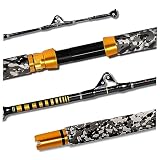
Saltwater Offshore Fishing 8’0” XH Spinning 20–40lb for Cobia Mahi Kingfish Casting Carbon Fiber One Piece Boat Fitzgerald Stunner HD
Picked as a relevant option in this category.
View on Amazon
Fitzgerald Stunner X Offshore Rod, 7'2" Medium Heavy Spinning, 20-50 lb
Chosen because it specifies 7'2" Medium Heavy Spinning and 20-50 lb.
View on Amazon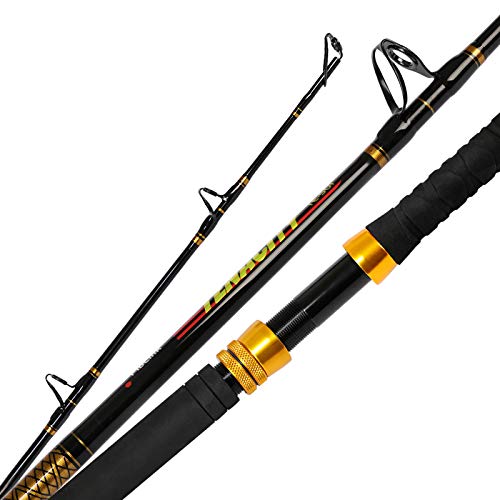
Fiblink Fishing Trolling Rod 2 Piece Saltwater Offshore Big Name Heavy Duty Conventional Boat Fishing Pole (7',30-50lbs)
Chosen because it specifies 30-50lbs).
View on AmazonSaltwater Offshore Fishing 7’0” Heavy Spinning 20–50lb for Snapper Cobia Mahi Kingfish Carbon Fiber One Piece Boat Fitzgerald Stunner HD
Picked as a relevant option in this category.
View on AmazonSougayilang Catfish & Inshore Spinning Combo – 30LB Drag, 4.7:1, 13+1 Bearings, 2-Piece Medium Heavy Rod for Catfish, Striper, Redfish, Carp – Bottom Fishing
Chosen because it specifies 30LB Drag and 4.7:1.
View on Amazon
Ugly Stik 7'6" Carbon Inshore Spinning Rod, 1-Piece Fishing Rod, Medium Rod Power, 10-17 lb Line Rating, 1/4-1 oz Lure Rating
Chosen because it specifies 1-Piece Fishing Rod and Medium Rod Power.
View on AmazonAll 6 Picks in Detail
1. Fitzgerald Stunner X 7’2″ Medium Heavy Spinning – Best all-around cobia rod
As an Amazon Associate we earn from qualifying purchases at no extra cost to you.

The Stunner X in 7’2″ medium heavy is the closest fit to the standard cobia recommendation, which is a medium-heavy to heavy spinning rod of seven to eight feet. Retailer information lists a one-piece carbon fiber blank with a fast action, an EVA handle and stainless guides, and the series is marketed for snapper, grouper, redfish, snook, mahi, tarpon, cobia and shark. The 20 to 50 pound rating, which one retailer chart labels as braided line weight, matches the 30 to 50 pound braid that cobia anglers often use. It suits anglers who need one rod for casting jigs, live bait and cut bait.
- Length and power: 7’2″ medium heavy, per the listing name
- Line rating: 20 to 50 pound, per the listing name
- Action: fast, per retailer information
- Pieces: one, per retailer information
- Guides: stainless, per retailer information; confirm on the listing
Pros
- Right power range for typical cobia
- Seven-foot-plus length helps with casting control
- One-piece blade has no ferrule to flex or fail
Cons
- A one-piece rod is awkward to transport
- Medium-heavy power may be borderline for very large fish around structure
Compared with the Stunner HD 7’0″ Heavy, this rod is lighter and faster, while the HD is stiffer.
2. Fitzgerald Stunner HD 7’0″ Heavy Spinning – Best for extra backbone near structure

This heavy-power Stunner HD is rated for 20 to 50 pound line, and the listing names snapper, cobia, mahi and kingfish as target species. The HD series is described by retailers as a blend of graphite responsiveness and fiberglass durability, with stainless guides. At seven feet it is shorter than the 8-foot options, which gives better leverage in close quarters. It suits anglers who fish wrecks, buoys and pilings, where a hooked cobia will dive for cover and the rod must turn it quickly.
- Length and power: 7’0″ heavy, per the listing name
- Line rating: 20 to 50 pound, per the listing name
- Pieces: one, per the listing name
- Blank: carbon fiber, per the listing name; series information describes a graphite and fiberglass blend
- Target species: snapper, cobia, mahi and kingfish, per the listing name
Pros
- Heavy power for lifting fish from structure
- Shorter length is easier to handle on a crowded boat
- Durable blank design
Cons
- Less casting distance than the 8-foot rod
- Stiffer than the Stunner X, so less forgiving on light braid
The nearest alternative is the 8’0″ Stunner HD, which adds length but a lower upper line rating.
3. Fitzgerald Stunner HD 8’0″ XH Spinning – Best for long casts
The 8-foot extra-heavy Stunner HD is built for distance. The listing frames it as a long offshore spinning rod for cobia, mahi and kingfish, and retailer information gives a lure rating of about 3/4 to 3 ounces. Its line rating is 20 to 40 pounds, a bit lower on the top end than the 7’0″ heavy, despite the extra-heavy power label. It suits anglers who cast big bucktails or eels to fish spotted from a tower or bow and need reach, as well as anglers who fish from piers where distance matters.
- Length and power: 8’0″ extra heavy, per the listing name
- Line rating: 20 to 40 pound, per the listing name
- Lure rating: about 3/4 to 3 ounces per retailer information; confirm on the listing
- Pieces: one, per the listing name
- Blank: carbon fiber, per the listing name
Pros
- Long casts with heavier lures
- Extra-heavy power gives lifting strength
Cons
- Eight feet is long for tight boats and one-piece transport
- Line rating tops out at 40 pound
Compared with the 7’0″ HD, it casts farther but has a lower stated maximum line weight.
4. Fiblink 7′ 2-Piece Trolling Rod – Best conventional boat rod
This rod does not match the spinning-rod standard for sight-casting, and that should be clear: it is a conventional trolling rod, meant for use with a conventional reel, and retailer descriptions mention roller guides. It is rated for 30 to 50 pound line and breaks into two pieces, which makes it easier to transport. It suits boat anglers who troll or drift live bait for cobia and other offshore species, and it fits a setup with a conventional reel loaded with mono or similar line. For casting to sighted fish it is not the right tool, so it is placed as a runner-up.
- Length: 7 feet, per the listing name
- Pieces: two, per the listing name
- Line rating: 30 to 50 pound, per the listing name
- Type: conventional boat or trolling rod, per the listing name
- Guides and weight: roller guides and a weight in the low twenty-ounce range per one retailer; confirm on the listing
Pros
- Two-piece design travels easily
- Strong rating for offshore trolling
Cons
- Not a spinning rod, so it needs a conventional reel
- Heavy and stiff for casting lures
Compared with the Stunner X, it is a different tool for a different technique.
5. Sougayilang Catfish and Inshore Spinning Combo – Runner-up for smaller cobia

This is a rod-and-reel combo aimed at catfish, striper, redfish and carp, not offshore work. The listing names a two-piece medium-heavy rod, a reel with a 30 pound drag, a 4.7:1 gear ratio and 13+1 bearings. Because cobia commonly run around thirty pounds and can go far larger, this combo is on the light side and is best treated as an option for smaller fish, piers and mixed-species days. It suits anglers who want one complete package and do not plan on dedicated cobia trips.
- Format: rod and reel combo, per the listing name
- Rod: two-piece medium heavy, per the listing name
- Drag: 30 pound, per the listing name
- Gear ratio and bearings: 4.7:1 and 13+1, per the listing name
- Reel size and rod length: not stated in the listing name; retailer variants differ, so confirm on the listing
Pros
- Complete rod and reel in one purchase
- Two-piece rod is easy to pack
Cons
- Built for catfish and inshore species, not offshore power
- Not suited to big cobia around structure
Compared with the Ugly Stik, it offers more power but is still not a dedicated cobia rod.
6. Ugly Stik 7’6″ Carbon Inshore Spinning – Runner-up only, too light for typical cobia

This rod does not fit the facet. It is a 7’6″ one-piece medium-power spinning rod rated for 10 to 17 pound line and 1/4 to 1 ounce lures, which is an inshore redfish and speckled trout class of rod. With typical cobia around thirty pounds, a 17 pound maximum rating leaves little margin, and a cobia near structure can break it. We list it as a runner-up for anglers who want a light backup and a rod for other inshore species, not for targeting cobia.
- Length and power: 7’6″ medium, per the listing name
- Line rating: 10 to 17 pound, per the listing name
- Lure rating: 1/4 to 1 ounce, per the listing name
- Pieces: one, per the listing name
- Construction: carbon blank, per the listing name
Pros
- Good inshore all-rounder
- Long length for casting light baits
Cons
- Underpowered for cobia
- Risk of damage on strong fish
Compared with the Sougayilang combo, it is a better rod for light species but a weaker choice for cobia.
Specs Compared
| Pick | Length and power | Line rating | Type | Pieces |
|---|---|---|---|---|
| Fitzgerald Stunner X 7’2″ | 7’2″ medium heavy | 20-50 lb | Spinning | 1 |
| Fitzgerald Stunner HD 7’0″ | 7’0″ heavy | 20-50 lb | Spinning | 1 |
| Fitzgerald Stunner HD 8’0″ | 8’0″ extra heavy | 20-40 lb | Spinning | 1 |
| Fiblink 7′ Trolling Rod | 7’0″, heavy per series; confirm on listing | 30-50 lb | Conventional | 2 |
| Sougayilang Catfish and Inshore Combo | Medium heavy; length confirm on listing | Confirm on listing | Spinning combo | 2 |
| Ugly Stik 7’6″ Carbon Inshore | 7’6″ medium | 10-17 lb | Spinning | 1 |
How We Chose These
We began with the rods in current catalog listings and compared each against the common cobia tackle recommendation: a medium-heavy to heavy spinning rod of about seven to eight feet, used with 30 to 50 pound line. We then checked length, power, line rating, piece count and construction in the listing text and retailer descriptions. This is a research-based roundup, not a field evaluation. Rods that fall outside the cobia class, whether too light or a different type, are labeled plainly and placed at the end so readers can see what each is good for.
What to Look For
Power and line rating
Cobia are strong, and the typical fish runs around thirty pounds with larger fish not unusual. A rod rated for 30 to 50 pound line gives you the margin to apply real pressure. Rods rated to only 17 pounds are underpowered and risk breakage. Remember that line ratings differ between manufacturers; one retailer chart for a rod in this list labels its rating as braided line weight. If a rod is heavy power but has a low top end, as with the 8’0″ HD, it may still lift well but should be paired with line within its range.
Worked example: if you plan to throw a 2 ounce bucktail to a cobia on 50 pound braid, you want a rod with a lure rating that includes 2 ounces and a line rating at or above 40 pounds. The Stunner X and Stunner HD both fit; the Ugly Stik does not.
Length and action
Seven to eight feet is the usual range. Longer rods cast farther and give more leverage to lift fish from the bottom, but they are harder to handle in a small boat. Shorter rods give control near the boat when you need to guide a fish toward a gaff or net. Fast action rods set the hook quickly and cast well, while slower action rods absorb shock. Braid has no stretch, so a bit of tip flex helps absorb the cobia’s runs.
Spinning versus conventional
Most anglers cast to cobia with spinning gear because of the ease of throwing bucktails and eels. Conventional rods and reels are better for trolling, drifting live bait and fighting fish at depth with heavy drag. Choose the type to match your reel and technique, and do not mix a conventional rod with a spinning reel. Spinning reels in the 5000 to 8000 size are common for cobia; confirm that your reel balances with the rod.
Reel pairing, drag and leader
A rod is only half of the outfit. For cobia, guides commonly suggest a spinning reel in the 5000 to 8000 class with a smooth drag that can deliver around a third of your line strength. Set the drag at a modest level for the cast and increase it after the hookset, because cobia often make a hard first run. Use a 50 to 80 pound fluorocarbon or monofilament leader of two to six feet, a little lighter in very clear water, and tie it with a knot you trust. When pairing a reel to a rod, look at the balance point: the rod should sit level when you hold it just in front of the reel seat. A reel that is too heavy tires your wrist, and one that is too light makes the tip heavy and hurts casting accuracy.
Sight-casting versus bottom fishing
The way you fish changes which features matter. Sight-casting rewards a longer rod with good casting distance, since you may only get one chance at a cruising fish. Bottom fishing and chumming around structure reward lifting power and a stiffer midsection that turns the fish before it wraps the line. Anglers who do both often choose a seven-foot-plus heavy rod and keep a second, longer rod rigged with a lure for sightings. A dependable approach is to rig one rod with a bucktail and one with live bait so you can respond quickly.
One-piece or two-piece
One-piece rods are strong and sensitive but hard to transport. Two-piece rods break down for travel and storage, with a small trade-off in blank continuity. For boat anglers with rod storage, one-piece is fine. For travel or trucks with limited room, two-piece is more practical.
Guides, handle and reel seat
Stainless steel guides with hard inserts resist grooving from braid. Check that the handle gives you enough room for two hands when fighting fish, and that the reel seat locks tight. Foam handles resist salt and are comfortable, while cork is lighter but needs care. Rinse the rod with fresh water after each trip and check guides for cracks.
Questions
What size rod do I need for cobia?
Most anglers use a seven to eight foot medium-heavy to heavy spinning rod with a 5000 to 8000 size reel. Choose a rod rated for 30 to 50 pound line for the best margin on typical fish.
Can I use an inshore rod for cobia?
A light inshore rod rated for 10 to 17 pound line is not suited to most cobia, which commonly weigh thirty pounds or more. It may work for small fish, but a heavier rod is safer for you and the fish.
Should I use braid or mono for cobia?
Many anglers use 30 to 50 pound braid with a 50 to 80 pound fluorocarbon or mono leader. Some prefer mono for its stretch. The rod’s line rating and your reel’s drag should guide the choice.
Is a spinning or conventional setup better for cobia?
Spinning gear is preferred for sight-casting lures and lighter bait. Conventional gear is better for trolling, bottom fishing and heavy drag. Both can land cobia when sized correctly.
What lure weight should my rod handle?
A cobia rod should handle roughly one to three ounces, which covers common bucktails and jigs. The 8’0″ Stunner HD has a retailer-listed lure rating of about 3/4 to 3 ounces, for example.
Do I need a one-piece rod?
No, but one-piece rods are stronger and more sensitive. Two-piece rods are fine if you need to travel, as long as the ferrule is well made and you check it for tightness before fishing.
Update History
- October 14, 2026 – Initial publication; product set drawn from current catalog listings.
- Check the product page for current specifications and availability before buying.
Sources
- Manufacturer product pages and retailer specification fields for Fitzgerald, Ugly Stik and Fiblink rods
- Retailer listing titles and specification fields for the Sougayilang combo
- Published cobia fishing guides and angler forum discussions on rod length, line weight and reel size

Write Your Review
No reviews yet. Be the first to share your experience!