
Our Top Picks
 Fiblink Fishing Trolling Rod 1 Piece Saltwater Offshore6'6" 80-120lbs78 x 1 x 1 inches2 PoundsCheck on Amazon
For Pacific halibut from a boat, the Okuma Cedros CJ-C-601MHa is the best match in this group: a 6-foot casting rod rated for 50 to 100 pound line with a lure rating of roughly 3 to 7 ounces, built for dropping jigs and heavy baits straight down. Halibut rods fall into two camps. Pacific and Atlantic halibut call for short, stiff conventional rods rated for 50-pound line or more, while California halibut in bays and along beaches are caught on medium spinning or casting rods in the 10 to 20 pound class. The six picks below are sorted by which camp they serve, and two are flagged plainly as poor matches for big-halibut work.
Quick List
- Fiblink 1-Piece 6′ Trolling Rod (80-120 lb) – best for heavy weights and very large fish
- Okuma Cedros CJ-C-601MHa – best for jigging for Pacific halibut in moderate depth
- Topline Tackle 2-Piece Roller Guide Rod – best for travel and boat storage in a two-piece format
- Fiblink 6’6″ Camo Heavy Roller Rod – best for anchored or drifting bait with a longer rod
- Okuma SST 7′ Medium-Light Spinning Rod – not a halibut rod; a light-tackle runner-up for small inshore flatfish
- Ugly Stik 7’6″ Carbon Inshore Spinning Rod – best for California halibut in bays and surf
Which One Is Right for You?
| If you… | Choose |
|---|---|
| Jig or drop weights from a boat in Alaska or British Columbia style waters | Okuma Cedros CJ-C-601MHa |
| Fish very deep water or very strong current with sinkers well over a pound | Fiblink 1-Piece 6′ Trolling Rod (80-120 lb) |
| Prefer a slightly longer heavy rod for drifting bait | Fiblink 6’6″ Camo Heavy Roller Rod |
| Need a two-piece rod that fits a small cabin or travels by air | Topline Tackle 2-Piece Roller Guide Rod |
| Chase California halibut with live bait or swimbaits in a bay | Ugly Stik 7’6″ Carbon Inshore Spinning Rod |
| Want an ultralight rod for panfish and small fish, with halibut only a distant possibility | Okuma SST 7′ Medium-Light Spinning Rod |
If you are not sure which type of halibut you will fish for, start there. Pacific and Atlantic halibut are large, deepwater flatfish where you need rod strength and a way to handle a lot of weight. California halibut is a different species and a different game, which makes the 7-foot-plus spinning rod a great fit. Do not use an ultralight rod for either, because a big halibut will overpower it.

Fiblink 1-Piece Saltwater Offshore Trolling Rod 6-Feet Big Game Rod Conventional Boat Fishing Pole (80-120 lbs)
Picked as a relevant option in this category.
View on Amazon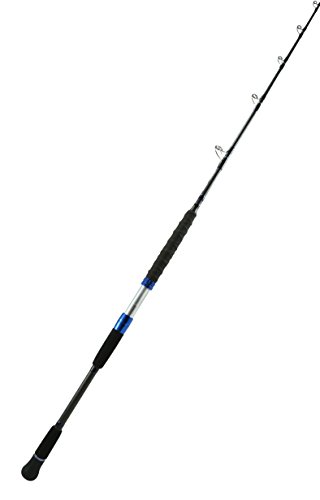
Okuma Fishing Tackle Okuma Cedros Jigging Rods, CJ-C-601MHa, Black
Chosen because it specifies CJ-C-601MHa and Black.
View on Amazon
Topline Tackle 2-Pieces Deep Sea Fishing Rods, Fishing Pole with 3+1 Roller GuidesTrolling Fishing Rod for Salt Water
Picked as a relevant option in this category.
View on AmazonFiblink Fishing Trolling Rod 1 Piece Saltwater Offshore Heavy Roller Rod Big Name Conventional Boat Camo Fishing Pole (Straight Butt, 6'6" 80-120lbs)
Chosen because it specifies 6'6" 80-120lbs).
View on Amazon
Okuma SST A Series Cork Grip 30/40 Ton Carbon Blank Lightweight Fishing Rod, SST-S-702MLa
Chosen because it specifies SST-S-702MLa.
View on Amazon
Ugly Stik 7'6" Carbon Inshore Spinning Rod, 1-Piece Fishing Rod, Medium Rod Power, 10-17 lb Line Rating, 1/4-1 oz Lure Rating
Chosen because it specifies 1-Piece Fishing Rod and Medium Rod Power.
View on AmazonAll 6 Picks in Detail
1. Fiblink 1-Piece 6′ Saltwater Trolling Rod (80-120 lb) – Best for Heavy Weights and Big Fish
As an Amazon Associate we earn from qualifying purchases at no extra cost to you.

This Fiblink is a one-piece, 6-foot conventional boat rod rated for 80 to 120 pound line. It has roller guides, which reduce friction when you fish heavy mono or braid in deep water, and a heavy-power build marketed for big-game fishing. For halibut, that translates to a stiff, powerful stick for dropping large weights and winching a big fish off the bottom.
Who it suits: anglers fishing very deep water, strong tides or giant halibut. It is overkill for typical 20 to 60 pound fish and not a refined jigging tool, and the 80 to 120 pound class is heavier than the 50 to 80 pound class most halibut anglers choose. It is also a trolling rod by design, so it is less sensitive than a jigging stick.
Fit and use: this rod makes sense for giant halibut, deep drops and strong current, and it can double as a trolling rod. For everyday halibut from a boat in moderate depth, a lighter class is usually more comfortable all day.
- Length and pieces: 6 ft, 1 piece
- Line class: 80 to 120 lb per title
- Guides: roller guides per listing family
- Blank: fiberglass or fiberglass-composite per brand descriptions; confirm on listing
- Butt: confirm on listing
Pros
- Handles large weights and big fish
- Roller guides reduce line wear
- Rugged construction
Cons
- Heavy and stiff, so tiring to jig
- More rod than most halibut trips need
Compared with the Topline, the Fiblink is a one-piece rod with a stated 80 to 120 pound class, while the Topline offers a two-piece design but unspecified class in the listing title.
2. Okuma Cedros CJ-C-601MHa – Best for Jigging Pacific Halibut
The Cedros is a purpose-built jigging rod, and the CJ-C-601MHa is a 6-foot, one-piece casting model with medium-heavy power and a medium-fast taper. Okuma lists a line rating of 50 to 100 pounds and a lure weight of 90 to 200 grams, which is about 3 to 7 ounces. That puts it in the sweet spot for halibut jigs in moderate depth and for lighter bait rigs. Published blank details mention E-glass, zirconium guide inserts and stainless guide frames.
Who it suits: anglers who jig in 100 to 200 feet or less and want a rod that works a jig with actual action. If you routinely fish 16 to 24 ounce weights in deep or fast water, the lure rating is on the light side, and you should look at the heavier Fiblink options.
Fit and use: pair it with a conventional or jigging reel that holds enough 65 to 80 pound braid for the depth you fish, and use jigs within the rod’s lure rating. For heavier weights, step up to a stiffer rod instead of overloading this one.
- Length and pieces: 6 ft, 1 piece
- Power and taper: medium-heavy, medium-fast
- Line rating: 50 to 100 lb
- Lure weight: 90 to 200 g (about 3 to 7 oz)
- Build: E-glass blank, zirconium inserts, stainless frames, per published specs
Pros
- Jigging taper with a meaningful lure rating
- Strong line class for large halibut
- Compact length is easy to manage in a boat
Cons
- Lure ceiling is light for deepwater weights above 8 ounces
- Casting reel setup required
Against the Fiblink 6-footer, the Cedros is the better jigger, while the Fiblink handles heavier weights and rougher use.
3. Topline Tackle 2-Piece Deep Sea Rod with 3+1 Roller Guides – Best for Travel

Topline’s rod comes in two pieces and uses three roller guides plus a roller tip, according to the title. The brand sells the rod in several line classes, and retailer descriptions mention versions in the 30-50, 50-80, 60-100 and 80-130 pound range, so the actual rating depends on which variant you choose. A two-piece design is easier to pack, which matters if halibut trips involve flights, small boats or tight storage.
Who it suits: anglers who travel for halibut or share a boat and need gear that breaks down. Pick the 50 to 80 pound class if you target typical Pacific halibut, and only step up if you fish giants or heavy current.
Fit and use: because the brand offers several classes, check the line rating, length and butt style on the exact variant before you order. A bent-butt version gives leverage in a rod holder, while a straight butt is easier to handle for jigging.
- Pieces: 2, per title
- Guides: 3 roller guides plus a roller tip
- Line class: varies by variant; confirm on listing
- Blank: solid fiberglass per brand descriptions
- Length and butt: confirm on listing
Pros
- Breaks down for transport
- Roller guides for heavy line
- Multiple classes in the line
Cons
- The key details depend on the variant
- A ferrule is a possible weak point under extreme loads
Versus the Fiblink one-piece rods, the Topline wins on packability but asks you to verify the rating.
4. Fiblink 6’6″ Camo Heavy Roller Rod – Best for Longer Heavy Drifting Rigs
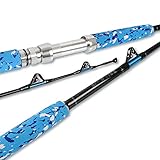
This model is a one-piece, 6-foot-6 heavy conventional rod with roller guides and a camouflage finish and a straight butt, according to the listing title. The extra six inches helps with lifting and boat clearance compared with a 6-footer. The line class is part of the truncated title, so confirm the exact rating on the product page before you buy, since the brand sells this rod in several classes.
Who it suits: boat anglers who want a heavier rod with a bit more length for drifting or anchoring with bait and heavy sinkers. A straight butt works with a belt or in a rod holder, but it gives less leverage than a bent butt for stand-up fighting.
Fit and use: pair it with a conventional reel sized for the line class you confirm, and use a rod holder or fighting belt for long fights. If the listing you choose is the lighter class, it can double as a bottomfish rod for lingcod and rockfish.
- Length and pieces: 6 ft 6 in, 1 piece
- Power: heavy per listing
- Guides: roller guides
- Butt: straight per title
- Line class: confirm on listing, since the brand offers several
Pros
- Extra length for lifting and boat clearance
- Roller guides suit heavy line
- Rugged finish
Cons
- Line rating not clear from the title alone
- One-piece length makes transport awkward
Next to the 6-foot Fiblink, this one trades a little compactness for reach, and the right choice depends on the line class you select.
5. Okuma SST A Series SST-S-702MLa – Best for Ultralight Trout and Panfish (Not a Halibut Rod)

The SST-S-702MLa is a 7-foot, two-piece, medium-light spinning rod with a cork grip. Published specs give a line rating of 4 to 8 pounds and a lure rating of 1/8 to 3/8 ounce. That is trout, panfish and light bass territory. It is not a suitable tool for Pacific or Atlantic halibut, and even for California halibut it is too light for anything beyond small fish in calm, snag-free water.
Who it suits: ultralight anglers who also happen to fish where small flatfish show up. It is listed as a runner-up because it does not match the facet, and it would be a poor choice if you hope to land a large halibut.
Fit and use: treat it as a trout, panfish and small bass rod. If you want one rod that covers California halibut from a pier or bay, the Ugly Stik in this list is a far better bet.
- Length and pieces: 7 ft, 2 pieces
- Power: medium-light, moderate action per most listings
- Line rating: 4 to 8 lb
- Lure rating: 1/8 to 3/8 oz
- Build: carbon blank with cork grip and zirconium inserts, per published specs
Pros
- Light, sensitive, easy to carry
- Two-piece for travel
- Good for finesse trout and panfish
Cons
- Not for halibut of any meaningful size
- Easy to overload with heavy sinkers
It sits at the opposite end of the list from the Fiblink 80-120 pound rod, and that is the best way to see how wide the halibut range is.
6. Ugly Stik 7’6″ Carbon Inshore Spinning Rod – Best for California Halibut

This one-piece, 7-foot-6 spinning rod has medium power, extra-fast action, a 10 to 17 pound line rating and a 1/4 to 1 ounce lure rating. Those numbers fit California halibut fishing in bays, harbors and surf, where anglers use live bait, swimbaits, grubs and bucktails on light to medium line. It does not fit Pacific or Atlantic halibut from deep water, because the line class and lure rating are far too light.
Who it suits: inshore anglers working sand flats, channel edges and surf zones for California halibut and similar fish such as flounder. A long rod helps with casts and with picking up slack as a halibut turns on the bait.
Fit and use: pair it with a 4000 to 5000 size spinning reel, 10 to 20 pound braid and a fluorocarbon leader, and slow-roll a swimbait along the bottom edge of a channel. It is also a sensible choice for flounder and other inshore flatfish.
- Length and pieces: 7 ft 6 in, 1 piece
- Power and action: medium, extra-fast
- Line rating: 10 to 17 lb
- Lure rating: 1/4 to 1 oz
- Build: graphite blank with stainless guides, per published specs
Pros
- Sensitive and easy to cast all day
- Long length for surf and bank fishing
- Durable stainless guides that suit braid
Cons
- Not for deepwater Pacific or Atlantic halibut
- One-piece length complicates travel
Compared with the Okuma SST, this Ugly Stik has the power to handle a legal-size California halibut, whereas the SST is designed for much smaller fish.
Specs Compared
| Product | Length | Pieces | Type | Line rating | Lure rating |
|---|---|---|---|---|---|
| Okuma Cedros CJ-C-601MHa | 6 ft | 1 | Casting, jigging | 50 to 100 lb | 90 to 200 g (about 3 to 7 oz) |
| Fiblink 6′ Trolling Rod | 6 ft | 1 | Conventional, roller guides | 80 to 120 lb | Confirm on listing |
| Fiblink 6’6″ Camo Roller Rod | 6 ft 6 in | 1 | Conventional, roller guides, straight butt | Confirm on listing | Confirm on listing |
| Topline 2-Piece Roller Rod | Confirm on listing | 2 | Conventional, 3+1 roller guides | Varies by variant | Confirm on listing |
| Ugly Stik 7’6″ Inshore | 7 ft 6 in | 1 | Spinning | 10 to 17 lb | 1/4 to 1 oz |
| Okuma SST-S-702MLa | 7 ft | 2 | Spinning, ultralight | 4 to 8 lb | 1/8 to 3/8 oz |
How We Chose These
This guide is research-based and does not rest on our own fishing trials. We started with the six rods in the current catalog set and sorted them by what the listing says about line class, lure rating, length, guide type and rod action. We compared those details with brand and retailer specification pages and with regional halibut gear guidance, which commonly points to short, stiff rods rated for 50-pound line or more for Pacific halibut and medium spinning gear for California halibut. Rods that do not meet those targets are labeled as such and placed as runner-ups. Where a listing did not state a spec, we said to confirm it on the product page.
What to Look For
Know Which Halibut You Are Fishing
The word halibut covers very different fishing. Pacific halibut and Atlantic halibut are large deepwater fish, often caught in 100 to 300 feet or more with heavy jigs and baits. California halibut live in shallow bays and surf, rarely exceed 30 pounds and take live bait and swimbaits. A rod that works well for one will fail at the other. Decide first, then use line class and lure rating as your guides.
Power, Line Class and Lure Weight
For Pacific halibut, most sources point to a heavy-power rod rated for 50 to 80 pound line, with sinkers or jigs in the 12 to 24 ounce range common in deep water. Rods that run 5-foot-6 to 6-foot-6 are typical, often one-piece, in medium-heavy to extra-heavy power. A lighter 30-pound class can work in shallow water, but a 50-pound class gives margin for current and large fish. For California halibut, a 7- to 8-foot medium rod with 10 to 20 pound line and a 1/4 to 1 ounce lure rating is standard. As a rule of thumb, your heaviest regular weight should fall within the rod’s lure rating, and the line should sit at the lower half of the line rating.
Guides, Action and Reel Type
Roller guides reduce friction on heavy mono and braid in deep water, but they add weight and need rinsing. Aluminum-oxide or stainless guides are more common on jigging rods and work well with braid. Action matters for jigging: a stiffer tip drives 16 to 24 ounce jigs better than a soft parabolic blank, which can feel mushy. For bait drifting, a slightly softer tip is fine. Conventional or casting reels suit Pacific halibut, while spinning reels dominate California halibut fishing.
One-Piece or Two-Piece
One-piece rods are stronger and more sensitive because there is no ferrule, which is why halibut charters favor them. Two-piece rods are easier to transport and store, and they make sense if you fly or have limited space. A well-made two-piece is fine for most anglers, but inspect the joint for cracks after rough use.
Safety and Handling Large Halibut
Large halibut are powerful and can thrash violently at the surface. Large fish are often subdued before they come over the rail, and local rules govern how halibut may be landed. Whatever the method, keep your hands and feet away from the line, keep the rod secure in a holder during the boat work and never wrap line or leader around a hand. Wear gloves when handling heavy line, check that rod holders are secure, and follow local seasons, size limits and bag rules, which change often.
Worked Example
Say you fish a 150-foot drift for Pacific halibut with a 16 ounce weight and a herring. A 6-foot medium-heavy rod rated for 50 to 100 pound line, loaded with 65 to 80 pound braid, is a typical choice. If a strong tide forces you to 24 ounces, you want a stiffer, heavier rod. For a bay flat with a live anchovy and a quarter-ounce weight, the 7-foot-6 medium spinning rod is far more comfortable.
Questions
What size rod is best for Pacific halibut?
Most anglers use a 5-foot-6 to 6-foot-6 heavy rod rated for 50 to 80 pound line or more. One-piece conventional rods are common because they are strong and simple. Choose the rating by depth, current and the size of fish you expect.
Can I use a spinning rod for halibut?
For California halibut, yes, a medium spinning rod with 10 to 20 pound line works well. For Pacific and Atlantic halibut, spinning gear is generally too light for the weights and fish involved. Heavy conventional or casting gear is the standard.
Do I need roller guides?
Roller guides help when you fish heavy line in deep water or troll, because they reduce friction. They are not required for halibut jigging, where ceramic or stainless guides with braid work well. Rollers add weight and require rinsing and lubrication.
Is a one-piece rod better than a two-piece?
One-piece rods are slightly stronger and more sensitive, so they are the norm on charter boats. Two-piece rods win on transport. If you travel often, a good two-piece is a reasonable trade.
How heavy a weight can these rods handle?
Use the lure rating on each rod as a guide. The Okuma Cedros lists about 3 to 7 ounces, while the heavy Fiblink and Topline rods are meant for much heavier loads, but their lure ratings are not always stated. If a listing does not state a number, confirm it before you rely on it.
What line should I put on a halibut rod?
Many Pacific halibut anglers spool 65 to 80 pound braid with a heavier fluorocarbon or monofilament leader. California halibut anglers more often use 10 to 20 pound braid or mono. Match the line to the rod’s rated range.
Update History
- October 14, 2026 – Initial publication; product set drawn from current catalog listings.
- Check the product page for current specifications and availability before buying.
Sources
- Manufacturer and retailer specification pages for Okuma and Ugly Stik rods
- Brand-store and retailer listings for Fiblink and Topline Tackle rods
- Regional halibut gear guides from tackle retailers and fishing publications

Write Your Review
No reviews yet. Be the first to share your experience!