
Our Top Picks
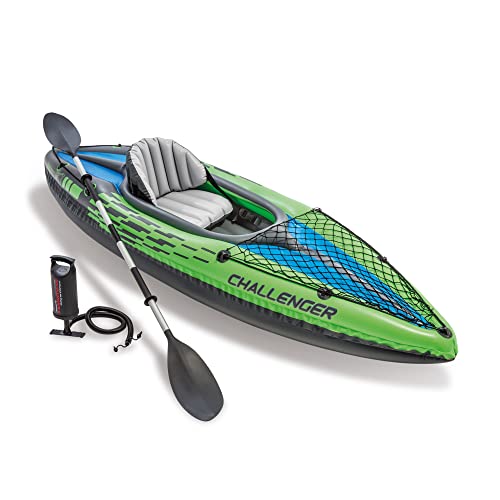 INTEX Challenger 1-Person Inflatable Kayak Set with OarsK1: 1-Person108 x 30 x 13 inches26 poundsCheck on Amazon
As an Amazon Associate we earn from qualifying purchases.
The paddleboard versus kayak choice is not really about which craft is better. It is about how you want your body to spend the day. One puts you standing, with your weight high and your view wide. The other seats you low, close to the water, with the hull doing more of the balancing work for you. That single difference in posture drives almost everything else, from how stable each craft feels in chop to how far you can comfortably travel and what you can carry.
This comparison is for first-time buyers choosing one craft for lakes and slow rivers, anglers deciding whether to fish standing or seated, fitness paddlers who want exercise as much as transport, and families working out which option children and guests will actually enjoy. It compares the two craft types directly, criterion by criterion, so you can match the decision to your water, your body, and your plans rather than to a trend.
Head-to-Head at a Glance
| Criterion | Paddleboard | Kayak |
|---|---|---|
| Body position | Standing, with options to kneel or sit | Seated, low in or on the hull |
| First-hour stability | Feels tippy until balance develops | Feels steadier from the first launch |
| View of the water | High, wide, good for spotting fish and shallows | Low, close to the surface |
| Gear carrying | Limited deck space, mostly dry bags | Hatches, tank wells and cockpit storage |
| Wind and chop | Body catches wind, board can drift | Lower profile tracks better in breeze |
| Fishing style | Sight casting while standing | Seated fishing with rod holders and storage |
| Transport | Flat, light, often inflatable | Longer, bulkier, usually needs a rack |
| Learning focus | Balance first, then stroke | Stroke and steering first |
Read the table as a summary of tendencies, not as a verdict. A wide fishing paddleboard can feel calmer than a narrow touring kayak, and a tippy performance kayak can demand more balance than a broad recreational board. Hull width, length, and shape move any individual model up or down each row. What the table does capture is the direction each design leans: paddleboards trade built-in support for freedom of movement and a standing view, while kayaks trade that freedom for a lower, more supported seat and better carrying capacity.
One more practical difference sits outside the table: the extras each craft asks for. A paddleboard needs little beyond the board, a paddle, a leash, and a flotation device, and many owners add nothing else for years. A kayak invites a longer kit list over time, including a paddle, a seat upgrade on basic models, rod holders for fishing, and storage crates or hatch bags. None of that makes one craft better, but it changes how simple your setup stays, how much gear lives in your garage, and how easily a second person can borrow your equipment and go.
The second thing the table cannot show is how the choice feels after three hours rather than three minutes. Standing paddling loads your feet, legs, and core the whole session, which is exactly the appeal for some people and exactly the problem for others. Seated paddling loads your shoulders and back instead, and lets your legs rest. Many buyers decide on the dock in the first five minutes and regret it at hour three, so weigh the endurance side of each craft as heavily as the first impression.
How to Choose
Stability and How Secure Each Craft Feels
Stability means two different things here. A kayak gives you initial security: you sit low, your weight sits inside or just above the hull, and the boat resists the first wobble before you have learned anything. A paddleboard asks your ankles and core to do that work, so the first session can feel unsteady even on a wide board, although most beginners settle surprisingly quickly on flat water. The gap narrows with practice and widens again in chop and boat wake, where the kayak’s lower position keeps paying off. If feeling secure immediately matters more than standing ever will, the kayak starts ahead.
Sitting Low Versus Standing Up
Posture shapes the whole experience. Standing on a paddleboard gives you a high sight line for spotting fish, reading shallow water, and watching wildlife, and it lets you stretch, kneel, or sit when you tire. The cost is constant effort through your feet and legs, plus a harder fall into the water when balance goes. A kayak seat supports your back and hips, spreads the work into your arms and torso through the paddle, and suits long, steady distances. Anglers who cast to visible fish lean toward standing; paddlers covering miles or carrying back problems usually lean toward the seat.
Transport, Storage, and Getting to the Water
How a craft travels often decides how often it gets used. Inflatable paddleboards roll into a bag that fits in a car trunk and a closet, and even rigid boards are flat, light, and easy to carry under one arm. Kayaks are longer and bulkier, usually need roof bars or a truck bed, and take real storage space at home. Apartment dwellers and spontaneous after-work paddlers often get more days on the water from a board simply because launching takes minutes. If you have a garage, a rack, and a regular launch nearby, the kayak’s transport burden shrinks and stops being a deciding factor.
The Water You Will Actually Paddle
Match the craft to your home water, not your holiday water. Paddleboards shine on calm lakes, slow rivers, and sheltered bays, where standing is pleasant and wind stays light; they struggle when a breeze turns your body into a sail and pushes the board around. Kayaks handle a wider range: they track better in wind, cope with chop and current more calmly, and enclosed or well-drained designs suit cooler water where staying drier and lower matters. Surf and moving water have specialist versions of both craft, but as a general rule, the rougher and windier your typical day, the stronger the case for the kayak.
Who Is Paddling, and Who Else Comes Along
Think about every user, not just the buyer. Children and nervous beginners usually relax faster seated in a kayak, and a tandem kayak carries a passenger without demanding balance from them. Confident, active paddlers often prefer the board precisely because it asks more of the body, and yoga, fitness, and casual floating all translate naturally to a wide deck. Dogs split the difference: many ride happily on a broad paddleboard deck, while a large cockpit or open tank well suits others. If the craft must serve a mixed group with one purchase, the kayak is usually the safer shared choice.
Which One Fits Your Situation
You Want Exercise as Much as Scenery
Choose the paddleboard. Standing paddling works your legs, core, and shoulders together, and the effort is built into every minute rather than added on top. Calm lakes and slow rivers give you a moving workout with a view, and you can drop to your knees whenever you need a break without stopping the session or heading for shore.
You Plan to Fish Most Weekends
Choose the kayak for most fishing, and the paddleboard only for sight casting in calm, shallow water. A kayak carries rods, tackle, and a catch more easily, keeps you drier, and lets you fish seated for hours. Standing to spot and cast to visible fish is the one clear board advantage, and it only pays off on flat, sheltered water where you can stay upright comfortably.
You Have a Small Car and a Smaller Closet
Choose an inflatable paddleboard. It rolls down to a bag, rides in the trunk, stores in a corner, and removes every transport excuse between you and the water. A kayak in the same household usually means roof bars, lifting help, and dedicated storage space. If storage is genuinely tight, this practical point outweighs most on-water differences between the two craft.
You Paddle Windy Lakes and Cover Distance
Choose the kayak. Your seated profile catches less wind, the hull tracks straighter across open water, and storage space supports longer days with food, layers, and safety gear aboard. A paddleboard on the same water turns every crossing into a fight against drift. Distance and weather reward the lower, more efficient craft almost every time.
Common Mistakes
- Choosing a paddleboard for windy, open water because it looked calm on a sheltered test paddle near the dock.
- Buying a narrow kayak for a nervous beginner, when width and a low seat matter more than speed for confidence.
- Ignoring transport and storage until after the purchase, then leaving the craft at home because loading it feels like a project.
- Assuming standing fishing is always better, when seated fishing carries more gear and lasts longer for most anglers.
- Picking for a once-a-year trip instead of the local water you will paddle every week of the season.
Boats and Accessories for Both Options
If you are comparing the two, these examples show how each style is set up for casual paddling.
FunWater Inflatable Stand Up Paddle Board
An inflatable board with accessories included, easy to store and transport.

FunWater Inflatable Stand Up Paddle Board with Beginners SUP Accessories | 10'6'' SUP,Anti-Slip EVA Deck,Versatile Yoga/Big Fin Inflatable Paddle Boards for Adults & Youth of All Skill Levels
One of the home product options compared in this guide.
View on AmazonINTEX Challenger 1-Person Inflatable Kayak
A one-person inflatable kayak with oars and pump included for easy transport.
INTEX Challenger 1-Person Inflatable Kayak Set with Oars and Pump | 68305EP - Lightweight, Compact, and Portable Kayak with Inflatable I-Beam Floor, Oars, Hand Pump for lakes, mild rivers
One of the home product options compared in this guide.
View on AmazonPelican Sentinel 100X Sit-on-Top Kayak
A hard-shell sit-on-top kayak that is stable and easy to launch.

Pelican Sentinel 100X - Recreational Sit on top Kayak - Fade Blue Yellow - Lightweight - Ergoform Backrest - 10 ft
One of the home product options compared in this guide.
View on AmazonSUPCOST 10 ft Coiled Paddle Board Leash
A coiled leash that keeps the board attached to you if you fall off.

SUPCOST 10 ft Surf Board Leash, 7mm Thick Urethane Coiled Paddle Board Leash. Coiled Spring Leg Foot Rope SUP Leash for Shortboard, Longboard, Paddleboard, Kayak
One of the home product options compared in this guide.
View on AmazonFrequently Asked Questions
Which is easier for a complete beginner, a paddleboard or a kayak?
For most beginners, a kayak feels easier in the first hour because you sit low and the hull does more of the balancing. A wide paddleboard is also beginner friendly on flat water, but it asks your legs and core to work from the start. Nervous paddlers and children usually relax faster seated, while active beginners often enjoy learning the board.
Which is better for fishing?
A kayak suits most fishing because it carries rods and tackle, offers storage, and lets you fish seated for long sessions in varied conditions. A paddleboard is better for one specific job: standing to spot fish in calm, shallow water and casting to what you can see. Choose by the fishing you actually do, not by the style you admire.
Can you sit down on a paddleboard?
Yes. Most paddleboards can be paddled kneeling or seated for a rest, and many paddlers add a clip-on seat for longer seated stretches. Sitting lowers your center of gravity and makes the board feel calmer in light chop. It will still not match a kayak seat for back support or all-day comfort, so treat sitting on a board as a useful option rather than the main position.
Which one handles wind better?
The kayak, clearly. A seated paddler presents far less area to the wind, and a kayak hull generally tracks straighter, so you spend less effort correcting drift. A standing paddler on a board catches the breeze like a sail, and the board itself is light and easily pushed. On regularly windy lakes, that difference alone can settle the choice.
FAQ
Which is easier for a complete beginner, a paddleboard or a kayak?
Which is better for fishing?
Can you sit down on a paddleboard?
Which one handles wind better?
More from Amazon
Programs that pair well with the guide above. Offers and eligibility are set by Amazon and may change.
Free shipping on eligible items, Prime Video and more. Eligible new members can start with a free trial.
Start a Prime free trialA Prime membership for ages 18-24 with a trial period. Eligibility is set by Amazon.
See Prime for Young AdultsAudiobooks and podcasts to listen to on the go. Eligible new members can start with a free trial.
Try Audible freeAd-free music streaming. Eligible new subscribers can start with a free trial.
Try Music Unlimited freeAs an Amazon Associate we earn from qualifying purchases.


Write Your Review
No reviews yet. Be the first to share your experience!