
Our Top Picks


The real decision with a multi-channel keyboard combo is not loudness. It is whether one box can take a stage piano, a second synth, a playback feed and maybe a vocal mic, mix them sensibly, and still hand the front-of-house desk a clean balanced signal. If the amp cannot do that, you end up renting a separate mixer and DI boxes for a rig that was supposed to stay simple.
This guide is for stage piano players running layered rigs, keyboardists in small bands who double on backing tracks, and solo performers who sing over their keys. Every amp below was chosen from its Amazon product title and listing details, with one hard filter applied throughout: the listing or its documented outputs must show a balanced XLR line, main or DI output.
Quick Picks
As an Amazon Associate we earn from qualifying purchases
| Product | Best for | Key spec from title |
|---|---|---|
| Roland KC-990 | A four-source stage rig mixed in one flagship combo | 4-channel stereo mixing, 320W (160W + 160W), balanced XLR line outs |
| Laney AUDIOHUB AH300 | Five channels for keys, e-drums, mic and playback together | 300W, 5 channels, 15-inch woofer, balanced XLR DI output |
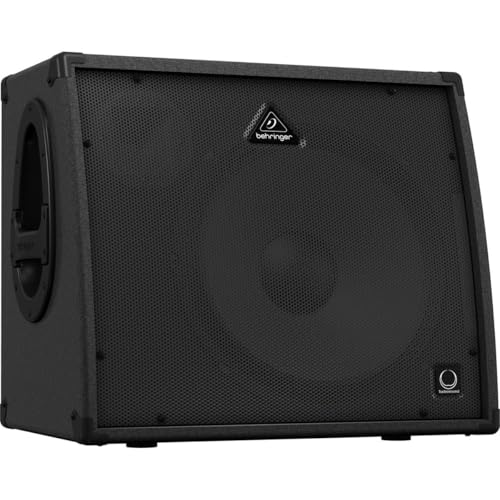
| Behringer ULTRATONE KXD15 | A band keyboardist who also feeds backing tracks | 600W, 4 stereo channels, 15-inch Turbosound, balanced XLR DI out |
| Peavey KB 5 | A singing pianist who wants a stereo feed to the desk | 150W, two 10-inch speakers, XLR balanced stereo line out |
How to Choose
Count inputs as stereo pairs, not sockets
A stage piano already eats a stereo pair, so a headline figure of ten inputs can shrink fast once left and right are counted honestly. Work backwards from your actual rig: piano, second board, a module or laptop, and a microphone if you sing. The Roland KC-990 and Laney AH300 both give you four or five proper channels to spread those sources across, while a three-channel amp forces sharing. Sharing one channel between two stereo sources means repatching mid-set, which is exactly what a multi-channel amp is meant to avoid.
Insist on a balanced output that carries the whole mix
The point of a balanced line output is a quiet, long cable run to the house desk that carries everything you mixed on stage. Check what the output actually is: the KC-990 offers a balanced XLR line out pair, the Behringer KXD15 a balanced stereo XLR DI output with ground lift, and the Peavey KB 5 an XLR balanced stereo line out. A single unbalanced jack labelled line out is a different thing, and on a long run to a distant desk it invites hum and buzz.
Look at EQ and effects sends channel by channel
A master EQ alone cannot rescue a boomy synth pad sitting under a bright piano patch. Per-channel EQ lets you trim the low end from one source without thinning the other, and per-channel FX sends decide how much reverb each source gets. The AH300 gives channels 1 to 4 their own two-band EQ and FX level, and the KXD15 adds an FX send on every stereo channel. If you run a mic as well, a dedicated mic channel with its own EQ, like the KB 5 offers, keeps vocals out of the piano channel entirely.
Match speaker size and power to the room, not the spec sheet peak
Multi-channel rigs usually play two roles: stage monitor in bigger rooms and the only sound source in small ones. A twin-woofer design such as the KC-990 spreads sound widely for the second role, while a single 15-inch combo like the AH300 moves more low end for left-hand piano parts. In rooms where the house system does the heavy lifting, the amp only has to be clear at your playing position, so placement and a kickback or pole option can matter more than headline wattage figures in the title.
The 4 Best Options
Roland KC-990

Roland’s flagship suits the player whose rig has quietly become a small PA: stage piano, second keyboard, a module and a vocal mic all landing in one place. Its four stereo input channels, stereo aux input and XLR mic support mean each source keeps its own level, and the balanced XLR line out pair sends the finished mix to the desk in stereo. Built-in DSP effects and Stereo Link leave room to grow, which matters for a rig bought to end repatching for good.
Specs
- 4-channel stereo mixing keyboard amplifier
- 320 watts total power (160W + 160W)
- Two custom 12-inch woofers and two horn tweeters
- Line Out (Balanced L, R) on XLR connectors, plus 1/4-inch line outputs
- Channel 1 balanced XLR input for a microphone
- Stereo Link for chaining a second KC-990
- Built-in DSP effects with footswitch control option
- Casters included
Best for: Players running three or four sources who want one combo to mix them and feed the house in stereo.
Watch out for: It is a large, heavy flagship with casters for a reason. Confirm the stage footprint and your transport before choosing it over a smaller four-channel option.
Laney AUDIOHUB AH300
Laney’s Audiohub takes the widest view of multi-channel: five channels accepting XLR, jack, RCA and mini-jack inputs, so keyboards, electronic drums, a microphone and a phone playing walk-in music can share one cabinet. Channels 1 to 4 carry their own level, two-band EQ and FX send, and a balanced XLR DI output hands the mix to a desk or recorder. The dual-position kickback cabinet helps it double as a personal monitor angled up at the player in tighter stage plots.
Specs
- 300-watt multi-input combo amplifier
- 5 channels with XLR, jack, RCA and mini-jack inputs
- 15-inch custom woofer plus HF horn
- Balanced XLR DI output for mixers and recording devices
- Master 5-band graphic EQ
- Onboard DSP with 16 effect presets
- Channels 1 to 4 with level, two-band EQ and FX send
- FX loop, line out, record out and headphone output with level control
- Dual-position kickback cabinet
Best for: Mixed-source setups where a keyboard amp also has to serve e-drums, vocals and playback.
Watch out for: The DI and line outputs sit alongside several other outs, so check the manual wording for which output is post-master before relying on it for a recording feed.
Behringer ULTRATONE KXD15
Behringer’s KXD15 gives four independent stereo channels, each with its own volume and FX send, plus a dedicated XLR mic input on channel 1, which maps neatly onto two keyboards, a drum machine and a voice. The balanced stereo XLR DI output with ground lift is the detail stage piano players actually need: the whole four-channel mix reaches the desk balanced, and the ground lift is there for the nights a venue’s wiring hums. A link output lets a second unit join later as a stereo partner.
Specs
- 600-watt bi-amped PA system and keyboard amplifier
- 4 independent stereo channels with volume and FX send per channel
- Original 15-inch Turbosound speaker
- Klark Teknik multi-FX processor with 100 presets
- Balanced stereo XLR DI output with ground lift switch
- 7-band graphic EQ with FBQ feedback detection
- XLR mic input on channel 1
- Link output for coupling a second unit into a stereo system
- Integrated pole socket for stand mounting
Best for: Keyboard players mixing several stereo sources who want ground-lift insurance on the house feed.
Watch out for: The onboard Klark Teknik effects and 7-band graphic EQ are shared master tools, so subtle per-source shaping still depends on each channel’s own controls.
Peavey KB 5
Peavey’s KB 5 was designed as a personal PA in keyboard-amp form, and its channel layout shows it: a stereo mixer with 2-band EQ, a separate mic and line channel with 3-band EQ and its own effects send, and a monitor input with level control and assign. For a stage piano player who sings and takes a monitor feed back from the desk, that is a complete little system. The XLR balanced stereo line out, ground lift and external speaker capability finish a layout built for working stages rather than bedrooms.
Specs
- 150 watts, rising to 200 watts with an external speaker
- Two 10-inch speakers and a horn
- Stereo mixer with 2-band EQ and main effects send/return
- Mic/line channel with 3-band EQ and effects send/return
- XLR balanced stereo line out
- Ground lift and DDT speaker protection defeat switch
- Monitor input with level control and assign
- Headphone output with level control
- Built-in casters and handle
Best for: Singing stage piano players who also want a monitor input and a balanced stereo feed out.
Watch out for: Output rises to 200 watts only with an external speaker attached, so judge the standalone 150-watt figure against your room sizes.
Which One Fits Your Situation
Two keyboards, a module and a vocal mic
Start with the Roland KC-990. Four stereo channels plus the XLR mic input cover that rig without repatching, and the balanced XLR line out pair sends the desk exactly the stereo mix you balanced at the piano. The Laney AH300 is the alternative if a fifth source, such as playback, also needs a permanent home.
A small band where the keys amp doubles as the PA brain
The Behringer KXD15 fits here. Its four stereo channels take keys and electronic drums, channel 1 adds a microphone, and the balanced stereo XLR DI output with ground lift feeds a powered house speaker or desk while the 15-inch Turbosound driver covers a modest room on its own.
A singing pianist taking a monitor feed from the desk
Choose the Peavey KB 5. The dedicated mic and line channel keeps your voice separate from the piano channels, the monitor input accepts the desk’s return feed with its own level control, and the XLR balanced stereo line out closes the loop back to front of house.
Playback, e-drums and keys sharing one cabinet
The Laney AH300 was laid out for this mixture. Five channels with mixed connector types mean nothing needs an adapter chain, the kickback cabinet aims the sound at the players, and the balanced XLR DI output gives the venue a clean copy of the combined mix.
Common Mistakes
- Counting input sockets instead of stereo channels, then discovering the stage piano alone uses half the amp.
- Assuming any jack marked line out is balanced, and meeting the hum only on a long cable run at soundcheck.
- Running a vocal mic through the same channel as the piano, so one EQ and one level have to serve two very different sources.
- Forgetting to ask whether the balanced output carries the full mix or only selected channels.
- Buying the biggest combo for a rig that mostly feeds a house desk, where a clear monitor position mattered more than raw power.
Frequently Asked Questions
How many channels does a stage piano rig actually need?
Count stereo sources, then add one. A stage piano takes one stereo channel, a second keyboard or module takes another, and playback takes a third. A vocal mic deserves its own channel with separate EQ. That arithmetic is why four- and five-channel amps like the KC-990 and AH300 exist, and why three-channel amps feel full quickly.
What does a balanced line output do at a gig?
It sends your mixed signal down a long XLR cable to the house desk while rejecting much of the interference that unbalanced runs pick up. On the amps here it appears as a balanced XLR line out pair, a balanced stereo DI output, or a balanced XLR main out, depending on the brand’s wording.
Can one of these amps replace a separate mixer and DI box?
For a keys-led rig, yes. The amp mixes your sources, adds EQ and often effects, and its balanced output performs the DI role toward the desk. A separate mixer still wins when the whole band needs mixing, but for piano, extra keys, tracks and one mic, these combos cover the job in a single cabinet.
Is a monitor input worth having on a keyboard amp?
It is useful when the desk sends you a foldback mix and you want its level under your own hand rather than the engineer’s. The Peavey KB 5 includes a monitor input with level control and assign, which lets the amp act as your personal monitor while its own channels handle your instruments.
FAQ
How many channels does a stage piano rig actually need?
What does a balanced line output do at a gig?
Can one of these amps replace a separate mixer and DI box?
Is a monitor input worth having on a keyboard amp?
More from Amazon
Programs that pair well with the guide above. Offers and eligibility are set by Amazon and may change.
Free shipping on eligible items, Prime Video and more. Eligible new members can start with a free trial.
Start a Prime free trialA Prime membership for ages 18-24 with a trial period. Eligibility is set by Amazon.
See Prime for Young AdultsAudiobooks and podcasts to listen to on the go. Eligible new members can start with a free trial.
Try Audible freeAd-free music streaming. Eligible new subscribers can start with a free trial.
Try Music Unlimited freeAs an Amazon Associate we earn from qualifying purchases.



Write Your Review
No reviews yet. Be the first to share your experience!