
Key takeaways
- Buying the longest rod for maximum casting distance. Extra length helps in open water, but it can become frustrating in a seated kayak. Start with control, then add length only when your fishing conditions justify it.
- Ignoring handle length. A long rear grip can catch on a PFD, seat frame, or hip while casting. Kayak anglers often prefer a shorter handle than shore anglers using the same rod length.
- Using one length for every technique. A 7-foot 6-inch rod may be great for long casts but excessive for close dock work. If you carry two rods, make them meaningfully different: for example, 6-foot 6-inch and 7-foot 3-inch.
- Forgetting storage and transport. Measure your vehicle and rod-holder layout before buying a one-piece rod. A rod that cannot travel safely or store securely will not be convenient on the water.
- Matching rod length without considering power. Length affects reach; power affects how much force the rod handles. A 7-foot ultralight rod and a 7-foot medium-heavy rod serve very different jobs.
The Short Answer
For most anglers, the best all-around answer to “what length rod for kayak fishing” is a 6-foot 6-inch to 7-foot spinning rod. That range is long enough for useful casting distance, line control, and fish-fighting leverage, yet short enough to handle comfortably while seated close to the water.
If you fish tight creeks, overhanging trees, docks, or mangroves, choose a shorter 5-foot 6-inch to 6-foot 6-inch rod. If you mainly fish open lakes, large rivers, bays, or offshore water from a stable fishing kayak, a 7-foot to 7-foot 6-inch rod gives more casting reach and better line pickup.
Our top picks
 PLUSINNO Fishing Rod and Reel Combos -24
- Fishing Technique: Casting
- Target Species: Bass
- Line Weight: 10 pounds
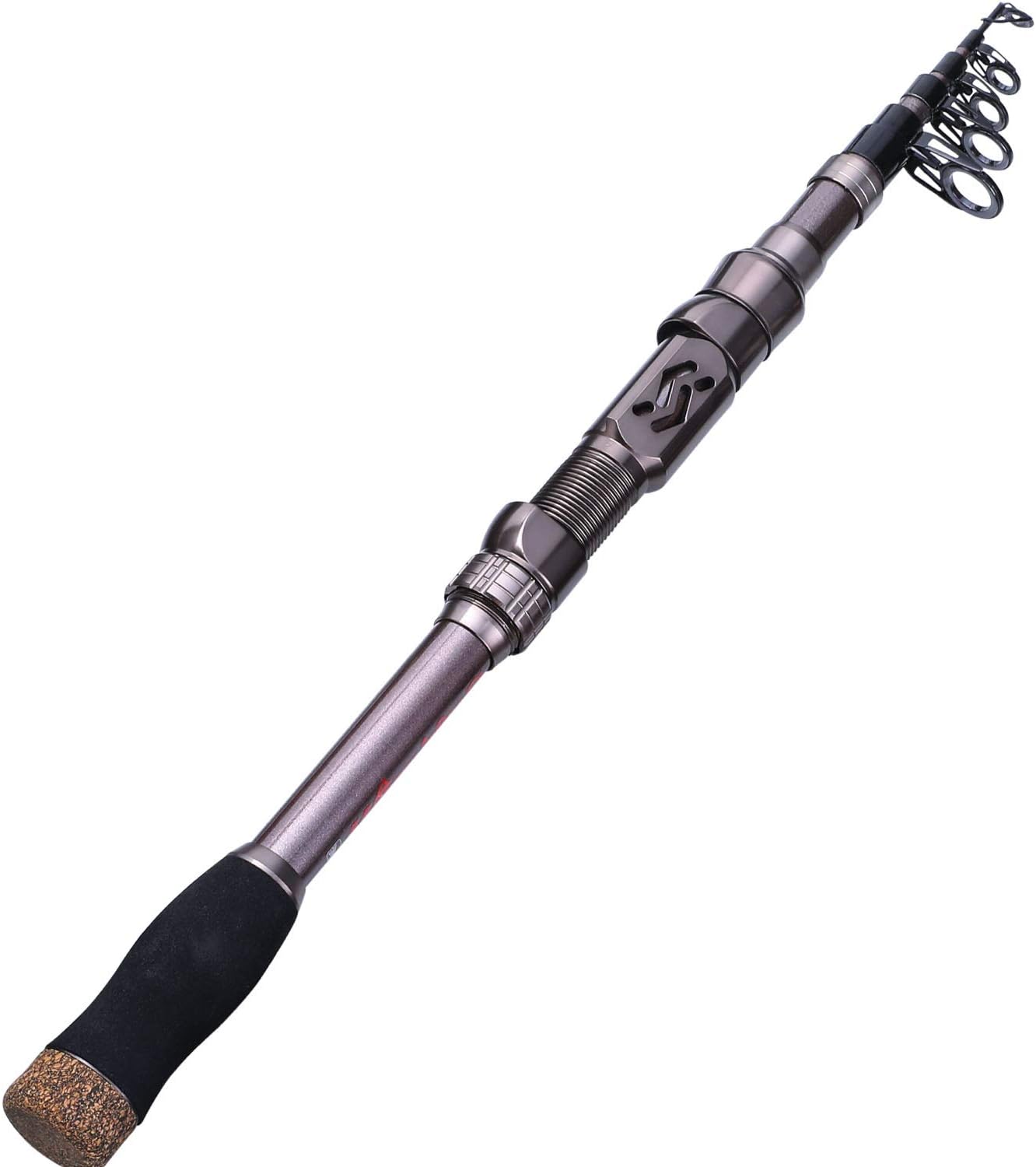 Sougayilang Fishing Rod Telescopic Fishing Rod Portable-
- Fishing Technique: Surf
- Target Species: Trout
- Line Weight: 14-20 pounds
| Product | Key specs | Amazon rating | |
|---|---|---|---|
 EOW XPEDITE PRO Telescopic Fishing Rods EOW XPEDITE PRO Telescopic Fishing Rods | – | Check price | |
| PLUSINNO Fishing Rod and Reel Combos -24 | Fishing Technique: Casting Target Species: Bass Line Weight: 10 pounds | 4.4★ | Check price |
| Sougayilang Fishing Rod Telescopic Fishing Rod Portable- | Fishing Technique: Surf Target Species: Trout Line Weight: 14-20 pounds | – | Check price |
 PLUSINNO Fishing Rod and Reel Combos Carbon PLUSINNO Fishing Rod and Reel Combos Carbon | Fishing Technique: Spinning Target Species: Bass Line Weight: 10 lb | 4.2★ | Check price |
As an Amazon Associate we earn from qualifying purchases at no extra cost to you. Ratings are shown as listed on Amazon.
Rod length is not the only decision. A rod that is too long can be awkward when landing a fish beside the kayak, clearing a paddle, or storing several rods. A rod that is too short can limit casting distance and make it harder to keep line above weeds, waves, or the kayak’s bow. In 2026, many kayak anglers solve the storage issue with two-piece or telescopic rods, but the usable fishing length should still suit the water and technique.
Standard Sizes
| Rod Length | Length in Inches | Length in Centimeters | Best Use From a Kayak | Typical Trade-Off |
|---|---|---|---|---|
| 5 ft 6 in | 66 in | 168 cm | Tight streams, brushy banks, docks, small ponds | Very manageable, but offers less casting distance |
| 6 ft | 72 in | 183 cm | Creeks, compact kayaks, close-range lure fishing | Easy to control, with moderate casting range |
| 6 ft 6 in | 78 in | 198 cm | Most freshwater kayak fishing, bass, trout, panfish | Excellent balance of control and reach |
| 7 ft | 84 in | 213 cm | All-purpose lake, river, and inshore fishing | More casting distance; can feel bulky in tight cover |
| 7 ft 3 in | 87 in | 221 cm | Open-water bass, inshore species, soft plastics, jigs | Good line control, but needs more clearance |
| 7 ft 6 in | 90 in | 229 cm | Open bays, larger lakes, surf-adjacent kayak fishing | Long casts and strong leverage; harder to manage seated |
| 8 ft or longer | 96 in+ | 244 cm+ | Specialized trolling, live-bait, or open-water setups | Usually cumbersome for general kayak use |
For a first setup, start with a 6-foot 6-inch medium-power spinning rod. It is a practical choice for casting small and medium lures, fishing worms or jigs, and handling common freshwater species. If your kayak fishing includes redfish, snook, striped bass, or other stronger inshore fish, a 7-foot medium-heavy rod may be more appropriate, provided you have enough room to use it safely.
How to Measure Your Space
- Measure the cockpit or standing deck length. Measure the open space from your seat back to the front of the footwell or forward deck. A compact sit-inside kayak may have only 48 to 60 inches of usable interior space, while a pedal kayak or sit-on-top fishing kayak may provide 70 inches or more.
- Measure your seated casting clearance. Sit in the kayak on dry land with your usual PFD on. Hold a tape measure at the approximate reel position, then check how much room you have to the bow, side rails, crate, electronics, and rod holders.
- Check overhead and side clearance. Add the rod length to your arm reach before casting. A 7-foot rod is 84 inches long; in narrow creeks, that extra length can regularly hit branches or dock pilings.
- Measure rod-holder storage space. If you carry rods behind the seat, measure from the rod holder to the bow and stern. A 7-foot 6-inch rod extends 90 inches before accounting for the reel, so its tip can easily project beyond the kayak.
- Consider transport length. Measure the inside of your vehicle, roof rack, or storage closet. A two-piece 7-foot rod usually breaks down into sections around 42 inches long, while a telescopic model can pack down much shorter.
- Allow for your paddle stroke. Keep at least 6 to 10 inches of clearance between stored rods and the normal path of your paddle blade. Rod tips that interfere with paddling are easy to snag, damage, or lose overboard.
A useful rule: choose a rod that is comfortable to sweep from your lap toward either side of the kayak without striking gear. If that motion feels cramped on land, it will feel more difficult when wind, current, fish movement, and a moving kayak are involved.
By Room or Use Case
Small Sit-Inside Kayaks and Narrow Cockpits
For a short recreational kayak or narrow sit-inside model, use a 5-foot 6-inch to 6-foot 6-inch rod. These boats place your knees, cockpit rim, and paddle closer to the rod handle, reducing the comfort of longer rods. A 6-foot rod is often easier to work around low bridges, tree cover, and dock structures.
Choose a shorter rod if you primarily cast small spinners, inline spinners, compact crankbaits, or bait rigs at close range. A light or medium-light rod in this length range also works well for trout, crappie, bluegill, and smaller bass.
All-Purpose Fishing Kayaks
A dedicated sit-on-top fishing kayak with rod holders and an open deck works best with a 6-foot 6-inch or 7-foot rod. These are the most versatile lengths for bass fishing, walleye, pike, catfish, and general inshore fishing. They provide enough tip length for casting while keeping the handle and reel manageable in a seated position.
For one-rod simplicity, choose a 6-foot 6-inch medium-power fast-action spinning rod. For two rods, pair it with a 7-foot medium-heavy rod for larger lures, heavier line, or thicker vegetation.
Open Lakes, Big Rivers, and Windy Water
Use a 7-foot to 7-foot 6-inch rod when casting distance matters. Longer rods help launch lures farther from the kayak, pick up slack line quickly, and keep line higher above surface chop. They are especially useful for fishing weed edges, points, flats, and offshore structure.
Stay realistic about handling, though. A 7-foot 6-inch rod can be productive in open water but inconvenient when netting a fish beside a low kayak. It is best for anglers with a stable, wider platform and relatively uncluttered deck space.
Tight Creeks, Mangroves, Docks, and Overhanging Trees
Choose a 5-foot 6-inch to 6-foot 6-inch rod for confined environments. Shorter rods make underhand pitches, roll casts, and short target casts easier. They also reduce the chance of hooking branches during the backcast.
A 6-foot 6-inch rod is often the sweet spot for kayak anglers who move between narrow cover and occasional open water. It retains more casting range than a 5-foot 6-inch model without becoming difficult to maneuver.
Travel and Limited Storage
A telescopic or multi-piece rod is useful when your storage space is limited. For example, telescopic options such as the 5.9-foot Sougayilang model are compact for car trunks, apartment storage, or airline-oriented travel gear. Basic telescopic rods and rod-and-reel kits commonly fall around $25 to $45, based on options such as the EOW XPEDITE PRO at about $28.99, the PLUSINNO carbon-fiber kit at about $29.74, and larger PLUSINNO combo packages around $44.95.
Focus on the extended length first. A compact rod is convenient only if its full fishing length matches your water. A 5.9-foot rod is practical for creeks and small kayaks, while a 6-foot 6-inch to 7-foot travel rod is more versatile for broad freshwater use.
Common Sizing Mistakes
- Buying the longest rod for maximum casting distance. Extra length helps in open water, but it can become frustrating in a seated kayak. Start with control, then add length only when your fishing conditions justify it.
- Ignoring handle length. A long rear grip can catch on a PFD, seat frame, or hip while casting. Kayak anglers often prefer a shorter handle than shore anglers using the same rod length.
- Using one length for every technique. A 7-foot 6-inch rod may be great for long casts but excessive for close dock work. If you carry two rods, make them meaningfully different: for example, 6-foot 6-inch and 7-foot 3-inch.
- Forgetting storage and transport. Measure your vehicle and rod-holder layout before buying a one-piece rod. A rod that cannot travel safely or store securely will not be convenient on the water.
- Matching rod length without considering power. Length affects reach; power affects how much force the rod handles. A 7-foot ultralight rod and a 7-foot medium-heavy rod serve very different jobs.
FAQ
Is a 7-foot rod too long for kayak fishing?
No. A 7-foot rod is one of the best general-purpose lengths for kayak fishing, especially from an open sit-on-top or pedal kayak. It may be too long only if you fish dense brush, narrow creeks, or a very compact cockpit.
What is the best rod length for bass fishing from a kayak?
A 6-foot 6-inch to 7-foot medium or medium-heavy rod is a strong starting point. Use 6-foot 6-inch for tighter cover and easier handling, or 7 feet for more casting distance and better line control in open water.
Should I use a shorter rod in a kayak than from shore?
Usually, yes. Shore anglers often benefit from longer rods because they need distance and must keep line above bank-side obstacles. From a kayak, you are closer to the water and can position the boat nearer to the target, so a slightly shorter rod is often more practical.
Are telescopic rods good for kayak fishing?
They can be a good fit for travel, small vehicles, and limited storage. Choose one with an extended length appropriate for your fishing area, and inspect the joints, guides, and locking sections before each trip. For frequent heavy-duty use, many anglers still prefer a quality two-piece rod for its straightforward setup and storage balance.




Write Your Review
No reviews yet. Be the first to share your experience!