
Key takeaways
- Assuming size numbers match across brands. A 500-size reel from one brand may be close to another brand’s 50, 75, or 100 size. Compare weight, spool capacity, and physical measurements.
- Buying too large for a short rod. A 1000 or 2000-size reel can overwhelm a 5-foot ultralight rod and make it tiring to use.
- Using too much heavy line. Thick 10- or 12-pound monofilament fills a small spool quickly and can cause coils, twists, and reduced casting distance. Most crappie setups work better with 2- to 6-pound line.
- Filling the spool improperly. Leave about 1/16 inch (1.6 mm) between the line and spool lip. Overfilled spools can spill loops; underfilled spools reduce casting performance.
- Focusing only on bearing count. A properly sized, balanced reel with a dependable drag matters more for crappie than a high bearing number.
The Short Answer
For most crappie fishing, choose a size 500, 50, 75, or 100 spinning reel. These ultralight reels balance well on 5- to 7-foot crappie rods, hold enough light line for casting and vertical presentations, and keep the overall outfit comfortable for all-day use.
A size 500 or 50 is best for a very light 5- to 6-foot rod, especially for dock shooting, tight brush, and small jigs. A size 75 or 100 is the most versatile choice for a 6- to 7-foot rod used for casting jigs, fishing minnows, or slip-float setups. If you regularly fish open water, deeper brush piles, or windier conditions, a small size 1000 reel can also work well—but it is often larger than necessary for a dedicated crappie outfit.
Our top picks


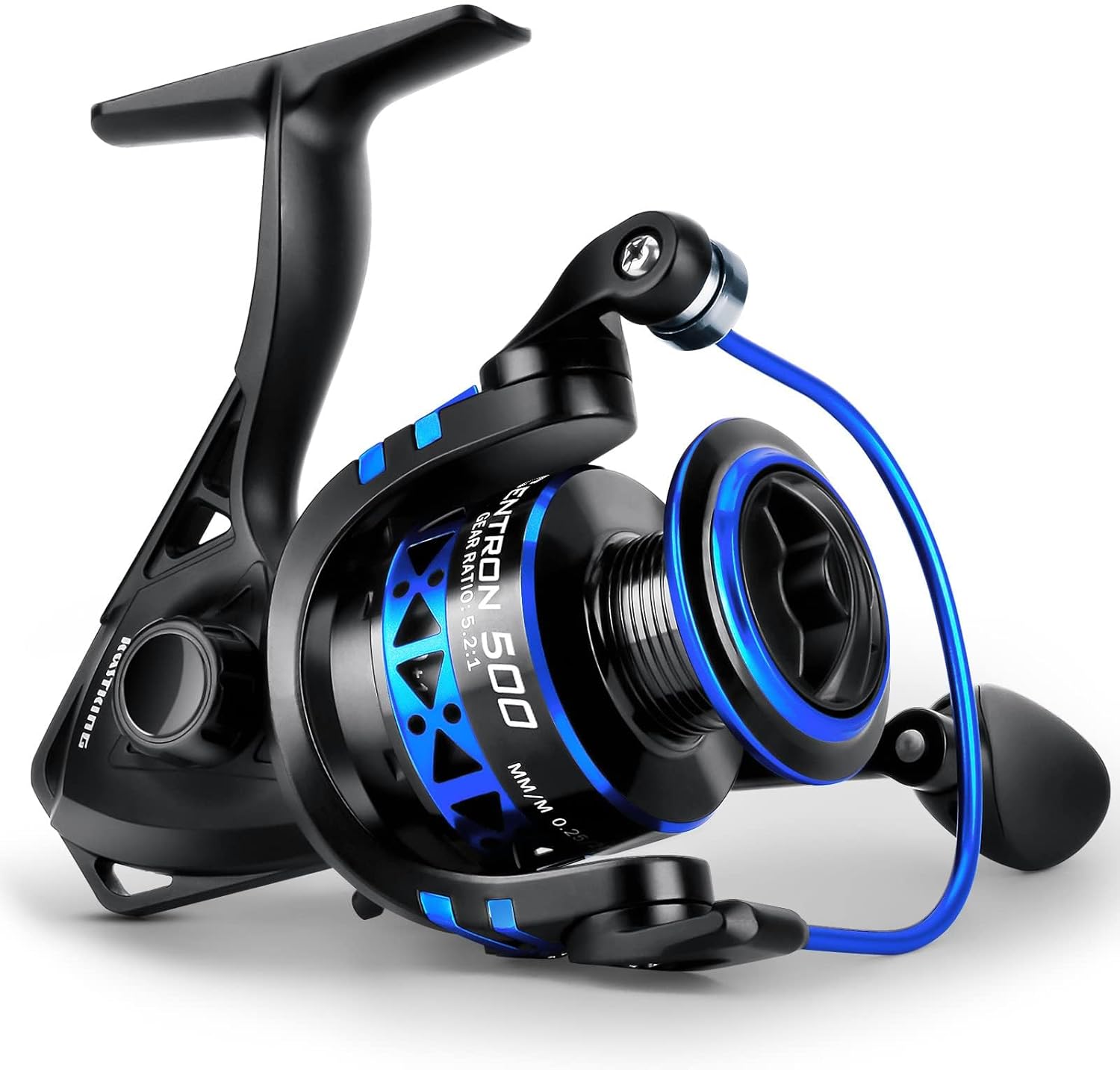 KastKing Centron Spinning Fishing Reels
- Hand Orientation: Ambidextrous
- Fishing Technique: Spinning
- Fishing Reel Maximum Drag: 17.6 pounds
As an Amazon Associate we earn from qualifying purchases at no extra cost to you. Ratings are shown as listed on Amazon.
The important point is that reel sizing is not perfectly standardized between brands. One manufacturer’s 100-size reel may be physically similar to another brand’s 500-size model. Match the reel to your rod’s intended line rating, your preferred line diameter, and the fishing technique rather than choosing by the number alone.
Standard Sizes
Crappie reels are commonly sold in compact size classes ranging from 50 through 1000. The measurements below reflect typical physical ranges for ultralight spinning reels, not a universal industry standard. Always check the manufacturer’s listed specifications before buying, since handle, spool, and body dimensions can vary.
| Common Reel Size | Typical Overall Length | Typical Height | Typical Weight | Best Rod Length | Best Crappie Use |
|---|---|---|---|---|---|
| 50 | 3.5-4.0 in. / 8.9-10.2 cm | 2.5-3.0 in. / 6.4-7.6 cm | 4.5-5.5 oz. / 128-156 g | 5-6 ft. | Dock shooting, ice fishing, close-range jig work |
| 75 | 3.8-4.3 in. / 9.7-10.9 cm | 2.7-3.2 in. / 6.9-8.1 cm | 5.0-6.0 oz. / 142-170 g | 5.5-6.5 ft. | Light jigging, bobber fishing, short casts |
| 100 | 4.0-4.6 in. / 10.2-11.7 cm | 2.9-3.4 in. / 7.4-8.6 cm | 5.5-6.5 oz. / 156-184 g | 6-7 ft. | All-purpose crappie fishing |
| 500 | 4.0-4.7 in. / 10.2-11.9 cm | 3.0-3.5 in. / 7.6-8.9 cm | 5.3-6.5 oz. / 150-184 g | 6-7 ft. | Ultralight casting, jig-and-float rigs |
| 1000 | 4.5-5.2 in. / 11.4-13.2 cm | 3.3-3.9 in. / 8.4-9.9 cm | 6.0-7.5 oz. / 170-213 g | 6.5-8 ft. | Longer casts, windy banks, occasional mixed-species fishing |
For a straightforward purchase, look for a reel weighing roughly 5 to 6.5 ounces with a line capacity suited to 2- to 6-pound monofilament or 4- to 10-pound braid. A moderate gear ratio around 5.0:1 to 5.2:1 is a practical fit for crappie because it retrieves slowly enough for controlled jig presentations while still taking up slack efficiently.
Examples in the budget category include the Lew’s Mr. Crappie Size 50, 75, and 100 models with approximately 5.0:1 to 5.1:1 gear ratios. These are typically priced around $20 to $30. A compact 500-size reel, such as a KastKing Centron 500, also commonly falls in the $20 to $30 range. In 2026, this remains a useful price range for a basic dedicated crappie reel; smoother drag systems, lighter materials, and sealed bearings generally move the cost toward $40 to $80 or more.
How to Measure Your Space
For fishing gear, “space” means the usable balance and clearance on your rod, in your hand, and in your storage setup. A reel can be technically small enough for crappie but still feel awkward if it does not fit the rod or your usual fishing method.
- Measure rod length. Check the printed rod specification near the handle. A 5- to 6-foot rod usually pairs best with a 50 or 500-size reel, while a 6- to 7-foot rod generally handles a 75, 100, or 500-size model well.
- Check the rod’s line rating. Most crappie rods are rated for 2- to 6-pound or 4- to 8-pound line. Select a reel whose spool is designed for those light diameters. Oversized spools can waste line and make light monofilament harder to manage.
- Measure handle clearance. With the reel mounted, leave at least 1 inch (2.5 cm) between the spinning handle knob and your rod butt, clothing, or rod holder hardware during a full rotation.
- Compare reel and rod weight. A compact rod and reel should feel balanced near the front of the cork or EVA grip. For most ultralight crappie combinations, a reel between 5 and 6.5 ounces is a comfortable starting point.
- Plan for storage. If rods stay in a locker, vehicle, or wall rack with reels attached, allow about 5 inches (12.7 cm) of depth for a small spinning reel and handle. Foldable handles reduce storage width but do not eliminate spool clearance.
By Room or Use Case
Dock Shooting and Tight Cover
Choose a 50, 75, or compact 500-size reel for dock shooting. A shorter 5- to 6-foot ultralight rod paired with a 4.5- to 5.5-ounce reel is easy to control beneath docks, around pontoon boats, and in narrow shaded pockets. Load the spool with 2- to 4-pound monofilament or 4- to 6-pound braid with a light leader. Avoid a large 1000-size reel here; its added spool diameter and weight can make quick, repeated shooting less comfortable.
Bank Fishing and Small Ponds
A 75, 100, or 500-size reel is the best all-around fit for shore fishing. Pair it with a 6- to 7-foot light or ultralight rod and use 4- to 6-pound monofilament, fluorocarbon, or braid. This size gives enough capacity for longer casts without making the outfit front-heavy. A 5.0:1 gear ratio is ideal for slow-rolling a small spinner, working a 1/16-ounce jig, or retrieving a float rig without pulling it too fast.
Boat Fishing, Brush Piles, and Vertical Jigging
For fishing from a boat, a size 100 or 500 is the practical default. These reels are small enough for precise jig control but offer enough line capacity for deeper water and occasional snags. If you fish vertically over brush piles in 15 to 30 feet of water, use a smooth drag and light line rather than stepping up to a large reel. A compact reel helps you feel subtle bites and reduces hand fatigue when repeatedly dropping and retrieving a jig.
Long Rods, Open Water, and Wind
Use a 500 or 1000-size reel when fishing a 7- to 8-foot rod, casting across open coves, or dealing with steady wind. The slightly larger spool improves line management and offers more capacity for 6-pound line or thin braid. This is also the better choice if your crappie water includes incidental white bass, small catfish, or largemouth bass. Keep in mind that a 1000-size reel should still balance the rod; it is not automatically better simply because it holds more line.
Common Sizing Mistakes
- Assuming size numbers match across brands. A 500-size reel from one brand may be close to another brand’s 50, 75, or 100 size. Compare weight, spool capacity, and physical measurements.
- Buying too large for a short rod. A 1000 or 2000-size reel can overwhelm a 5-foot ultralight rod and make it tiring to use.
- Using too much heavy line. Thick 10- or 12-pound monofilament fills a small spool quickly and can cause coils, twists, and reduced casting distance. Most crappie setups work better with 2- to 6-pound line.
- Filling the spool improperly. Leave about 1/16 inch (1.6 mm) between the line and spool lip. Overfilled spools can spill loops; underfilled spools reduce casting performance.
- Focusing only on bearing count. A properly sized, balanced reel with a dependable drag matters more for crappie than a high bearing number.
FAQ
Is a 1000-size spinning reel too big for crappie?
Not necessarily. A 1000-size reel works well on a 6.5- to 8-foot light rod, especially for open-water casting or wind. For a short ultralight rod, dock shooting, or close-range jigging, a 50, 75, 100, or 500-size reel usually feels better balanced.
What line should I put on a crappie spinning reel?
Use 2- to 6-pound monofilament for a simple, forgiving setup. Four-pound monofilament is a popular all-purpose choice. For better sensitivity around brush, use 4- to 8-pound braid with a 2- to 6-pound fluorocarbon or monofilament leader.
What gear ratio is best for crappie?
A gear ratio around 5.0:1 to 5.2:1 is an excellent crappie choice. It provides controlled retrieval for small jigs, minnows, and floats. Faster reels can work, but they make it easier to retrieve a slow presentation too quickly.
Should I choose a size 50, 75, or 100 reel?
Choose size 50 for the lightest 5- to 6-foot setups and close-quarters fishing. Choose size 75 for a compact general-purpose setup. Choose size 100 when you want the most versatile match for a 6- to 7-foot crappie rod, moderate casting distance, and a broader range of rigs.



Write Your Review
No reviews yet. Be the first to share your experience!