
Key takeaways
- 6- to 10-pound braid: approximately 0.10 to 0.15 mm; useful for finesse spinning setups and open-water panfish, trout, bass, or walleye.
- 15- to 20-pound braid: approximately 0.16 to 0.23 mm; a versatile range for bass, inshore fishing, and moderate vegetation.
- 30- to 40-pound braid: approximately 0.25 to 0.32 mm; appropriate for thick grass, heavy cover, catfish, pike, and many inshore applications.
- 50- to 80-pound braid: approximately 0.35 to 0.50 mm; intended for powerful rods, heavy structure, larger fish, and offshore use.
Choosing braided line diameter is less about finding the thinnest line on the shelf and more about matching line strength, casting behavior, reel capacity, and fishing conditions. A common mistake is treating the pound-test number as a universal diameter rating. It is not. Two 10-pound braids can have noticeably different diameters, coatings, strand counts, and stated spool lengths.
Another frequent error is buying line based only on price or maximum strength. A 40-pound braid may be excellent around heavy cover, but it can be unnecessarily bulky on a small spinning reel. Conversely, an ultrathin braid may cast beautifully but offer less abrasion resistance around rocks, docks, timber, or shell beds. The right choice depends on the entire setup.
Our top picks

As an Amazon Associate we earn from qualifying purchases at no extra cost to you. Ratings are shown as listed on Amazon.
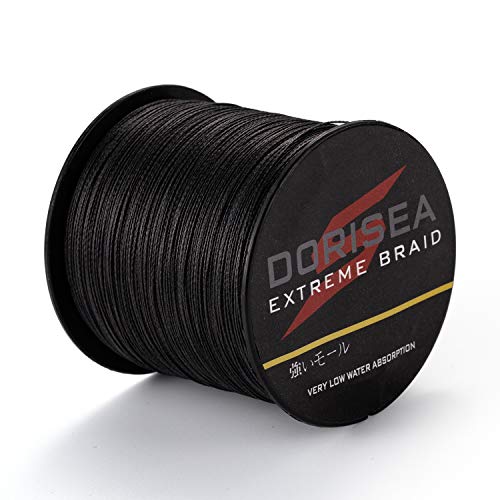
This guide explains how to choose braided line diameter in 2026, using practical measurements and realistic price ranges. Product listings such as KastKing Superpower and Dorisea Extreme Braid illustrate the wide range of available strengths, spool lengths, and prices, but always verify the manufacturer’s diameter specification before buying.
Decide These 3 Things First
- Target species and cover: Decide whether you are fishing open water, weeds, wood, rocks, or saltwater structure. Cover usually matters as much as fish size.
- Reel and rod capacity: Check the reel’s line-capacity chart and the rod’s recommended line range. A spool designed for 6- to 12-pound mono may not handle a thick 40-pound braid efficiently.
- Priority: distance, strength, or handling: Thin braid favors casting distance and capacity. Thicker braid favors abrasion resistance, pulling power, and easier handling. No diameter maximizes every benefit.
Once those decisions are clear, compare actual diameter, not just the number printed beside “LB test.”
Size: Match Diameter to the Reel and Cover
Braided line is commonly sold by pound test, while diameter may be listed in millimeters or inches. Approximate diameters vary by brand, but a useful starting range is:
- 6- to 10-pound braid: approximately 0.10 to 0.15 mm; useful for finesse spinning setups and open-water panfish, trout, bass, or walleye.
- 15- to 20-pound braid: approximately 0.16 to 0.23 mm; a versatile range for bass, inshore fishing, and moderate vegetation.
- 30- to 40-pound braid: approximately 0.25 to 0.32 mm; appropriate for thick grass, heavy cover, catfish, pike, and many inshore applications.
- 50- to 80-pound braid: approximately 0.35 to 0.50 mm; intended for powerful rods, heavy structure, larger fish, and offshore use.
These are buying estimates rather than universal conversions. A 10-pound braid from one manufacturer may not have the same measured diameter as another company’s 10-pound braid. Check the package or product specifications whenever possible.
As a practical example, a small 1000- or 2000-size spinning reel usually works well with 6- to 10-pound braid. A 2500- or 3000-size reel can commonly accommodate 10- to 20-pound braid, depending on the spool. Conventional reels and heavy spinning reels may be better suited to 30-pound braid and above.
Material: Understand What the Fibers Change
Most braided fishing lines use polyethylene fibers, often identified as PE. The fibers are woven into strands and then finished with coatings or surface treatments. The material affects diameter consistency, surface smoothness, stiffness, and resistance to fraying.
Some products use familiar fiber names such as Spectra or Dyneema, while others simply state “100% PE.” That label tells you the basic material but does not guarantee a particular diameter or construction quality. Two lines made from polyethylene can feel very different on the reel.
For freshwater finesse fishing, a smooth, limp braid in the 6- to 10-pound range is usually easier to cast. For heavy cover, a 30- to 50-pound option may be preferable even if it feels less supple. Saltwater anglers should also consider whether the line’s coating and color are suitable for repeated exposure to salt and grit.
Do not assume a more expensive fiber name automatically means longer life. Proper spool tension, clean guides, correct knots, and regular inspection have a major effect on service life.
Construction: Compare Strand Count and Roundness
Common braided lines use four, eight, or more strands. A four-strand braid is often less expensive and may have a slightly rougher texture. An eight-strand braid is generally smoother and rounder, which can reduce guide noise and improve casting feel. More strands do not automatically mean greater abrasion resistance or higher actual strength.
For example, a 4X line may be a practical budget choice for anglers who fish around moderate cover and replace line regularly. An 8X line can be attractive when quiet casting, smooth handling, and a more refined surface are priorities. The tradeoff is often price rather than a guaranteed performance ranking.
Roundness matters because a line that packs evenly on the spool is less likely to dig into lower layers under heavy pressure. It can also reduce loose loops and wind knots when the reel is properly filled. Look for a line that sits evenly without obvious flat spots, fuzz, or inconsistent thickness.
Spool length is another construction-related buying detail. A 109-yard spool is enough for many small reels or a single refill. A 150-yard spool is a common general-purpose size. A 327-yard spool provides more flexibility for larger reels, backing, or multiple short applications. Larger Dorisea Extreme Braid listings may offer much longer spools and strengths from approximately 6 to 550 pounds, but the unusually broad range makes it especially important to verify the exact diameter and configuration selected.
Comfort and Performance: Choose the Feel You Can Manage
“Comfort” in fishing line means how easily it loads, knots, casts, and handles during a full day on the water. A thin, smooth braid can reduce casting effort and increase line capacity. It can also be harder to see, more prone to digging under tension, and less forgiving around sharp cover.
For spinning reels, fill the spool to approximately 1/16 inch below the spool lip. Overfilling can increase loops and wind knots; underfilling can reduce casting distance. Use steady tension while winding new braid and avoid simply pouring it onto the reel loosely.
Diameter also affects leader and knot selection. Light braid in the 6- to 10-pound range pairs well with lighter fluorocarbon or monofilament leaders, while 30- to 50-pound braid commonly uses heavier leaders suited to the cover and target species. Test the knot by pulling firmly before fishing, because braid’s low stretch can expose weak connections quickly.
Color is mostly a visibility preference, although it can help with line watching. Low-visibility gray can be a sensible general-purpose choice. High-visibility colors can make subtle bites easier to detect, with a clear or fluorocarbon leader used when needed.
Price Tiers: Pay for the Use Case, Not the Largest Number
Budget braid generally costs about $8 to $15 for 100 to 150 yards. A 10-pound, 150-yard KastKing Superpower spool listed around $10.99 fits this category. This tier is suitable for occasional fishing, spare reels, and anglers who would rather replace line periodically than pay for premium finishing.
Midrange braid usually costs approximately $12 to $25 for 150 to 330 yards. A 6-pound, 327-yard KastKing spool listed around $12.74 and a 40-pound, 327-yard version around $16.19 show how strength and length can vary without a dramatic price increase.
Premium or specialty braid commonly costs $20 to $45 or more for 150 to 300 yards, with some heavy-duty or unusually long spools priced differently. Pay more when you need a specific diameter, smoother construction, tighter color consistency, or better documentation. Do not pay more solely because the package displays an extremely high pound-test number.
Warranty and Quality Control: Check What Is Actually Covered
Fishing line is often treated as a consumable, so warranty coverage can be limited. Before buying, look for a stated manufacturer warranty, return period, and exclusions for normal wear, UV exposure, abrasion, incorrect storage, or knot failure.
A clear product listing should identify the line length, pound test, color, strand count when available, and diameter or equivalent reference. Be cautious when a listing provides only a very broad strength range, such as 6 to 550 pounds, without clearly identifying the diameter for each selected option.
When the line arrives, inspect the spool for crushed edges, loose winding, discoloration, or visible fuzz. Keep unused braid in a dry, shaded location. If the product does not match the selected strength, length, or color, photograph the label before opening or loading it and contact the seller promptly.
Delivery and Setup: The “Assembly” Is on Your Reel
Braided line does not require furniture-style assembly, but setup can determine whether the purchase performs well. Confirm that the delivered spool contains the advertised length. A 109-yard spool may be adequate for one small reel, while a 327-yard spool may be more convenient for several setups or a deep spool.
Before adding braid, use a small amount of monofilament backing on most spinning reels. Backing helps prevent slick braid from slipping around the bare spool and reduces the amount of expensive braid needed to fill it. Wind the braid under firm, even tension, leaving approximately 1/16 inch of space below the lip.
Allow the line to acclimate if it arrives extremely cold or hot, and avoid storing it in direct sunlight. After several outings, inspect the first 10 to 20 feet for roughness and cut away damaged sections. A professional spool installation is rarely necessary, but a tackle shop can help if you are uncertain about backing, fill level, or line lay.
Spec Checklist
| Spec | Budget | Mid | Premium |
|---|---|---|---|
| Typical price | $8–$15 | $12–$25 | $20–$45+ |
| Spool length | 100–150 yards | 150–330 yards | 150–600+ yards |
| Common strength range | 6–40 pounds | 6–50 pounds | 10–80+ pounds |
| Likely construction | 4-strand or basic 8-strand | 4- or 8-strand | 8-strand or specialty weave |
| Best use | Occasional fishing and backups | Regular freshwater or inshore use | Specific diameter, smoothness, or heavy-duty needs |
| Diameter guidance | Choose by reel capacity first | Compare millimeters across brands | Demand a clearly listed diameter |
Red Flags
- The listing gives pound test but no diameter, strand count, or spool length.
- A single product page combines many strengths but does not identify which specifications apply to each option.
- The stated diameter seems unusually small for the advertised strength, with no explanation or supporting specification.
- The spool arrives loosely wound, crushed, faded, or visibly fuzzy.
- The product is dramatically cheaper than comparable braid without a clear reason.
- You are choosing 40-pound braid for a reel rated for only light line without checking capacity.
- You are buying the thinnest possible braid for sharp rocks, heavy vegetation, or abrasive structure.
FAQ
Is thicker braided line always stronger?
No. Thicker line often provides more abrasion resistance and may offer a higher rated strength, but construction and fiber quality also matter. Compare the manufacturer’s diameter, pound test, and strand information instead of assuming thickness alone determines performance.
What braided line diameter is best for bass fishing?
For open-water bass on a spinning reel, 10- to 15-pound braid is a practical starting point. In heavy grass, timber, or dense cover, many anglers move to 20- to 40-pound braid. Match the choice to the rod, reel, lure, and leader rather than using one strength for every technique.
Does braid diameter affect casting distance?
Yes. Thinner braid generally creates less resistance and takes up less spool space, which can help casting distance and line capacity. However, line lay, reel size, lure weight, guide condition, wind, and spool fill also matter. A poorly filled spool can erase the benefit of a thinner line.
How do I choose between four- and eight-strand braid?
Choose four-strand braid when price, toughness, and straightforward general use matter most. Choose eight-strand braid when you prioritize a smoother, rounder feel and quieter passage through the guides. Neither option is automatically best; diameter, cover, reel compatibility, and verified specifications should decide the purchase.





Write Your Review
No reviews yet. Be the first to share your experience!