
Key takeaways
- Reduces impact damage: A rigid wall is far more protective than a cloth sleeve when luggage is stacked, dropped, or compressed.
- Keeps sections together: A case prevents one rod piece from disappearing in a vehicle, hotel room, or airport transfer.
- Protects guides and tips: Internal movement is limited, reducing the chance of bent guides or snapped tips.
- Makes packing easier: A marked, closed case is simpler to load than several loose rod tubes or uncovered sections.
- Works for multiple rods: Many hard cases can carry several disassembled rods, making one container more practical than individual packaging.
- Improves weather resistance: Hard plastic cases generally offer better protection from rain, wet floors, and damp vehicle interiors than fabric sleeves.
- Protects an expensive investment: Replacing a quality rod can cost $100 to $500 or more, making a $67 to $90 case easier to justify.
The Short Answer
It depends—with one important condition: you need a rod case if your fishing rod will be checked on an airplane, placed in a crowded vehicle, or exposed to baggage handling. A case is not essential for a short drive to the launch when the rod is already rigged and secured, but it becomes inexpensive insurance when a broken blank, crushed guide, or lost section could ruin a trip.
For most anglers, the decision is less about whether a case is “required” and more about how much risk they are willing to accept. A soft sleeve is often enough for local travel. A hard or semi-rigid tube is the safer choice for flights, long road trips, and expensive rods. Before buying, check your airline’s current sporting-equipment and oversize-baggage rules; policies and fees can change.
Our top picks

As an Amazon Associate we earn from qualifying purchases at no extra cost to you. Ratings are shown as listed on Amazon.
What You Actually Get
A travel rod case is a protective container designed to keep rod sections aligned and shielded from impact. Depending on the style, it may be a cylindrical tube, a rectangular box, or a telescoping case that adjusts to different rod lengths.
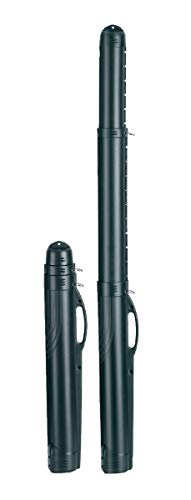
The Plano Airliner Telescoping Rod Case is the classic adjustable-tube approach. It extends to accommodate longer rods, with a typical usable length of roughly 47 to 88 inches depending on the setup. Its $89.99 price places it in the middle of the dedicated travel-case market. A telescoping tube is useful if you own several rods or want one case that can handle both shorter freshwater setups and longer two-piece rods.
The Flambeau Outdoors 4455BB Rod Bunk Box takes a different approach. At $66.99, it is a hard-sided, box-style storage case intended to protect multiple rod sections and related gear. A rectangular interior can be easier to organize than a round tube, particularly when carrying reels, line, or small accessories separately. The trade-off is that a box generally takes up more space in a vehicle and may not fit odd-shaped luggage compartments as easily.
Most cases protect the blank from crushing and prevent guides from catching on clothing, cargo straps, or other equipment. They do not make a rod indestructible. You still need to separate sections, loosen drag and line tension, remove lures, and keep sharp hooks away from the rod walls. If a case has interior dividers or sleeves, use them; rod sections that rattle together can still chip or crack.
For air travel, measure the case rather than relying on the rod’s advertised length. Many airlines use a 62-linear-inch limit for standard checked baggage, calculated by adding length, width, and height. A long case can exceed that threshold quickly, even when it contains only two-piece rods. An 80-inch case may therefore be subject to a separate sporting-goods or oversize fee. A loaded case can weigh 8 to 15 pounds before other luggage is added, so weight limits matter too.
Pros
- Reduces impact damage: A rigid wall is far more protective than a cloth sleeve when luggage is stacked, dropped, or compressed.
- Keeps sections together: A case prevents one rod piece from disappearing in a vehicle, hotel room, or airport transfer.
- Protects guides and tips: Internal movement is limited, reducing the chance of bent guides or snapped tips.
- Makes packing easier: A marked, closed case is simpler to load than several loose rod tubes or uncovered sections.
- Works for multiple rods: Many hard cases can carry several disassembled rods, making one container more practical than individual packaging.
- Improves weather resistance: Hard plastic cases generally offer better protection from rain, wet floors, and damp vehicle interiors than fabric sleeves.
- Protects an expensive investment: Replacing a quality rod can cost $100 to $500 or more, making a $67 to $90 case easier to justify.
Cons
- Adds bulk: A long case can be awkward in compact cars, hotel rooms, boats, and standard luggage storage.
- May trigger airline fees: A case longer than about 62 linear inches may not qualify as ordinary checked baggage.
- It adds weight: A hard case may weigh several pounds empty, reducing the room available within a checked-bag limit.
- Not every case holds a rigged rod: Most travel cases require you to remove the reel, lure, and sometimes the handle or butt section.
- Interior capacity can be misunderstood: A case advertised for several rods may fit only disassembled sections, not several complete setups.
- Storage is another commitment: Long cases need a closet corner, garage wall, or other dedicated space between trips.
- Hard plastic can crack: A rigid shell is protective, but extreme impacts, cold temperatures, or rough handling can still damage hinges, latches, or caps.
Who Should Buy It
Buy a rod case if you fly with fishing gear at least once or twice a year, especially when checking the rod rather than carrying it into the cabin. It is also a smart purchase for anglers who drive long distances with a full trunk, share a vehicle with other people, or regularly transport rods alongside coolers, tackle boxes, camping equipment, and tools.
A case makes particular sense for travel rods longer than six feet, fragile ultralight rods, multi-piece fly rods, and premium models with delicate guides. If one rod is your primary setup and replacing it would disrupt the trip, protection is easier to justify. Choose a telescoping tube when rod length varies or you want a narrower profile. Choose a box-style case when organization and carrying several disassembled rods are more important than compact storage.
Before purchasing, count your rod sections and measure their longest pieces. Also measure the outside dimensions of the loaded case and weigh it with the rods inside. Leave room for padding, but do not pack the case so tightly that sections press against the cap or walls.
Who Should Skip It
Skip a dedicated hard case if you mostly fish close to home and transport one or two rods inside a vehicle. A simple rod sleeve, factory tube, or padded travel bag may provide enough protection for a 10-minute drive. You can also skip it if your rods are inexpensive, easily replaceable, and never leave your sight.
A case may be unnecessary for anglers who use short, one-piece rods and carry them in a boat locker or roof-free vehicle with dedicated rod storage. It is also worth skipping when the case itself would create airline problems. If the only available case is too long, too heavy, or too large for your planned baggage allowance, a shorter multi-piece travel rod may be the better solution.
Cheaper Alternatives
| Option | Cost | Trade-off |
|---|---|---|
| Padded rod sleeve | $15–$40 | Light and easy to store, but offers limited crush protection and little protection from hard impacts. |
| Factory rod tube | $0–$30 | Often included with specialty rods; usually fits one setup and may not have enough room for extra sections. |
| DIY PVC tube with end caps | $20–$50 | Strong and customizable, but heavier, less polished, and potentially subject to airline oversize rules. |
| Soft travel rod bag | $25–$70 | Can hold multiple rods and tackle, but fabric walls do not prevent crushing as reliably as a hard case. |
| Cardboard shipping tube | $5–$20 | Very inexpensive for one trip, but vulnerable to moisture, punctures, and repeated handling. |
For occasional road travel, a padded sleeve is usually the best value. For air travel, the additional cost of a hard case is easier to defend because one damaged rod can cost more than the case. If you build a PVC tube, use secure end caps and padding that prevents the rod from sliding lengthwise. Do not rely on duct tape alone for checked baggage.
FAQ
Can I carry a fishing rod on a plane without a case?
Sometimes, but it depends on the airline, the rod’s packed length, and available cabin space. A short, multi-piece rod may fit within carry-on dimensions, but a long rod tube often will not. Never assume a rod can enter the cabin simply because it is narrow. Confirm the airline’s current policy before arriving at the airport.
Is a soft rod bag enough for a road trip?
Yes, if the rod is placed where luggage cannot crush it. A padded bag works well in an open truck bed only when it is also protected from weather and tied down securely. Inside a packed trunk or SUV, a hard case offers better protection because cooler lids, boxes, and cargo can press against the rod.
How many rods should one case hold?
That depends on the interior diameter or width and whether the rods are assembled. Many travel cases hold several disassembled rods but only one or two complete setups. Separate each blank with a sleeve or divider, and avoid forcing extra sections into the case. Overpacking can cause pressure damage even when the outside shell remains intact.
What is the best choice for most travelers in 2026?
For occasional driving, choose a padded sleeve or the manufacturer’s tube. For checked flights or valuable rods, choose a rigid case sized to your longest section and verify the airline’s baggage limits first. A telescoping case is the more flexible option for mixed rod lengths; a box-style case is better when organized storage for several disassembled rods is the priority.


Write Your Review
No reviews yet. Be the first to share your experience!