
Key takeaways
- Choosing between a single hook and a treble hook for a topwater lure is less about which one is universally “better” and more about how and where you fish. The real decision is whether you want easier unhooking, fewer snags,…
Choosing between a single hook and a treble hook for a topwater lure is less about which one is universally “better” and more about how and where you fish. The real decision is whether you want easier unhooking, fewer snags, and a more fish-friendly setup—or the broad hookup coverage and familiar profile of multiple hook points.
For anglers who store tackle at home, the choice also affects organization and safety. A lure covered in three-point treble hooks takes more care to handle, transport, and keep away from children, pets, and loose fabric. A single-hook setup is usually simpler to grab from a tackle box or hang on a dedicated gear board. That distinction matters in 2026, especially for compact homes where fishing equipment may share a closet, garage wall, or utility area with everyday household items.
Our top picks


As an Amazon Associate we earn from qualifying purchases at no extra cost to you. Ratings are shown as listed on Amazon.
Quick Verdict
Choose single hooks for topwater lures if you prioritize quick releases, easier handling, reduced snagging, and a less hazardous tackle-storage setup. They are particularly practical for anglers who fish around vegetation, practice catch-and-release, or keep gear in a small apartment or family home.
Choose treble hooks if you want maximum point coverage on traditional topwater plugs, especially walking baits, poppers, and prop baits designed around multiple exposed hook points. Trebles can improve the odds of connecting when fish swipe, slash, or strike short, though they require more careful handling and replacement maintenance.
Side by Side
| Factor | Single Hook | Treble Hook |
|---|---|---|
| Comfort and handling | Easier to hold, rig, remove, and store; one point means fewer accidental grabs. | More points to avoid while tying knots, landing fish, and retrieving lures from storage. |
| Hookup coverage | Requires a more committed bite and solid hook placement. | Three points provide wider contact coverage on short strikes and side swipes. |
| Durability | Usually has a thicker wire and fewer bends or joints to inspect. | Durable when quality-made, but each point can dull, bend, rust, or catch debris. |
| Typical price range | About $4 to $12 for a small pack, depending on size and finish. | About $8 to $20 for replacement packs; multi-size kits can cost around $15. |
| Maintenance | Inspect one point, rinse after use, and replace when bent or dull. | Inspect and sharpen up to three points per hook; replace rusted or spread points promptly. |
| Space needed | Fits more cleanly in divided tackle trays and is less likely to tangle with nearby lures. | Needs more separation in a box or on a hanging rack to prevent hook-to-hook tangles. |
| Look | Cleaner, more streamlined, and often less visually busy beneath a lure. | Classic topwater-lure appearance; can preserve the original factory profile. |
| Resale and resale appeal | Appeals to anglers who prefer simplified or catch-and-release-oriented setups. | Often better for buyers seeking an original-style vintage or factory configuration. |
| Best for | Weeds, cautious households, travel tackle, and anglers who value quick releases. | Open-water topwater fishing, aggressive strikes, and traditional plug setups. |
Where Single Hook Wins
Single hooks are the practical choice when simplicity matters more than maximum hook-point coverage. A single inline hook has one point and one barb, so it is easier to see what is happening when a fish takes the bait. It is also generally easier to remove from a fish’s mouth, your landing net, a towel, or the edge of a tackle bag.
They are especially useful around grass, lily pads, flooded brush, and shoreline cover. No exposed hook is truly snag-proof, but one hook point is less likely to collect weeds than a cluster of three points. For topwater frogs and weedless surface presentations, a double hook or single-point configuration can be far more manageable than a hanging treble.
Single hooks also make sense for catch-and-release anglers. Fast removal can reduce the time a fish is out of water, and a single point is less likely than a treble to catch in multiple places. That does not eliminate the need for careful handling, barbless options where appropriate, or pliers, but it makes the process more straightforward.
At home, they are the lower-drama option. A tackle tray with single-hook lures is easier to sort through without catching fingers or snagging dividers. If you display rods or organize gear on a garage wall, keep lures separated from household hooks. Products such as the Josmimic 22LB Wall Hooks for Hanging Towel/Coat, Black 5 Pack, listed at $6.99, or the Kruodop 4 Pack Wall Hooks, listed at $5.99, can be useful for hanging a tackle bag, rain jacket, landing net, or rod sleeve—but not for leaving uncovered lures within reach of children or pets.
Where Treble Hook for Topwater Lures Wins
Treble hooks remain a standard choice because many hard topwater lures were designed around them. Walking baits, poppers, chuggers, and prop-style plugs frequently use two treble hooks: one near the belly and another at the tail. That arrangement gives fish several chances to connect when they attack from below, strike sideways, or slap at the lure without fully inhaling it.
This matters on surface strikes, which are not always clean. A bass, pike, or other predator may create a dramatic explosion but only brush the lure. With three points per hook, a treble can catch on a partial strike that a single hook misses. That does not mean every lure needs trebles; it means trebles are well suited to open-water situations where vegetation and wood are limited.
Treble hooks can also preserve a lure’s intended balance and action. Replacing factory trebles with hooks that are much lighter or heavier may alter how a plug floats, sits tail-down, walks, pops, or casts. When swapping them, match the original hook size and approximate weight as closely as possible. A small digital scale that reads in grams can help when modifying premium lures.
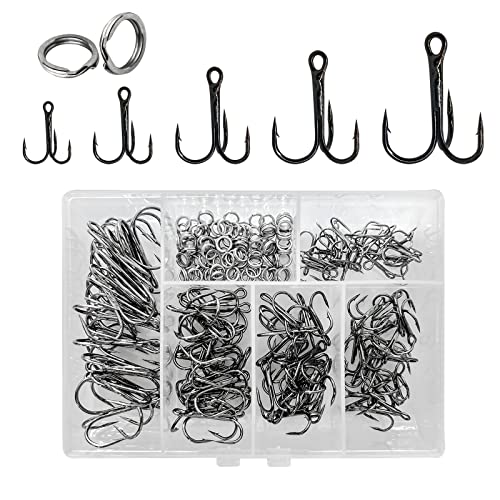
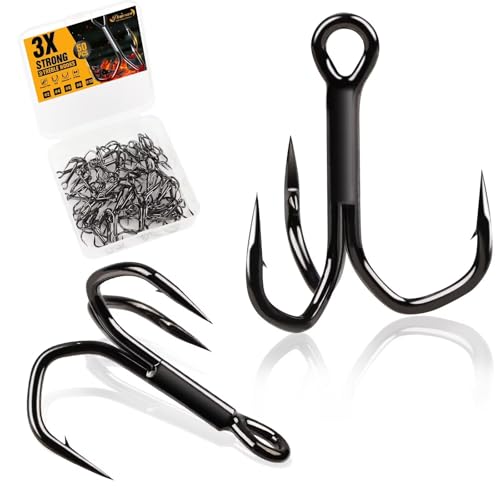
Replacement choices range from basic kits to heavy-duty options. The UperUper 200 Pack Fishing Treble Hooks Kit, priced at $14.99, includes multiple sizes and split rings for anglers maintaining a larger collection. The Dovesun Fishing Treble Hooks, 3X Strong Forged Replacement Hooks for Lures, priced at $13.99, is the type of stronger replacement option anglers may consider for larger, harder-fighting fish. In either case, use split-ring pliers, inspect the hook eyes, and avoid changing sizes simply because a hook looks larger or more aggressive.
Cost Over 5 Years
The five-year cost difference is usually modest unless you maintain a large tackle collection or fish frequently in saltwater. The bigger expense is often replacing lost lures, not replacing hooks.
A reasonable home-and-weekend angler might maintain six to 12 topwater lures. With single hooks, plan on about $10 to $30 in replacement hooks over five years for occasional freshwater use, plus $8 to $15 for a basic pair of split-ring pliers if you do not already own them. Heavy use, saltwater exposure, or frequent snagging can raise that figure.
For treble hooks, plan on roughly $20 to $60 over five years for replacements across the same collection. Trebles cost more to maintain because every lure may use two or three hooks, and each hook has three points that can dull or corrode. A $14.99 assorted kit can be cost-effective for anglers who know the sizes they need, but buying a large kit is not automatically a bargain if most sizes never get used.
Storage can add a small indirect cost. A hard tackle box with adjustable dividers generally runs about $15 to $40, while a wall-mounted gear station may cost more once bins, rod holders, and protective cases are included. Whatever system you choose, cover treble-equipped lures with individual hook caps or keep them in compartmentalized boxes rather than hanging them exposed in a shared living area.
Which One for Your Home
Small apartment
Choose single hooks when possible, or keep treble-hook lures in a latching utility box with fixed compartments. In a small apartment, fishing gear may live in a hall closet, under a bed, or near cleaning supplies and seasonal items. Singles reduce tangling when you need to pack quickly. If you own several hard topwater plugs with trebles, use hook covers and a compact 10- to 14-inch tackle organizer rather than an open shelf.
Family with kids or pets
Single hooks are the safer default, but every fishing hook should be treated as a sharp tool and stored securely. Keep tackle in a latched box on a high shelf or inside a locked cabinet. Treble hooks should never be left attached to a rod leaning in a corner, placed in an open bin, or used as decorative display pieces at child height. If traditional treble-equipped lures are important to your fishing style, storage discipline matters more than switching every lure.
Rental
A removable, contained setup is usually best. Store lures in tackle boxes, soft-sided tackle bags with internal trays, or portable storage cases instead of building a permanent wall display. Single hooks make portable storage less frustrating, while treble lures benefit from divided trays that keep one bait from catching another. If you use wall hooks for bags or clothing, follow the rental agreement and avoid treating a coat hook as an exposed-lure rack.
Long-term home
A long-term home gives you room to separate fishing gear from household storage. Treble hooks can be an excellent fit if you have a dedicated garage cabinet, locking tackle chest, or workshop area. Single hooks remain the easier choice for grab-and-go travel boxes and weed-focused fishing. Many experienced anglers keep both: treble-equipped plugs for open water and single-hook or weedless options for cover-heavy conditions.
FAQ
Do treble hooks catch more fish on topwater lures?
They can improve hookup chances on short strikes because they offer more exposed points. However, lure action, retrieve speed, rod control, fish behavior, and hook sharpness all matter. In heavy vegetation, a single or weedless hook may result in more effective presentations because the lure stays cleaner and snags less often.
Can I replace treble hooks with single hooks on any topwater lure?
You can replace them on many lures, but not every change performs well. A single hook can alter weight, buoyancy, hook position, and walking action. Match the replacement hardware carefully, test the lure in shallow water, and keep the original hooks if you may want to restore the factory setup.
Are single hooks better for catch-and-release?
Often, yes. A single hook is generally easier and faster to remove, especially when it is positioned cleanly in the mouth. Proper fish handling still matters: use pliers, keep the fish in water when practical, avoid excessive handling, and follow local regulations.
How should I store treble-hook topwater lures at home?
Use a closed tackle box with individual compartments, hook caps, or lure wraps. Keep the container dry, rinse hooks after saltwater use, and store it above child and pet reach. Check periodically for rust, loose split rings, dull points, and lures tangled together.




Write Your Review
No reviews yet. Be the first to share your experience!