
Key takeaways
- Lipless crankbait plan: three lures at $6-$15 each, or $18-$45; replacement treble hooks and split rings at roughly $10-$25 over five years; one tray at $8-$15. Estimated five-year total: $36-$85.
- Jerkbait plan: three lures at $8-$25 each, or $24-$75; replacement hooks and split rings at roughly $15-$35; one tray at $8-$15. Estimated five-year total: $47-$125.
Choosing between a lipless crankbait and a jerkbait for cold water bass is less about finding a universally “better” lure and more about matching your fishing style, water conditions, and storage situation at home. A lipless crankbait is compact, loud, and designed to cover water quickly. A jerkbait is more subtle, more precise, and often better when bass are suspended or unwilling to chase.
The real decision a buyer faces is whether to spend money on a versatile search bait that can be cast, lifted, and retrieved in several ways, or on a minnow-shaped hard bait that excels at slow, deliberate presentations. In cold water, when bass metabolism slows and water temperatures commonly fall below 55°F, retrieve speed, pause duration, and lure buoyancy can matter as much as color.
Our top picks



As an Amazon Associate we earn from qualifying purchases at no extra cost to you. Ratings are shown as listed on Amazon.
For 2026 tackle storage, the practical answer is usually not either-or. One lipless crankbait and one suspending jerkbait cover very different jobs while taking up little room. However, if you are buying only one, the best choice depends on whether you fish expansive flats and vegetation or clear, structured water where bass suspend near baitfish.
Quick Verdict
Choose a lipless crankbait when you need to locate bass, fish around grass or flats, or make long casts with a compact lure. It is particularly useful when bass are willing to chase and when you want one bait that can be burned, yo-yoed, or crawled near the bottom. The Strike King Red Eyed Shad Fishing Lure in Sexy Shad, listed at $7.53, is a familiar example of this category. Similar lipless vibration baits commonly cost about $6 to $15.
Choose a jerkbait for cold water bass when fish are suspended, water clarity is moderate to clear, and bass respond better to a slow retrieve interrupted by long pauses. A suspending jerkbait can remain in the strike zone while a lethargic fish decides whether to bite. The Berkley Stunna Fishing Hard Bait in Stone Cold, 112mm and 1/2 ounce, priced at $10.10, fits the larger minnow-style format. Comparable jerkbaits generally range from $8 to $25, with premium models costing more.
If you fish unfamiliar water, start with the lipless crankbait to find active fish. If you can see baitfish, mark suspended bass on electronics, or notice short strikes on faster lures, switch to a jerkbait and slow down.
Side by Side
| Factor | Lipless Crankbait | Jerkbait |
|---|---|---|
| Comfort | Easy to cast and retrieve; repeated casting can cause fatigue | Comfortable at a slower pace, but constant rod snaps may tire your wrist |
| Durability | Hard plastic body is durable; treble hooks and paint can wear | Hard body is durable, but bills, paint, and multiple hooks need care |
| Price range | About $6-$15 for common models | About $8-$25 for common models |
| Maintenance | Rinse and dry hooks after use; check split rings | Rinse, dry, and inspect hooks, split rings, and the diving bill |
| Space needed | Typically 2 1/2-3 1/2 inches long; compact in a tackle box | Commonly 3 1/2-5 inches long; needs more compartment space |
| Look | Vibrating, shad-shaped profile with a strong flash | Detailed minnow profile with a more natural swimming action |
| Resale | Recognized colors and clean hooks are easiest to pass along | Popular suspending models may retain value when undamaged |
| Best for | Searching flats, grass edges, points, and deeper water | Suspended bass, clear water, baitfish, and inactive fish |
| Typical weight | About 1/4-3/4 ounce | About 3/8-5/8 ounce for many bass-sized models |
Where Lipless Crankbait Wins
The biggest advantage of a lipless crankbait is efficiency. Because the lure sinks when paused, you can fish several depths without changing baits. Count it down for five seconds to reach shallow-to-mid-depth water, allow it to fall longer for deeper fish, or keep it moving just above submerged vegetation. That versatility makes it a strong first choice when you do not know where the bass are holding.
Lipless crankbaits also cover water quickly. Casts of 30 to 50 yards are realistic with suitable spinning or baitcasting tackle, line, and wind conditions. A steady retrieve creates vibration, while a lift-and-fall presentation imitates a struggling baitfish. In late winter and early spring, slowly dragging or gently hopping one near a bottom transition can outperform a fast retrieve.
They are especially useful around sparse grass. Rip the lure free when it catches a few strands, then let it fall. That sudden change often triggers a reaction strike. They can also work around rocky banks, channel edges, and points where bass move between shallow and deep water.
Storage is simple. A 2 1/2- to 3 1/2-inch lipless bait usually fits easily in a standard 3600-size tackle tray compartment. A small selection of three colors—natural shad, gold, and a darker option—can cover many conditions. The tradeoff is noise and speed: in very clear, cold water, an aggressive vibrating lure may draw follows without producing bites.
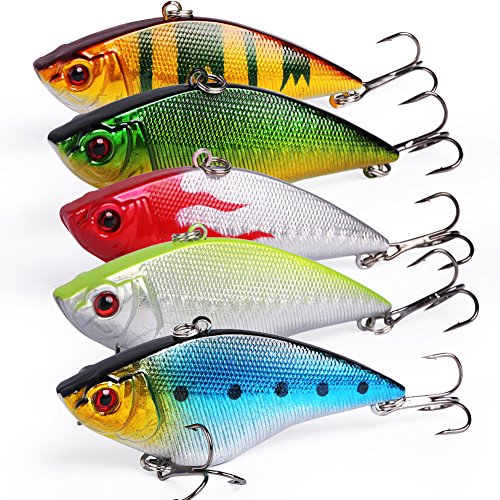
Treble hooks are another consideration. A lipless crankbait can snag grass, wood, and bottom debris, so it is not automatically the best choice for heavy cover. Keep a pair of hook cutters and inspect the hooks after contact with rocks. The Sougayilang Large Hard Bait Minnow VIB lure, priced at $9.99, represents another budget-friendly vibration-bait format.
Where Jerkbait for Cold Water Bass Wins
A jerkbait shines when bass are present but unwilling to chase. Its defining advantage is the pause. With a twitch-twitch-pause cadence, you can make the lure dart, stop, and remain visible in the strike zone. In water around 40°F to 55°F, pauses of 3 to 10 seconds are a useful starting range, although inactive fish may require longer pauses.
Suspending jerkbaits are particularly effective over points, creek channels, bluff walls, and open water near baitfish. They are also valuable when bass appear on sonar several feet below the surface. Rather than pulling the lure rapidly away from fish, you can work it through a narrow depth zone and pause beside a likely holding area.
Water clarity influences the choice. In clear water, bass have more time to inspect a minnow-shaped profile, so realistic finishes and subtle movement can help. Natural shad, translucent patterns, and muted colors are common starting points. In stained water, select a jerkbait with more flash or a brighter side pattern, and use a slightly more forceful cadence.
The learning curve is steeper than with a lipless crankbait. You must understand whether a lure floats, suspends, or slowly sinks in your actual water temperature. Line diameter, snap size, and hook changes can alter that action. A 112mm, 1/2-ounce bait such as the Berkley Stunna gives a substantial profile without becoming difficult for typical bass tackle to cast.
Jerkbaits also demand more organization. Many measure 4 to 5 inches and carry two or three treble hooks. Use divided compartments, keep hooks dry, and avoid allowing wet baits to touch rust-prone hooks. A 10-piece 3D Eyes Artificial Crankbait Fishing Lures Kit, listed at $11.99, offers a low-cost way to build variety, but a larger assortment requires careful tray management.
Cost Over 5 Years
The lure itself is only part of the five-year cost. A realistic starter setup includes two or three lures, replacement hooks, split rings, and a small tackle tray. Prices vary by brand, but the following estimates use common retail ranges rather than lab or durability claims.
- Lipless crankbait plan: three lures at $6-$15 each, or $18-$45; replacement treble hooks and split rings at roughly $10-$25 over five years; one tray at $8-$15. Estimated five-year total: $36-$85.
- Jerkbait plan: three lures at $8-$25 each, or $24-$75; replacement hooks and split rings at roughly $15-$35; one tray at $8-$15. Estimated five-year total: $47-$125.
Heavy contact with rocks, docks, or wood can increase either total. Jerkbaits may cost more to replace because their bills, paint finishes, and multi-hook layouts add complexity. On the other hand, a carefully maintained jerkbait can remain useful for years. Rinse both styles with fresh water after fishing, dry them completely, and store them with the box open until moisture is gone.
Which One for Your Home
Small Apartment
Choose two lipless crankbaits and one jerkbait if storage is limited. Their compact footprints fit a single tackle tray measuring roughly 14 by 9 by 2 inches. A lipless crankbait provides more retrieve options per cubic inch, while one suspending jerkbait gives you a cold-water finesse option without requiring a large collection.
Family With Kids or Pets
Prioritize secure storage over lure style. Treble hooks on both baits can cause injuries if tackle is left on a table or floor. Use a latched, elevated container and keep hooks covered when possible. If accidental handling is a major concern, the smaller profile of a lipless crankbait may be easier to organize, but neither bait should be stored loose.
Rental
A lipless crankbait is often the more practical rental-home choice because it needs minimal equipment and stores neatly. Keep the tackle tray inside a sealed plastic tote to prevent wet gear, odors, and loose hooks from affecting floors or cabinets. A small setup with three lipless baits can cover shallow, mid-depth, and deeper presentations.
Long-Term Home
Build a complementary collection. Keep four to six lipless crankbaits in different weights and colors for search fishing, then add four to six jerkbaits with different running depths and buoyancy rates. Label boxes by depth and water clarity rather than brand. This arrangement creates a manageable home storage system and avoids buying duplicate lures that perform the same job.
FAQ
Is a lipless crankbait or jerkbait better in very cold water?
A jerkbait is usually the better starting point when bass are sluggish, suspended, and feeding on small baitfish. Use long pauses and gentle twitches. A lipless crankbait can still excel when fish are grouped near the bottom, feeding actively, or positioned around grass.
What color should I choose for cold water bass?
Start with a natural shad or minnow pattern in clear water. Gold or brighter finishes can help in stained water or low light. Keep one dark option for overcast conditions. Color matters, but depth and retrieve speed often matter more.
Can I use the same rod for both lures?
Usually, yes. A medium-power rod with a moderate-fast or fast action can handle many bass-sized models in the 3/8- to 5/8-ounce range. Match the rod and line to cover, lure weight, and your preferred reel rather than choosing solely by lure category.
How many lures do I need to start?
Three lipless crankbaits or three jerkbaits are enough to learn the basics: one natural color, one brighter or gold option, and one darker pattern. Add different weights or diving depths only after you know which water conditions you fish most often.




Write Your Review
No reviews yet. Be the first to share your experience!