
Key takeaways
- No diameter listed: Pound test alone does not tell you how visible or bulky the line will be.
- Unclear intended use: Craft or hanging wire may be suitable for decorations but lack dependable fishing specifications.
- Only “invisible” claims: Treat appearance language as marketing unless strength, length, diameter, and material are also provided.
- Unusually low price for a premium material: Verify whether the spool is actually fluorocarbon, coated nylon, or ordinary monofilament.
- Damaged packaging: Crushed, sun-faded, or unsealed line may have been stored poorly.
- Wrong strength for the cover: A thin line chosen solely for clear water can fail instantly around rocks, weeds, or wood.
Clear water can make fish cautious, but the line itself is rarely the only reason a presentation fails. Shoppers often make three expensive mistakes: choosing the thinnest line without considering knots, buying a heavy test rating that looks obvious to fish, or assuming “clear” means every material is equally invisible underwater. They may also overlook stretch, memory, abrasion resistance, and whether the line suits a spinning reel, baitcaster, or simple handline.
This fishing line buying guide for clear water focuses on practical choices rather than marketing language. The goal is not to find one universally invisible line. It is to match diameter, material, construction, and handling to the species, cover, lure, and reel you actually use. The recommendations below apply to common freshwater fishing, where clear monofilament remains one of the best-value starting points.
Our top picks
 KLASIT Fishing Line 788FT
- Item Length: 788 feet
- Warranty Description: NO
- Line Weight: 0.18
 Fishing Line Wire
- Item Length: 755 feet
- Warranty Description: no
- Line Weight: 0.02
| Product | Key specs | Amazon rating | |
|---|---|---|---|
| KLASIT Fishing Line 788FT | Item Length: 788 feet Warranty Description: NO Line Weight: 0.18 | 4.6★ | Check price |
 Zebco Outcast Monofilament Fishing Line Zebco Outcast Monofilament Fishing Line | – | Check price | |
| Fishing Line Wire | Item Length: 755 feet Warranty Description: no Line Weight: 0.02 | 4.8★ | Check price |
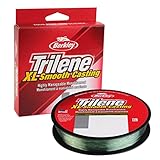
 Berkley Trilene® XL® Berkley Trilene® XL® | League Name: x Item Length: 330 yard Warranty Description: Manufacturer Warranty | 4.6★ | Check price |
As an Amazon Associate we earn from qualifying purchases at no extra cost to you. Ratings are shown as listed on Amazon.
Decide These 3 Things First
- Choose your target and cover. Panfish and small trout may work well with 2- to 6-pound line in open water. Bass in weeds, docks, or light wood generally call for 8- to 15-pound line. Heavy cover, catfish, and larger predators may require 20 pounds or more, even in clear water.
- Choose your main line material. Nylon monofilament is inexpensive, easy to knot, and forgiving. Fluorocarbon is denser and generally less visible underwater, but it is stiffer and costs more. Braided line is thin and strong, but its visibility and lack of stretch often make a clear or low-visibility leader useful.
- Choose a realistic spool size. A 160-yard spool can refill a small reel or provide leader material. A 300- to 330-yard spool is more practical for repeated respooling. Do not buy based on yardage alone: confirm the line diameter and your reel’s capacity.
Size: Diameter and Pound Test Matter More Than the Label
Pound test describes approximate breaking strength, while diameter affects visibility, casting, stretch, and how much line fits on the spool. In clear water, a thinner line can reduce visual presence, but going too thin increases break-offs and makes knots less reliable.
For small jigs, trout, and panfish in open water, consider 2- to 6-pound test with a diameter around 0.006 to 0.010 inches. General-purpose bass and walleye setups often land in the 8- to 12-pound range, approximately 0.010 to 0.014 inches for nylon monofilament. Around vegetation, rocks, or dock posts, 12- to 17-pound line may be the safer choice. For larger fish or abrasive structure, 20- to 30-pound line can be appropriate, even if it is more visible.
Compare diameter whenever possible. Two lines labeled 8-pound may not have identical diameters, and the thicker option may cast differently or fill a reel sooner. A line that is 0.012 inches thick generally offers a different experience from one measuring 0.010 inches, even when both carry the same strength label.
Material: Nylon, Fluorocarbon, or Braid With a Leader
Nylon monofilament is the budget default. It is soft enough for beginner-friendly knots, has useful stretch, and typically costs about $4 to $12 for 160 to 330 yards. That stretch can cushion sudden runs and imperfect hooksets. Its drawbacks are memory, water absorption, and a larger diameter than braid at comparable strength. Clear nylon is still a sensible choice for many freshwater applications.
Fluorocarbon is denser and sinks more readily than nylon. Many anglers select it when a subtle presentation matters, especially for clear water, light line, or a leader. Full-spool fluorocarbon is often stiffer than monofilament and can be difficult on smaller spinning reels. Expect roughly $12 to $35 for a 50- to 200-yard spool, with premium options costing more.
Braid offers high strength for its diameter and very little stretch. It can improve sensitivity, but its visible profile may be undesirable in exceptionally clear water. A common compromise is 10- to 20-pound braid as the main line with a 6- to 12-pound fluorocarbon leader. Use a leader length of about 18 to 36 inches for general presentations, adjusting longer when fish are line-shy or shorter around heavy cover.
Construction: Coatings, Strands, and Consistency
Monofilament is usually a single extruded nylon strand. Look for a smooth, consistent surface and packaging that clearly states length, pound test, and diameter. “Invisible,” “clear,” and “crystal” are useful color descriptions, not proof that fish cannot see the line. Clear line can still reflect light, and underwater visibility varies with angle, depth, background, and water clarity.
For braid, construction usually means the number of woven carriers, such as four- or eight-carrier designs. Four-carrier braid often has a rougher feel and may tolerate abrasion well, while eight-carrier braid is commonly smoother and quieter through guides. Neither construction is automatically better for clear water because a leader may still be needed.
Check for a fresh, undamaged spool. Avoid line with crushed edges, cloudy sections, nicks, or packaging that has been opened and stored in heat or direct sun. No line should be treated as permanent: replace monofilament or fluorocarbon when it becomes visibly rough, coiled beyond normal memory, or weakened after contact with rocks and docks.
Comfort and Performance: The Line Must Suit the Reel
On a spinning reel, soft line with low to moderate memory reduces loops and wind knots. Nylon monofilament is often the easiest option for a 1,000- to 2,500-size reel. Fill the spool to about 1/16 inch below the rim rather than completely to the edge. Underfilling reduces casting distance; overfilling encourages loose coils.
Baitcasters can handle thicker line and heavier lures, but excessive memory can increase backlash. For a general bass setup, 10- to 15-pound nylon or fluorocarbon is a practical range. Match the line to the lure: 2- to 6-pound line is more comfortable with light lures, while 12-pound line is better suited to medium presentations and cover.
Stretch is another performance trade-off. Nylon can help keep treble-hooked fish pinned, while fluorocarbon and braid transmit more movement and contact. High sensitivity is not always the same as ease of use. Beginners may land more fish with a forgiving line that handles knots cleanly than with an expensive, stiff line selected only for low visibility.
Price Tiers: What You Get at Each Budget
Budget, about $4 to $8: Basic nylon monofilament is widely available in 160- to 330-yard spools. Examples in this category include the 788-foot KLASIT clear monofilament at $4.19, the 160-yard, 30-pound Zebco Outcast at $3.99, and the WUINOID clear nylon line at $5.69. These prices can be attractive for handlines, craft uses, leader experiments, or straightforward freshwater fishing. Confirm that a product sold for hanging decorations or crafts lists fishing-relevant strength before using it for a landed fish.
Midrange, about $8 to $18: This tier typically offers clearer labeling, more consistent handling, and better choices across diameters. Berkley Trilene XL in clear, 8-pound test and 330 yards is listed at $9.99, making it a practical benchmark for general freshwater use. Midrange nylon is often the best value for routine respooling.
Premium, about $18 to $40 or more: Premium fluorocarbon, specialized low-memory nylon, and quality braid cost more because of material and manufacturing differences. Buy at this level when a specific benefit—small diameter, sinking behavior, abrasion resistance, or sensitivity—solves a real problem. Premium pricing does not make an unsuitable pound test appropriate.
Warranty, Freshness, and Packaging
Fishing line is a consumable, and many inexpensive spools carry no meaningful long-term warranty. A seller’s return window matters more than a lifetime guarantee. Before buying, check whether the package is factory sealed and whether the seller provides a clear return policy for damaged, opened, or incorrectly labeled line.
Do not treat a warranty as coverage for normal wear, knot failure, UV exposure, or damage from rocks. Keep spare line in a cool, dry drawer away from windows and vehicle heat. If the outer packaging is faded, cracked, or badly crushed, choose another spool when possible. Fresh line is a better purchase than a heavily discounted spool with uncertain storage history.
Delivery and Setup: Get the Line Onto the Reel Correctly
Delivery time is rarely the main buying factor, but it matters before a fishing trip. Order far enough ahead to inspect the diameter, length, color, and pound test. A 160-yard spool may not fully refill a large reel, while 330 yards may provide enough line for a full refill plus future leader material.
When spooling a spinning reel, place the supply spool flat, maintain light tension, and stop approximately 1/16 inch below the lip. For a baitcaster, follow the reel’s line-capacity markings and keep steady tension. Wetting nylon slightly during spooling can help it seat neatly, but it does not remove permanent memory. Tie a reliable knot, trim the tag end to about 1/8 inch, and test the knot with steady pressure before fishing.
Spec Checklist
| Spec | Budget | Mid | Premium |
|---|---|---|---|
| Typical price | $4–$8 | $8–$18 | $18–$40+ |
| Common material | Nylon monofilament | Refined nylon or basic fluorocarbon | Fluorocarbon or specialized braid |
| Useful spool length | 160–330 yards | 200–330 yards | 50–200 yards for leader; 150–300 yards for braid |
| Clear-water range | 2–15 pounds | 4–17 pounds | 4–20 pounds, matched to technique |
| Best use | General freshwater, practice, backup | Routine reel fills and versatile fishing | Specific low-visibility, sensitivity, or abrasion needs |
Red Flags
- No diameter listed: Pound test alone does not tell you how visible or bulky the line will be.
- Unclear intended use: Craft or hanging wire may be suitable for decorations but lack dependable fishing specifications.
- Only “invisible” claims: Treat appearance language as marketing unless strength, length, diameter, and material are also provided.
- Unusually low price for a premium material: Verify whether the spool is actually fluorocarbon, coated nylon, or ordinary monofilament.
- Damaged packaging: Crushed, sun-faded, or unsealed line may have been stored poorly.
- Wrong strength for the cover: A thin line chosen solely for clear water can fail instantly around rocks, weeds, or wood.
FAQ
What is the best fishing line for clear water?
There is no single best option. Clear nylon monofilament is the most economical general-purpose choice, while fluorocarbon is a strong option when sinking behavior and a subtle leader matter. Choose the lightest line that still handles the fish and cover safely.
Is clear monofilament invisible underwater?
No. Clear monofilament is designed to be less visually obvious than colored line in many conditions, but it can still reflect light and be detected. Diameter, background, sunlight, water depth, and fish behavior all affect visibility.
How much line should I put on a spinning reel?
Fill the spool to approximately 1/16 inch below its outer rim. Use the reel’s capacity markings to select a suitable spool. A 160-yard spool may be enough for a small reel, while 300 to 330 yards is more convenient for larger reels or repeated refills.
Should I use braid with fluorocarbon in clear water?
It can be a useful combination. Braid provides strength and sensitivity, while an 18- to 36-inch fluorocarbon leader can reduce the visible connection near the lure. For the simplest setup, however, properly sized nylon monofilament remains effective and easier to manage.





Write Your Review
No reviews yet. Be the first to share your experience!