
Key takeaways
- Initial purchase: Common round and low profile reels cost approximately $40 to $90, with heavier-duty or premium models reaching $150 or more.
- Line replacement: Budget $10 to $25 per year, depending on line type, capacity, and how often damaged line is removed.
- Maintenance supplies: Reel oil, grease, cotton swabs, and cleaning cloths generally total about $5 to $15 per year when purchased as needed.
- Replacement parts: Set aside $10 to $30 over five years for a spool bearing, handle knob, drag washer, or small hardware.
Choosing between a round baitcaster and a low profile baitcaster is less about which reel is universally better and more about how the reel will fit into your fishing habits, storage space, and budget. A round reel usually offers greater line capacity, a sturdy frame, and a classic appearance. A low profile reel is generally lighter, more compact, and easier to hold for hours of repeated casting.
For a buyer setting up a home tackle area, the decision also involves practical details: how much shelf space the reel needs, whether children or pets may knock it from a storage bin, how often it will be cleaned, and whether the reel will be used occasionally or throughout the season. The right choice can remain comfortable and useful for years, while the wrong shape may feel tiring or awkward after a full day on the water.
Our top picks
 Piscifun Chaos XS Round Baitcasting Reel
- Hand Orientation: Right Hand
- Fishing Technique: Trolling
- Gearbox Ratio: 5.3
| Product | Key specs | Amazon rating | |
|---|---|---|---|
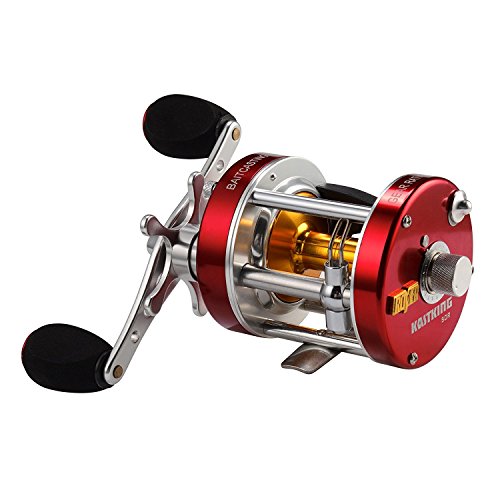 KastKing Rover Round Baitcasting Fishing Reel KastKing Rover Round Baitcasting Fishing Reel | – | Check price | |
| Piscifun Chaos XS Round Baitcasting Reel | Hand Orientation: Right Hand Fishing Technique: Trolling Gearbox Ratio: 5.3 | 4.5★ | Check price |
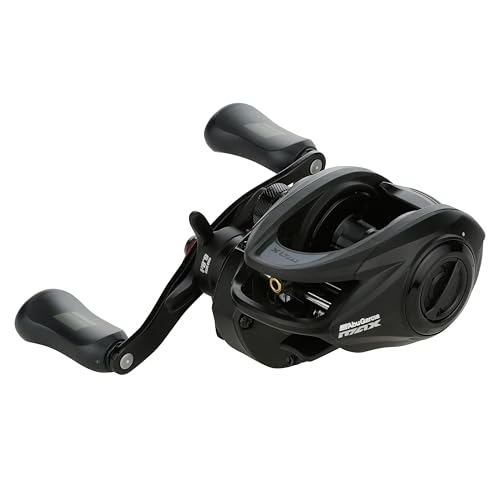 Abu Garcia Max SX Low Profile Baitcast Abu Garcia Max SX Low Profile Baitcast | – | Check price | |
 KastKing Spartacus II Baitcasting Reels KastKing Spartacus II Baitcasting Reels | Hand Orientation: Ambidextrous, Right Hand Fishing Technique: Baitcasting Gearbox Ratio: 7.2 | 4.5★ | Check price |
As an Amazon Associate we earn from qualifying purchases at no extra cost to you. Ratings are shown as listed on Amazon.
Quick Verdict
Choose a round baitcaster if you need more line capacity, prefer a durable traditional design, fish larger species, or want a reel that can handle heavier line and demanding conditions. Round reels are also a sensible choice for anglers who value long-term durability over minimum weight.
Choose a low profile baitcaster if comfort, compact storage, and repeated casting matter most. Its lower body sits closer to the rod, which can make it easier to palm and control. For bass fishing, general freshwater use, and anglers who carry several rods, a low profile model is usually the more convenient option.
Side by Side
| Factor | Round Baitcaster | Low Profile Baitcaster |
|---|---|---|
| Comfort | Can feel bulky during constant casting; comfortable for heavier tackle | Usually easier to palm and less tiring over long sessions |
| Durability | Often built with a robust frame and simple, serviceable layout | Durable when maintained, though compact parts may require closer care |
| Price range | About $45 to $150 for common recreational models | About $40 to $180 for common recreational models |
| Maintenance | Generally straightforward; spool and frame are easy to access | Usually simple, but the compact body can make detailed cleaning less convenient |
| Space needed | Roughly 4.5 to 6 inches long and 3 to 4 inches tall, depending on size | Roughly 4 to 5.5 inches long and 2.5 to 3.5 inches tall |
| Look | Classic, rounded, and traditional | Modern, streamlined, and sportier |
| Resale | Can appeal to users who want capacity and heavy-duty construction | Often easier to sell to general freshwater and bass anglers |
| Best for | Large line capacity, heavier lures, trolling, and larger fish | Frequent casting, bass fishing, travel, and compact rod storage |
| Typical weight | About 8 to 13 ounces | About 6 to 9 ounces |
Dimensions and weights vary by spool size, frame material, and handle configuration. Use the manufacturer’s specification sheet when a reel must fit a particular rod case, drawer, or tackle compartment.
Where Round Baitcaster Wins
The strongest advantage of a round baitcaster is capacity. Its larger spool can hold more line, which is useful when fishing deep water, targeting powerful fish, or using thick monofilament, fluorocarbon, or braided line. More capacity also gives you a larger margin if you need to cut away damaged line during a trip.
Round reels often feel substantial in the hand. That extra mass is not always desirable, but it can provide a stable platform when casting heavier lures. A 10-ounce reel may be more comfortable than a lightweight reel when paired with a rod designed for swimbaits, large crankbaits, or other substantial presentations. The reel’s balance can matter as much as its listed weight.
Durability is another reason buyers choose this style. Many round baitcasters use a straightforward frame and spool arrangement that is easy to understand and service. That does not make every round reel indestructible, but it can make routine cleaning and part replacement less intimidating. Wipe away grit and moisture after each trip, then apply reel oil and grease according to the manufacturer’s instructions.
Round reels also work well for a home tackle station with open shelving. Their traditional shape is easy to identify, and a reel stored on a 12-inch-deep shelf typically has enough room for the handle and line guide. If the reel will live in a crowded drawer, however, its extra height and handle clearance can become inconvenient.
Among affordable examples, the KastKing Rover Round Baitcasting Fishing Reel, 60 Size, Right, Red is listed at $50.99. The Piscifun Chaos XS Round Baitcasting Reel, Blue 50 Right Hand is listed at $49.99. These prices illustrate that a round reel does not automatically require a premium budget.
Where Low Profile Baitcaster Wins
A low profile baitcaster is designed to sit close to the rod and fit naturally under the angler’s palm. That shape can improve control when casting repeatedly, adjusting the thumb bar, or working a lure with short, accurate presentations. For many anglers, the difference becomes noticeable after several hours rather than after a few test casts.
Lower weight is helpful when a rod and reel are carried between several spots. A typical low profile reel weighs approximately 6 to 9 ounces, although aluminum frames, large handles, and stronger drag systems can push that figure higher. Reducing even 2 or 3 ounces at the top of a rod may help reduce wrist fatigue, particularly for smaller-handed users.
Storage is also easier. A low profile reel usually occupies less vertical space in a tackle bag, rod locker, or cabinet. A shelf that is 10 inches deep and 4 inches tall may accommodate several compact reels, while round models may need more room around the handle and spool. Keep reels separated from wet clothing and soft plastics that can transfer oil or chemicals.
The modern appearance may be a deciding factor for buyers who keep fishing gear visible in a mudroom, utility room, or home office storage cabinet. Low profile reels tend to look less bulky and coordinate more easily with contemporary rod-and-tackle organizers.
The Abu Garcia Max SX Low Profile Baitcast Fishing Reel, Right, with a graphite body and sideplates, Duragear brass gear, and Power Disk drag system is listed at $63.74. The KastKing Spartacus II Baitcasting Reels, 7.2:1, Green, Right is listed at $40.79. These examples show how low profile pricing can range from budget-friendly to moderately priced without requiring a high-end purchase.
Cost Over 5 Years
Purchase price is only one part of ownership. For a realistic five-year comparison, assume an occasional freshwater angler fishes 15 to 25 trips per year, stores the reel indoors, and performs basic maintenance at home.
- Initial purchase: Common round and low profile reels cost approximately $40 to $90, with heavier-duty or premium models reaching $150 or more.
- Line replacement: Budget $10 to $25 per year, depending on line type, capacity, and how often damaged line is removed.
- Maintenance supplies: Reel oil, grease, cotton swabs, and cleaning cloths generally total about $5 to $15 per year when purchased as needed.
- Replacement parts: Set aside $10 to $30 over five years for a spool bearing, handle knob, drag washer, or small hardware.
Using a $55 reel, $15 per year for line, $8 per year for maintenance supplies, and $20 in parts over five years, the estimated five-year ownership cost is about $210. A $65 reel with the same care would cost about $220. The shape itself does not create a major ownership-cost difference. The bigger variables are corrosion, neglected lubrication, damaged line, and whether the reel is exposed to saltwater.
If a low profile reel’s lighter weight prevents hand fatigue and encourages regular use, its value may be higher even when the purchase price is similar. If a round reel lasts through heavier use without needing early replacement, its greater initial weight may be worthwhile.
Which One for Your Home
Small Apartment
Choose a low profile baitcaster when storage is limited. Its compact body is easier to place in a 10- to 12-inch-deep cabinet, under-bed container, or narrow tackle bag. Store it in a soft sleeve or divided box so the handle does not press against another reel. A small apartment also favors lighter equipment that can be carried with one rod and a compact tackle case.
Family With Kids or Pets
Either style can work, but a round baitcaster may be easier to retrieve and inspect because its larger body and controls are more visible. Keep hooks, spare line, and reels in a latched container at least several feet above the floor. Avoid leaving a reel mounted on a rod where a child or pet can pull it down. A protective case matters more than the reel’s shape.
Rental
A low profile reel is often the better fit for a rental because it can be stored in a closet without requiring dedicated furniture. Choose a case with a washable interior if the reel will travel in a car. Do not rinse a reel over a sink or bathtub unless the manufacturer permits it; controlled wiping prevents water from being forced into the bearings.
Long-Term Home
Buy based on fishing style rather than storage alone. A dedicated tackle cabinet or garage shelf gives a round reel enough room, making its capacity and sturdy feel more valuable. If the household includes multiple anglers or several rods, low profile reels create a more efficient, uniform storage system. Leave at least 1 inch of clearance around each reel’s handle and line guide.
FAQ
Is a round baitcaster easier to maintain?
Often, yes. The larger body can provide easier access to the spool and frame, but maintenance depends on the specific design. Follow the manufacturer’s lubrication schedule, rinse only as directed, and never store the reel while wet.
Which type casts farther?
Neither shape guarantees greater distance. Casting distance depends on spool design, bearings, braking, line diameter, lure weight, rod action, and technique. A properly adjusted low profile reel may outcast a round reel, while a round model may be better suited to heavy line and large lures.
Are low profile baitcasters less durable?
Not necessarily. A well-made low profile reel can provide years of service. Its compact shape does not determine durability by itself; frame material, gear quality, drag design, sealing, and maintenance are more important.
Can either reel be used for saltwater?
Only if the manufacturer approves it. Saltwater requires thorough cleaning and drying after every use, along with appropriate corrosion protection. A reel that is merely described as durable should not automatically be treated as saltwater-safe.




Write Your Review
No reviews yet. Be the first to share your experience!