
Key takeaways
- Table of Contents 6 sections 12 min read 1 Quick Picks 2 How We Picked 3 The 8 Best Whole Home Generators in 2026 3.1 Generac 10kW Whole Home Generator with Transfer Switch & Cellular Capability 3.2 Generac 26kW Whole…
What's inside
A whole home generator is not a luxury purchase—it is the difference between a minor inconvenience and a genuine crisis when the grid fails for days. Sump pumps lose power, refrigerators warm up, medications spoil, and in many climates the home becomes unlivable within hours. The challenge for buyers in 2026 is navigating a market that spans from sub-$1,000 portable units to six-figure permanently installed standby systems, each promising to protect your home but delivering wildly different levels of automation, fuel flexibility, and output capacity.
What separates the best whole home generators from mediocre options comes down to a handful of decisive factors: whether the unit starts automatically without your involvement, whether it can actually carry your household’s simultaneous loads, and whether the fuel source matches your climate and storage constraints. A standby generator that never fires because its automatic transfer switch is undersized is worse than a portable you run manually. A portable rated for “whole home” that only delivers half its advertised wattage on propane is a spec-sheet fantasy. This comparison pulls together eight models that own a meaningful share of the market and evaluates them on published specs, real-world pricing, and recurring patterns in owner feedback.
As an Amazon Associate we earn from qualifying purchases at no extra cost to you. Product prices and availability are accurate as of the date shown and are subject to change.





Quick Picks
| Product | Best for | Price |
|---|---|---|
| Generac 10kW | Small homes on a tight budget | $3,701.30 |
| Generac 26kW | Large homes with heavy simultaneous loads | $6,317.10 |
| Generac 18kW | Medium-sized homes needing reliable standby | $5,039.10 |
| Generac 22kW | Homes wanting premium features bundled | $6,506.10 |
| DuroStar DS13000MX | Maximum output on a budget | $899.00 |
| Westinghouse 14500 Peak | Fuel flexibility without permanent installation | $1,499.00 |
| Honeywell 18kW Standby | Quiet operation from a trusted brand name | $5,819.00 |
| Westinghouse 28000 Peak | Whole-home coverage without a permanent install | $3,899.00 |
How We Picked
We narrowed this list by weighing four criteria: rated continuous output versus the typical household demand it can realistically carry, fuel source options and how they behave in cold weather or fuel-storage scenarios, the presence and quality of automatic transfer switching (the single feature that determines whether a generator is truly “standby” or merely a machine you must start yourself), and long-term support infrastructure including warranty terms and local service availability. Price-to-capacity ratio was also tracked to identify standout value in each tier.
The 8 Best Whole Home Generators in 2026
Generac 10kW Whole Home Generator with Transfer Switch & Cellular Capability
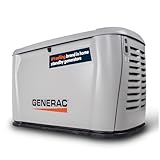
This is the entry point into permanent standby power, and it includes the transfer switch in the package—a meaningful savings versus buying it separately. Owners praise the cellular monitoring module, which sends alerts and logs run hours to your phone so you can confirm the unit exercised itself without leaving the house. The 10kW rating suits a smaller home running a furnace, a refrigerator, sump pump, and a few circuits, but it will not carry central air or an electric range. The con that appears most often in owner reports is that the installation cost can rival the unit price itself, and some buyers find the bundled switch lacks the capacity headroom they expected once they add circuits. Skip this if your home exceeds roughly 1,500 square feet with standard electric appliances, or if you want whole-house coverage without circuit prioritization.
Generac 26kW Whole Home Generator with Cellular Capability
At the top of Generac’s residential standby line, the 26kW model carries nearly everything in a larger home—central air, electric oven, multiple refrigerators—without the constant circuit-shedding anxiety that plagues smaller standby units. Owners consistently note that the 26kW rating means the transfer switch rarely needs to make trade-offs during a storm. The cellular module keeps monitoring simple. The downside is price and installation footprint: this unit requires a more substantial pad, longer runs of natural gas line, and a bigger switch, pushing total installed cost well above the sticker. If your home genuinely draws that much, the capacity is justified; if it does not, you are paying for headroom you will never use. Skip it if your peak load is under 20kW and a smaller model would save you thousands on installation.
Generac 18kW Whole Home Generator with Cellular Capability
The 18kW sits in Generac’s sweet spot for typical three-to-four bedroom homes on gas heat. It will carry HVAC, a refrigerator, lights, sump pump, and most kitchen appliances simultaneously without triggering the transfer switch to shed loads aggressively. Owners report it as the “Goldilocks” size—large enough to avoid feeling limited, small enough that installation stays reasonable. The cellular monitoring is the same platform used across the line. The recurring complaint is that Generac’s dealer pricing for transfer switches and installation varies enormously by region, so the $5,039 figure can feel misleading when the final bill doubles. Skip it if you run electric heat or a large home with a full electric kitchen; in those cases the 22kW or 26kW would serve better.
Generac 22kW Whole Home Generator with Transfer Switch & Cellular Capability
This model bundles the automatic transfer switch and cellular monitoring into a single purchase, which simplifies procurement and often saves buyers versus sourcing components separately. The 22kW rating handles larger homes with central air and multiple high-draw appliances without the premium of the 26kW unit. Owners appreciate the convenience of a complete package arriving together, reducing coordination headaches during installation. The trade-off is a higher sticker price than the 18kW, and some buyers note the bundled switch is Generac’s own model rather than a third-party option with more circuit slots. If you have more than ten critical circuits to back up, you may outgrow the included switch. Skip it if budget is your primary constraint and you are willing to source a transfer switch independently to save money.
DuroStar DS13000MX 13,000-Watt Dual Fuel Portable Generator
At $899, this portable delivers more raw wattage than any other unit on this list under $1,000, and its dual-fuel capability—gasoline or propane—gives owners options when fuel availability is uncertain. The remote electric start and 500cc engine are genuine highlights for the price bracket, and the 13,000-watt peak output can carry a whole home’s essential loads through manual operation and extension cords or a transfer switch. The honest downside is that this is not a standby generator. It requires manual startup, regular exercise, and safe outdoor placement during storms. Noise and vibration are also typical for an open-frame portable. Skip it if you need automatic response during a storm or if you cannot safely store and operate a portable unit outdoors in your climate.
Westinghouse 14500 Peak Watt Tri-Fuel Home Backup Portable Generator
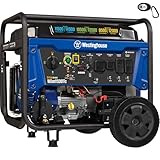
The tri-fuel flexibility—gasoline, propane, and natural gas—sets this Westinghouse apart from dual-fuel competitors and makes it one of the most versatile portables for prepared-minded homeowners. Remote electric start, transfer switch readiness, and a peak rating that comfortably covers most essential household circuits make it a practical whole-home option without permanent installation. Owners like the natural gas compatibility for homes with a gas line, which eliminates fuel-storage worries entirely. The limitation is that peak wattage is not continuous wattage, and real sustained output will be meaningfully lower, so load planning matters. It also lacks automatic start, so you are still the operator. Skip it if you want true hands-off standby protection and are willing to pay the premium for an installed unit.
Honeywell 18kW Whole Home Standby Generator
Honeywell brings brand recognition and a reputation for quality industrial controls into the residential standby space. The 18kW rating matches Generac’s popular mid-size option, and owners report solid build quality and quieter operation relative to comparable units. The Honeywell name carries weight in HVAC circles, which reassures buyers about long-term parts availability. The main drawback is that the Honeywell standby ecosystem is less established than Generac’s in many regions, meaning fewer factory-trained installers and potentially longer wait times for service. The $5,819 price sits above the Generac 18kW, so you are paying a small premium for the brand. Skip it if local dealer access to Honeywell standby products is limited in your area, as service logistics can become frustrating.
Westinghouse 28000 Peak Watt Tri-Fuel Home Backup Portable Generator
This is the output monster of the list—a portable that delivers peak wattage rivaling entry-level standby units while retaining tri-fuel flexibility and no installation requirements. For homeowners who want whole-home coverage without the cost, permits, and contractor coordination of a permanent standby, this is the strongest portable option. Owners praise the ability to run an electric range, HVAC, and multiple appliances simultaneously. The obvious trade-offs are weight, noise, fuel consumption, and the fact that you are still manually starting and monitoring it during an outage. The $3,899 price is aggressive for that output class. Skip it if you travel frequently, are elderly, or live in an area with frequent short outages where a true standby unit would be less burdensome to operate.
Buying Guide
Standby Versus Portable: The Real Decision
The divide in this list is not about quality—it is about what you are willing to do at two in the morning during an ice storm. A standby generator with an automatic transfer switch starts within seconds of grid loss without you touching anything. A portable requires you to go outside, check fuel, connect cords or flip a manual switch, and monitor it during operation. If outages in your area last hours and you are comfortable managing equipment, a portable like the Westinghouse 28000 delivers remarkable value. If outages can occur while you are asleep or away, only a standby is genuinely protective.
Matching Rated Output to Your Home
Kilowatt ratings on standby units and peak-watt ratings on portables are not directly comparable. Standby ratings represent continuous output at a safe sustained level. Portable “peak” ratings represent a short surge before the unit settles lower. For a typical home, you need roughly 12 to 18kW of continuous output to run HVAC, refrigeration, lighting, sump pump, and electronics simultaneously. Homes with electric heat or electric ranges should target the upper end of this range or higher. Oversizing adds cost with diminishing returns; undersizing forces frustrating load-shedding decisions every outage.
Fuel Type Determines Real-World Reliability
Standalone gasoline has limited shelf life and can gum up carburetors if the unit sits unused for months. Propane stores indefinitely but delivers lower energy density, meaning propane-powered units produce less output than on gasoline. Natural gas eliminates storage concerns entirely but requires a gas line and delivers the least per-cubic-foot output of the three. Standby units typically run on natural gas or propane, both of which remain reliable long-term. If you choose a portable, a tri-fuel model like the Westinghouse options provides the most resilience across fuel-availability scenarios.
Our Verdict
The top pick for most homeowners is the Generac 18kW Whole Home Generator. It carries a typical home’s full load, includes the monitoring platform you need, and sits at a price point where installation remains manageable. For budget-conscious buyers who want serious output without permanent installation, the DuroStar DS13000MX at $899 is the standout value. However, if your home runs electric appliances and you want maximum wattage without a contractor, the Westinghouse 28000 Peak becomes the winner—it delivers more raw power than any standby unit under $6,000 on this list, at a fraction of the cost.
FAQ
Can a portable generator actually power an entire home?
Yes, if the unit’s continuous output matches your home’s simultaneous draw and you install a transfer switch to feed circuits from your panel. The Westinghouse 28000 and DuroStar 13000 can cover most household needs, but they require manual startup and safe outdoor operation, which is the practical difference from standby units.
Is a natural gas portable as effective as gasoline?
Natural gas delivers lower energy per unit volume, so a tri-fuel generator produces slightly less wattage on gas line versus gasoline or propane. However, the advantage is that it never runs out during extended outages as long as the gas line is active, which makes it the most reliable option for long events.
How does cellular monitoring work on standby generators?
A built-in module connects to the generator’s controller and reports status, exercise logs, fault codes, and fuel information to your phone or a monitoring platform. It is particularly valuable for second homes or owners who want confirmation that scheduled exercise runs completed without visiting the unit.
Do I need an electrician or a plumber for standby installation?
Yes to both in most cases. The transfer switch requires a licensed electrician to connect to your panel, and a natural gas or propane standby unit requires a licensed plumber or gas fitter to run the fuel line and perform a pressure test. These labor costs typically add significantly to the unit price.








Write Your Review
No reviews yet. Be the first to share your experience!