
Key takeaways
- 50–83 kHz: Better penetration for deeper water and some offshore applications.
- 200 kHz: Strong all-around choice for depth readings and fish detection in shallow to moderately deep water.
- 455 kHz: Wider coverage and useful structure detail for scanning modes.
- 800 kHz and above: Finer detail in relatively shallow water, often with reduced effective range.
Choosing a fish finder transducer frequency is less about buying the highest number on the box and more about matching sonar behavior to the water you fish. A common mistake is assuming that higher frequency always means better detail. Another is buying a powerful transducer without considering mounting location, boat speed, water depth, or whether the display can use the transducer’s sonar modes.
Shallow-water anglers may benefit from high-frequency traditional sonar or ultra-high-definition scanning. Deep-water anglers generally need lower frequencies that travel farther through the water. Many buyers also overlook beam width: a narrow beam can show a sharper slice of the bottom, while a wider beam covers more water beneath the boat.
Our top picks
 Garmin Striker Vivid 7cv
- Easy-to-use 7” color fishfinder with new vivid scanning…
- Includes a GT20 transducer for built-in Garmin CHIRP…
- High-sensitivity GPS to mark waypoints, create routes and…
 Garmin 010-01870-00 Striker Plus 4 with Dual-Beam
- Includes dual-beam transducer with Garmin Chirp traditional sonar…
- Built-in Garmin quickdraw contours mapping software lets you…
- Built-in GPS lets you mark waypoints, create routes…
| Product | Key specs | |
|---|---|---|
| Garmin Striker Vivid 7cv | Easy-to-use 7” color fishfinder with new vivid scanning… Includes a GT20 transducer for built-in Garmin CHIRP… High-sensitivity GPS to mark waypoints, create routes and… | Check price |
| Garmin 010-01870-00 Striker Plus 4 with Dual-Beam | Includes dual-beam transducer with Garmin Chirp traditional sonar… Built-in Garmin quickdraw contours mapping software lets you… Built-in GPS lets you mark waypoints, create routes… | Check price |
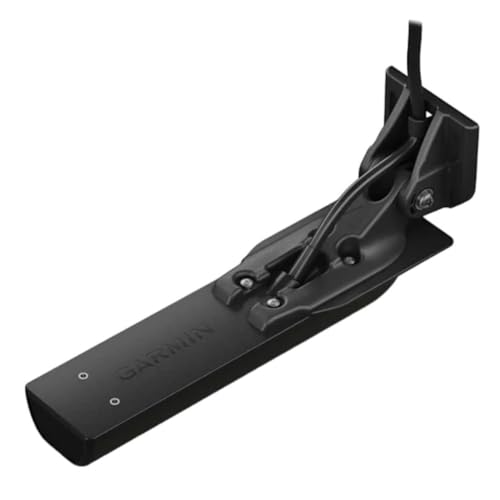 Garmin GT56UHD-TM Transom Mount Transducer Garmin GT56UHD-TM Transom Mount Transducer | Check price | |
 Garmin Striker Vivid 7sv Garmin Striker Vivid 7sv | Warranty Description: 2 year limited warranty Power Source: Battery Powered Display Size: 7 Inches | Check price |
As an Amazon Associate we earn from qualifying purchases at no extra cost to you.
This guide explains how to choose fish finder transducer frequency, using practical specifications and current price ranges to help you compare equipment in 2026.
Decide These 3 Things First
- Your typical depth: For water under about 100 feet, 200 kHz traditional sonar and high-frequency scanning modes are often useful. For water from roughly 100 to 300 feet, a dual-frequency transducer is more versatile. Beyond 300 feet, prioritize lower-frequency capability, adequate power, and a suitable hull installation.
- What you want to see: Traditional sonar is best for depth, bottom structure, and fish arches. DownScan-style imaging uses higher frequencies to produce a more photographic view of cover and hard structure. Side-scanning sonar shows areas to the left and right of the boat, but it needs boat movement and a compatible transducer.
- How you will mount it: A transom-mount unit is usually the simplest choice for a small outboard boat. A trolling-motor mount can work well for bass fishing. Through-hull and in-hull installations are cleaner and more dependable at speed, but they require hull compatibility, drilling, or professional installation.
Size and Frequency Range
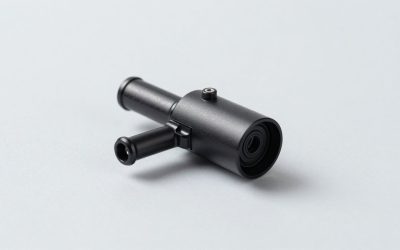
Transducer size often reflects the number of sonar elements and the scanning technology inside, but physical size alone does not determine performance. A compact dual-beam transducer may measure approximately 6 to 8 inches long and weigh less than 2 pounds. A side-scanning or ultra-high-definition model can be 9 to 14 inches long and weigh 2 to 4 pounds before the cable and mounting hardware.
Frequency is the more important specification. Low frequencies, commonly around 50 or 83 kHz, travel farther and are useful in deeper water, but they generally show less fine detail. Frequencies around 200 kHz are widely used for general-purpose freshwater fishing because they provide a useful balance of depth and definition. High-frequency imaging systems may operate in the 455 kHz, 800 kHz, or 1.2 MHz range, depending on the sonar mode.
Think of frequency as a tradeoff rather than a quality rating:
- 50–83 kHz: Better penetration for deeper water and some offshore applications.
- 200 kHz: Strong all-around choice for depth readings and fish detection in shallow to moderately deep water.
- 455 kHz: Wider coverage and useful structure detail for scanning modes.
- 800 kHz and above: Finer detail in relatively shallow water, often with reduced effective range.
A dual-frequency transducer, such as the type supplied with an entry-level Garmin Striker Plus 4, gives you more flexibility than a single-frequency unit. It is a sensible starting point for anglers who fish different lakes and do not yet know which sonar view they prefer.
Material and Environmental Durability
Most transducers use a plastic housing designed for freshwater and general recreational use. That is adequate for many aluminum and fiberglass boats, provided the unit is installed securely and rinsed after use. Look for a housing rated for continuous immersion and a cable jacket that can tolerate sunlight, spray, and repeated flexing.
Metal housings, including bronze or stainless-steel options, are more common in through-hull installations and larger boats. They are heavier and typically cost more, often adding $150 to $600 compared with a basic plastic transducer. Metal is not automatically better for a small transom-mount setup; the wrong material can create galvanic-corrosion concerns when paired with an incompatible hull or hardware.
Check the transducer’s temperature sensor range if water temperature matters to your fishing. Many recreational units report water temperature with accuracy suitable for locating seasonal patterns, but temperature readings can be affected by mounting position, boat movement, and exposure to engine heat.
Construction and Mounting Design
A good transducer must stay level and fully submerged while the boat is moving. A transom-mount bracket should include an adjustable angle and a release mechanism that allows the transducer to kick up if it strikes an object. Installation usually requires a drill, marine sealant, a screwdriver, and enough cable slack to turn the motor or adjust the bracket.
For most small boats, position a transom-mount transducer below the hull’s turbulence line, but not so low that it becomes vulnerable to impact. The exact location depends on hull shape, strakes, rivets, trim tabs, and the propeller. Even an excellent 1,200-watt transducer can produce unreliable readings if bubbles pass across its face.
Side-scanning transducers need additional clearance and careful alignment. Their wider housing may measure about 10 inches long, and they can extend below the hull farther than a basic dual-beam unit. Before buying, confirm that the bracket fits your transom and that the cable reaches the display without a risky extension.
Comfort and Performance on the Water
For a straightforward depth and fish-finding setup, look for a transducer with a usable traditional sonar beam, a clear temperature reading, and a refresh rate that remains stable while the boat is moving. A 20-degree beam may cover a relatively narrow cone, while a 60-degree beam covers substantially more water but can make targets appear less precisely located.
High-frequency imaging is especially useful when you are searching for brush piles, rock edges, submerged timber, and dock cover. However, a scanning image is not a replacement for traditional sonar. The best combination often includes both: traditional sonar for depth and arches, plus DownScan or side-scanning imagery for interpreting structure.
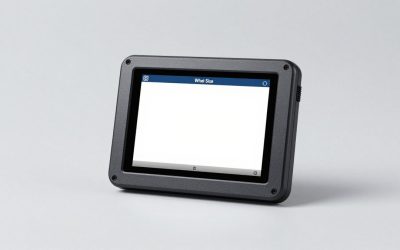
The Garmin Striker Vivid 7cv with GT20-TM transducer is an example of a display-and-transducer package aimed at accessible traditional and down-looking sonar. At about $420, it is more capable than a basic four-inch unit while remaining relatively simple to operate. The Striker Vivid 7sv, around $520, is designed for anglers who want scanning features that show more of the area around the boat. It is worth choosing only if you will use those views and have a suitable mounting position.
Power also matters. Transducer power is often listed as RMS and peak-to-peak values, and those figures should not be compared casually between brands. More power can help with depth capability and target separation, but frequency, beam design, installation, water conditions, and display processing all affect the final image.
Price Tiers and Total Cost
Budget systems: $150–$250. These usually include a compact display, a basic dual-beam transducer, and traditional sonar. The Garmin Striker Plus 4 with a dual-beam transducer, listed around $180, represents this category. It is appropriate for small boats, kayaks, casual lake fishing, and anglers who mainly need depth and bottom information.
Midrange systems: $300–$600. Expect a larger five- to seven-inch display, color palettes, GPS features, and either improved traditional sonar or an entry-level scanning transducer. The Garmin Striker Vivid 7cv at approximately $420 and Striker Vivid 7sv at approximately $520 fit within this broad range.
Premium transducers: $600–$1,200 or more. These may support multiple scanning views, higher-definition imagery, wider coverage, and specialized mounting options. A standalone Garmin GT56UHD-TM transducer priced around $470 shows why the transducer itself can represent a substantial portion of the system cost. Confirm that your existing display supports its sonar modes before purchasing.
Budget another $30–$100 for sealant, cable management, replacement hardware, or a protective cover. Professional through-hull installation can add $200–$600 or more depending on hull construction and access.
Warranty and Compatibility
Check the warranty period for both the display and transducer; they may be covered separately. A one-year limited warranty is common, while some brands or retailers offer longer coverage. Keep the receipt, serial number, and installation documentation, especially for higher-priced equipment.
Compatibility is just as important as warranty length. Confirm the connector type, supported frequencies, sonar modes, power requirements, and software compatibility. A transducer that physically plugs into a display may still fail to provide side-scanning or ultra-high-definition features if the display does not support them.
Also verify whether the package includes the mounting bracket, power cable, fuse, and transom hardware. A “transducer only” listing may look inexpensive until you add a compatible display and installation parts.
Delivery and Assembly
Before ordering, measure the distance from the planned mounting point to the display. Common cables are about 20 feet long, but routing around a console, battery compartment, and gunwale can consume more length than expected. Never sharply bend the cable near the connector, and avoid routing it alongside ignition wires when possible.
Allow at least 60 to 90 minutes for a simple transom installation if the wiring path is accessible. A through-hull installation may take several hours and should be handled by a marine technician if you are uncertain about hull construction or sealing. Let marine sealant cure according to its instructions before launching.
Spec Checklist
| Spec | Budget | Mid | Premium |
|---|---|---|---|
| Typical price | $150–$250 | $300–$600 | $600–$1,200+ |
| Display size | 4–5 inches | 6–9 inches | 9–16 inches |
| Core frequencies | 83/200 kHz or similar | 50/200 kHz plus 455 kHz | Multiple traditional and imaging frequencies |
| Sonar views | Traditional sonar | Traditional plus down-looking imaging | Traditional, down, side, and high-definition imaging |
| Transducer weight | Under 2 pounds | 2–4 pounds | 3–8 pounds, depending on installation |
| Best use | Small boats, kayaks, shallow lakes | Freshwater versatility and structure fishing | Serious mapping, scanning, and deep-water use |
Red Flags
- A listing gives a frequency but does not identify the beam angle, sonar mode, or compatible displays.
- The product claims extreme depth performance without stating water conditions, frequency, power, or installation requirements.
- The transducer cable is too short for your boat, or the manufacturer prohibits cutting or extending it.
- A side-scanning model is being installed behind a step, strake, trim tab, or other source of turbulence.
- The package price excludes the mounting bracket, power cable, or display.
- The seller cannot provide a clear warranty, serial number, or return policy.
FAQ
Is a higher fish finder frequency always better?
No. Higher frequencies usually show finer detail but work best in shallower water and over shorter ranges. Lower frequencies travel farther and are generally more useful for deep-water detection. A dual-frequency transducer is often the most practical compromise.
What frequency is best for shallow-water fishing?
For many freshwater applications under about 100 feet, 200 kHz traditional sonar is a strong general-purpose choice. High-frequency modes from 455 kHz to 1.2 MHz can add detailed images of structure, particularly when the boat is moving slowly or scanning a defined area.
Do I need side-scanning sonar?
Choose side-scanning if you regularly search for structure away from the boat, such as creek channels, rock piles, or flooded timber. If you mainly fish directly beneath the boat or want a simple depth reading, traditional and down-looking sonar may provide better value.
Can I upgrade the transducer later?
Often, yes, but only within the limits of your display. Check connector compatibility, supported frequencies, power requirements, and software features before upgrading. In some cases, replacing the display and transducer as a matched package costs less and avoids compatibility problems.
Write Your Review
No reviews yet. Be the first to share your experience!