
Our Top Picks
The best diesel heaters for garages and shops are vented 5kW to 8kW forced-air models like the Eberspacher Airtronic D2/D4 and Webasto Air Top 2000 STC for permanent installation, while portable 2kW to 5kW all-in-one units like the VEVOR 8KW, HCALORY HC-A01, and LF Bros N2 are the most practical for camping, tents, and temporary job sites because they balance heat output, fuel efficiency, and simple exhaust venting.
Choosing between them comes down to how well you can vent exhaust, how much steady heat your space needs, and whether you need 12V/24V power or household AC. All diesel heaters produce carbon monoxide and must be vented outside, so there is no truly “ventless” safe option for an enclosed garage or tent.

VEVOR 8KW Diesel Heater, Parking Heater with Automatic Altitude Adjustment, Max 18045 ft, Bluetooth App Control Diesel Air Heater, Remote Control and LCD, for Car SUV Trailer Camper Van Boat Garage
Chosen because it specifies Parking Heater with Automatic Altitude Adjustment and Max 18045 ft.
View on Amazon
VEVOR 8KW Diesel Heater, DC 12V/24V, Bluetooth APP Control, CO Alarm
Chosen because it specifies DC 12V/24V and Bluetooth APP Control.
View on Amazon
LF Bros 5KW Diesel Heater, 12V/24V/110V Diesel Parking Air Heater
Chosen because it specifies 12V/24V/110V Diesel Parking Air Heater.
View on Amazon
VEVOR Diesel Heater 8KW, DC 12V/24V, All in One Portable Diesel Heater with Bluetooth APP Control, Remote Control and LCD Screen, 1.3 Gal Fuel Tank for Trucks, Vans, RVs, Campers, and Garages
Chosen because it specifies DC 12V/24V and All in One Portable Diesel Heater with Bluetooth APP Control.
View on AmazonHow Diesel Heaters Work and Why Venting Is Non-Negotiable
Diesel air heaters burn fuel in a sealed combustion chamber and use a heat exchanger to blow clean hot air into the space. Exhaust gases exit through a separate stainless steel pipe and muffler. The combustion air intake and exhaust must both be routed outside, even in a drafty shop. Recirculating exhaust inside a garage quickly raises carbon monoxide levels, and diesel exhaust also carries moisture and odor that will coat tools and lumber if not vented.
There are two main forms you will see in 2026:
- Split-system / permanent-mount heaters: Heater unit mounts inside, fuel tank and fuel pump mount outside or under the unit, exhaust routed through a wall or floor. Examples: Eberspacher (Espar) Airtronic, Webasto Air Top, Planar/Autoterm. Quieter inside, cleaner install, requires drilling and wiring.
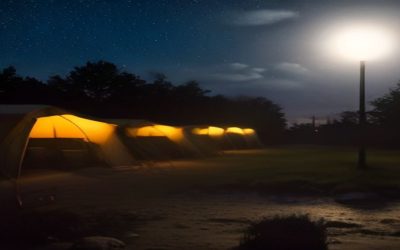
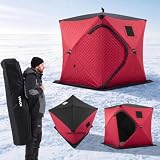
- All-in-one portable heaters: Heater, tank, pump, and controls in a single metal case with carry handle. Examples: VEVOR 8KW, HCALORY, LF Bros. Exhaust and combustion intake hoses exit the case and must still go outside via a window plate, wall thimble, or tent port. Ideal for rentals, tents, overlanding, and ice fishing shelters.
Spec Comparison: Common 2kW to 8kW Diesel Heaters
Most consumer diesel heaters are rated 2kW, 5kW, or 8kW. In practice, many 8kW-labeled portable units use the same 5kW burner and plate as 5kW models but are run at a higher fuel pump frequency. Real output is typically 10-15% lower than the label. Use this table to compare realistic specs rather than marketing numbers.
| Model / Type | Rated Output | Realistic Heat (BTU/hr) | Fuel Use (L/hr) | Tank Size | Weight (Unit Only) | Startup Power / Run Power | Noise at 1m (Low / High) |
|---|---|---|---|---|---|---|---|
| Eberspacher Airtronic D2 (2kW) | 2.2kW | 7,500 | 0.12 – 0.28 | External 10L or vehicle tank | 2.6 kg | 100W / 8-34W | 38 / 52 dB |
| Webasto Air Top 2000 STC (2kW) | 2.0kW | 6,800 | 0.12 – 0.24 | External 10L or vehicle tank | 2.6 kg | 100W / 9-32W | 37 / 51 dB |
| Planar / Autoterm 4D (4kW) | 4.0kW | 13,600 | 0.12 – 0.51 | External 10L | 5.1 kg | 110W / 10-55W | 40 / 58 dB |
| VEVOR 8KW Portable All-in-One | 8kW (labeled) | 13,500 – 17,000 | 0.18 – 0.64 | 5L integrated | 8.5 kg | 120-150W / 15-65W | 44 / 62 dB |
| HCALORY HC-A01 (5kW) Portable | 5kW | 13,600 | 0.16 – 0.52 | 5L integrated | 8.8 kg | 120W / 12-48W | 43 / 60 dB |
| LF Bros N2 (5kW) Portable | 5kW | 14,200 | 0.15 – 0.50 | 5L integrated | 9.2 kg | 140W / 13-50W | 42 / 59 dB |
Notes: Fuel use is for diesel at 35.8 MJ/L. Noise varies heavily with pump mounting and muffler. Startup power is for glow plug ignition for 2-4 minutes; running power is fan + fuel pump. All require 12V DC (some offer 12V/24V auto). For battery-powered camping, that startup surge dictates your power station size.
How Much Heater Do You Need?
Use this quick sizing method for insulated spaces. For uninsulated garages or canvas tents, add 50% more.
Step 1: Calculate volume. Length x Width x Height = cubic meters. Example: 24 x 24 ft garage with 10 ft ceiling = 576 sq ft x 10 = 5,760 cu ft = 163 cubic meters.
Step 2: Estimate wattage. Well-insulated shop: 30 watts per cubic meter. Poorly insulated / drafty: 50 watts per cubic meter. Tent / shelter in wind: 60+ watts per cubic meter.
Step 3: Match to heater. 163 m3 x 30W = 4,890W. You need a true 5kW unit for a well-insulated double garage at -10C. The same garage with single-wall metal and open rafters needs closer to 8,150W, which means two heaters or a larger Planar 44D/Webasto Evo 40, or accepting slower warm-up.
For camping: A 4-person canvas wall tent (approx 15 cubic meters) at 0C needs about 900W on low, so even a 2kW heater will cycle on its thermostat and run quiet. A large rooftop tent or ice shelter (8-10 cubic meters) is comfortable on a 2kW low setting.
Fuel and Runtime: Worked Calculation
Fuel consumption directly follows heat setting. At 0.48 L/hr (mid-high on a 5kW unit), a 5L integrated tank lasts about 10.4 hours. At 0.20 L/hr on low, the same tank lasts 25 hours.
Cost per night: If diesel is $1.10 per liter (typical US range $0.90-$1.40/L in 2026 outside of winter spikes), 8 hours on low (1.6L) costs about $1.76. 8 hours on high (approx 3.8L) costs about $4.18. Heating a shop 8 hours a day, 5 days a week on mid setting (0.35 L/hr) uses about 14L per week, or roughly $15.40 in diesel, plus 12V power.
Battery runtime: A portable heater draws about 35W on high after startup (approx 2.9A at 12V). An 80Ah lithium battery (approx 1,024 Wh) with 85% usable capacity gives 870Wh. Subtract one 40Wh start cycle and you have ~830Wh / 35W = ~23.7 hours on high, or 60+ hours on low (15W). A standard 100Ah lead-acid battery gives only ~50Ah usable, so about half that time. Always account for the 10-12A startup surge for 3 minutes, which can trip small power stations.
Decision Matrix: Which Type Fits Your Situation
| Your Situation | Best Choice | Why |
|---|---|---|
| Detached garage or shop, own the building, use 3+ times per week in winter | Permanent-mount 2kW-4kW (Eberspacher D2/D4, Webasto Air Top, Autoterm 4D) with external 10L tank and wall thimble | Lowest noise inside, safest venting, fuel pump can be isolated on rubber mount, altitude compensation is better |
| Attached garage, need to keep fumes and noise away from house | Permanent-mount 2kW with extended exhaust run (max 2m) and combustion intake from outside | 2kW units cycle lower without sooting, and exterior intake prevents drawing on house air pressure |
| Rental shop, temporary workspace, or budget under $300 | All-in-one 5kW portable (VEVOR, HCALORY) on a heat-proof stand | No permanent holes, moves with you. General market range $120-$250. Plan to replace fuel lines and clamps early |
| Wall tent, ice fishing shelter, overlanding trailer, off-grid cabin | All-in-one 2kW-5kW portable with 12V lithium battery + window/tent port adapter | 2kW runs longer and quieter in small shelters; 5kW heats faster but cycles more. LF Bros N2 includes higher-grade controller and quieter pump |
| High altitude (above 5,000 ft / 1,500m) camping | Model with automatic altitude compensation (Webasto, Eberspacher, Autoterm, or HCALORY with altitude mode) | Thin air causes rich burn, white smoke, and carbon buildup without compensation |
Venting, Noise, and Installation Realities
Venting: The exhaust pipe gets to 300-400F at the heater outlet. Maintain at least 2 inches clearance to wood, and 8 inches to fuel lines. Use a double-wall thimble for wall passes and never terminate exhaust under an overhang or near an HVAC intake. The combustion intake should pull fresh outside air. If you use a window plate in a garage, seal the remaining window gap; otherwise cold air infiltration cancels half your heat.
Noise: There are three sources: fan, fuel pump tick, and exhaust. Fan noise dominates inside on high (50-62 dB is similar to a microwave). Pump ticking (a soft clock-like sound every 0.5-1 second) transmits through the floor if the pump is hard-mounted to metal. Mount it on rubber with the outlet angled up at 15-30 degrees to prevent air locks. The included motorcycle-style muffler cuts exhaust noise by 5-8 dB; adding a second inline muffler helps further.
Power: All diesel heaters need 12V, even if you have AC in the garage. Portable units include a 110V AC to 12V DC brick (usually 10-15A). For off-grid use, a 20A regulated power supply or a battery with at least 15A peak is required for cold starts. Voltage sag below 11.5V causes failed starts and white smoke.
Fuel: Use winter diesel or add anti-gel below -10C. Kerosene burns cleaner and reduces carbon buildup, which is useful for low-setting tent use. Always use the small inline fuel filter supplied and keep the tank vent clear.
Durability and Ownership: What Actually Wears Out
Diesel heaters are reliable but not maintenance-free. Based on common failure points reported by shop and camp users:
- Glow plug and burn chamber carbon: Running constantly on low (under 2kW on a 5kW unit) without a periodic high burn builds carbon. Run on high for 15 minutes every 8 hours of low use to burn off deposits. Glow plugs typically last 1,500-3,000 hours; low voltage starts shorten life.
- Fuel pump and lines: Budget portable pumps often get loud after one season. The green 4mm nylon line and factory hose clamps can weep in cold. Replacing them with 5mm rubber fuel hose and proper fuel-injection clamps is the most common first upgrade.
- Controller and wiring: Standard rotary dial controllers are more reliable than early Bluetooth/app controllers that can lose pairing in cold. Keep connectors dielectric-greased and fused within 12 inches of the battery with a 15A fuse.
- Gaskets and seals: Burn chamber gaskets harden after 2-3 winters. If you smell diesel in the hot air, shut down and inspect the chamber seal and exhaust clamp; no combustion gases should ever mix with circulation air.
- Cleaning interval: Plan a 45-minute teardown every 500-800 hours for portables used daily: remove the glow plug, brush the chamber, inspect the atomizer screen, and clear the exhaust pipe. Shops with fine sawdust should clean the intake filter monthly.
Common mistakes that cause sooting and shutdowns: oversized heater for the space (an 8kW label unit in a small tent cannot stay on low enough and will carbon foul), exhaust longer than 2 meters or with too many bends, fuel pump mounted flat or upside down, and running the heater dry. Prime the fuel line before first start and after any filter change.
Safety for Enclosed Spaces
Even with correct venting, install a UL-listed carbon monoxide alarm at breathing height in any garage or tent using a diesel heater, and a smoke alarm in shops. Keep a 3-foot clearance to combustibles in front of the hot air outlet (output air can be 90-180F depending on duct length). Never refuel a hot unit indoors. Store spare diesel in an approved container outside the living space. If you have any heart or respiratory condition aggravated by fumes or dry heat, or if you experience headache, nausea, or dizziness, turn the heater off, ventilate, and seek fresh air immediately.
Our Picks by Use Case
Best for Permanent Garage/Shop: Eberspacher Airtronic D4 or Webasto Air Top 2000 STC / Evo 40
If the budget allows for the general market range of $900-$1,400 for the kit plus install parts, these offer the quietest operation, certified safety, high-altitude auto adjustment, and longest service intervals. Choose the D2 / Air Top 2000 for single-car or well-insulated shops, the D4 / Evo 40 for 2-3 car garages.
Best Budget Portable for Camping and Ice Shelters: HCALORY HC-A01 or LF Bros N2
These 5kW portables in the $150-$280 range include improved controllers, better fuel line routing, and carrying cases compared to the earliest VEVOR models. For small shelters under 12 cubic meters, look for the 2kW versions to get lower minimum output and longer runtime without cycling.
Best Value for Temporary Shop Heat: VEVOR 8KW All-in-One
Widely available, inexpensive, and easy to replace. Budget an extra $20-$40 for upgraded fuel hose, clamps, and a proper wall thimble. It will heat a 400-600 sq ft uninsulated shop on high, but expect higher noise and more frequent decarbonizing than premium brands.
FAQ
Can I vent a diesel heater out a garage window?
Yes, if you use a sealed window plate made of steel or aluminum with a thimble for the exhaust. The exhaust must extend beyond the wall and the combustion intake should also draw outside. A cracked window with a hose poked out is not safe due to exhaust recirculation and CO risk.
Do I need to crack a window for fresh air?
Yes. Even though combustion is sealed, the heater recirculates indoor air. In a tight garage or tent, crack a window or vent 1-2 inches to prevent oxygen depletion and condensation. This also reduces CO buildup risk if there is a small leak.
How long can I run a diesel heater continuously?
Indefinitely as long as fuel and 12V power remain, with a recommended 15-minute high burn every 8-10 hours on low to clear carbon. Most controllers have overheat protection and will shut down if inlet air is blocked.
Is a 5kW or 8kW better for a tent?
For most tents and camping, a true 2kW-3kW is better because it can idle lower without sooting. A labeled 8kW portable in a small tent will short-cycle, run hot then cold, and build carbon. Only choose 5kW/8kW for large wall tents, uninsulated shops, or very cold conditions below -15C.






Write Your Review
No reviews yet. Be the first to share your experience!