
Our Top Picks
 VEVOR Pop Up Ice Fishing Tent 3-4 Person70*70*80 inch, for 2-4 people71 x 71 x 79 inches23.15 PoundsCheck on Amazon
 VEVOR Pop Up Ice Fishing Tent 6-8 Person130*130*79 inch, for 6-8 people130 x 130 x 79 inches27.78 PoundsCheck on Amazon
 Eskimo 69445 Quickfish 3i Insulated Pop-Up Portable Hub-Style3 Person70 x 70 x 80 inches34 PoundsCheck on Amazon
 Your Choice Pop Up Ice Fishing Shelter 3-45.7ft L x 5.7ft W x 6.5ft H66 x 66 x 78 inches23 poundsCheck on Amazon
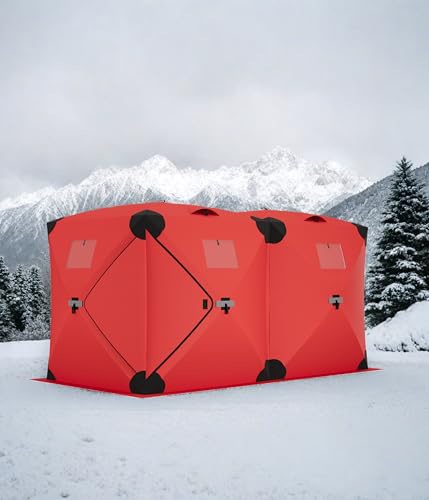 Garvee Pop Up Ice Fishing Tent Insulated Ice140" x 70.8" x 79"140 x 70.8 x 79 inches35.12 PoundsCheck on Amazon
One thing needs saying before the picks: none of the six listings on this page is a portable shelter heater. Five are insulated pop-up ice shelters, and one is an electric pond deicer that is designed to sit in water and must never be used to warm a tent. So the practical answer for anglers searching “heaters for shelters” is to start with a shelter that holds heat well, then add a separately purchased, indoor-rated heater with safety features. Of the shelters here, the Eskimo Quickfish 3i is the best overall pick for most small groups, because it is a compact, insulated hub-style tent with a clearly stated fishable area.
This page ranks the insulated shelters as the heat-holding half of the equation and explains how to heat them safely.
VEVOR Pop Up Ice Fishing Tent 3-4 Person 71 x 71 x 79 in Insulated Shelter | For Winter Fishing, 34 sq ft Area, 600D 4-Layer Fabric, Portable Hub-Style Shanty Cube with Anchors, Ropes, Carry Bag, Red
Chosen because it specifies For Winter Fishing and 34 sq ft Area.
View on AmazonVEVOR Pop Up Ice Fishing Tent 6-8 Person 130x130x79 in Insulated Shelter
Picked as a relevant option in this category.
View on AmazonEskimo 69445 Quickfish 3i Insulated Pop-Up Portable Hub-Style Ice Fishing Shelter, 34 Square Feet of Fishable Area, 3 Person Shelter, Red
Chosen because it specifies 34 Square Feet of Fishable Area and 3 Person Shelter.
View on Amazon
K&H Pond Heater for Fish, Deluxe Pond Deicer, 1500W, Safety Listed, Black | Outdoor pond heater & deicer for fish; Winter oxygen exchange; Thermostatically controlled; Safety Listed
Chosen because it specifies Deluxe Pond Deicer and 1500W.
View on AmazonYour Choice Pop Up Ice Fishing Shelter 3-4 Person Insulated Tent - Red | Function Upgrades Windproof and Warm Ice Shanty Fishing Gear and Equipment
Chosen because it specifies Red.
View on AmazonGarvee Pop Up Ice Fishing Tent Insulated Ice Fishing Shelter 140"x70.8"x79" Portable Hub-Style Shelter Shanty Windproof and Warm for 6 to 8 Persons, Includes Anchors, Ropes & Carry Bag, Red
Chosen because it specifies Includes Anchors and Ropes & Carry Bag.
View on AmazonQuick List
- VEVOR 3-4 Person Pop-Up – best for a mid-size insulated shelter with a thick multi-layer fabric
- VEVOR 6-8 Person Pop-Up – best for large groups who need room for a heater and several rods
- Eskimo Quickfish 3i – best for a quick-setting, insulated three-person hub shelter
- K&H Deluxe Pond Deicer 1500W – not a shelter heater; best for keeping a backyard fish pond from freezing over
- Your Choice 3-4 Person Insulated Tent – best for a simple insulated shelter for a small crew
- Garvee 6-8 Person Hub Shelter – best for a wide, low-profile group shelter with plenty of floor length
Which One Is Right for You?
| If you… | Choose |
|---|---|
| Fish with one or two friends and want a quick, insulated setup | Eskimo Quickfish 3i |
| Share a shelter with three or four anglers and plan to run a small heater | VEVOR 3-4 Person Pop-Up |
| Bring a large group, kids or a lot of gear | VEVOR 6-8 Person Pop-Up or Garvee 6-8 Person |
| Want an insulated 3-4 person tent and will confirm details on the listing | Your Choice 3-4 Person Insulated Tent |
| Need to stop a pond from freezing at home | K&H Deluxe Pond Deicer 1500W (never inside a tent) |
| Care most about trapping heat from a small safe heater | Any insulated shelter above, in the smallest size that fits your group |
Size drives warmth. A smaller shelter heats up faster and needs less fuel, while a big group shelter loses heat to a larger air volume. Choose the smallest tent that fits everyone comfortably, then pair it with a properly sized, safety-equipped heater and a carbon monoxide alarm.
All 6 Picks in Detail
1. VEVOR 3-4 Person Pop-Up – Best for a Mid-Size Insulated Shelter
As an Amazon Associate we earn from qualifying purchases at no extra cost to you.

This VEVOR pop-up is listed as an insulated shelter for three to four people with a 71 by 71 by 79 inch footprint, 34 square feet of fishable area and a 600D, four-layer fabric. It is a hub-style tent, meaning the poles are connected so the shelter pops up and folds down quickly. It is not a heater, but the insulated fabric is the part of the system that keeps a small heater’s warmth from leaking out. The roughly 230 cubic feet of box volume (calculated from the listed dimensions; a hub shape holds somewhat less) is a manageable amount of air to warm with a low-output heater, which is why this size is a sweet spot for small crews.
- Pop-up hub-style design for three to four people
- 71 x 71 x 79 inches with 34 square feet of fishable area, per the listing
- 600D four-layer insulated fabric, per the listing
- Portable, with a carry bag; confirm included anchors and ropes on the listing
- Confirm vent and window layout on the product page before planning for a heater
Pros:
- Insulated fabric helps hold heat
- Manageable volume for a small heater on a low setting
Cons:
- Tight with four anglers plus a heater and gear
- Fabric must be kept well clear of any heat source
Compared with the Eskimo Quickfish 3i, it offers a similar footprint with a thicker stated fabric build, while the Eskimo brings a longer-established design.
2. VEVOR 6-8 Person Pop-Up – Best for Big Groups

The larger VEVOR is listed at 130 by 130 by 79 inches for six to eight people, which makes it the roomiest shelter in this set. Roomy is a double-edged word for heating. Its box volume works out to about 770 cubic feet from the listed dimensions, more than triple the small shelters, so a heater that is comfortable in a 3-4 person tent will struggle here, and a heater big enough to warm it needs more ventilation and more attention. On the plus side, a bigger tent lets you keep the heater far from walls, rods and seated anglers, which is a safety benefit.
- 130 x 130 x 79 inches, six to eight person capacity
- Insulated shelter per the listing; confirm fabric weight and layers on the product page
- Hub-style pop-up setup
- Large footprint needs a big, flat area of ice and several people to anchor
- Confirm weight and carry-bag size on the listing
Pros:
- Room to place a heater with generous clearance
- Space for rods, buckets, chairs and a group
Cons:
- Large air volume is slow to warm
- Heavy and bulky to haul without a large sled
Choose it over the Garvee if you want a square footprint and over the small VEVOR if you routinely fish with a crowd.
3. Eskimo Quickfish 3i – Best for Quick, Insulated Setups

The Eskimo Quickfish 3i is an insulated, pop-up, hub-style shelter with 34 square feet of fishable area for three people, as the listing states. Manufacturer information describes it as roughly 70 by 70 by 80 inches when set up, around 34 pounds, with insulated quilted fabric, windows, vents and ice anchors. Set-up is advertised as quick, which matters when you are building a shelter in a rising wind. Treat vents as essential equipment: when you add any combustion heater, you should keep at least two open to move fresh air in and exhaust out.
- Insulated hub-style shelter for three people
- 34 square feet of fishable area, per the listing
- Roughly 70 x 70 x 80 inches, per manufacturer information
- Includes vents, windows and anchors, per manufacturer information; confirm on the listing
- Roughly 34 pounds with a carry bag, per manufacturer information
Pros:
- Well-known design with quick setup
- Vents and windows help manage condensation
Cons:
- Limited headroom for taller anglers standing
- Three-person label is generous once a heater and gear are inside
It is the most proven design on the list, which makes it the natural starting point when a small group wants a simple, heat-friendly shelter.
4. K&H Deluxe Pond Deicer 1500W – Not a Shelter Heater
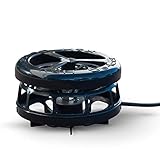
This listing does not belong in a shelter-heater guide, and it is included here only as a clearly labeled runner-up so nobody mistakes it for one. The K&H Deluxe Pond Deicer is a 1500 watt, thermostatically controlled electric heater for outdoor fish ponds. It keeps a small opening in the ice by holding the water just above freezing, and the heating element has to stay submerged whenever it runs. It is not designed to warm air, and using it inside a tent would be unsafe and ineffective. It also needs a grounded electrical outlet, which is not available on the ice.
- 1500 watt electric pond heater and deicer, per the listing
- Thermostatically controlled; manufacturer information says it keeps water above freezing
- Can float or sit submerged in a pond; the element must remain in water
- Safety listed, per the listing
- Requires a power cord and outlet; not a portable ice-shelter accessory
Pros:
- Keeps a gas-exchange hole open in a backyard fish pond
- Thermostat cycles the unit on and off
Cons:
- Does not warm a tent or shelter
- Must never be run out of water
Next to the shelters on this list, it solves a different problem entirely: a pond that stays open, not an angler who stays warm.
5. Your Choice 3-4 Person Insulated Tent – Best Simple Shelter for a Small Crew

This red pop-up shelter is listed as a windproof, warm, insulated tent for three to four people. The listing is short on measurements, so confirm the footprint, fabric and included anchors on the product page before you buy. The value of a tent like this lies in the same place as the others: a closed, insulated space that reduces wind and keeps radiant warmth near you. If you plan to add a heater, make sure the shelter has adjustable vents, a way to prop a window open, and a door that can be opened quickly.
- Pop-up insulated shelter for three to four people, per the listing
- Windproof and warm positioning; confirm fabric type on the page
- Red exterior, which is easy to spot on a white lake
- Confirm dimensions, weight and included accessories on the listing
- Check that vents and windows are present before planning to run a heater
Pros:
- Insulated shelter in a popular size
- Easy-to-spot color for group fishing
Cons:
- Fewer verified details than the better-known models
- Fire-retardant treatment is not confirmed here
Between this and the small VEVOR, the VEVOR lists more stated detail, so use this one if the layout suits you.
6. Garvee 6-8 Person Hub Shelter – Best for Long, Low-Profile Group Space

The Garvee is listed as an insulated, windproof, portable hub-style shelter for six to eight people at 140 by 70.8 by 79 inches. That shape is notably long and narrow, which gives you a spacious floor line for sitting along both sides. In terms of heater planning, the box volume works out near 450 cubic feet from the listed measurements, between the compact shelters and the large VEVOR. A narrow tent keeps anglers close to the center aisle, so clearance from a heater needs deliberate planning.
- 140 x 70.8 x 79 inches, six to eight person label, per the listing
- Insulated hub-style pop-up shelter, per the listing
- Windproof positioning; confirm fabric details on the page
- Long aisle layout for seating along the walls
- Confirm anchors, ropes and weight on the listing
Pros:
- Plenty of floor length for a group
- Lower volume than the large VEVOR, so less air to warm
Cons:
- Narrow width limits heater placement
- Six to eight people would be a tight squeeze with gear
Pick it over the large VEVOR if you want less air to warm and can live with a narrower tent.
Specs Compared
| Product | Type | Capacity (listing) | Size (listing) | Fabric (listing) | Heats a shelter? |
|---|---|---|---|---|---|
| VEVOR 3-4 Person Pop-Up | Insulated hub shelter | 3-4 people, 34 sq ft | 71 x 71 x 79 in | 600D 4-layer | No; holds heat from a separate heater |
| VEVOR 6-8 Person Pop-Up | Insulated hub shelter | 6-8 people | 130 x 130 x 79 in | Confirm on listing | No; holds heat from a separate heater |
| Eskimo Quickfish 3i | Insulated hub shelter | 3 people, 34 sq ft | About 70 x 70 x 80 in | Insulated fabric | No; holds heat from a separate heater |
| K&H Deluxe Pond Deicer 1500W | Electric pond deicer | Not applicable | Confirm on listing | Not applicable | No; for ponds only, never a tent |
| Your Choice 3-4 Person Tent | Insulated pop-up shelter | 3-4 people | Confirm on listing | Insulated (confirm layers) | No; holds heat from a separate heater |
| Garvee 6-8 Person Hub Shelter | Insulated hub shelter | 6-8 people | 140 x 70.8 x 79 in | Confirm on listing | No; holds heat from a separate heater |
How We Chose These
This set was drawn from current catalog listings and published manufacturer information, not from personal use. We compared stated capacities, dimensions, fabric descriptions and ventilation features across manufacturer pages and retailer specification fields. Because the listings turned out to be shelters plus one pond deicer, we organized the page around how well each insulated tent can support safe heating and labeled the deicer as a non-shelter item. We prioritized clear size statements, insulation claims and ease of setup, and we deliberately avoided recommending any specific heating appliance that is not among the listed products.
What to Look For
Match Shelter Volume to Heater Output
The first step is arithmetic. Multiply length, width and height in feet to get the box volume, then knock about a quarter off for a hub shape. A 71 by 71 by 79 inch shelter is about 230 cubic feet, so a small heater on its lowest setting is enough. A 130 by 130 by 79 inch tent is more than 750 cubic feet and needs far more output, along with more ventilation and a bigger safety margin. Oversizing a heater in a small tent causes overheating, condensation and wasted fuel, and it increases the risk from exhaust.
Choose an Indoor-Rated Heater With Safety Features
Only use a heater whose label says it is approved for enclosed or indoor use. Look for an oxygen depletion sensor and a tip-over shutoff. Open-flame or unvented outdoor heaters do not belong in a tent. A low-oxygen sensor is not a carbon monoxide alarm; carbon monoxide can build before the sensor trips, and sensors can behave unreliably at high elevation. A battery-powered carbon monoxide detector mounted near the floor and checked before every trip is a must. If it alarms, leave immediately and ventilate before going back in.
Ventilation and Clearance
Never run a combustion heater in a sealed tent. Keep at least two vents or windows cracked so fresh air can enter low and exhaust can leave high. Keep the heater about a foot or more from any fabric, and place it on a stable, level surface such as a solid platform so it cannot sink into slush or tip over. Nylon and polyester shelter fabrics can melt or ignite, and many insulated shelters have no stated fire-retardant rating on the listing, so confirm before you rely on one. Never leave a heater running while you sleep or step away.
Electric Heat and Fuel Types
Electric heaters need a power source such as a generator, which must be kept outside and downwind because it produces carbon monoxide. Propane canisters lose pressure in the cold, so heaters run weaker at low temperatures unless the fuel is kept warm. An electric pond deicer is not a substitute for any of these. Its element must stay underwater to run safely.
Fabric, Insulation and Anchoring
Fabric weight is expressed in denier, and a 600D shell is noticeably tougher than a 300D one, though the number alone does not tell you how well a tent holds heat. Look for stated insulation layers, a sewn-in or well-covered floor edge and a skirt or flap at the base that you can pile with snow to stop drafts. The floor matters: most hub shelters have no floor at all because you fish through holes in the ice, which means cold air can rise through the openings. Covering unused holes with foam or a mat helps, and so does standing on an insulated pad.
Anchoring matters as much as warmth. A pop-up shelter is basically a sail, and a gust can send an unanchored tent skidding across the lake, heater and all. Screw-in ice anchors, sled weights and guy lines should be set before you light anything. If the listing does not state that anchors and ropes are included, plan to buy them separately. Never leave a heated shelter unattended, and pack the heater down only after it has cooled completely, since a hot unit can scorch the carry bag or sled.
Group size should drive the final choice. A bigger tent is not automatically better for heating: the extra air dilutes a small heater, and the extra fabric loses more heat to the wind. Most anglers do best with the smallest shelter that fits the group, a single heater on a low setting and a few minutes of airing out every hour. If you regularly fish with a crowd, consider two smaller shelters rather than one very large one, which also cuts the number of people relying on a single heater.
Worked example. Four anglers in a 71 by 71 inch shelter will generate a surprising amount of body heat. A heater on its lowest setting, two open vents and a CO alarm will probably keep the tent comfortable at around freezing. Bump the output only if you are cold, and open a vent further if you see heavy condensation.
Questions
Can I use the pond deicer to heat my ice fishing tent?
No. It is built to heat water, needs its element submerged and requires an electrical outlet, so it should never be used to warm a tent. Using it that way is both ineffective and unsafe.
Is it safe to run a propane heater in an ice shelter?
It can be reasonably safe with an indoor-rated heater that has an oxygen depletion sensor and tip-over shutoff, plus ventilation and a battery-powered carbon monoxide alarm. Never run one in a sealed tent or while sleeping.
How big of a heater do I need for a small shelter?
Small shelters in the three to four person range generally need only a low output. Bigger tents need more, but oversizing causes overheating and condensation. Check the heater manufacturer’s guidance for enclosed spaces.
Do insulated shelters really stay warmer?
Insulated fabric reduces heat loss and blocks wind, so a shelter stays more comfortable than an uninsulated one at the same heat input. It still needs ventilation if a combustion heater is used.
How far should a heater sit from the tent wall?
Keep roughly a foot or more from fabric and gear, and follow the heater’s own clearance instructions. In a narrow tent, place it near the center on a stable surface.
What can I do about condensation inside the tent?
Crack a vent, avoid boiling water inside, and wipe the ceiling when drips form. Lower the heater setting if the tent is getting humid.
Update History
- October 20, 2026 – Initial publication; product set drawn from current catalog listings.
- Check the product page for current specifications and availability before buying.
Sources
- Manufacturer product and specification pages for Eskimo, VEVOR and K&H Pet Products
- Retailer listing titles and specification fields
- Outdoor retailer and angler guidance on enclosed-space heater ventilation and carbon monoxide alarms


Write Your Review
No reviews yet. Be the first to share your experience!